Elevator Modernization Services for Healthcare Facilities: What Hospitals and Medical Centers Need to Know
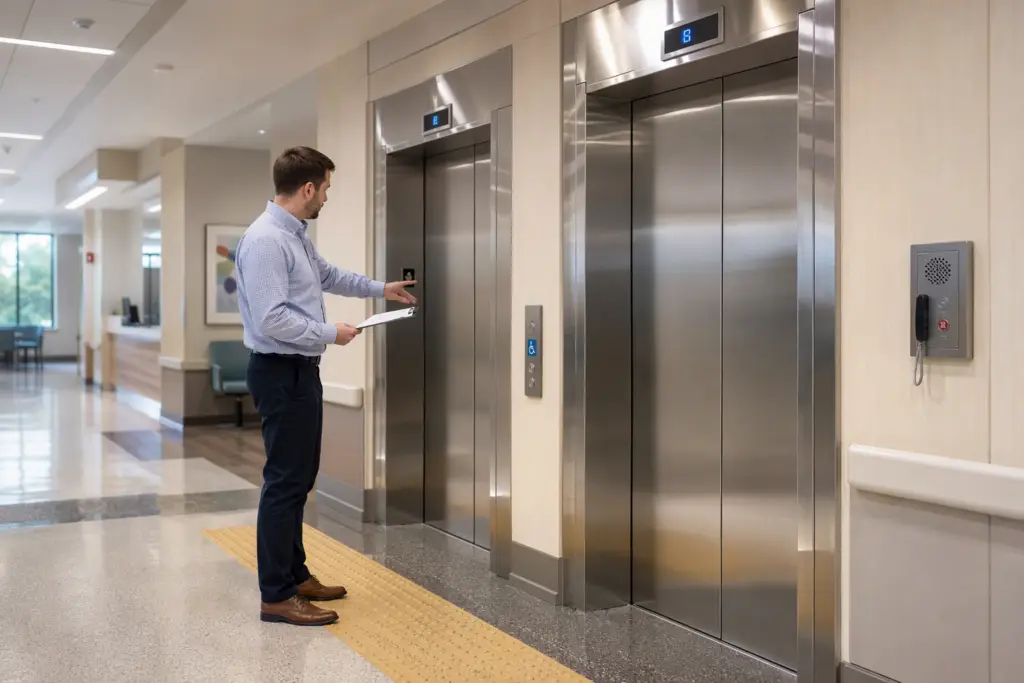
Healthcare facilities operate under some of the most demanding elevator performance and compliance standards of any building type. Patient transport, medical equipment movement, sterile environment requirements, and round-the-clock building occupancy make elevator reliability a genuine patient-safety issue — not simply a convenience matter. When elevators in hospitals, outpatient clinics, assisted living communities, or medical office buildings require modernization, facility managers need a service partner who understands both the technical scope of the work and the regulatory environment that governs it.
Quality Elevator Company serves healthcare facilities across Baltimore MD, Washington DC, Philadelphia PA, and Richmond VA, providing modernization planning and execution that accounts for clinical workflows, phased scheduling to minimize service disruption, and full compliance with applicable federal and state elevator codes.
What Does Elevator Modernization for a Healthcare Facility Actually Involve?
Elevator modernization is the process of replacing or upgrading major elevator components — or entire systems — on an existing unit without necessarily replacing the entire hoistway structure. For healthcare facilities, this work typically includes one or more of the following scopes:
- Control system replacement: Swapping legacy relay-logic or older microprocessor controls for modern solid-state dispatch systems that improve call response and dispatching efficiency across multiple units.
- Drive system upgrades: Replacing DC motor drives with variable-voltage, variable-frequency (VVVF) drive technology to reduce energy consumption and improve ride quality — both important in facilities where patient comfort and operating costs matter.
- Door operator and safety edge replacement: Modernizing door operators and installing full-length light curtains or multi-beam detection systems to meet current ASME A17.1 Safety Code for Elevators and Escalators door safety requirements and to accommodate wide hospital beds and equipment carts.
- Car interior and cab refurbishment: Upgrading wall panels, flooring, handrails, lighting, and signage to meet ADA accessibility requirements and infection-control surface standards common in clinical environments.
- Emergency communication and lighting: Ensuring alarm, lighting, and two-way communication systems comply with current code requirements and the specific clinical continuity standards the facility must maintain.
- Hydraulic system modernization: For older hydraulic units, replacing cylinder assemblies, power units, and fluid systems to meet modern environmental and safety standards.
- Machine room and controller upgrades: Updating or relocating control equipment to improve serviceability and meet current code requirements for machine room environments.
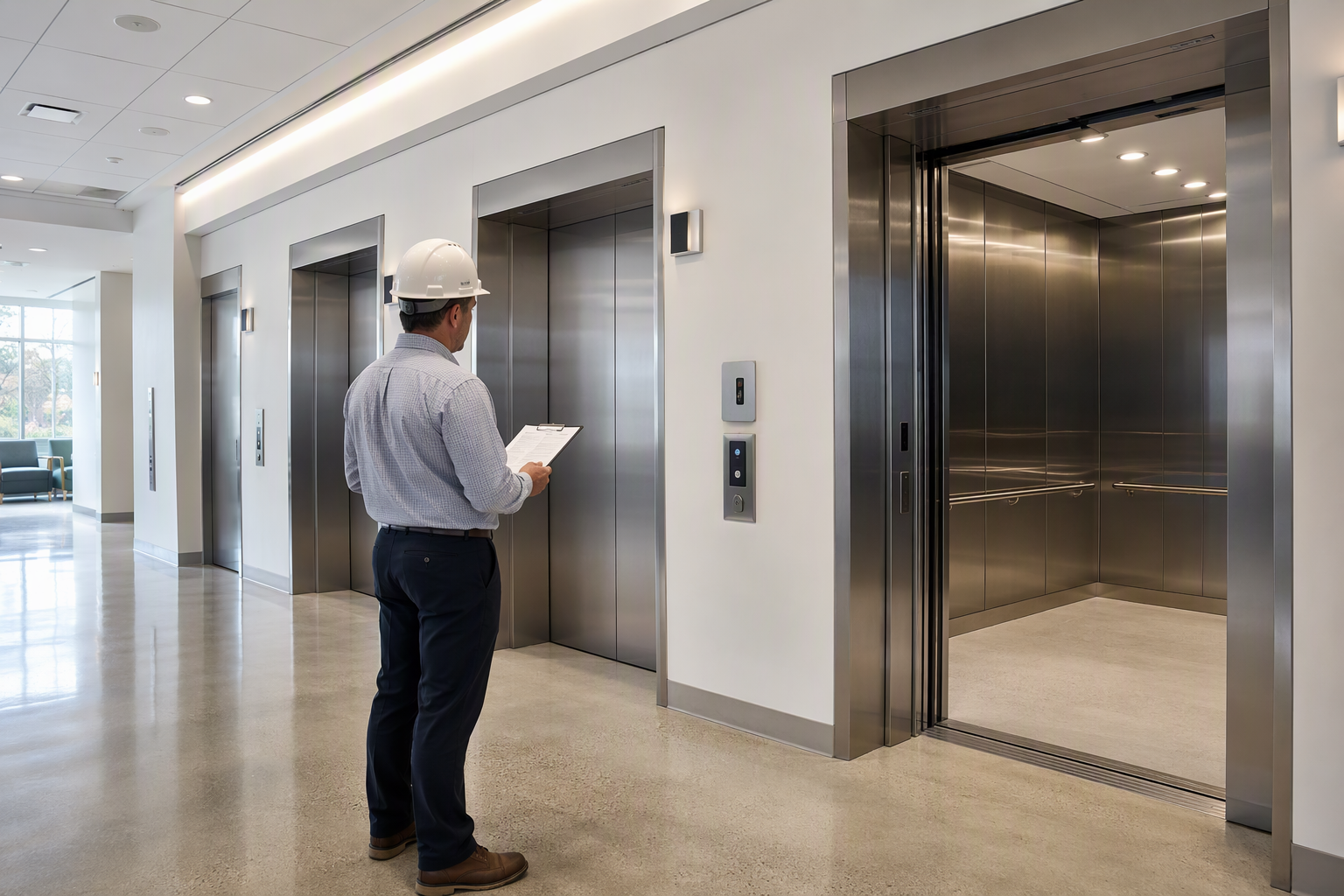
For healthcare facilities with multiple elevator units — such as a hospital tower with four to eight cars serving different functional zones — Quality Elevator Company develops phased modernization plans that sequence unit downtime to ensure the facility always maintains adequate vertical transport capacity for patient care.
What Compliance Standards Govern Elevator Modernization in Healthcare Settings?
Healthcare elevator modernization must satisfy multiple layers of regulatory requirements simultaneously. Facilities operating in Quality Elevator Company’s service markets should be aware of the following frameworks:
Federal Standards
- ASME A17.1 Safety Code for Elevators and Escalators: The primary safety standard governing new elevator installations and alterations in the United States. The edition that applies to a modernization project depends on when the permit application is submitted and which edition each jurisdiction has adopted.
- ASME A17.3 Safety Code for Existing Elevators and Escalators: Governs retrofits and upgrades to equipment already in service. Healthcare facilities with older elevator stock may be subject to mandatory retroactive compliance requirements under A17.3 as adopted by their jurisdiction.
- Americans with Disabilities Act (ADA): Requires that elevators in public accommodations and commercial facilities — including hospitals, medical offices, and assisted living facilities — provide accessible features including compliant car dimensions, tactile controls, audible signals, and Braille signage. Modernization projects are an opportunity to bring older units into full ADA compliance.
- OSHA: Sets worker safety requirements that govern how modernization work is performed, including lockout/tagout procedures and hoistway access protocols during active construction in an occupied healthcare building.
State-Level Requirements by Market
- Maryland: The Maryland Department of Labor, Division of Labor and Industry, Elevator and Escalator Safety oversees elevator regulation under the Annotated Code of Maryland, Public Safety Article, Title 12, Subtitle 8, and COMAR 09.12.81. Maryland adopted ASME A17.1/CSA B44, 2022 edition effective June 17, 2026. Any alteration or modernization requires a State acceptance inspection before the unit returns to service. All work must be performed by mechanics licensed by the Maryland Elevator Safety Review Board, and the contractor must carry minimum liability and property damage insurance as required by Maryland law. Annual periodic inspections and five-year comprehensive inspections are required for wire-rope-suspended units.
- District of Columbia: The DC Department of Buildings (DOB) issues elevator certificates and requires DOB-approved third-party inspection agencies. DC operates under ASME A17.1-2013/CSA B44-13 as referenced by the 2017 DC Building Code. A modernization places the elevator under an alteration permit, during which the certificate of inspection may be temporarily suspended. DC buildings with passenger elevators must keep at least one elevator in operation whenever the building is occupied — a critical constraint for healthcare facility planning. A DOB permit is required to take any elevator out of service.
- Pennsylvania: The Pennsylvania Department of Labor and Industry (L&I), Bureau of Occupational and Industrial Safety, Elevator Section, has statewide jurisdiction including Philadelphia. Pennsylvania currently requires compliance with ASME A17.1-2000 (with A17.1a-2002 addenda) for permits submitted before December 20, 2026; ASME A17.1-2016 applies to permit applications on or after that date. A Department acceptance inspection is required before a modernized unit returns to service. Electric and hydraulic elevators require periodic inspections at intervals no greater than six months.
- Virginia (Richmond): Elevator inspection and enforcement in Virginia is handled by local building departments under the Virginia Uniform Statewide Building Code (13VAC5-63), which adopted ASME A17.1/CSA B44-2019 effective January 18, 2024. In the City of Richmond, the Department of Planning and Development Review, Bureau of Permits and Inspections, handles final acceptance inspections of modernized elevators and annual elevator inspections. Elevator mechanics must be certified by the Virginia Board for Contractors (DPOR), and contractors must hold an Elevator/Escalator Contracting (EEC) specialty license. Annual periodic inspections are required, and the locality may require six-month inspections.
How Is a Multi-Unit Modernization Project Sequenced in an Occupied Healthcare Building?
Sequencing is one of the most operationally complex aspects of multi-unit modernization in healthcare. Quality Elevator Company approaches multi-unit projects in occupied facilities using the following general process:
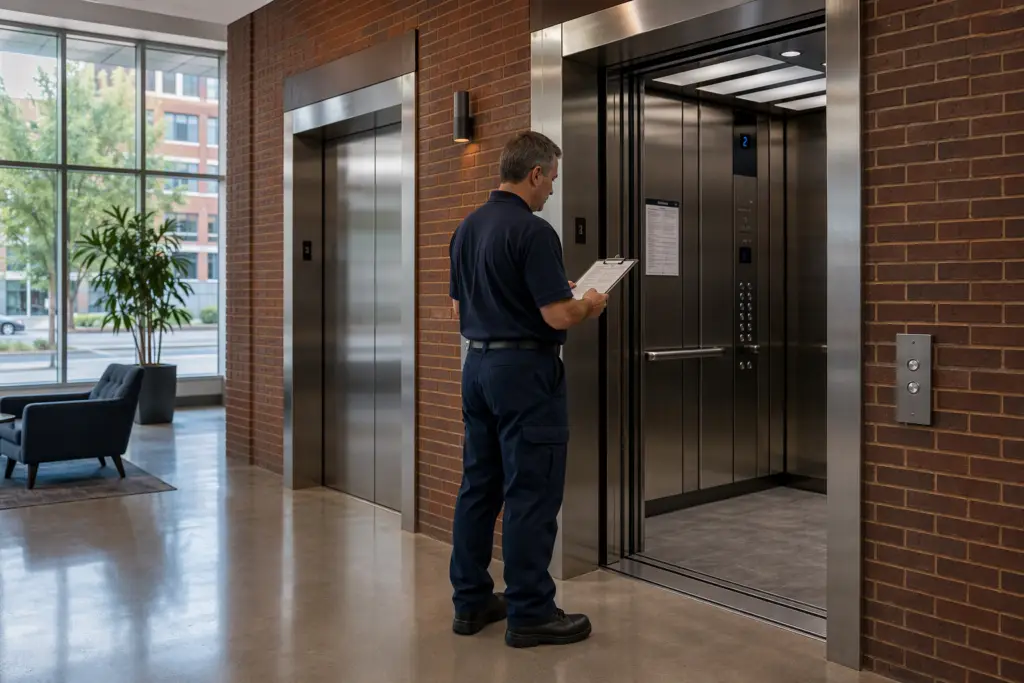
- Facility assessment and unit inventory: Document the current condition, age, component status, and code compliance gaps of every elevator unit in the building. Identify which units are highest priority based on reliability history, parts availability risk, and compliance requirements.
- Permit and regulatory pre-coordination: Submit permit applications to the appropriate state or local authority having jurisdiction (AHJ) for each unit. Coordinate inspection scheduling with the AHJ in advance, since healthcare facilities typically cannot tolerate unplanned extended downtime.
- Phasing plan development: Work with facility management, facilities engineering, and clinical operations teams to establish a modernization sequence that ensures minimum elevator availability thresholds are maintained at all times — particularly for patient transport and freight/service elevators.
- Material procurement and staging: Order long-lead components (controllers, drive systems, door operators) well in advance of the scheduled work window for each unit to avoid supply-chain delays that extend downtime.
- Unit-by-unit modernization: Execute modernization on one unit at a time (or in controlled pairs for very large banks), with clear start and completion milestones agreed upon with facility management before work begins.
- Acceptance inspection and return to service: Coordinate with the AHJ for the required acceptance inspection before each modernized unit is returned to service. In healthcare settings, this step should be scheduled proactively to avoid gaps between completion and reinspection.
- Documentation and record retention: Provide complete as-built documentation, updated maintenance records, and certificate tracking for each unit. In Maryland, maintenance and inspection records must be kept at a readily accessible central location in the building.
- Post-modernization review: Conduct a post-project performance review with facility management to confirm all units are operating as intended and that compliance documentation is current and properly displayed in each car.
What ADA Requirements Apply to Hospital and Medical Facility Elevators?
Under the ADA, hospitals and medical facilities are public accommodations, meaning their elevators must comply with ADA Standards for Accessible Design. Modernization projects are a practical and often cost-effective opportunity to bring older units into compliance. Key ADA elevator requirements for healthcare settings include: compliant car dimensions to accommodate wheelchairs and mobility devices; tactile and visual floor indicators; audible and visual position indicators; Braille and raised-character control buttons at compliant heights; door reopening devices that respond to obstruction without requiring contact; and illuminated cab interiors meeting minimum light-level thresholds.
Quality Elevator Company evaluates each unit against current ADA requirements as part of the modernization assessment process, flagging gaps that should be remediated during the project scope.
How Long Does a Healthcare Elevator Modernization Project Take?
Project timelines vary based on the scope of modernization, the number of units, component lead times, permit processing by the AHJ, and the facility’s operational constraints. A single-unit full modernization in a hospital setting typically takes several weeks from permit issuance to acceptance inspection. A multi-unit project at a large hospital may be planned over multiple months or phased across more than one fiscal year to accommodate budget cycles and clinical operations.
Quality Elevator Company works with healthcare facility managers during the planning stage to develop realistic timelines that account for permitting, procurement, construction, and inspection — and to build schedule contingencies that protect patient care continuity.
What Components Are Most Commonly Replaced in a Healthcare Elevator Modernization?
In healthcare facilities, the components most frequently addressed in modernization projects include:
- Aging relay-logic or early-generation microprocessor control systems that are difficult or impossible to source parts for
- Door operators that cannot reliably detect wide equipment carts, hospital beds, or occupied wheelchairs
- Motor-generator sets replaced by energy-efficient VVVF drive systems
- Emergency lighting and communication systems that no longer meet current code requirements
- Cab interiors with surfaces that are difficult to clean and disinfect to clinical standards
- Hydraulic power units and cylinders on older single-bottom hydraulic elevators
- Position indicator and signaling systems that do not meet current ADA or ASME signaling requirements
Does Elevator Modernization Require the Unit to Be Taken Out of Service?
Yes — modernization work requires the unit to be out of service during the active work period. In the District of Columbia, a DOB permit is required to take an elevator out of service, and the certificate of inspection may be temporarily suspended while the unit is under an alteration permit. In all Quality Elevator Company service markets, facilities must notify the appropriate AHJ before removing a unit from service for modernization.
For DC buildings specifically, the requirement that at least one elevator remain in operation during building occupancy means multi-unit healthcare facilities must plan outage sequencing with particular care.
How Does Modernization Affect Ongoing Inspection and Testing Requirements?
After modernization, each unit must pass an acceptance inspection by the AHJ before returning to service. Once in service, the regular inspection and testing cycle resumes under the jurisdiction’s requirements:
- Maryland: Annual periodic inspections, with five-year comprehensive inspections for wire-rope-suspended units.
- District of Columbia: Category 1 inspections every 12 months and Category 5 inspections every 60 months, each by an ASME QEI-certified inspector. The DC certificate of inspection is valid for two years.
- Pennsylvania: Periodic inspections at intervals no greater than six months for electric and hydraulic elevators. Starting December 20, 2026, Category 1 tests must be performed annually as a stand-alone requirement under the incoming ASME A17.1-2016 framework.
- Virginia: Annual periodic inspections required; localities may require six-month inspections. Periodic tests follow ASME A17.1 Appendix N intervals and must be witnessed by the code official.
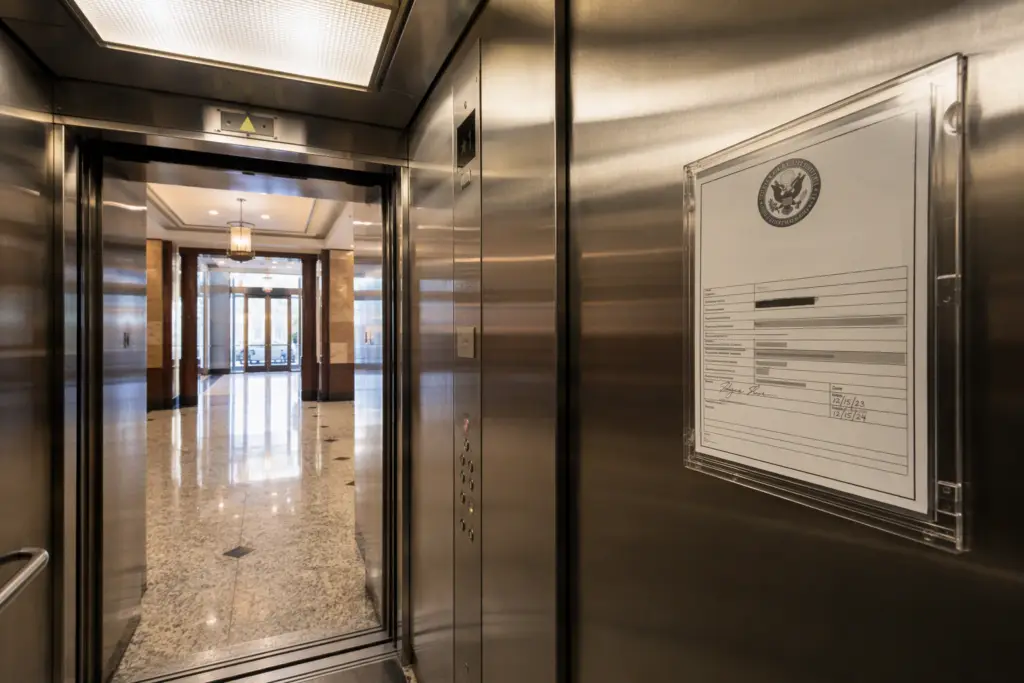
Quality Elevator Company assists healthcare facility managers in tracking inspection due dates and coordinating with the appropriate inspectors to maintain current certificates — a critical compliance function given that certificates must be conspicuously displayed in each elevator car in all four service markets.
What Should Healthcare Facility Managers Ask When Evaluating Modernization Proposals?
When comparing modernization proposals, healthcare facility managers should ask prospective contractors the following:
- Is your company licensed as an elevator contractor in this state, and are your mechanics appropriately licensed or certified for this jurisdiction?
- What edition of ASME A17.1 will this modernization be permitted under, and how will your scope address any A17.3 retroactive requirements?
- How will you coordinate phasing to ensure we maintain required elevator availability during the project?
- What is your process for permit acquisition, inspection scheduling, and returning each unit to service?
- How does your proposed scope address ADA compliance gaps identified in the assessment?
- What documentation will you provide at project completion, and in what format?
Quality Elevator Company provides written modernization assessments that address each of these questions before any contract is signed, giving facility managers the information needed to make informed comparisons.
Questions Your Inspector Will Ask
Healthcare facility elevator inspectors — whether state inspectors, third-party qualified elevator inspectors, or local code officials — routinely evaluate the following during and after a modernization project. Facility managers and elevator contractors should be prepared to address each:
- Is the permit for this alteration current and posted? In all four markets, work requires a valid permit from the AHJ before modernization begins.
- Was the work performed by a licensed/certified elevator mechanic? Maryland requires a licensed elevator mechanic for all tests performed for a required inspection. Virginia requires state-certified mechanics or work performed under direct and immediate supervision of a certified mechanic.
- Does the modernized equipment conform to the edition of ASME A17.1 under which the permit was issued? Inspectors will verify that the installed components match the approved scope and applicable code edition.
- Have all required tests been performed and witnessed? In Virginia, periodic tests must be witnessed by the code official. In Maryland, when a third-party qualified elevator inspector witnesses a test, the inspector must be physically present for the entire test.
- Is the current certificate of inspection displayed in the car? All four markets require conspicuous display in the elevator car, with narrow exceptions.
- Are ADA-required signage, controls, and dimensions in compliance? Inspectors in healthcare settings will verify that tactile controls, Braille signage, and car dimensions meet ADA Standards for Accessible Design.
- Are maintenance, inspection, and test records retained at the building? Maryland law specifically requires records to be kept at a readily accessible central location in the building.
- Do door safety systems detect obstruction across the full door height? Healthcare-use elevators must reliably detect wide loads; inspectors will test door reversal and light curtain/safety edge performance.
- Is the emergency communication system functional and code-compliant? Inspectors verify two-way communication capability under both normal power and emergency power conditions.
- Has the unit been registered or re-registered with the appropriate authority? In Maryland, owners must re-register elevator units annually at the time of periodic inspection.
Why Do Healthcare Facilities in Baltimore, Washington DC, Philadelphia, and Richmond Choose Quality Elevator Company?
Healthcare facilities in Quality Elevator Company’s service markets operate under different regulatory frameworks, each with its own adopted code edition, inspection authority, and licensing requirements. Quality Elevator Company maintains working familiarity with the specific AHJs, permit processes, and compliance requirements in each of these markets — the Maryland Department of Labor’s Division of Labor and Industry, DC’s Department of Buildings, Pennsylvania’s Department of Labor and Industry, and Virginia’s local building departments — rather than applying a one-size-fits-all approach.
For multi-unit healthcare projects, that market-specific knowledge matters from the first permit application through the final acceptance inspection and beyond, into the ongoing inspection and certificate management cycle that keeps a healthcare facility in continuous compliance.
Get a Free Elevator Assessment for Your Healthcare Facility
Whether your hospital, medical office building, outpatient clinic, or assisted living community needs a single-unit upgrade or a phased multi-unit modernization program, Quality Elevator Company is ready to assess your current equipment, identify compliance gaps, and develop a modernization plan that fits your clinical operations and regulatory requirements.
Contact Quality Elevator Company for a free elevator assessment — call 301-779-9116 today.
Need elevator service you can rely on? Quality Elevator Company is ready to help.