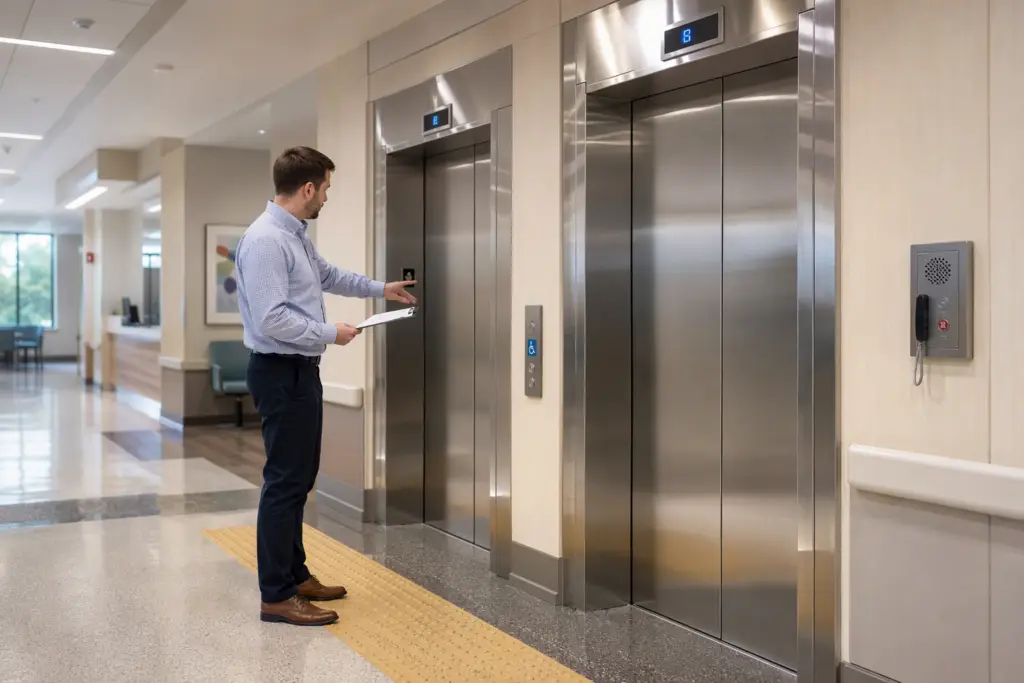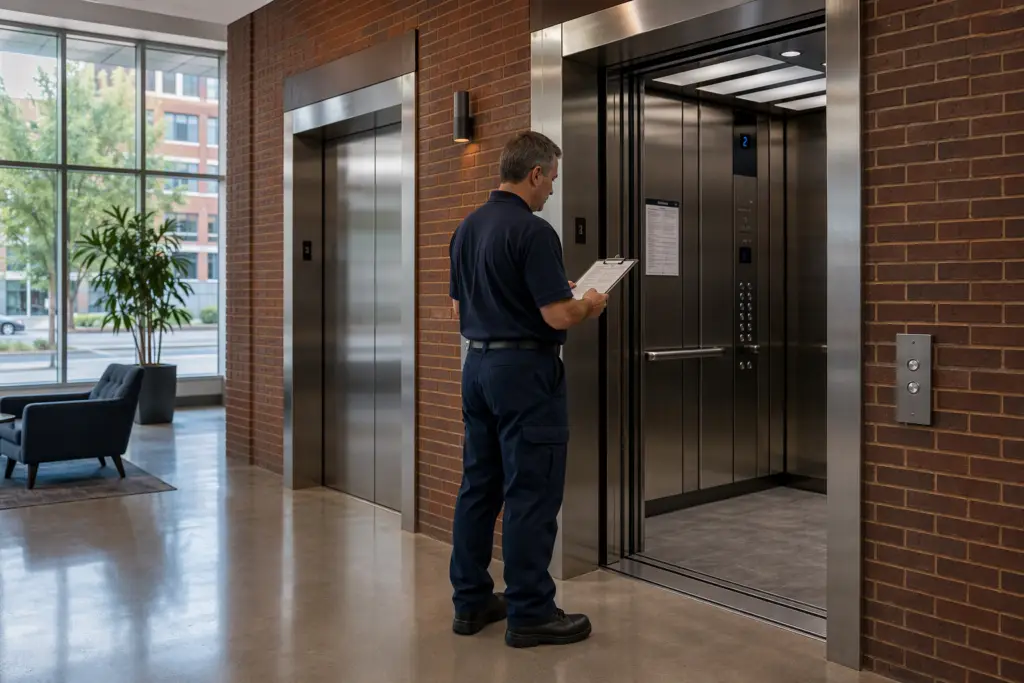
Elevator inspections involve a licensed inspector examining mechanical, electrical, and safety systems against code requirements — if an elevator fails, it must be taken out of service immediately and cannot legally operate until deficiencies are corrected and the unit passes a reinspection.
How Do Elevator Inspections Work — and What Happens If My Elevator Fails?
Elevator inspections protect passengers, building owners, and operators from mechanical failure, code violations, and legal liability. Whether you manage a commercial office building in Washington DC, a residential high-rise in Baltimore, a healthcare facility in Philadelphia, or a mixed-use property in Richmond, understanding the inspection process — and knowing exactly what a failed inspection means — is essential to maintaining compliance and keeping people safe. This comprehensive FAQ hub covers every stage of the inspection lifecycle, from scheduling through reinspection, for property owners and facility managers operating in Maryland, the District of Columbia, Pennsylvania, and Virginia.
What is an elevator inspection and what does it cover?
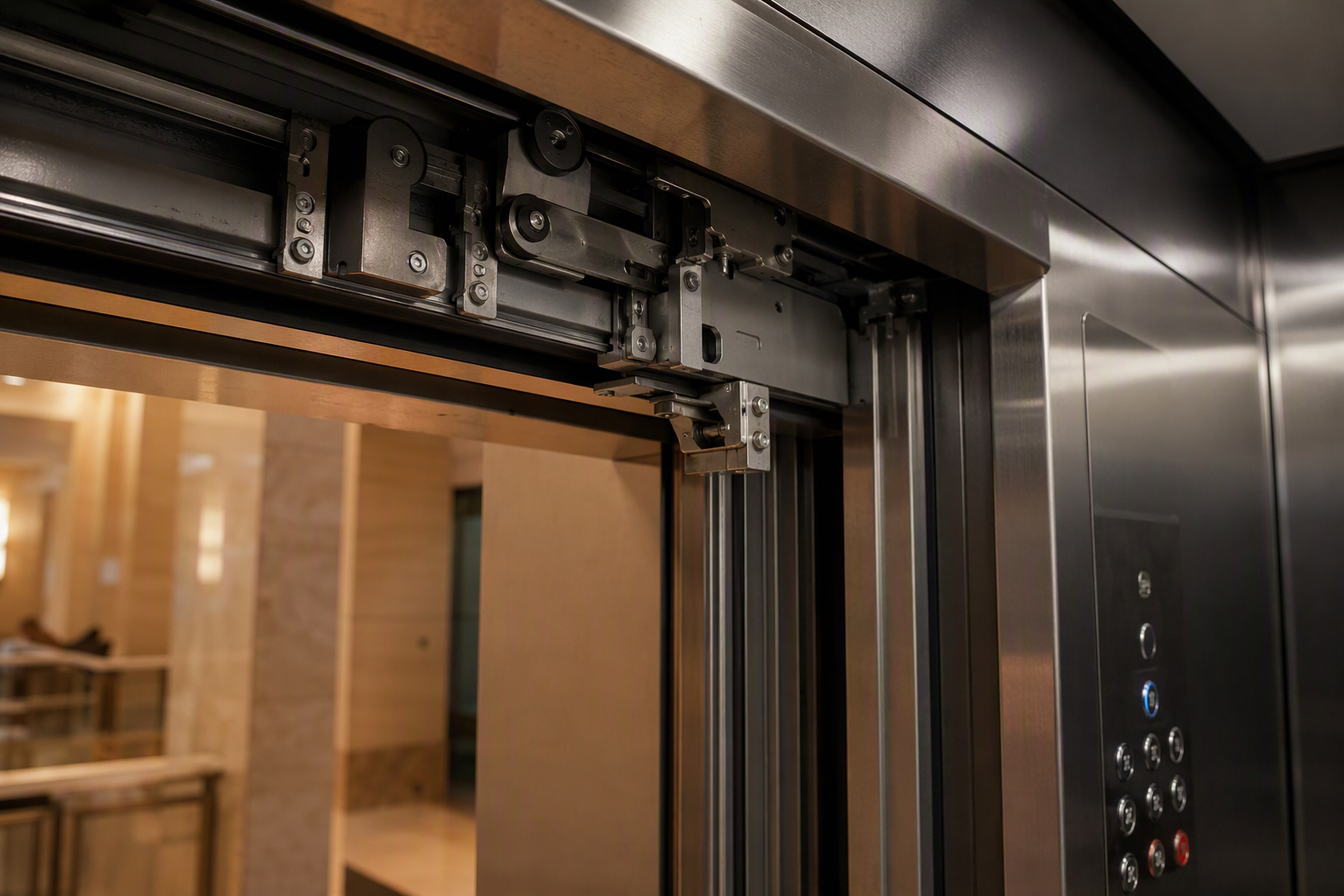
An elevator inspection is a formal, code-governed examination of an elevator’s mechanical, electrical, and safety systems conducted by a licensed inspector to verify the unit meets applicable safety standards.
During an inspection, the inspector evaluates the hoistway, machine room, car enclosure, door systems, safety devices, brakes, buffers, governor, and emergency communications equipment. Inspectors verify that all components conform to the ASME A17.1 Safety Code for Elevators and Escalators (for new and recently altered equipment) and ASME A17.3 Safety Code for Existing Elevators and Escalators (for units already in service). Inspectors also check compliance with ADA accessibility requirements where applicable.
The inspection is not a routine maintenance visit — it is a legally required evaluation conducted by or under the authority of the state or local Authority Having Jurisdiction (AHJ). In Maryland, the Department of Labor’s Division of Labor and Industry administers elevator inspections. In the District of Columbia, the DC Department of Consumer and Regulatory Affairs (DCRA) oversees the program. Pennsylvania’s Department of Labor and Industry, Bureau of Occupational and Industrial Safety, administers inspections statewide, and Virginia’s Department of Labor and Industry (DOLI) oversees the program under that state’s elevator safety law.
How often are elevators required to be inspected?

Most jurisdictions require elevators to undergo a routine periodic inspection at least once per year, with additional witnessing tests at defined intervals.
The specific intervals depend on the type of inspection and the jurisdiction. Maryland, DC, Pennsylvania, and Virginia all adopt requirements consistent with the ASME A17.1 and A17.3 codes, which define categories of periodic tests. Routine inspections typically occur annually, while more comprehensive category tests — such as Category 1 (no-load safety and governor tests) and Category 5 (full-load, full-speed tests of safeties and buffers) — occur on longer cycles established by the applicable code edition and the local AHJ.
Beyond the standard periodic inspection, a new installation requires a certificate of inspection before the elevator can be placed in service, and any major alteration triggers a new inspection before the modified elevator reopens to the public. Building owners are responsible for scheduling inspections on time — operating an elevator without a current, valid certificate of inspection is a code violation in all four jurisdictions served by Quality Elevator Company.
Who is authorized to inspect an elevator?
Inspections must be conducted by a state-licensed or AHJ-authorized elevator inspector — not by a general building inspector or the elevator maintenance company alone.
In Maryland, inspectors must be certified under the state’s elevator safety program administered by the Division of Labor and Industry. In Virginia, inspectors must hold a license issued by DOLI. Pennsylvania requires inspectors to be licensed by the Bureau of Occupational and Industrial Safety, and DC requires inspectors to be licensed through DCRA. Third-party inspection agencies must be separately authorized by the relevant AHJ and cannot serve as both the maintenance contractor and the inspecting authority for the same unit, maintaining the independence of the inspection process.
What happens step by step during an elevator inspection?
A standard elevator inspection follows a structured sequence that moves from document review through physical testing of all major systems.
- Pre-inspection documentation review: The inspector reviews the elevator’s previous certificate of inspection, maintenance log, test records, and any outstanding violation notices.
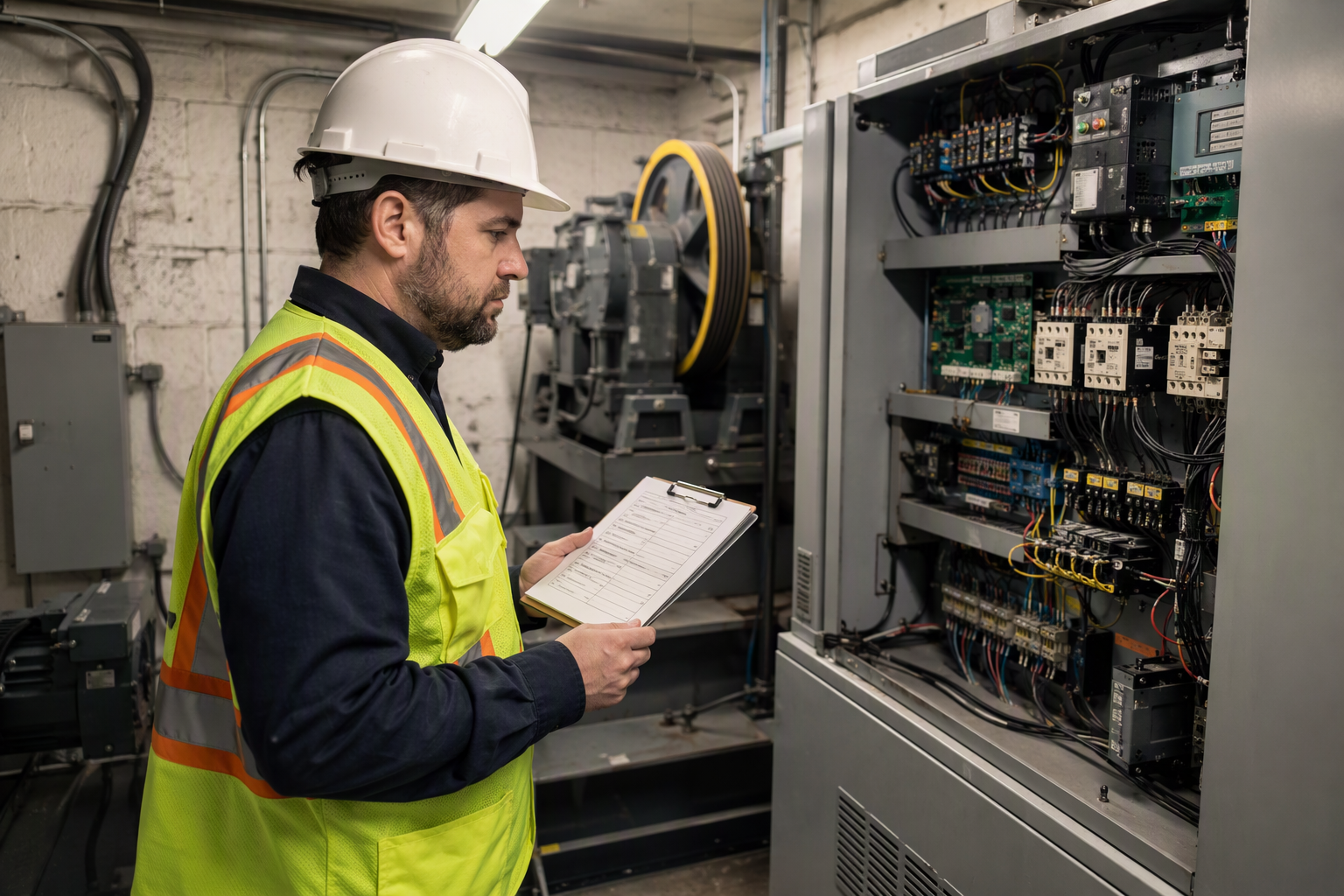
- Machine room examination: The inspector checks the machine room for proper lighting, ventilation, temperature control, housekeeping, and accessibility. Drive equipment, controllers, and disconnect switches are examined.
- Hoistway inspection: The inspector examines the pit, buffers, traveling cables, guide rails, and hoistway clearances for conformance with code dimensions and cleanliness requirements.
- Car and enclosure examination: The inspector evaluates the car frame, platform, enclosure panels, lighting, capacity plate, certificate holder, and emergency lighting and communications systems — including the ADA-required two-way emergency communication device.
- Door and gate system testing: Door closing force, closing speed, reopening devices, interlocks, and landing door panels are tested for proper operation.
- Safety device testing: The governor, safeties, buffers, and other protective devices are tested per the applicable ASME category test requirements.
- Operational tests: The elevator is run through its operating range to check leveling accuracy, ride quality, speed, and response to normal and emergency controls.
- Final review and report: The inspector completes the official inspection report, notes any deficiencies, and either issues a certificate of inspection or issues a failed inspection notice.
What are the most common reasons elevators fail an inspection?
Elevator inspections most commonly result in failures due to deficiencies in door safety systems, emergency communications, machine room conditions, and overdue required tests.
Door-related issues are among the most cited deficiencies: worn or improperly adjusted door reopening devices, excessive door closing force, and faulty interlock mechanisms all represent direct safety hazards that inspectors flag consistently. Emergency telephone or two-way communication systems that are non-functional or do not connect to a live monitoring point are a frequent ADA and code compliance failure. Machine room violations — including blocked access, inadequate fire protection, unauthorized storage, and temperature extremes that can damage controls — are also common findings. Finally, elevators whose owners have not arranged required periodic tests (particularly Category 1 or Category 5 tests) within the required intervals will fail because the mandated safety documentation is absent.
Deferred maintenance is a root cause behind most failures. Worn brake linings, deteriorated wire ropes, corroded pit equipment, and failing safety switches are all conditions that develop gradually when preventive maintenance programs are not consistently followed.
What happens immediately after an elevator fails an inspection?
A failed elevator must be taken out of service immediately — the AHJ will issue a shutdown order, and the elevator cannot legally carry passengers until deficiencies are corrected and a reinspection is passed.
When an inspector determines that an elevator presents an imminent hazard, the unit is placed out of service on the spot. The inspector affixes a posted notice or tags the control panel, and in most jurisdictions the building owner or operator receives a formal violation order detailing each deficiency and establishing a correction deadline. Operating a posted elevator is a violation of state elevator safety law in Maryland, DC, Pennsylvania, and Virginia and can expose building owners to significant civil liability in the event of an injury.
Not all failed inspections result in immediate shutdown. Some violations are classified as non-imminent hazards and are given a correction period — often 30 days or more depending on the severity and the jurisdiction — during which the elevator may continue to operate under a conditional notice. However, even conditional violations must be corrected and reinspected within the timeline established by the AHJ. Property managers should treat any failed inspection as an urgent operational matter regardless of whether an immediate shutdown is ordered.
How quickly must deficiencies be corrected after a failed inspection?
Correction deadlines depend on whether the deficiency is classified as an imminent hazard or a non-imminent violation — imminent hazards require immediate action before the elevator can be returned to service, while non-imminent violations typically carry a defined correction window set by the AHJ.
Building owners in Baltimore, Washington DC, Philadelphia, and Richmond should contact a qualified elevator service provider as soon as a violation notice is received. Correction timelines are not indefinite — operating past a deadline without requesting an extension through proper AHJ channels compounds the original violation and can trigger additional enforcement action. Quality Elevator Company works with building owners across all four markets to identify the fastest compliant path to reinspection following a failed inspection.
What is a reinspection and how does it work?
A reinspection is a formal follow-up examination conducted by the AHJ or authorized inspector to verify that all cited deficiencies have been corrected before a certificate of inspection is reissued.
After the elevator service contractor has completed the required repairs or corrections, the building owner or property manager must notify the AHJ or inspection agency and request a reinspection appointment. The inspector returns and specifically examines each previously cited deficiency to confirm it has been resolved. If the unit passes reinspection, a new certificate of inspection is issued and the elevator can legally return to service. If additional deficiencies are found during reinspection, the cycle repeats.
Most jurisdictions charge a reinspection fee, and some charge a higher fee for each subsequent failed reinspection. Thorough correction work before reinspection — rather than partial repairs — is the most cost-effective approach. Working with an experienced elevator service company that understands exactly what inspectors look for significantly improves the likelihood of passing reinspection on the first attempt.
What is the difference between a certificate of inspection and a permit to operate?
A certificate of inspection documents that an elevator passed a code-compliance inspection on a given date, while a permit to operate (or operating permit) is the ongoing authorization issued by the AHJ that allows the elevator to remain in public service between inspections.
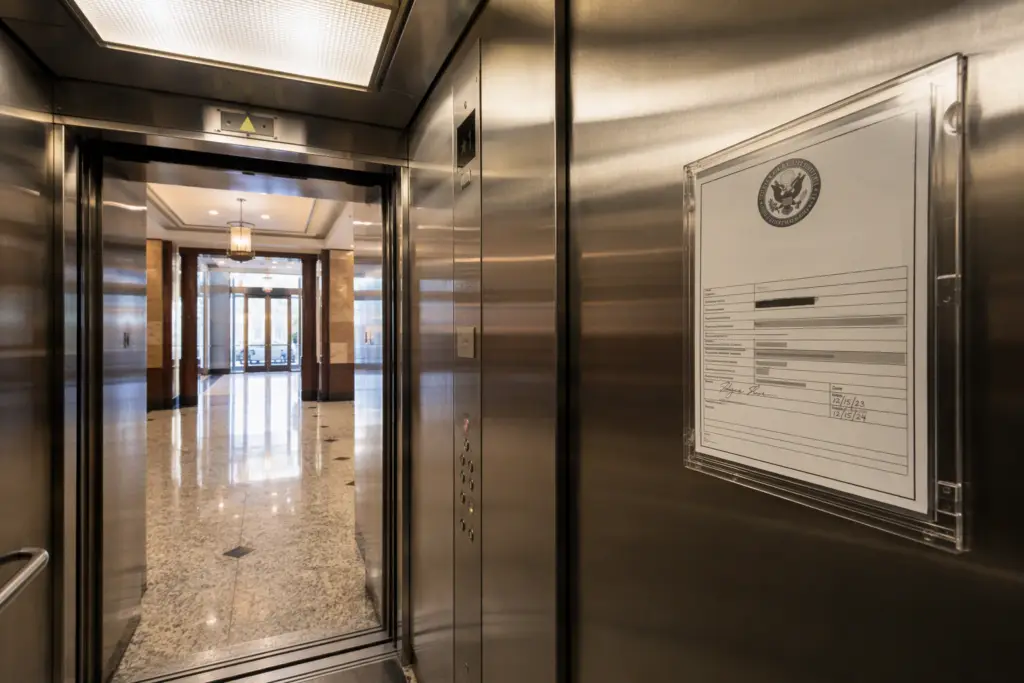
Both documents must be current and posted in the elevator car as required by the applicable state law. In Maryland, DC, Pennsylvania, and Virginia, the certificate or permit must be displayed in the car in a frame visible to passengers — this is not optional. An expired certificate is itself a code violation even if no other deficiency exists. Building owners and facility managers should track expiration dates proactively and schedule inspections before the existing certificate expires to avoid creating a lapse in legal operating authority.
Does my elevator need to be shut down for the inspection?
The elevator must be taken out of passenger service during the physical inspection and testing portions, but the total downtime is typically limited to the duration of the inspection — usually a few hours for a standard unit.
The building owner or property manager should notify tenants and occupants in advance and arrange alternative access where possible, particularly in healthcare settings or buildings serving individuals with mobility limitations. For multi-elevator buildings, inspectors will coordinate to minimize simultaneous downtime. Machine room access, pit access, and roof-of-car access must all be available to the inspector without obstruction — a building that cannot provide proper access on the day of the inspection may require rescheduling, which delays the issuance or renewal of the operating certificate.
What ADA requirements are evaluated during an elevator inspection?
Inspectors evaluate ADA-relevant features including two-way emergency communication capability, Braille and raised-character floor designations, door timing and force requirements, and car control placement — all governed by the Americans with Disabilities Act.
The ADA Standards for Accessible Design require that elevators providing access to multiple floors in covered facilities meet specific dimensional, signage, communication, and control requirements. While ADA compliance is not always the primary focus of a state elevator safety inspection, inspectors frequently note ADA-related deficiencies — particularly non-functional emergency phones and missing or damaged tactile signage — because these items overlap with safety and building code requirements. Building owners should treat ADA compliance as part of their ongoing elevator maintenance program, not only as an inspection concern.
How do elevator inspections differ for hydraulic versus traction elevators?
Both hydraulic and traction elevators are inspected against the applicable ASME A17.1 and A17.3 requirements, but the specific systems examined and the applicable test categories differ based on the drive type.
| System / Component | Hydraulic Elevator | Electric Traction Elevator |
|---|---|---|
| Drive system examined | Hydraulic power unit, cylinder, jack assembly, oil reservoir | Traction machine, sheaves, motor, brake |
| Safety device focus | Pressure relief valve, lowering valve, cylinder integrity | Governor, safeties, counterweight, wire ropes |
| Machine room location | Typically adjacent or below (or machine-room-less) | Typically overhead or at base |
| Applicable ASME test categories | Category 1, Category 3 (hydraulic-specific tests) | Category 1, Category 5 |
| Environmental concern | Oil leakage, environmental containment | Wire rope condition, lubrication |
| Common failure points | Hydraulic leaks, settling, valve wear | Rope wear, brake adjustment, governor function |
Property owners should ensure their elevator service provider maintains records specific to the drive type and has experience preparing both hydraulic and traction units for the applicable ASME test categories required by the AHJ in their jurisdiction.
What role does ongoing maintenance play in passing inspections?
Consistent preventive maintenance is the single most effective strategy for passing elevator inspections — it addresses developing deficiencies before they become inspection failures or safety incidents.
A structured maintenance program ensures that lubrication, adjustment, cleaning, and parts replacement happen on a planned schedule rather than reactively after failure. Maintenance providers should retain detailed records of every service visit, including parts replaced, adjustments made, and test results — these records support the inspector’s review and demonstrate a culture of compliance. Jurisdictions served by Quality Elevator Company all recognize the value of documented maintenance histories in the inspection process.
Deferred maintenance is the most predictable path to a failed inspection and the most avoidable. Worn door operators, degraded ropes, improperly adjusted governors, and deteriorating pit equipment all develop gradually over time. A maintenance program that catches these conditions early — and corrects them before the annual inspection — eliminates the operational disruption and reinspection costs associated with failed inspections.
What documentation should building owners keep related to elevator inspections?
Building owners should maintain a complete elevator file containing the current certificate of inspection, all previous inspection reports, violation notices, reinspection results, test records, maintenance logs, and alteration permits.
Inspectors in Maryland, DC, Pennsylvania, and Virginia may request documentation of previous tests — particularly Category 1 and Category 5 test reports — to confirm that required tests have been performed within the required intervals. Missing documentation is treated as evidence that the test was not performed, which is itself a deficiency. Maintaining organized records is a compliance obligation, not merely a best practice. Records should be retained for at least the period specified by the applicable AHJ, and building owners undergoing a sale or transfer of property should ensure complete elevator records are transferred to the new owner.
What are the legal consequences of operating an elevator without a valid inspection certificate?
Operating an elevator without a current, valid certificate of inspection is a violation of state elevator safety law in Maryland, DC, Pennsylvania, and Virginia and can result in civil penalties, mandatory shutdown, and significant civil liability if an injury occurs.
State elevator safety statutes in all four jurisdictions authorize the AHJ to order immediate shutdown of any elevator operating without a valid certificate or in violation of a posted notice. Beyond regulatory penalties, building owners and property managers face substantial personal injury liability if an unvalidated elevator injures a passenger — the absence of a valid inspection certificate is strong evidence of negligence in civil litigation. Insurance carriers may also deny coverage for incidents involving elevators operating without current certificates. Property managers should treat the inspection certificate expiration date as a hard operational deadline, not an administrative footnote.
How should a building owner choose an elevator service company to prepare for inspections?
Building owners should select an elevator service company that holds all required state licenses in the jurisdiction where the equipment is located, maintains documented maintenance records, and has direct experience with the AHJ’s inspection process in that market.
Licensing requirements vary by state: Maryland, the District of Columbia, Pennsylvania, and Virginia each have their own elevator contractor and mechanic licensing frameworks administered by their respective labor agencies. A contractor licensed in one state is not automatically authorized to work in another. Beyond licensing, building owners should look for a service provider that documents every maintenance visit, provides detailed pre-inspection preparation, and has a demonstrated track record of working through the reinspection process when deficiencies arise. Quality Elevator Company holds the required licenses to operate across its four-state service area — Baltimore MD, Washington DC, Philadelphia PA, and Richmond VA — giving building owners a single accountable service partner across multiple properties and jurisdictions.
What is a witnessing test and how is it different from a routine inspection?
A witnessing test is a code-required performance test — such as a Category 1 or Category 5 test under ASME A17.1 — conducted by the elevator service contractor in the presence of a licensed inspector who witnesses the test results firsthand, as opposed to a routine inspection where the inspector evaluates the general condition of the elevator.
Under the ASME A17.1 Safety Code, periodic tests are categorized by their scope and frequency. Category 1 tests — which include no-load tests of the governor, safeties, and buffers where applicable — are typically required annually. Category 5 tests — full-load, full-speed safety and buffer tests — are required on a less frequent interval defined by the code and the AHJ. These tests must be performed by the elevator service contractor and witnessed by an authorized inspector. Failure to arrange witnessing tests within the required interval will cause the elevator to fail its routine inspection because the required test documentation cannot be produced.
What should I do immediately after receiving a failed inspection notice?
Upon receiving a failed inspection notice, a building owner or facility manager should take the following steps in order to minimize downtime, avoid escalating penalties, and return the elevator to compliant operation as quickly as possible.
- Read the notice completely: Identify every cited deficiency, its classification (imminent hazard versus non-imminent violation), and the stated correction deadline.
- Post the notice as required: Some jurisdictions require the violation notice to be posted in or near the elevator — failure to post is a separate violation.
- Take the elevator out of service if ordered: If the notice specifies immediate shutdown, comply immediately. Do not allow passengers to use the elevator while it is posted out of service.
- Contact your elevator service company: Share the full inspection report with your service provider so they can assess each deficiency and develop a correction plan.
- Obtain a written scope of corrections: Before authorizing any repair work, confirm in writing what work will be performed to address each cited deficiency specifically.
- Track the correction deadline: If more time is needed, contact the AHJ before the deadline to request an extension through the proper process — do not simply allow the deadline to pass.
- Request reinspection upon completion: Once corrections are complete, notify the AHJ or inspection agency and schedule a reinspection — do not return the elevator to passenger service until reinspection is passed and a new certificate is issued.
- Update your maintenance records: Document all repair work performed in the elevator’s maintenance file for future inspection reference.
How do elevator inspection requirements in Maryland, DC, Pennsylvania, and Virginia compare?
While all four jurisdictions adopt requirements rooted in the ASME A17.1 and A17.3 codes, each has its own administering agency, licensing authority, inspection intervals, and fee structures that building owners must navigate separately.
Maryland’s Division of Labor and Industry administers elevator safety under the state’s elevator safety law, with inspections conducted by state inspectors or authorized third-party agencies. The District of Columbia’s DCRA manages elevator permits and inspections for the DC market. Pennsylvania’s Bureau of Occupational and Industrial Safety administers one of the more extensive state elevator inspection programs in the mid-Atlantic region, with specific requirements for both state and third-party inspectors. Virginia’s Department of Labor and Industry oversees elevator safety under state statute, with elevator inspections conducted by DOLI staff or authorized inspectors. Because the four jurisdictions have meaningfully different administrative processes, building owners with properties across state lines benefit from working with a service company — like Quality Elevator Company — that operates and maintains compliance across all four markets and understands each AHJ’s specific procedural requirements.
How can building owners reduce the risk of failing future elevator inspections?
The most effective strategies for avoiding failed inspections combine a consistent preventive maintenance program, proactive recordkeeping, timely scheduling of required witnessing tests, and prompt correction of any deficiencies identified during maintenance visits before the annual inspection date.
Building owners should establish an annual calendar that maps out every required inspection and witnessing test interval for each elevator in their portfolio and assign clear responsibility for scheduling. Pre-inspection walkthroughs conducted by the elevator service company — which systematically check the same items an inspector will evaluate — allow deficiencies to be identified and corrected before the formal inspection takes place. This approach transforms the annual inspection from a compliance risk into a confirmation of ongoing compliance. Quality Elevator Company provides pre-inspection assessments for building owners and facility managers across Baltimore, Washington DC, Philadelphia, and Richmond to support exactly this approach.
Ready to Ensure Your Elevator Passes Its Next Inspection?
Don’t wait for a failed inspection notice to take elevator compliance seriously. Quality Elevator Company provides comprehensive elevator maintenance, inspection preparation, and post-inspection correction services for commercial, residential, and institutional buildings across Baltimore MD, Washington DC, Philadelphia PA, and Richmond VA.
Contact Quality Elevator Company for a free elevator assessment: 301-779-9116
Need elevator service you can rely on? Quality Elevator Company is ready to help.