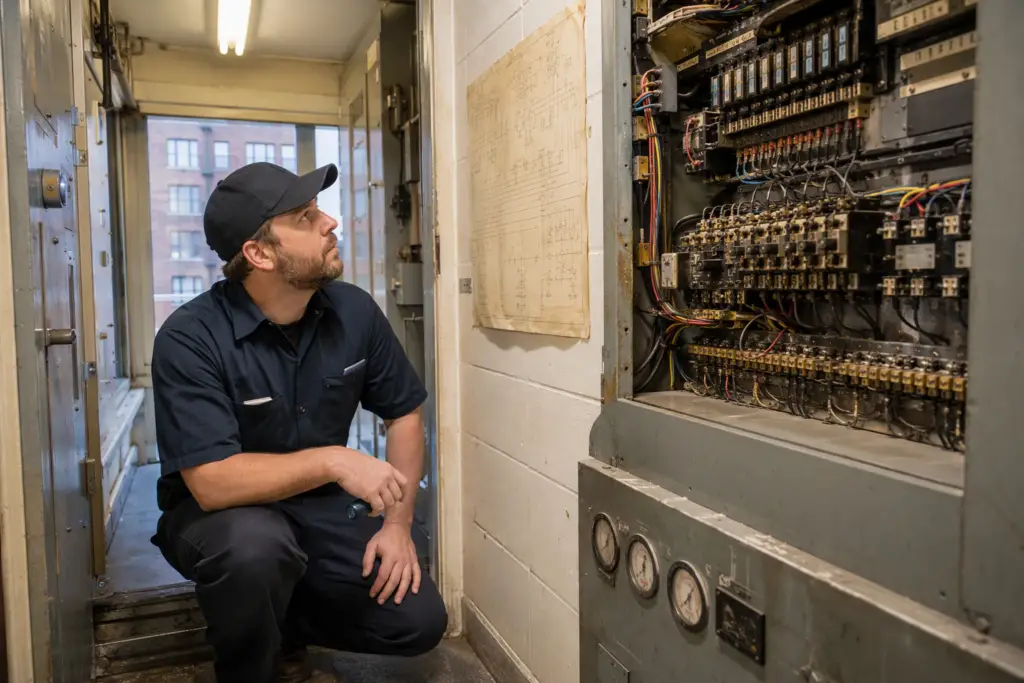
Direct Answer: Warehouses and industrial facilities in Maryland, DC, Virginia, and Pennsylvania must maintain freight elevators and material lifts in compliance with ASME A17.1 Safety Code for Elevators and Escalators (new installations) and ASME A17.3 Safety Code for Existing Elevators and Escalators (existing equipment), undergo periodic inspections by the applicable state or district Authority Having Jurisdiction (AHJ), meet OSHA workplace safety standards, and maintain detailed maintenance records — with inspection frequencies and specific retrofit requirements varying by jurisdiction.
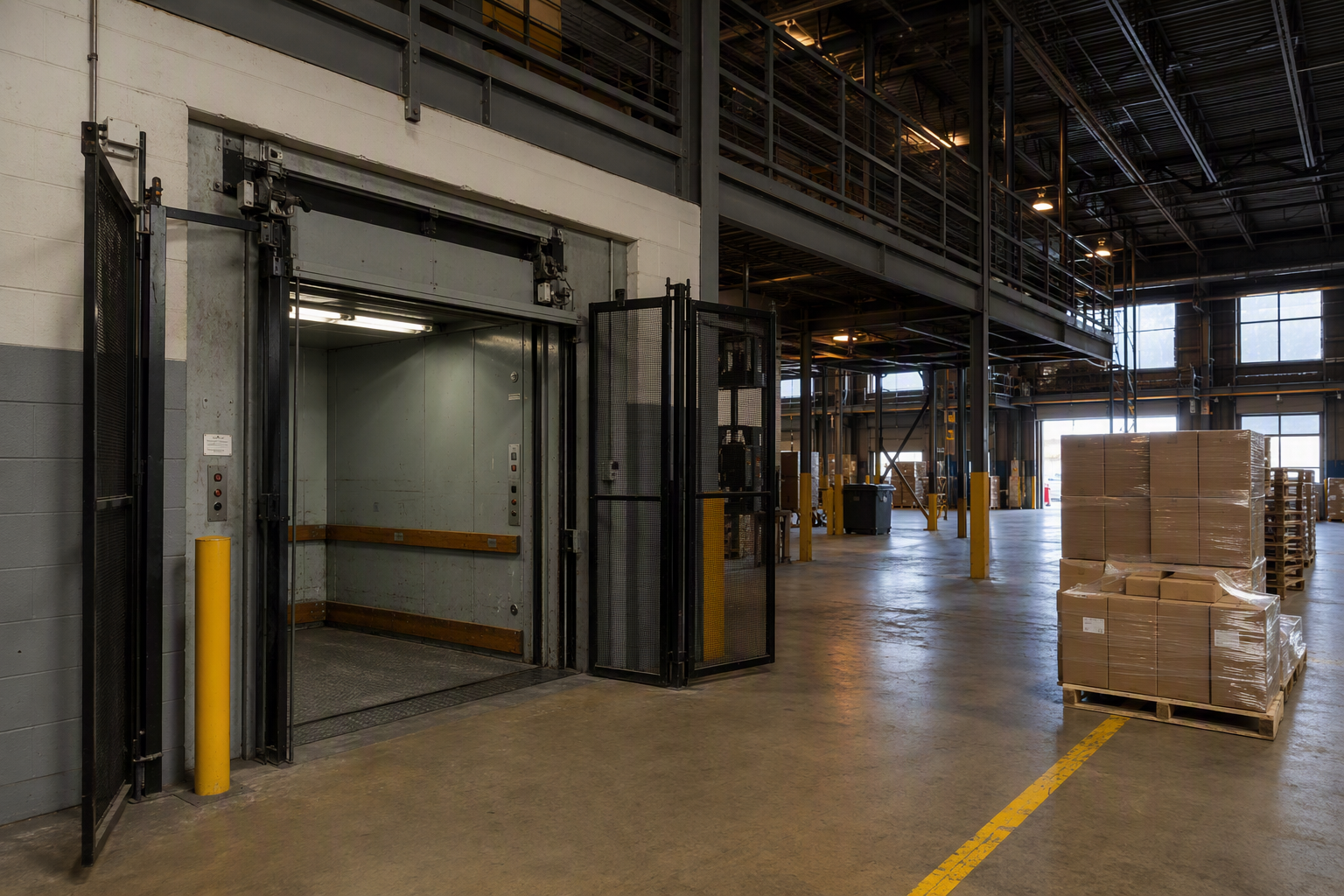
Warehouses, distribution centers, manufacturing plants, and other industrial facilities rely heavily on freight elevators, dumbwaiters, material lifts, and vertical reciprocating conveyors (VRCs) to move goods safely and efficiently across multiple levels. The compliance landscape governing these devices is layered: federal codes set the baseline, state and district agencies enforce inspections, and OSHA imposes parallel workplace safety obligations. Facility managers who treat elevator compliance as an afterthought face operational shutdowns, significant fines, and serious liability exposure. This guide breaks down exactly what applies, where, and how to stay ahead of it.
What Federal Codes Govern Freight Elevators and Industrial Lifts?
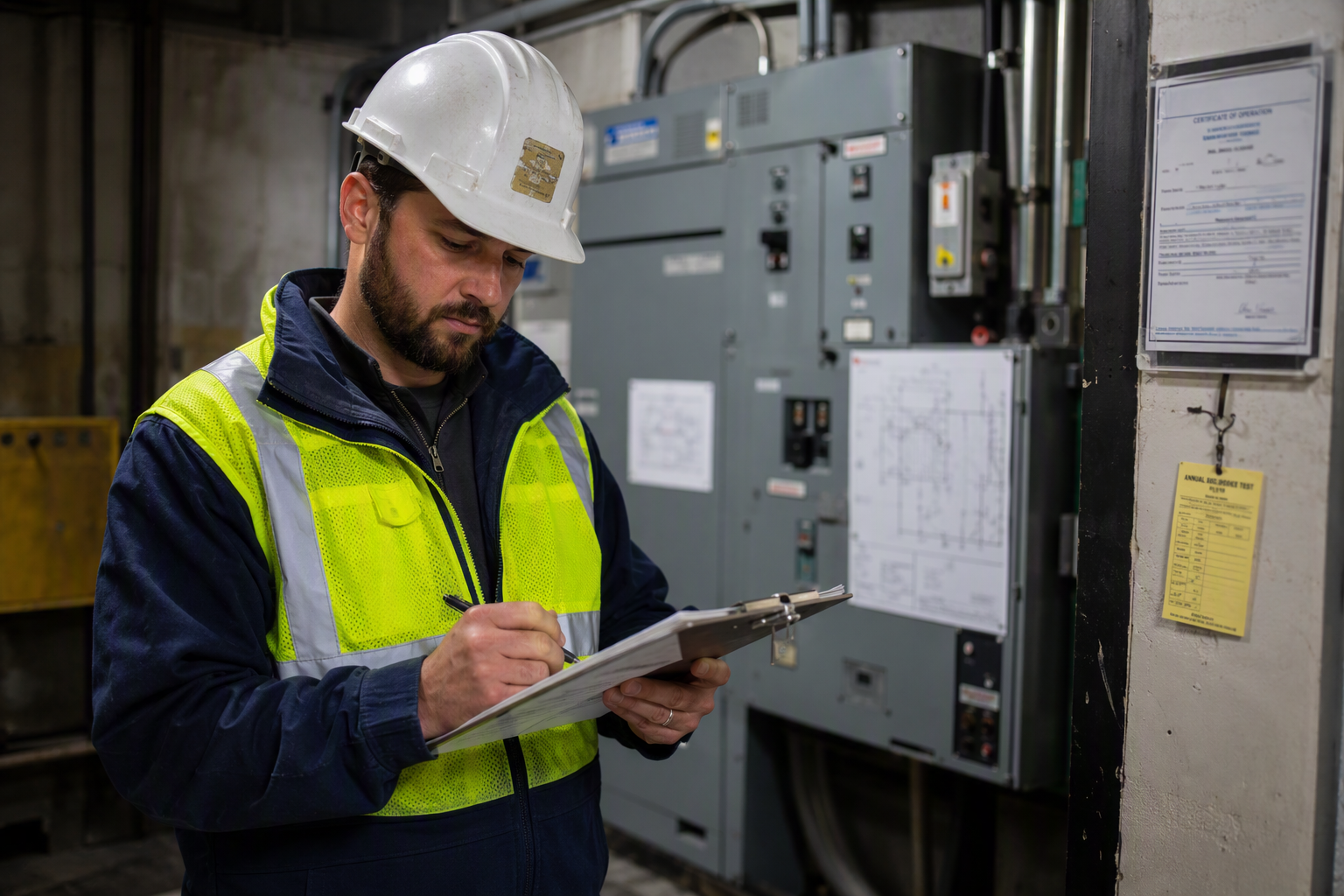
Two ASME codes form the national foundation for elevator safety in the United States:
- ASME A17.1 Safety Code for Elevators and Escalators — applies to new installations and major alterations. It establishes design, construction, installation, operation, and testing requirements for electric and hydraulic elevators, freight elevators, dumbwaiters, and related equipment.
- ASME A17.3 Safety Code for Existing Elevators and Escalators — applies to equipment already in service. It sets the minimum safety standards existing installations must be brought up to over time, through a retroactive requirements process coordinated by the local AHJ.
Additionally, OSHA regulations under 29 CFR 1910 (General Industry) and 29 CFR 1926 (Construction) impose parallel obligations on industrial employers, including requirements around powered platforms, material hoists, and employee protection when working on or near elevator equipment.
Where passenger access exists — even for employees — the Americans with Disabilities Act (ADA) may also impose accessibility requirements for the elevator cab, controls, and call stations.
How Do Inspection Requirements Differ Across Maryland, DC, Virginia, and Pennsylvania?
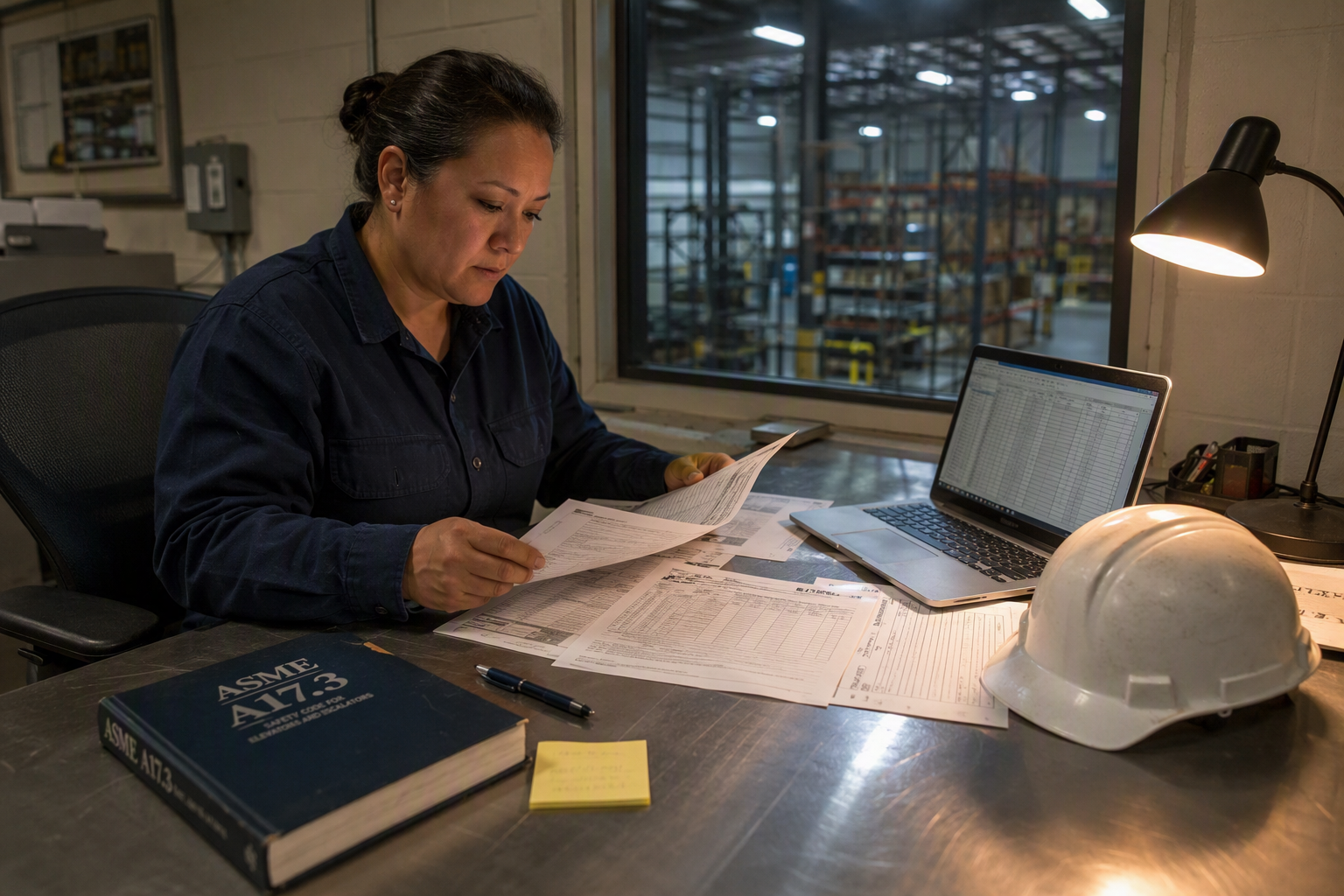
Each jurisdiction adopts ASME codes by reference but administers inspections through its own regulatory body. Inspection intervals, permitting fees, and enforcement practices vary. The table below summarizes the key structural differences as of 2026:
| Jurisdiction | Governing Agency (AHJ) | Code Basis | Periodic Inspection Requirement | Certificate of Operation Required? |
|---|---|---|---|---|
| Maryland | Maryland Department of Labor – Division of Labor and Industry (Elevator Safety) | ASME A17.1 / A17.3 by reference | Periodic inspections required; frequency set by the Division based on equipment type and use | Yes — operating permit required and must be posted in the elevator |
| District of Columbia | DC Department of Consumer and Regulatory Affairs (DCRA) – Elevator Inspection Program | ASME A17.1 / A17.3 by reference | Annual inspections required for most commercial and industrial equipment | Yes — Certificate of Inspection must be displayed in the car |
| Virginia | Virginia Department of Labor and Industry (DOLI) – Elevator Safety Unit | ASME A17.1 / A17.3 by reference | Periodic inspections required; conducted by DOLI or third-party inspector approved by DOLI | Yes — Certificate of Operation required |
| Pennsylvania | Pennsylvania Department of Labor and Industry – Bureau of Occupational and Industrial Safety (Elevator Division) | ASME A17.1 / A17.3 by reference | Periodic inspections required; third-party inspection by a licensed inspector is permitted | Yes — permit must be posted and current |
Note: Specific inspection intervals are determined by each AHJ and may be updated. Facility managers should verify current requirements directly with the applicable agency.
What Types of Lifting Equipment Are Regulated in Industrial Facilities?
Not all vertical transport equipment in a warehouse falls under the same regulatory umbrella. Understanding the category of equipment matters for compliance:
| Equipment Type | Governed By | Typical Industrial Use | Passenger Use Permitted? | AHJ Permit Typically Required? |
|---|---|---|---|---|
| Freight Elevator | ASME A17.1 / A17.3 | Moving pallets, heavy equipment, loaded carts between floors | Yes, with restrictions (freight-only or freight with operator) | Yes |
| Dumbwaiter | ASME A17.1 / A17.3 | Small goods, documents, parcels | No | Yes |
| Vertical Reciprocating Conveyor (VRC) | ASME B20.1 (Conveyors) + OSHA | Automated material handling | No — strictly material only | Varies by jurisdiction |
| Material / Personnel Hoist (Construction) | ASME A10.4 + OSHA 29 CFR 1926 | Temporary construction lifts | Depends on hoist type and rating | Yes (temporary permit) |
| Platform Lift | ASME A18.1 | Accessibility, mezzanine access | Yes | Yes |
What Are the Maintenance Requirements for Industrial Freight Elevators?
Maintenance obligations for freight elevators in warehouse and industrial environments are driven by ASME A17.1, the applicable state AHJ rules, and OSHA’s general duty clause. Key requirements include:
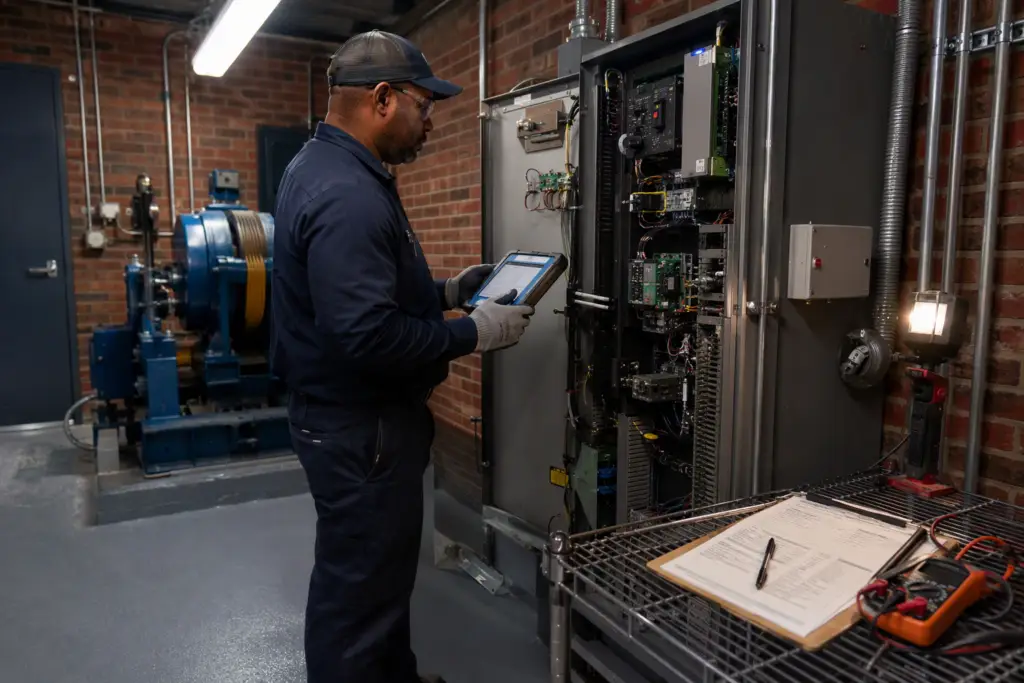
- Routine Preventive Maintenance: Regular lubrication, adjustment, and inspection of mechanical and electrical components. The frequency and scope should align with the manufacturer’s recommendations and the volume of use — freight elevators in active warehouses operate under significantly higher cycle counts than commercial passenger units.
- Maintenance Records: ASME A17.1 requires that maintenance logs be kept and made available to the AHJ inspector. Records should document every service visit, repair, part replacement, and test.
- Periodic Tests: ASME A17.1 mandates specific tests at defined intervals, including full-load tests, safety device tests, and governor tests. The AHJ inspector typically witnesses or verifies these.
- Modernization / Retrofit Obligations: Under ASME A17.3, existing equipment must be brought into compliance with retroactive safety requirements as they are adopted by the AHJ. Facilities that have not reviewed their retrofit status recently may be operating non-compliant equipment.
- OSHA Obligations: Under OSHA’s General Duty Clause, employers must maintain equipment free from recognized hazards. This applies to all lifting equipment used by employees, even if not otherwise regulated by a state elevator code.
What Is the Compliance Timeline for Getting a Freight Elevator Inspection-Ready?
Facilities bringing equipment into compliance — or preparing for a scheduled AHJ inspection — should follow a structured process. The timeline varies based on the condition and age of the equipment, but the general sequence applies across all four jurisdictions:
- Conduct a baseline assessment — Have a qualified elevator service provider evaluate the equipment against current ASME A17.1 and A17.3 requirements, as well as any jurisdiction-specific retroactive mandates.
- Identify deficiencies — Document all items that are out of compliance, including safety device functionality, cab lighting, door operation, load capacity placarding, and controller condition.
- Prioritize safety-critical repairs — Address any immediately unsafe conditions first. Operating an elevator with known safety deficiencies creates OSHA liability regardless of whether an AHJ inspection is pending.
- Complete required modernization items — Work through ASME A17.3 retroactive requirements as directed by the AHJ.
- Schedule and pass the AHJ inspection — Coordinate with the applicable state or district agency. Ensure all required documentation, maintenance logs, and test records are compiled and available for the inspector.
- Post the Certificate of Operation — Once issued, the certificate must be posted in the elevator car as required by all four jurisdictions.
- Establish an ongoing maintenance schedule — Document a preventive maintenance program aligned with ASME A17.1 requirements and the operational demands of the facility.
How Do Freight Elevators Compare to VRCs for Industrial Use?
| Factor | Freight Elevator | Vertical Reciprocating Conveyor (VRC) |
|---|---|---|
| Personnel Access | Permitted (with appropriate class rating) | Not permitted — material only |
| Primary Code | ASME A17.1 / A17.3 | ASME B20.1 + OSHA |
| AHJ Inspection Required | Yes — in all four jurisdictions | Varies; often OSHA-regulated rather than AHJ elevator permit |
| Regulatory Complexity | Higher — full elevator code compliance | Lower for elevator code; still subject to OSHA |
| Maintenance Demand | Significant — especially under high-cycle industrial use | Moderate — fewer regulatory mandated tests but mechanical upkeep required |
| Best Fit | Facilities where workers must travel with loads, or where accessible transport is required | Facilities with purely automated material flow and no personnel transport need |
Does OSHA Apply to Elevator Maintenance Workers at Industrial Facilities?
Yes. OSHA regulations apply both to the facility’s use of elevator equipment and to maintenance and repair activities performed on that equipment. Key OSHA considerations in industrial elevator contexts include:
- Lockout/Tagout (LOTO): OSHA 29 CFR 1910.147 requires that energy sources be isolated before maintenance personnel work on elevator mechanical or electrical systems.
- Confined Space Entry: Elevator pits may qualify as permit-required confined spaces under OSHA 29 CFR 1910.146, requiring a written program, atmospheric testing, and attendant procedures before entry.
- General Duty Clause: Employers must keep equipment free from recognized hazards likely to cause serious injury. A freight elevator with a known deficiency — even one not yet flagged by an AHJ — can generate OSHA liability if an incident occurs.
- Fall Protection: Work on elevator car tops and in hoistways involves significant fall hazards subject to OSHA’s fall protection standards.
What Are the ADA Requirements for Freight Elevators in Industrial Facilities?
The ADA requires that elevators serving as a means of access to areas of a facility open to employees or the public meet accessibility standards. For industrial facilities, the key question is whether a freight elevator is the accessible route to areas where employees work or where the public might access. If so, ADA Standards for Accessible Design requirements for cab dimensions, control heights, door timing, and audible/visual signals may apply. Facilities should consult qualified counsel or a certified accessibility consultant to determine the specific ADA obligations for their layout and use patterns, as the analysis is fact-specific.
What Happens If a Warehouse Elevator Fails an Inspection?
A failed AHJ inspection in any of the four jurisdictions can result in:
- Immediate operational shutdown — The AHJ has authority to order an elevator out of service. In active distribution or manufacturing environments, this can halt operations across multiple floors.
- Financial penalties — Each jurisdiction has a penalty structure for operating without a current certificate or for failing to address inspection deficiencies within required timeframes.
- OSHA exposure — If an incident occurs while operating an elevator with known deficiencies, OSHA can cite the employer under the General Duty Clause or applicable standards.
- Liability risk — Documented non-compliance creates significant exposure in the event of a worker injury or property damage incident.
The most effective mitigation strategy is proactive maintenance and a thorough pre-inspection readiness review, conducted by a qualified independent elevator service provider.
How Often Should Freight Elevators Be Serviced in High-Use Industrial Environments?
The appropriate maintenance frequency for a freight elevator in a warehouse or industrial facility depends on cycle volume, load characteristics, equipment age, and the manufacturer’s specifications. High-cycle industrial freight elevators — those used repeatedly throughout a multi-shift operation — experience accelerated component wear compared to low-volume commercial units. Maintenance intervals that are appropriate for a light-duty installation may be wholly inadequate for an elevator moving heavy pallets dozens of times per day.
The baseline obligation is set by ASME A17.1, which requires a maintenance control program and documentation. Beyond that minimum, a qualified service provider should assess the actual operating profile of the equipment and recommend a maintenance schedule that reflects real-world demands rather than a one-size-fits-all calendar.
What Should Warehouse Facility Managers Look for in an Elevator Service Provider?
Selecting a qualified independent elevator service provider for an industrial facility involves evaluating several factors:
| Evaluation Factor | Why It Matters for Industrial Facilities |
|---|---|
| Multi-Jurisdiction Knowledge | Facilities operating across MD, DC, VA, and PA face different AHJ requirements for each site. The provider must understand all four regulatory environments. |
| Freight Elevator Specialization | Industrial freight equipment differs substantially from commercial passenger elevators. Providers with specific freight and industrial experience are better positioned to identify wear patterns and compliance gaps. |
| Independent (Non-OEM) Status | Independent providers are not locked into proprietary parts or manufacturer service agreements, which can reduce costs and improve parts availability for aging equipment. |
| Compliance Documentation Support | The provider should assist with maintaining records required by ASME A17.1 and be able to support the facility through the AHJ inspection process. |
| OSHA Awareness | Service technicians should follow proper LOTO and confined space entry procedures — this protects the facility from derivative OSHA liability during maintenance visits. |
Quality Elevator Company is a certified independent elevator service provider serving Maryland, the District of Columbia, Virginia, and Pennsylvania. Quality Elevator Company specializes in freight elevator maintenance, compliance support, and inspection readiness for warehouse and industrial clients across all four jurisdictions — without the proprietary lock-in of OEM service agreements.
What Are the Pros and Cons of Independent vs. OEM Elevator Service for Industrial Facilities?
| Factor | Independent Provider (e.g., Quality Elevator Company) | OEM / Manufacturer-Affiliated Service |
|---|---|---|
| Parts Sourcing | Access to multiple parts suppliers; not limited to one manufacturer’s catalog | May be restricted to OEM parts, which can be more expensive or have longer lead times |
| Contract Flexibility | Typically more flexible contract terms and service scopes | May include long-term contract commitments with penalties for early termination |
| Multi-Brand Capability | Can service mixed-brand equipment common in older industrial facilities | Optimized for their own brand; mixed-fleet facilities may need multiple OEM contracts |
| Compliance Expertise | Strong independent providers maintain deep knowledge of local AHJ requirements across jurisdictions | Quality varies; national OEMs may lack local regulatory nuance |
| Accountability | Direct relationship with facility management; no corporate intermediary | Service managed through national or regional corporate structure |
Ready to Bring Your Warehouse Elevator Into Full Compliance?
Non-compliant freight elevators create operational, regulatory, and legal risk. Quality Elevator Company provides independent elevator maintenance, compliance assessments, and inspection support for warehouse and industrial facilities throughout Maryland, DC, Virginia, and Pennsylvania — with expertise across all relevant AHJ requirements and ASME code editions.
Contact Quality Elevator Company for a free elevator assessment: 301-779-9116
Need elevator service you can rely on? Quality Elevator Company is ready to help.