Top Rated Elevator Maintenance Company Philadelphia: Complete FAQ Guide
Whether you manage a commercial office tower on Market Street, a mid-rise residential building in Center City, or a healthcare facility in the Philadelphia suburbs, elevator reliability is non-negotiable. After more than 15 years turning wrenches and diagnosing control systems across Pennsylvania and the Mid-Atlantic region, I’ve put together this comprehensive FAQ to answer every question building owners and facility managers typically ask when evaluating elevator maintenance companies in Philadelphia.
What Makes a Top-Rated Elevator Maintenance Company in Philadelphia?
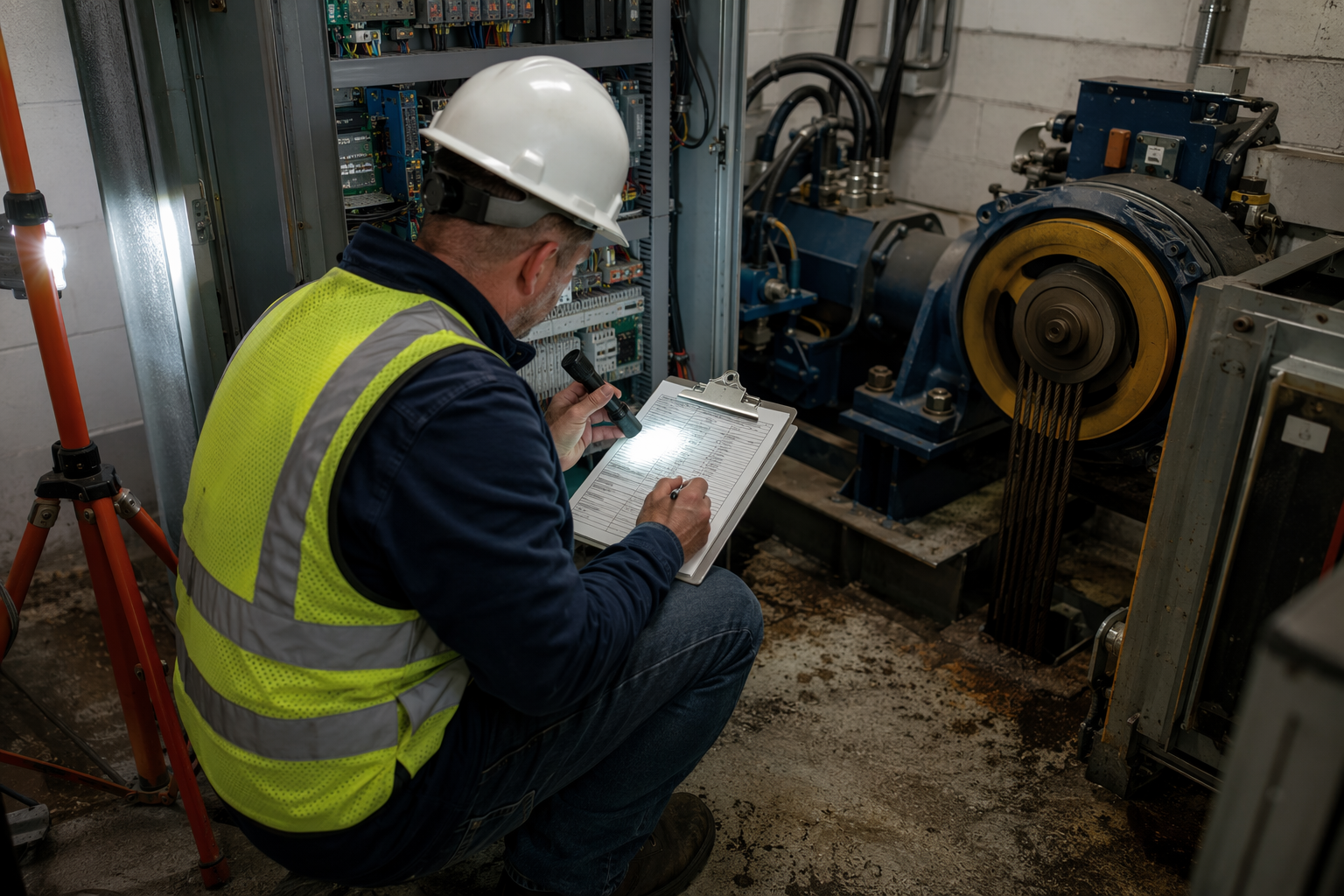
A top-rated elevator maintenance company in Philadelphia must hold active Pennsylvania Department of Labor & Industry licensure, employ IUEC-certified technicians, demonstrate measurable response times under four hours for emergencies, and maintain full compliance with ASME A17.1 Safety Code for Elevators and Escalators.
Beyond certifications, the best companies differentiate themselves through transparency in pricing, documented maintenance logs, and a proactive approach that prevents breakdowns rather than just reacting to them. In Philadelphia specifically, any reputable provider must be familiar with the Pennsylvania Uniform Construction Code (UCC) and the local inspection protocols administered through the City of Philadelphia Department of Licenses and Inspections (L&I).
Quality Elevator Company meets and exceeds all of these benchmarks across its Philadelphia service territory, bringing the same rigorous standards it applies in Baltimore, Washington DC, and Richmond to every Pennsylvania contract.
How Often Should Elevators Be Inspected in Philadelphia, Pennsylvania?

In Philadelphia, elevators must receive a full third-party safety inspection at least once every 12 months, in accordance with Pennsylvania Department of Labor & Industry regulations and consistent with ASME A17.1 Safety Code for Elevators and Escalators requirements.
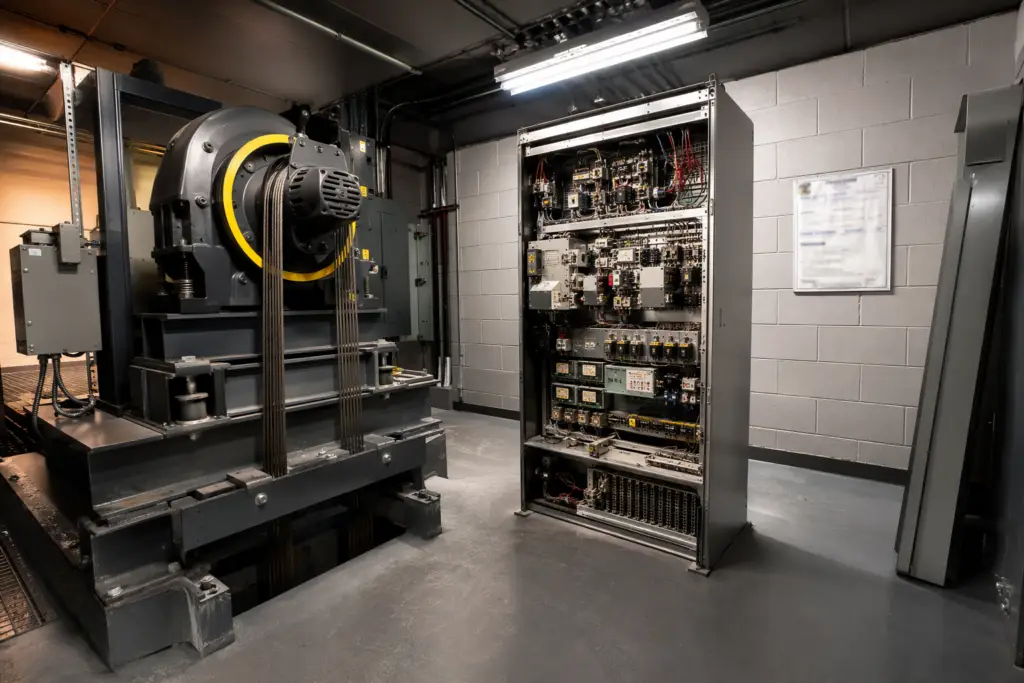
Annual inspections cover the hoistway, machine room, pit, safeties, buffers, doors, interlocks, and emergency communication systems. Beyond mandatory inspections, industry best practice — and what I recommend to every client — is a minimum of 12 scheduled preventive maintenance visits per year, meaning monthly technician visits. High-traffic units in commercial settings or hospitals should be serviced more frequently, sometimes every two to three weeks.
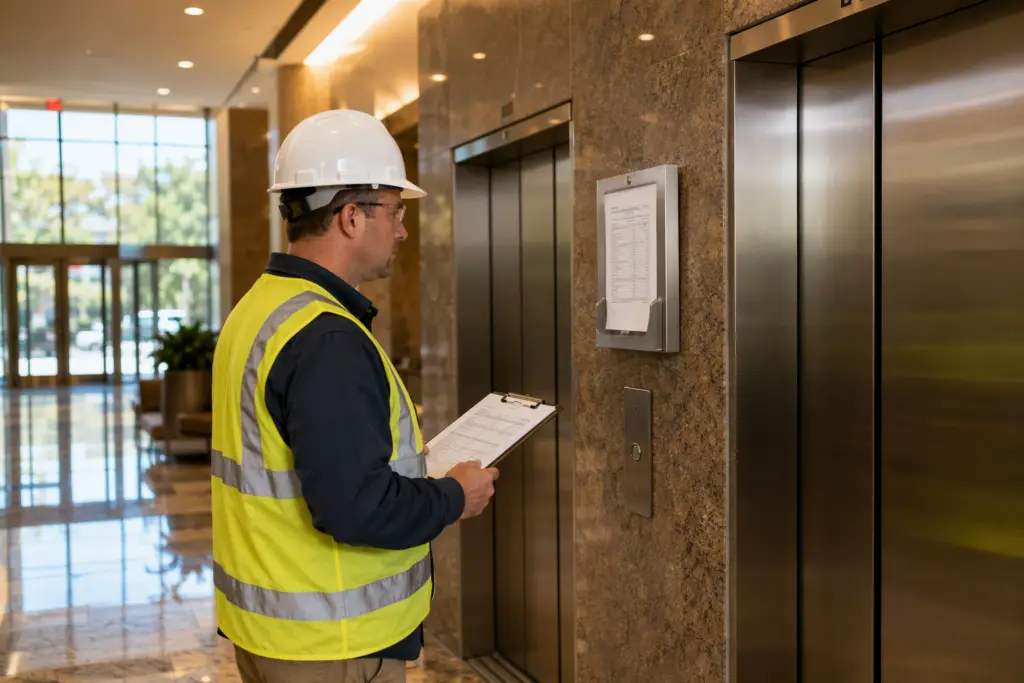
Failing to schedule your annual inspection on time can result in an elevator being placed out of service by the City of Philadelphia L&I, which carries operational and liability consequences for building owners. Keep your certificate of inspection current and displayed in the cab — this is a legal requirement in Pennsylvania as of 2026.
What Is Included in a Standard Elevator Maintenance Contract?
A standard elevator maintenance contract should include scheduled lubrication, adjustment of all mechanical and electrical components, safety device testing, door operator calibration, emergency phone testing, and a documented inspection report after every visit.
There are typically three contract tiers in the industry:
- Oil and Grease (Basic): Covers lubrication and minor adjustments only. Parts and labor for repairs billed separately.
- Full Maintenance (Mid-Tier): Covers all routine labor and most parts, excluding major components like motors, controllers, and door operators.
- Comprehensive (Full Coverage): Covers all parts and labor including major components, often with guaranteed response time clauses.
When I evaluate a maintenance contract for a Philadelphia building owner, I always recommend understanding the exclusions list carefully. Contracts that seem cheap at signing often carry steep out-of-pocket costs when a controller board or hydraulic valve fails. A comprehensive contract typically runs between $3,500 and $9,000 per unit per year in the Philadelphia metro market as of 2026, depending on unit type and age.
How Much Does Elevator Maintenance Cost in Philadelphia?
Elevator maintenance in Philadelphia typically costs between $250 and $750 per unit per month depending on the contract tier, unit type (hydraulic vs. traction), building usage, and equipment age.
| Contract Type | Monthly Cost Per Unit | Annual Cost Per Unit | Parts Coverage | Typical Response Time |
|---|---|---|---|---|
| Oil & Grease (Basic) | $250–$350 | $3,000–$4,200 | None | Next business day |
| Full Maintenance (Mid-Tier) | $350–$550 | $4,200–$6,600 | Partial (minor parts) | 4–8 hours |
| Comprehensive (Full Coverage) | $550–$750 | $6,600–$9,000 | Full including major | 2–4 hours |
| Modernization + Maintenance Bundle | $650–$900 | $7,800–$10,800 | Full post-modernization | 2–4 hours |
These figures reflect the Philadelphia market specifically. Emergency callback fees, when not covered by contract, typically range from $175 to $350 per hour with a two-hour minimum. Always clarify whether overtime and holiday callbacks are included before signing.
What Are the Pennsylvania State Regulations for Elevator Safety?
Pennsylvania regulates elevators under Title 34, Chapter 405 of the Pennsylvania Code, administered by the Department of Labor & Industry’s Bureau of Occupational and Industrial Safety, which mandates licensed inspection, permitting for new installations, and annual certificate renewal.
Key Pennsylvania-specific requirements as of 2026 include:
- All conveyance equipment must be inspected by a Pennsylvania-licensed elevator inspection agency.
- Certificates of Operation must be posted inside the elevator cab at all times.
- Any alteration to an elevator system requires a permit from the Bureau of Occupational and Industrial Safety prior to work beginning.
- Elevator companies must hold a current Pennsylvania Certificate of Authorization.
- Technicians performing maintenance and repair work must hold valid Pennsylvania elevator mechanic licenses.
These state requirements layer on top of the national ASME A17.1 Safety Code for Elevators and Escalators, which establishes the baseline technical standards for construction, installation, and maintenance. Non-compliance can result in fines, forced shutdowns, and — most importantly — preventable injuries to passengers.
What Is the Difference Between Hydraulic and Traction Elevator Maintenance?
Hydraulic elevators rely on a fluid-powered piston system requiring fluid level checks, cylinder inspections, and valve maintenance, while traction elevators use steel ropes or belts and a counterweight system requiring rope tension testing, sheave groove inspection, and brake adjustment.
From a maintenance standpoint, hydraulic units tend to have lower upfront costs but require annual fluid analysis and are subject to EPA and Pennsylvania DEP environmental regulations concerning hydraulic fluid leaks. Older single-bottom hydraulic units in Philadelphia buildings — many installed before 1990 — are particularly vulnerable to underground cylinder corrosion and may require cylinder replacement or conversion to a holeless hydraulic design.
Traction elevators, especially machine-room-less (MRL) models now common in Philadelphia new construction, require specialized software diagnostics and factory-trained technicians. A maintenance company that only services hydraulic units should not be trusted with a modern MRL traction system.
How Quickly Should an Elevator Company Respond to an Emergency in Philadelphia?
A top-rated elevator maintenance company in Philadelphia should guarantee emergency response — including passenger entrapments — within two hours or less, 24 hours a day, 365 days a year.
Under OSHA general duty clause requirements and ASME A17.1 provisions, an elevator with a passenger trapped inside is an emergency situation requiring immediate response. Pennsylvania law does not specify a maximum response time numerically, but building owner liability exposure escalates significantly the longer an entrapment lasts. I recommend building owners contractually require a two-hour maximum response guarantee — in writing — before signing any service agreement.
When evaluating Philadelphia elevator companies, ask specifically: “Do you have local technicians stationed in Philadelphia, or do you dispatch from a regional hub?” Companies with local technician bases consistently outperform those routing calls through out-of-state dispatch centers.
How Do I Know If My Elevator Is ADA Compliant?
An ADA-compliant elevator must meet the specifications outlined in the Americans with Disabilities Act Standards for Accessible Design, including minimum cab dimensions of 51 inches deep by 68 inches wide, door clear width of at least 36 inches, Braille and raised-character floor buttons, and audible and visual floor indicators.
In Philadelphia, ADA compliance intersects with both federal law and the Pennsylvania Human Relations Act. Buildings open to the public — including commercial offices, retail, healthcare, and multifamily residential — must ensure their elevators meet accessibility standards. Key ADA elevator requirements include:
- Call buttons positioned 42 inches maximum above the finished floor.
- Car controls mounted 15 to 48 inches above the floor on the side wall when cab depth exceeds 54 inches.
- Two-way emergency communication system operable without voice (visual signal required).
- Leveling accuracy within 1/2 inch of the landing floor sill.
- Illumination minimum of 5 foot-candles measured at the car threshold.
An ADA compliance audit should be part of any comprehensive maintenance assessment. If your elevator was installed before 1990 and has never been modernized, there is a high probability it falls short of current ADA standards.
What Should I Do Immediately If Someone Gets Trapped in My Elevator?
If a passenger becomes trapped in an elevator, your immediate priority is passenger safety and communication — never attempt to manually open doors or rescue passengers without trained elevator technicians present.
- Instruct the trapped passenger to use the emergency communication button or phone inside the cab to establish two-way contact.
- Call 911 if the passenger is experiencing a medical emergency, panic attack, or has been trapped for more than 15 minutes.
- Call your elevator maintenance company’s 24/7 emergency line immediately and provide the building address, elevator unit number, and number of passengers trapped.
- Assign a building staff member to remain at the elevator entrance to communicate with the trapped passenger through the door until technicians arrive.
- Do not allow untrained individuals to attempt manual door release or hoistway access.
- Document the time of entrapment, response times, and resolution for your maintenance records and any required incident reporting.
- After rescue, take the elevator out of service and do not return it to operation until a certified technician has identified and corrected the cause of the entrapment.
Entrapments are among the most legally sensitive elevator incidents a building owner can face. Proper documentation and rapid professional response are your best protections.
How Do I Evaluate and Compare Elevator Maintenance Companies in Philadelphia?
To compare elevator maintenance companies in Philadelphia, evaluate them across six criteria: Pennsylvania licensure and technician certifications, contract coverage tiers and exclusions, emergency response time guarantees, local technician availability, references from similar building types, and documented maintenance reporting systems.
Here is a practical checklist I give to Philadelphia facility managers before they sign any service agreement:
- Verify the company holds a current Pennsylvania Certificate of Authorization from the Bureau of Occupational and Industrial Safety.
- Confirm all assigned technicians hold valid Pennsylvania elevator mechanic licenses.
- Request a sample maintenance log to evaluate reporting thoroughness.
- Ask for three references from Philadelphia buildings similar in size and use to yours.
- Demand a written emergency response time guarantee — not a verbal commitment.
- Clarify the escalation process if the assigned technician cannot resolve an issue.
- Ask whether the company employs in-house engineers or relies entirely on subcontractors.
Quality Elevator Company provides all of these verification documents upfront during the proposal process — no chasing required.
What Is Elevator Modernization and When Does a Philadelphia Building Need It?
Elevator modernization is the process of replacing obsolete components — controllers, motors, door operators, cab finishes, or entire drive systems — to improve safety, energy efficiency, reliability, and code compliance without replacing the entire elevator structure.
In Philadelphia, most elevators installed before 2000 are candidates for at least partial modernization. Indicators that modernization is needed include:
- Recurring breakdowns more than four times per year on a single unit.
- Difficulty obtaining replacement parts due to obsolete equipment.
- Annual repair costs exceeding 30% of the cost of a full modernization.
- Control systems that do not support modern remote monitoring.
- Non-compliance with current ASME A17.1 Safety Code for Elevators and Escalators or ADA Standards.
- Energy consumption significantly higher than modern variable-voltage variable-frequency (VVVF) drive systems.
A full traction elevator modernization in Philadelphia typically costs between $80,000 and $200,000 per unit depending on scope. Hydraulic unit modernizations generally range from $25,000 to $75,000. These are significant capital investments, but they typically yield a 30–50% reduction in maintenance costs and a measurable improvement in tenant satisfaction.
What Is Remote Elevator Monitoring and Should Philadelphia Buildings Use It?
Remote elevator monitoring uses IoT-connected sensors and cloud-based platforms to track elevator performance data in real time, enabling predictive maintenance alerts before failures occur and reducing emergency callbacks by 20–40% according to 2026 industry data.
Modern remote monitoring systems track door open and close cycles, motor temperature, travel speed, leveling accuracy, and error codes. When an anomaly is detected, the system automatically alerts technicians — often allowing the issue to be diagnosed and parts ordered before the elevator fails completely.
For Philadelphia buildings with high traffic — office towers, hospitals, residential high-rises — remote monitoring is no longer optional from a best-practices standpoint. It is increasingly required by sophisticated property management firms and institutional landlords. Ask any elevator maintenance company you are evaluating whether they offer a proprietary or third-party remote monitoring platform and what the data reporting cadence looks like.
How Do Philadelphia Elevator Inspections Work and Who Performs Them?
In Philadelphia, elevator inspections are performed by third-party inspection agencies licensed by the Pennsylvania Department of Labor & Industry, not by the elevator maintenance company itself, ensuring an independent safety review of every conveyance unit.
The inspection process in Philadelphia involves scheduling with a licensed inspection agency, a physical inspection of all safety-critical components, issuance of a Certificate of Operation upon passing, and — if deficiencies are found — a written report identifying required corrections with a reinspection timeline. The City of Philadelphia L&I maintains oversight authority and can conduct spot inspections at any time.
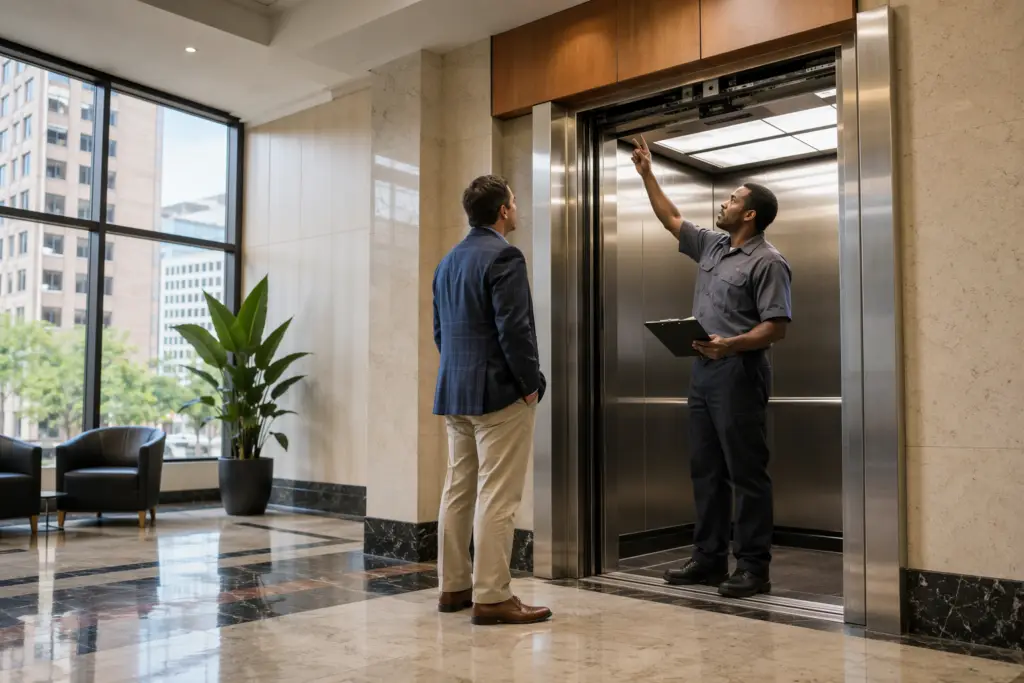
Your maintenance company plays a critical supporting role: ensuring the elevator is properly prepared for inspection, accompanying the inspector, and executing any required corrections on the spot or within the cited timeframe. A maintenance company that is unfamiliar with Philadelphia L&I inspection protocols will cost you time and money in failed inspections and correction cycles.
What Types of Buildings in Philadelphia Need Professional Elevator Maintenance?
Any building in Philadelphia with a conveyance system — including passenger elevators, freight elevators, wheelchair lifts, escalators, moving walkways, and dumbwaiters — is subject to Pennsylvania elevator safety regulations and requires certified maintenance.
Building types commonly served in the Philadelphia market include:
- Class A and Class B commercial office buildings
- Multifamily residential high-rises and mid-rises
- Healthcare facilities, hospitals, and medical office buildings
- Hotels and hospitality properties
- Retail centers and mixed-use developments
- Educational institutions including universities and K–12 schools
- Government and municipal buildings
- Industrial facilities with freight elevator systems
- Senior living and assisted care communities
Each building type has distinct traffic patterns, regulatory overlays, and maintenance frequency requirements. A senior living community, for example, faces heightened ADA scrutiny and zero tolerance for unplanned downtime given resident mobility dependence. A freight elevator in an industrial facility faces different load and duty cycle stresses than a commercial passenger unit.
How Do I Switch Elevator Maintenance Companies in Philadelphia Without Disruption?
Switching elevator maintenance companies in Philadelphia requires reviewing your existing contract’s termination clause, providing proper written notice, conducting a transition inspection with the incoming company, and transferring all maintenance records and documentation before the changeover date.
The transition process typically takes 30 to 60 days and involves:
- Reviewing your current contract for termination notice requirements — typically 30, 60, or 90 days written notice.
- Notifying your current provider in writing via certified mail on the required timeline.
- Scheduling a transition inspection with Quality Elevator Company or your chosen incoming provider to document current equipment condition.
- Requesting complete maintenance logs, inspection certificates, and equipment documentation from your outgoing provider.
- Ensuring the incoming company is fully briefed on any outstanding deficiencies or pending repairs.
- Updating your building’s emergency contact procedures to reflect the new provider’s emergency number.
Do not allow your outgoing provider to retain original maintenance logs — those records belong to the building owner and are critical for inspection history and future troubleshooting.
What Qualifications Should Elevator Technicians in Philadelphia Have?
Elevator technicians working in Philadelphia must hold a valid Pennsylvania elevator mechanic license, and the best technicians will additionally carry IUEC (International Union of Elevator Constructors) certification demonstrating apprenticeship training and ongoing continuing education requirements.
Beyond licensing, I look for these qualifications when building a service team:
- Completion of the four-year IUEC apprenticeship program covering mechanical, electrical, and hydraulic systems.
- Manufacturer-specific training on major control system brands (Otis, KONE, Schindler, ThyssenKrupp, MCE).
- OSHA 30-hour construction safety certification.
- Familiarity with current ASME A17.1 Safety Code for Elevators and Escalators and ASME A17.3 Safety Code for Existing Elevators.
- Hands-on experience with both hydraulic and traction systems, including MRL configurations.
- Competency with remote monitoring platforms and diagnostic software.
Always ask a prospective maintenance company for the license numbers of the technicians who will be assigned to your building. You can verify Pennsylvania elevator mechanic licenses through the Department of Labor & Industry’s online verification system.
How Does Preventive Maintenance Reduce Elevator Downtime in Philadelphia Buildings?
Consistent preventive maintenance reduces unplanned elevator downtime by 60–70% compared to reactive-only service approaches, according to 2026 industry benchmarks, because it identifies and corrects component wear before failure thresholds are reached.
In practical terms, a monthly preventive maintenance visit on a commercial elevator typically involves:
- Lubrication of all friction points including guide rails, roller guides, governor rope, and door tracks.
- Inspection and adjustment of door operator clutch, gibs, and door timing.
- Testing of all safeties including overspeed governor, pit stop switch, and car top inspection station.
- Brake clearance measurement and adjustment.
- Hydraulic fluid level check and fluid condition assessment (hydraulic units).
- Motor and drive system temperature and vibration check.
- Emergency lighting and communication system test.
- Review of previous maintenance log for recurring issues.
The correlation between visit frequency and downtime is direct: buildings with monthly maintenance visits average 1.2 emergency callbacks per unit per year, while buildings on quarterly programs average 4.7 callbacks per unit per year based on service data I have observed across the Mid-Atlantic market.
What Are the Most Common Elevator Problems in Philadelphia’s Older Building Stock?
Philadelphia’s older building stock — much of it constructed between 1940 and 1985 — presents recurring elevator issues including obsolete relay-logic controllers, deteriorated door gibs and sills, corroded hydraulic cylinders, aging wire ropes, and outdated safety circuits that no longer meet current ASME standards.
The most frequently encountered problems I diagnose in Philadelphia buildings include:
- Door malfunctions: Responsible for approximately 50–60% of all elevator service calls. Worn clutches, misaligned door tracks, and failed door operator boards are the primary culprits.
- Leveling issues: Elevators that do not stop flush with the floor create trip hazards and ADA compliance failures.
- Controller failures: Older relay logic systems fail unpredictably and parts are increasingly unavailable.
- Hydraulic fluid leaks: Underground single-bottom cylinders in pre-1990 hydraulic units are prone to corrosion and leakage, creating environmental liability under Pennsylvania DEP regulations.
- Rope wear and elongation: Wire ropes on traction elevators require periodic testing and replacement — neglected ropes are a serious safety hazard.
- Emergency phone failures: A non-functional two-way communication system is an immediate code violation under ASME A17.1 Safety Code for Elevators and Escalators.
Is Energy Efficiency a Factor in Philadelphia Elevator Maintenance Planning?
Yes — elevator systems account for 2–10% of a building’s total energy consumption, and modern maintenance programs in Philadelphia increasingly incorporate energy efficiency audits as part of their service offering, particularly for buildings pursuing LEED certification or Energy Star benchmarking.
Energy efficiency improvements available through maintenance and modernization include:
- Upgrading to variable-voltage variable-frequency (VVVF) drive systems, which reduce motor energy consumption by 30–40% versus older single-speed systems.
- Installing LED lighting in cabs and machine rooms — replacing fluorescent fixtures in older Philadelphia elevator cabs is a low-cost, immediate efficiency gain.
- Implementing standby mode programming that dims cab lighting and ventilation when the elevator is idle for more than 30 seconds.
- Regenerative drive systems on high-rise traction elevators that return energy to the building’s electrical grid during descent with a counterweighted load.
For Philadelphia buildings participating in the City’s Building Energy Performance Program, elevator system energy performance data is increasingly relevant to annual benchmarking submissions.
Why Should Philadelphia Building Owners Choose Quality Elevator Company?
Philadelphia building owners should choose Quality Elevator Company because it combines IUEC-certified technicians with local Philadelphia market knowledge, guaranteed two-hour emergency response, transparent maintenance contracts, and a documented track record across commercial, residential, and healthcare properties throughout the Mid-Atlantic region.
What distinguishes Quality Elevator Company from national elevator conglomerates operating in Philadelphia:
- Local technician deployment: Technicians based in the Philadelphia service area — not routed through a regional hub hours away.
- No proprietary parts lock-in: Quality Elevator Company services all major brands and does not use proprietary components to create vendor dependency.
- Transparent reporting: Every maintenance visit generates a detailed written report delivered to the building owner within 24 hours.
- Full code competency: Deep familiarity with Pennsylvania Department of Labor & Industry requirements, Philadelphia L&I inspection protocols, ASME A17.1 Safety Code for Elevators and Escalators, and ADA Standards.
- Multi-market consistency: The same service standards Quality Elevator Company maintains in Baltimore, Washington DC, and Richmond are applied without exception in Philadelphia.
Building owners who switch to Quality Elevator Company consistently report faster response times, improved inspection outcomes, and lower total cost of ownership within the first 12 months of service.
Ready to Experience Philadelphia’s Top-Rated Elevator Maintenance?
Don’t wait for a breakdown, a failed inspection, or a passenger entrapment to evaluate your elevator maintenance program. Whether you manage one unit or a multi-building portfolio across Philadelphia, Quality Elevator Company will provide a thorough, no-obligation assessment of your current equipment condition, maintenance gaps, and compliance status.
Our certified technicians are ready to review your maintenance contract, inspect your equipment, and put a service plan in place that protects your passengers, satisfies Pennsylvania regulators, and keeps your elevators running at peak performance in 2026 and beyond.
Contact Quality Elevator Company for a free elevator assessment: 301-307-5363
Serving Philadelphia PA, Baltimore MD, Washington DC, and Richmond VA — with local technicians ready to respond when it matters most.