When temperatures drop in winter, elevator hydraulic fluid thickens, door mechanisms stiffen, lubricants harden, and control systems become vulnerable to condensation and thermal stress — all of which increase breakdown risk — but a pre-winter inspection, cold-rated lubricants, machine room heating, and a proactive maintenance contract can prevent most cold-weather failures.
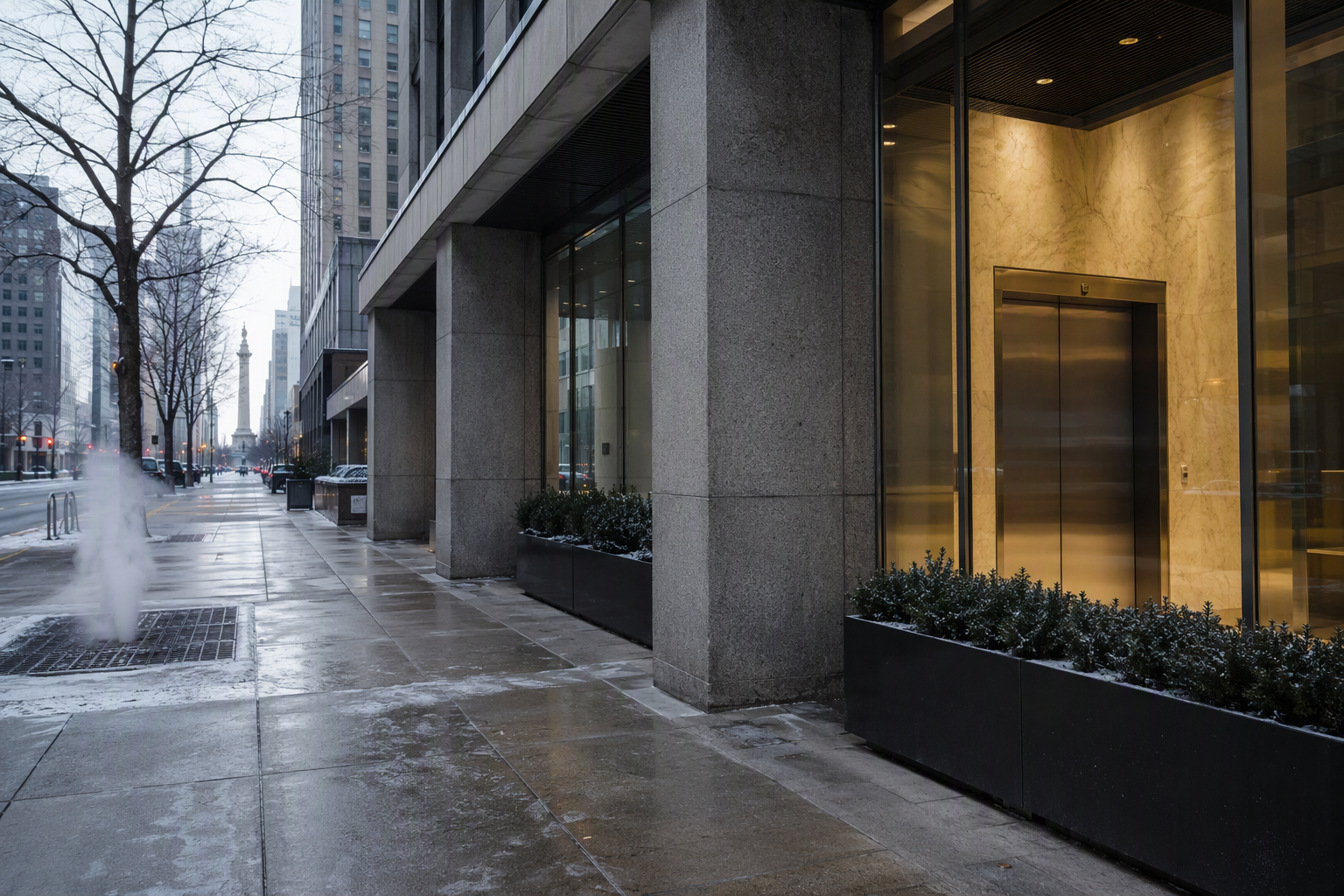
Cold Weather Elevator Problems: What Happens in Winter and How to Prevent Breakdowns
Cold temperatures are one of the most underestimated threats to elevator reliability. As winter arrives across Baltimore, Washington DC, Philadelphia, and Richmond, building owners and facility managers face a predictable surge in elevator service calls — most of which are preventable. This comprehensive guide explains exactly what happens to elevator systems when temperatures fall, which components are most vulnerable, what codes require, and how to protect your equipment through the cold months ahead.
What exactly happens to an elevator when outdoor temperatures drop?
Cold weather causes hydraulic fluid to thicken, lubricants to congeal, metal components to contract, door mechanisms to stiffen, and electronic control systems to suffer condensation damage — a combination that significantly raises the probability of unexpected shutdowns.
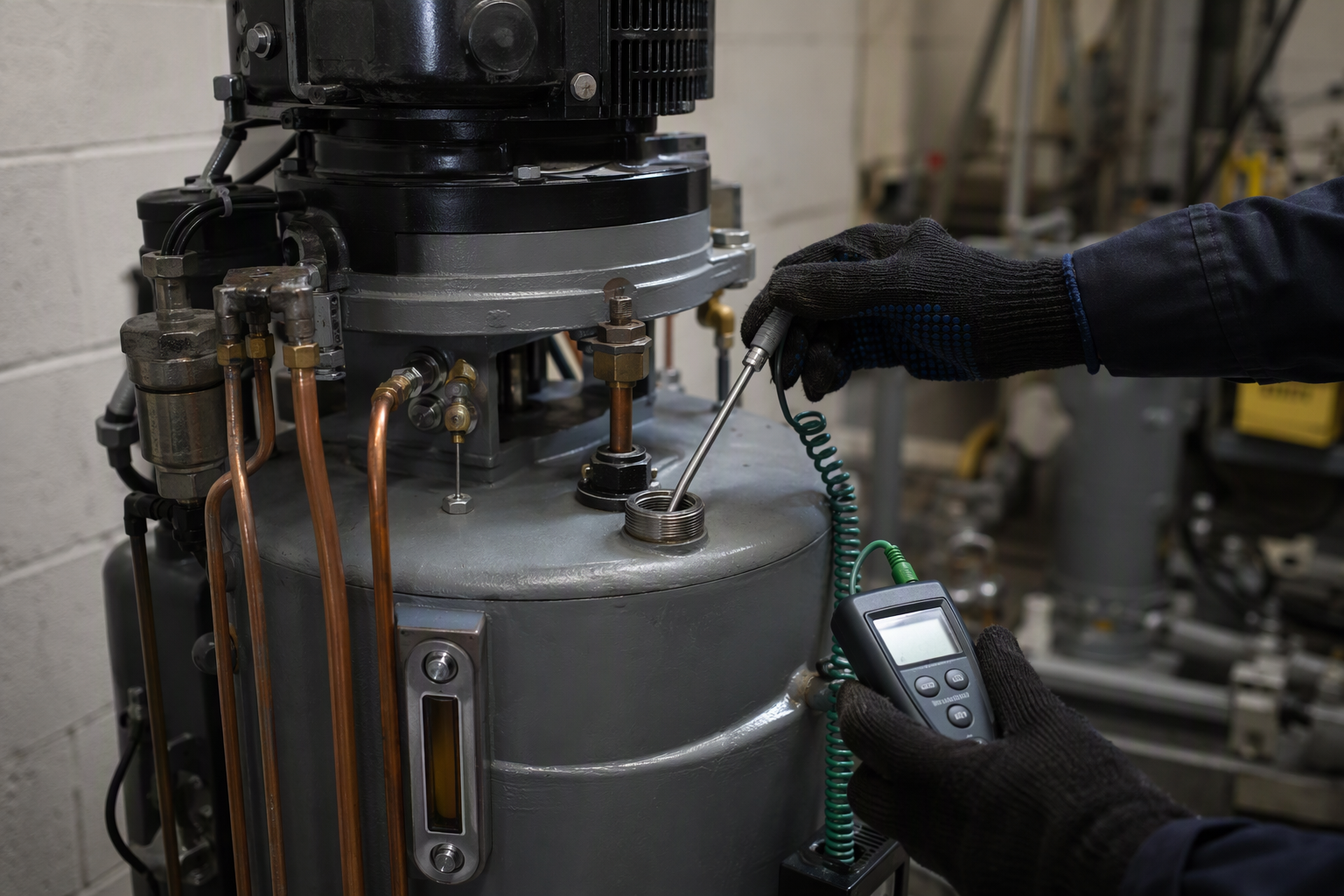
Elevators are precision mechanical systems designed to operate within specific temperature and environmental parameters. When ambient temperatures fall below those parameters, multiple subsystems are affected simultaneously. Hydraulic units — which power the majority of low-rise and mid-rise elevators found in the buildings Quality Elevator Company services across Maryland, DC, Pennsylvania, and Virginia — are particularly susceptible because hydraulic oil viscosity increases sharply as temperature drops. When viscosity rises too high, the pump must work harder to move fluid, piston response slows, and the elevator may fail to level correctly at floor landings or refuse to start entirely.
Traction elevators face their own cold-weather challenges. Wire ropes stiffen and lose flexibility in low temperatures. Counterweight guide rails and car guide rails contract, altering running clearances. The governor rope — a critical safety device — can become less pliable, affecting its ability to activate the safety gear at the precise speed required by the ASME A17.1 Safety Code for Elevators and Escalators.
Which elevator components are most vulnerable to cold weather damage?
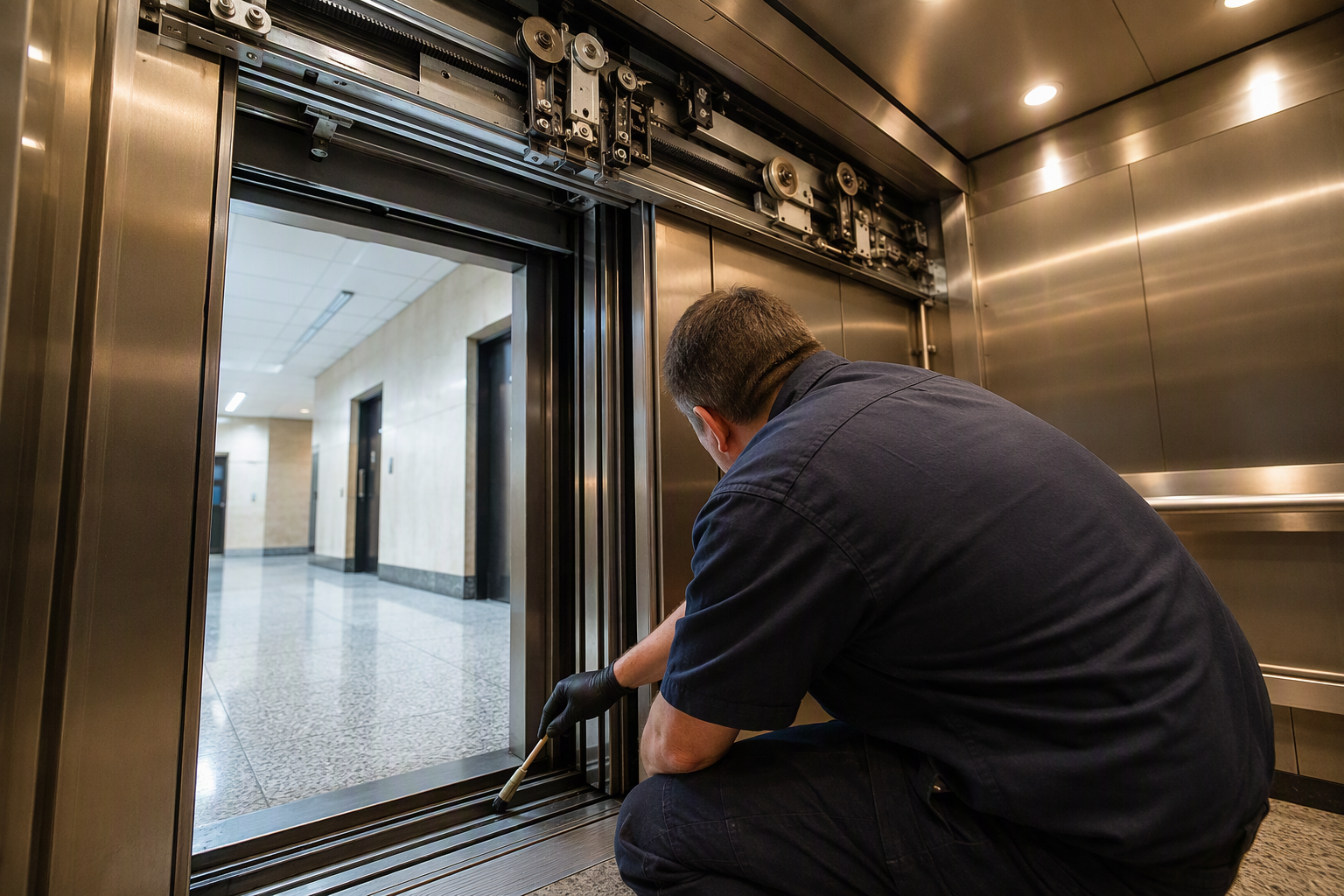
Hydraulic systems, door operators, lubricants, control electronics, and wire ropes are the components most commonly compromised by cold temperatures, with hydraulic units typically being the first point of failure in winter.
Understanding component-specific vulnerabilities allows maintenance teams to prioritize inspections and preventive actions. Each component fails in a characteristic way when exposed to cold, and knowing the failure mode helps technicians diagnose problems quickly during a service call.
| Component | Cold-Weather Effect | Primary Risk | Recommended Winter Action |
|---|---|---|---|
| Hydraulic fluid / power unit | Increased viscosity; sluggish pump operation | Slow leveling, failure to start, pump overload | Switch to cold-rated hydraulic fluid; inspect immersion heater |
| Door operators and tracks | Lubrication congeals; track contraction narrows tolerances | Door nuisance trips, reopening failures, entrapments | Apply cold-compatible track lubricant; adjust door timing |
| Wire ropes and governor rope | Reduced flexibility; lubricant hardens in strands | Irregular travel, governor activation anomalies | Inspect rope condition; apply appropriate rope lubricant |
| Guide rail lubricant | Oil congeals on rail surface | Rough ride, excessive guide shoe wear | Switch to low-temperature rail lubricant |
| Control system electronics | Condensation on circuit boards when warm air meets cold surfaces | Short circuits, erratic behavior, controller faults | Inspect machine room heating; check for moisture ingress |
| Buffers (oil-type) | Buffer oil thickens, affecting deceleration performance | Non-compliant buffer response; safety hazard | Verify buffer oil type is rated for ambient temperature range |
| Machine room heating system | Failure of room heater leaves all above components unprotected | Cascading failures across all mechanical systems | Test and service machine room heaters before first freeze |
| Pit sump / pit environment | Water intrusion and freezing in below-grade pits | Water on buffers, electrical shorts, frozen sump pumps | Inspect pit waterproofing; test sump pump function |
How does cold weather affect hydraulic elevator oil specifically?
Hydraulic oil viscosity increases as temperature falls, causing the power unit pump to strain under load, the piston to respond slowly, and the elevator to misleveling at landings or stall entirely — all common winter service call causes in the mid-Atlantic region.
Most hydraulic elevator units are filled with petroleum-based or biodegradable hydraulic fluids formulated for a specific viscosity range. When machine room or pit temperatures fall below the fluid’s recommended operating range, the oil becomes significantly thicker. The pump must generate considerably more force to circulate fluid, leading to increased motor current draw, elevated heat generation at the pump, and reduced piston response speed.
In practical terms, this manifests as an elevator that moves very slowly on a cold morning, stops short of the landing threshold, or throws a fault code and refuses to move at all until the fluid warms up. Buildings that lack adequate machine room heating — or whose heaters have failed unnoticed — are particularly vulnerable. The solution typically involves verifying that the fluid specification matches the installation’s temperature exposure and confirming that immersion heaters within the hydraulic power unit tank are functional before winter arrives.
Why do elevator doors malfunction more often in cold weather?
Door operators rely on lubricated mechanical components that stiffen in the cold, causing door timing to drift, safety edges to respond inconsistently, and door tracks to contract — all of which trigger nuisance shutdowns and, in more serious cases, passenger entrapment risks.
Elevator door systems include motors, drive belts or chains, clutch mechanisms, rollers, tracks, and electronic safety edges or light curtains. Standard lubricants used on door tracks and roller hangers can congeal at low temperatures, dramatically increasing friction in the door operator. When friction rises, the operator motor draws more current to complete a door cycle, sometimes tripping the overload protection and putting the elevator out of service.
Door timing is calibrated to open and close within specific force and speed parameters to comply with the Americans with Disabilities Act (ADA), which governs door opening force and timing requirements for accessible elevators. Cold-related friction changes can push door performance outside compliant parameters without triggering any fault code — the door simply moves too slowly or with too much force, creating an accessibility and safety concern that only a hands-on inspection reveals.
Technicians addressing cold-weather door problems typically recalibrate door speed and force settings, replace congealed lubricants with low-temperature alternatives, and inspect safety edge and light curtain function for cold-related sensitivity drift.
How does cold weather affect elevator machine rooms and why does machine room temperature matter?
Machine room temperature directly governs the operating condition of nearly every critical elevator component — controllers, motor drives, hydraulic units, and lubricants — making a properly heated machine room the single most important cold-weather protection measure available.
The ASME A17.1 Safety Code for Elevators and Escalators establishes requirements for machine room environmental conditions, including temperature ranges within which equipment must be maintained. Equipment manufacturers also specify minimum operating temperatures in their installation manuals. When machine room temperature falls below these thresholds, warranties may be voided and equipment may operate outside its design envelope.
Beyond mechanical components, modern elevator controllers contain variable frequency drives (VFDs), programmable logic controllers (PLCs), and power conditioning equipment that incorporate capacitors, transistors, and other electronic components rated for specific temperature ranges. Extreme cold can alter capacitor performance and cause condensation on circuit boards when warm, humid air later enters a cold machine room — a scenario common in late winter when temperatures fluctuate significantly across Baltimore, DC, Philadelphia, and Richmond.
Machine room heaters should be inspected and tested as part of every pre-winter service visit. A failed machine room heater is a low-cost repair that, left unaddressed, can cause thousands of dollars in controller or motor damage during a single cold snap.
What should building owners do before the first freeze to prevent elevator breakdowns?
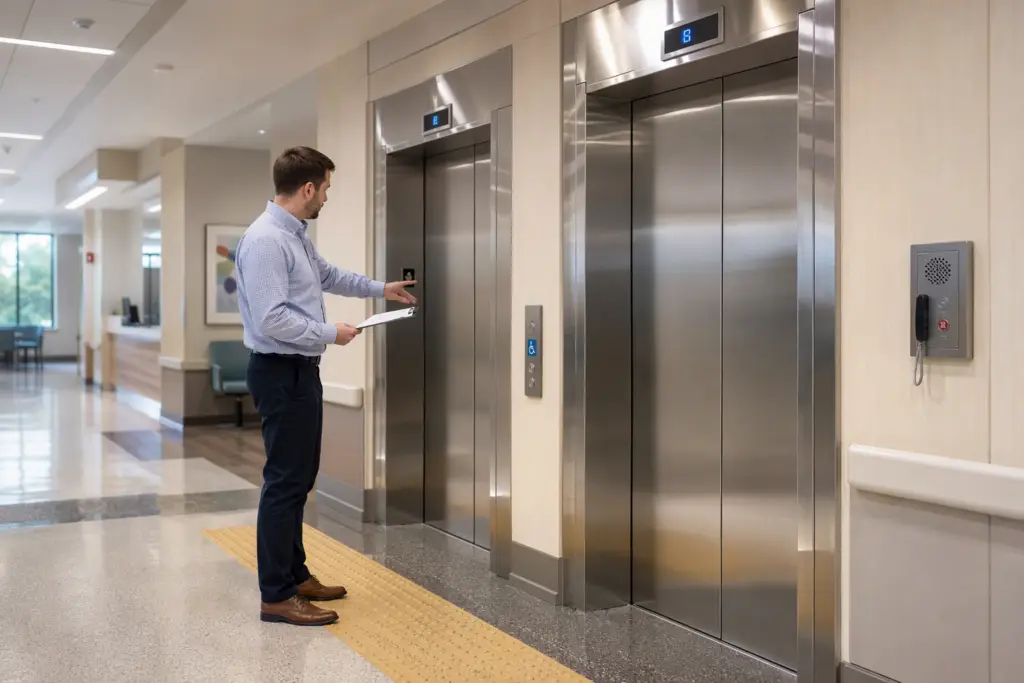
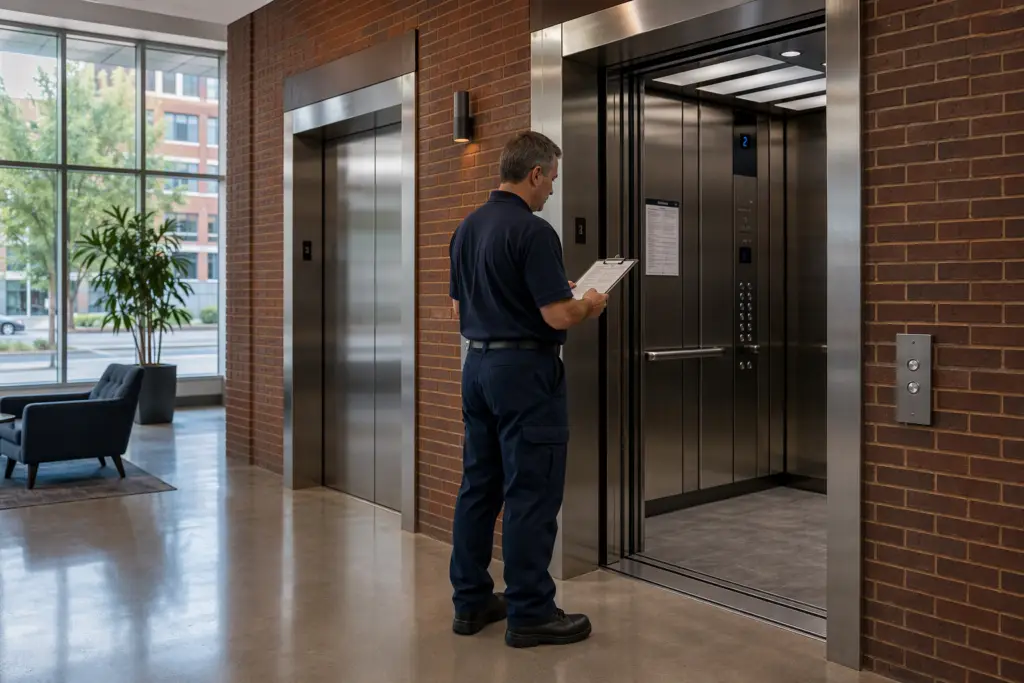
Building owners should schedule a pre-winter elevator inspection that covers machine room heating, hydraulic fluid specification, lubrication replacement, door operator adjustment, pit waterproofing, and wire rope condition — ideally completed before temperatures drop below 40°F.
A structured pre-winter maintenance visit should follow this sequence:
- Test machine room heaters. Confirm that all machine room and hoistway heating equipment is functional and set to maintain manufacturer-specified minimum temperatures. Replace failed heating elements before the season begins.
- Inspect and replace hydraulic fluid if needed. Verify that the hydraulic oil specification is appropriate for the installation’s expected cold-weather temperature range. If the current fluid is not rated for winter conditions, arrange a fluid change before temperatures drop.
- Replace or supplement lubricants throughout the system. Door tracks, guide rails, hoist ropes, governor ropes, and mechanical linkages should all be lubricated with products rated for the expected temperature range.
- Test and calibrate door operators. Measure door open and close force and timing with a calibrated door force gauge. Adjust parameters to account for increased friction that will occur as temperatures fall further.
- Inspect the elevator pit. Check for water intrusion signs, confirm sump pump function, and inspect waterproofing seals. A flooded pit in freezing weather can immobilize equipment and create electrical hazards.
- Inspect wire ropes and governor rope. Assess rope condition, lubrication, and any signs of brittleness or accelerated wear that cold-induced stiffness may worsen.
- Check controller and drive unit environment. Inspect control panels for signs of moisture ingress or condensation. Confirm that any panel heating elements or thermostat-controlled ventilation are operating correctly.
- Review the inspection certificate expiration date. Confirm the current regulatory inspection certificate is valid and schedule any required periodic inspection before it lapses, since service calls surge in winter and scheduling lead times increase.
Quality Elevator Company provides pre-winter elevator assessments for buildings throughout Baltimore, Washington DC, Philadelphia, and Richmond, addressing all of the above systems before the cold season arrives.
What are the regulatory inspection requirements for elevators in the winter months in Maryland, DC, Pennsylvania, and Virginia?
Cold weather does not pause regulatory inspection obligations — annual and periodic inspection deadlines continue year-round, and allowing a certificate to lapse while an elevator is already stressed by cold weather compounds both liability and operational risk.
Each jurisdiction Quality Elevator Company serves maintains its own regulatory framework:
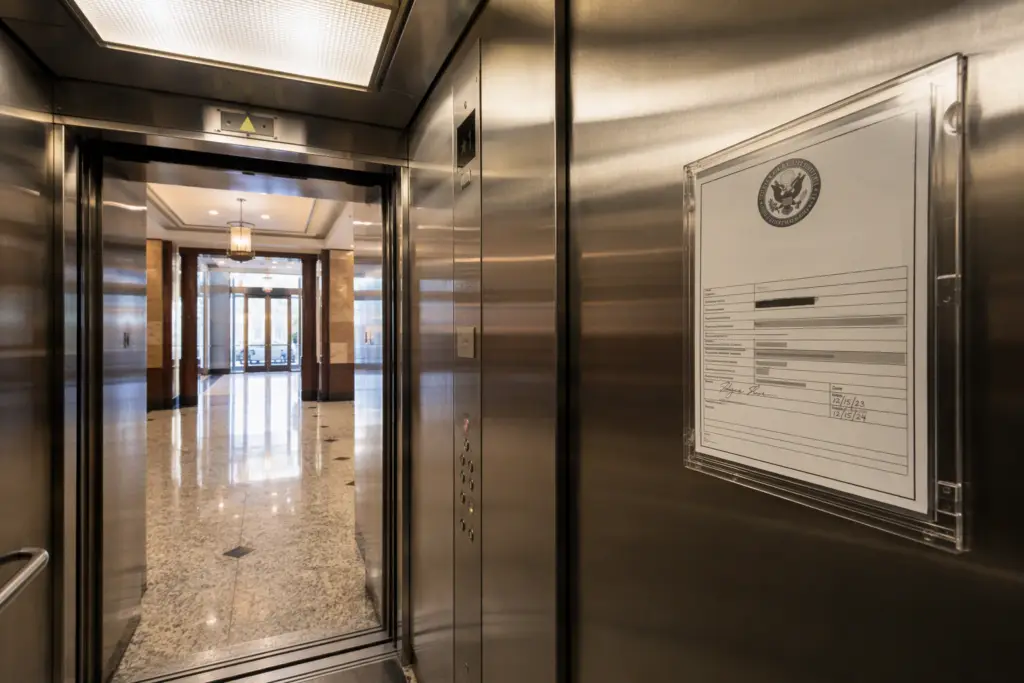
Maryland: Under the Annotated Code of Maryland, Public Safety Article, Title 12, Subtitle 8, and Maryland Department of Labor, Division of Labor and Industry, Elevator and Escalator Safety requirements, each elevator must receive a periodic annual inspection by a state inspector or a third-party qualified elevator inspector. Owners are responsible for re-registering elevator units annually. The current inspection certificate must be posted conspicuously in or on the elevator unit at all times.
District of Columbia: The DC Department of Buildings (DOB) requires a periodic inspection and Category 1 test every 12 months and a Category 5 test every 60 months, each performed by an ASME QEI-certified inspector from a DOB-approved third-party agency. A DC certificate of inspection is valid for two years, and inspections continue during that validity period. The certificate must be displayed conspicuously in the elevator car.
Pennsylvania: The Pennsylvania Department of Labor and Industry requires periodic inspections of electric elevators, hydraulic elevators, and escalators at intervals of no more than six months. Certificates of operation must be posted in the elevator car or machine room controller. As of December 20, 2026, updated regulations under ASME A17.1-2016 take effect for new permit applications.
Virginia: Under the Virginia Uniform Statewide Building Code (13VAC5-63), all elevators require an annual periodic inspection enforced by the local building department. In Richmond, the City of Richmond Department of Planning and Development Review, Bureau of Permits and Inspections, administers elevator annual inspections and certificates. The current certificate must be displayed in the elevator or kept accessible in the building operator’s office.
Can cold weather cause an elevator to trap passengers?
Yes — cold-related door malfunctions, hydraulic system sluggishness, and control system faults are all mechanisms that can cause an elevator to stop mid-travel or between floors, creating a passenger entrapment situation that requires a licensed technician to resolve.
An entrapment occurs whenever an elevator stops with passengers inside and cannot complete normal operation to bring them to a landing where doors can open. Cold weather creates multiple pathways to entrapment: a door that fails to open due to a frozen or stiff operator, a hydraulic elevator that loses leveling ability due to cold fluid, or a controller fault triggered by condensation on electronics.
All elevators in the Quality Elevator Company service area are required under applicable codes to be equipped with an emergency lighting system and a means of two-way communication to allow trapped passengers to summon help. Building operators should verify that emergency communication systems are functional before winter — battery-backed telephone systems can have their battery capacity reduced by cold temperatures if batteries are located in cold environments.
If a passenger entrapment occurs, building staff should immediately contact the elevator service provider and emergency services. Staff should reassure trapped passengers through the communication system, confirm their safety, and not attempt to manually open doors or move the elevator without trained technician guidance.
How does winter affect elevator pit safety and what should be inspected?
Below-grade elevator pits are vulnerable to water intrusion through foundation walls and floor seams in winter, and standing water that freezes can damage buffers, sump pumps, safety equipment, and electrical wiring — creating both a mechanical failure risk and a serious safety hazard.
Elevator pits are required by the ASME A17.1 Safety Code for Elevators and Escalators to be kept dry, clean, and free of materials not related to elevator function. In winter, hydrostatic pressure increases as groundwater levels rise with rainfall and snowmelt. Cracks in pit walls that were manageable in dry conditions can allow significant water intrusion when the soil is saturated.
Water in the pit poses multiple risks: it can freeze around the buffer, rendering it non-functional; it can submerge pit electrical junction boxes, creating shock hazards; and it can cause sump pump motors to fail if the pump mechanism freezes. Pre-winter pit inspections should confirm that sump pump operation is verified, pit lighting is functional and properly protected, all electrical equipment is mounted above any anticipated flood line, and waterproofing seals are intact around any penetrations in the pit walls.
What type of lubricant should be used on elevators in winter?
Winter elevator lubrication requires products specifically rated for low-temperature performance — standard petroleum-based lubricants used year-round often congeal below 40°F, whereas low-temperature synthetic or semi-synthetic alternatives maintain adequate viscosity and film strength throughout cold conditions.
Elevator manufacturers and component suppliers specify lubricant types in their maintenance manuals. Technicians servicing elevators in cold climates select lubricants that maintain appropriate viscosity at the lowest ambient temperatures expected in the machine room, hoistway, and pit. For guide rails, this typically means a low-temperature rail lubricant or a synthetic equivalent. For hydraulic systems, it means either a fluid with a low pour point or the use of an immersion heater to maintain fluid temperature above the viscosity threshold required for reliable pump operation.
Using an incompatible lubricant — or failing to transition away from summer-weight products before winter — is one of the most common causes of preventable cold-weather elevator failures. A qualified technician will identify the correct product for each application based on the elevator type, manufacturer specifications, and the temperature profile of the installation environment.
Do traction elevators and hydraulic elevators have different cold-weather vulnerabilities?
Yes — hydraulic elevators are most vulnerable to fluid viscosity and power unit issues, while traction elevators are most affected by rope stiffness, rail lubrication, and motor drive performance, meaning each type requires a somewhat different preventive maintenance approach in winter.
Hydraulic elevators — which use a jack and piston driven by pressurized oil from a power unit — are directly and immediately affected by fluid temperature. The entire operating cycle depends on fluid flowing freely through valves and the pump. A hydraulic elevator can become inoperative simply because the machine room is too cold and the fluid has not warmed to operating viscosity.
Traction elevators use a motor, drive sheave, wire ropes, and counterweights. The cold-weather concerns are different: wire rope stiffness, guide rail lubrication, brake performance, and the variable frequency drive (VFD) or motor control unit behavior in cold machine rooms. VFDs contain electrolytic capacitors that can underperform in very cold conditions, and their cooling fans may experience bearing issues if lubrication congeals.
Both elevator types share vulnerabilities in their door systems, control electronics, and pit environments. A comprehensive winter service program must be tailored to the specific equipment installed rather than applying a generic checklist to all units.
How often should elevator maintenance be performed in winter versus other seasons?
Elevators in cold climates benefit from more frequent inspection points during winter transition periods — specifically a dedicated pre-winter visit in the fall and a post-winter check in early spring — in addition to the standard maintenance intervals required by the applicable regulatory authority.
Maryland’s Maryland Department of Labor, Division of Labor and Industry requires annual periodic inspections. Pennsylvania’s Pennsylvania Department of Labor and Industry mandates inspections at intervals of no more than six months. The DC Department of Buildings requires Category 1 inspections annually. Virginia localities enforce annual inspections under the Virginia Uniform Statewide Building Code.
These regulatory minimums define inspection frequency for compliance purposes. Maintenance visits — which differ from code-required inspections and are performed by the elevator contractor rather than the inspector — should be structured so that a maintenance technician is on-site before the cold season begins to perform the pre-winter lubrication, heating verification, and system adjustment tasks described throughout this guide. A post-winter visit in early spring should then address any accelerated wear caused by cold-season stresses and prepare the system for warm-weather operation.
What should building staff do immediately if an elevator stops working in cold weather?
When an elevator stops operating in cold weather, building staff should confirm no passengers are trapped, secure the elevator from further use, contact the licensed elevator service company, and document the conditions — including machine room temperature — to assist the responding technician.
- Check for trapped passengers immediately. Use the emergency communication system to confirm whether anyone is inside the elevator. If passengers are confirmed trapped, contact emergency services in addition to the elevator service provider.
- Place the elevator out of service. Post clear signage at all landings indicating the elevator is out of service. Ensure no one attempts to use the elevator until a technician has assessed and cleared it.
- Do not attempt to manually override controls. Untrained personnel should not attempt to reset controllers, manually operate the car, or open hoistway doors without a trained, licensed technician present.
- Check machine room temperature if accessible. If building staff have authorized access to the machine room, note the temperature displayed on any thermostat or thermometer. This information is valuable to the responding technician.
- Contact the elevator service company. Provide the elevator unit number or location, describe any symptoms observed before shutdown, and report the machine room temperature if obtained.
- Check whether other mechanical systems have also failed. A building-wide HVAC failure may indicate the same cold snap has affected machine room heating. Communicating this to the technician can speed diagnosis.
- Document the event. Record the time of failure, reported symptoms, environmental conditions, and any actions taken. This documentation supports the maintenance record that Maryland, DC, Pennsylvania, and Virginia regulations require to be kept accessible at the building.
Are building owners liable if an elevator fails a code inspection because of cold-weather deferred maintenance?
Yes — building owners bear regulatory and legal responsibility for maintaining elevators in safe, code-compliant condition year-round, and cold-weather deterioration does not exempt an elevator from inspection requirements or shield an owner from liability if a failure harms a passenger.
In Maryland, an elevator may not be operated without a valid certificate issued by the Maryland Department of Labor, Division of Labor and Industry. Operating without a certificate is a statutory violation. Similarly, in DC, the DC Department of Buildings requires all elevators to be inspected and certified. Pennsylvania’s Pennsylvania Department of Labor and Industry prohibits operating an elevator without a valid certificate of operation. Virginia localities enforce the same requirement under the Virginia Uniform Statewide Building Code.
Beyond regulatory penalties, owners face tort liability for injuries caused by foreseeable equipment failures. A pattern of deferred maintenance — including failure to address known cold-weather vulnerabilities — can constitute negligence if a passenger is injured. Proactive winter maintenance is not just operationally prudent; it is a fundamental element of the duty of care owed to elevator users.
Can frozen or damaged elevator components be repaired or do they typically require replacement?
Many cold-weather elevator failures involve repairable components — such as refilling hydraulic fluid, replacing lubricants, or servicing heaters — but components that have sustained physical damage from freezing, such as cracked hydraulic cylinders, seized bearings, or water-damaged circuit boards, typically require partial or full replacement.
The outcome of a cold-weather failure depends on how long the adverse conditions persisted and whether protective systems were in place. A hydraulic elevator that experienced one morning of cold fluid and then warmed to operating temperature without mechanical strain may require only a fluid specification change going forward. An elevator whose machine room heater failed weeks ago and whose hydraulic power unit was repeatedly operated in extreme cold may have pump wear, valve damage, or seal degradation that requires component replacement.
Control system electronics damaged by condensation often require board-level repair or replacement. Bearings that have been run dry because lubricant congealed can experience accelerated wear that is not immediately apparent but shortens component life significantly. A post-failure inspection by a qualified technician determines what corrective action is necessary.
How do outdoor ambient temperatures in the mid-Atlantic region specifically threaten elevators?
Baltimore, Washington DC, Philadelphia, and Richmond experience cold snaps, freeze-thaw cycles, and high humidity that combine to stress elevator systems in ways that purely cold or purely dry climates do not — making region-specific winter preparation essential.
The mid-Atlantic climate is characterized by temperature volatility rather than sustained extreme cold. A week of temperatures in the teens can be followed by a 50°F day, then another freeze. This freeze-thaw cycling is particularly damaging to elevator pit waterproofing, exterior hoistway walls, and any component exposed to condensation and re-freezing. Water that seeps into pit wall cracks expands when it freezes, progressively widening those cracks with each cycle.
High winter humidity compounds the electronic vulnerability issue. When a cold controller room is suddenly opened or heated, the temperature differential can cause moisture to condense on circuit boards at precisely the moment power is applied — a recipe for component failure. Elevator service providers operating in this region are familiar with these specific conditions and can advise on insulation, humidity control, and sealing strategies that address the mid-Atlantic climate profile.
What role does a full-service maintenance contract play in cold-weather elevator protection?
A comprehensive maintenance contract ensures that qualified technicians perform pre-winter preparation, monitor critical systems through the cold season, and respond to cold-weather breakdowns as a priority — providing protection that reactive, call-only service relationships cannot match.
Under a full-service maintenance agreement, the elevator contractor is responsible for all scheduled lubrication, adjustment, and component testing across the year. This structure means a technician is proactively on-site before winter to perform the lubrication changeovers, heater tests, and door adjustments that prevent most cold-weather failures. When a breakdown does occur, a contracted account typically has access to faster response than a building seeking emergency service from a company with no prior relationship with the equipment.
Maintenance agreements also provide the documentation infrastructure required by state regulators. Maryland requires maintenance, repair, test, and inspection records to be kept at a readily accessible central location in the building. Having a service company that maintains organized records for every visit — accessible to regulators and owners — is part of responsible elevator ownership.
Quality Elevator Company structures maintenance programs for commercial buildings, multifamily properties, and institutional facilities across Maryland, DC, Pennsylvania, and Virginia to include winter-specific service touchpoints as a standard component of the agreement.
What questions should a building owner ask when hiring an elevator company for winter maintenance?
Building owners should ask prospective elevator service companies about their technicians’ licensing status in the applicable state, their familiarity with the specific equipment installed, whether their maintenance program includes a pre-winter service visit, and how they handle emergency calls during severe weather events.
Licensing requirements vary by jurisdiction. In Maryland, a business must be licensed by the Maryland Elevator Safety Review Board as an elevator contractor before performing maintenance, and technicians must be licensed as elevator mechanics. In Virginia, contractors must hold an Elevator/Escalator Contracting (EEC) specialty license from the Virginia Board for Contractors, and mechanics must be state-certified. In DC, elevator contracting and mechanics are licensed by the DC Board of Industrial Trades. Owners should verify that any company they engage holds the appropriate license for the jurisdiction in which the building is located.
Beyond licensing, owners should ask whether the company’s maintenance program documentation satisfies the state’s record-keeping requirements, whether technicians are familiar with the specific manufacturer and model of equipment installed, and whether the company’s inspection personnel are ASME QEI-certified where required by the applicable jurisdiction. Quality Elevator Company serves building owners across the four-jurisdiction service area and is familiar with the specific regulatory requirements of each state and locality.
What are the signs that a cold-weather elevator problem is developing before a full breakdown occurs?
Early warning signs of cold-weather elevator stress include sluggish door operation, rough or slower-than-usual rides, unusually loud pump or motor sounds, misleveling at floors, and increased nuisance fault codes — all of which appear before a full system shutdown and signal the need for immediate service.
Building staff and regular elevator users are often the first to notice these early indicators. A door that was quick and quiet in October but now stutters or closes slowly in December is exhibiting a documentable change in behavior that a technician can address before it progresses to a full door failure or entrapment. A hydraulic elevator that is leveling a few inches above or below the floor threshold is signaling that fluid viscosity or valve performance has been affected by cold.
Building managers should train maintenance staff and reception personnel to report any change in elevator behavior — unusual sounds, slower speeds, rough rides, or inconsistent floor leveling — immediately rather than waiting to see if the problem resolves. These early reports allow elevator service companies to schedule a corrective maintenance visit before the problem escalates to a breakdown affecting building occupants and potentially triggering a regulatory inspection event.
How can building owners stay compliant with elevator codes through winter in DC, Maryland, Pennsylvania, and Virginia?
Staying compliant through winter requires confirming that all inspection certificates remain valid, that required maintenance records are up to date, that any cold-weather repairs are performed by licensed contractors, and that no elevator is placed back in service after a winter breakdown without proper authorization.
Each jurisdiction has specific requirements that intersect with winter maintenance scenarios. In DC, a DOB permit is required to take an elevator out of service, and at least one passenger elevator must remain in operation whenever a building with multiple passenger elevators is occupied. If a cold-weather breakdown takes an elevator out of service, the building owner must be aware of this occupancy requirement and take appropriate steps.
In Pennsylvania, after a major repair or alteration — which can include significant cold-weather damage repairs — an elevator may not return to service until the Pennsylvania Department of Labor and Industry inspects and approves it. Understanding this requirement before initiating a major repair avoids unexpected operational delays.
In all four jurisdictions, working with a licensed elevator contractor who maintains organized inspection and maintenance records — and who understands the specific regulatory requirements of each authority having jurisdiction — is the most reliable way to stay compliant year-round, including through the demanding winter maintenance period.
Schedule Your Pre-Winter Elevator Assessment Today
Cold weather breakdowns are preventable. Quality Elevator Company provides comprehensive pre-winter elevator assessments for commercial buildings, multifamily properties, healthcare facilities, and institutional clients throughout Baltimore MD, Washington DC, Philadelphia PA, and Richmond VA. A qualified technician will evaluate your hydraulic systems, machine room heating, door operators, lubrication, pit condition, wire ropes, and control electronics — and provide a written report of findings and recommended
Need elevator service you can rely on? Quality Elevator Company is ready to help.