How to Manage Elevator Downtime and Keep Tenants Informed When an Elevator Is Out of Service
Elevator downtime is one of the most disruptive events a building manager can face. Whether the cause is a mechanical failure, a failed safety inspection, or a scheduled modernization project, an out-of-service elevator affects tenant mobility, building accessibility, and legal compliance under the Americans with Disabilities Act (ADA). This FAQ hub covers every dimension of elevator downtime management — from the first moment a unit goes offline through the full restoration of service — with practical protocols, compliance guidance, and communication strategies applicable to commercial and residential buildings throughout Baltimore MD, Washington DC, Philadelphia PA, and Richmond VA.
What should a building manager do immediately when an elevator goes out of service?
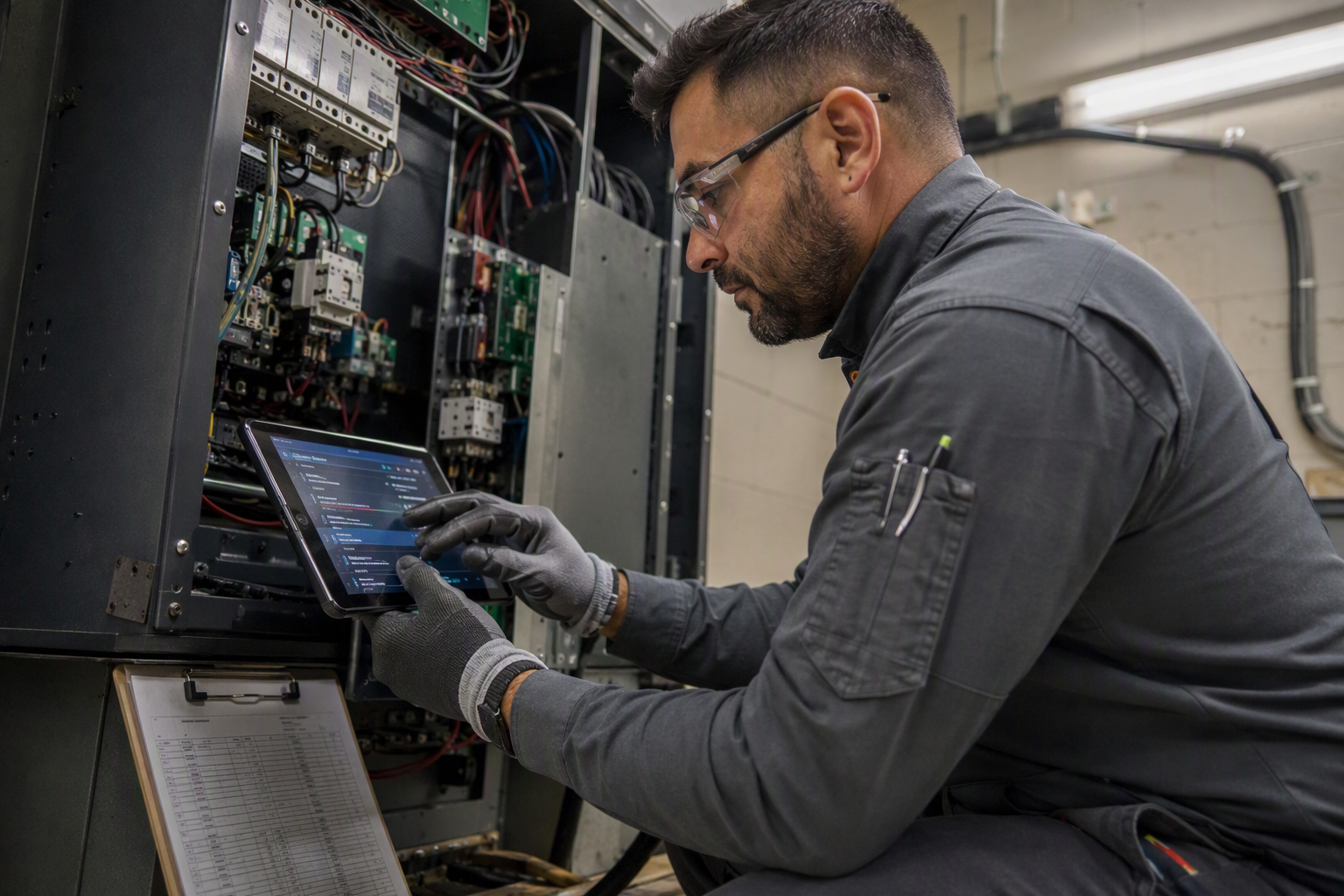
The first priority is safety: secure the unit, alert all building occupants, and contact a certified elevator service provider to assess the situation.
Acting quickly in the first hour of an elevator outage establishes the tone for the entire repair process. A disorganized initial response erodes tenant trust and can expose the building owner to liability, especially if a tenant with a mobility impairment is stranded without an alternative access plan.
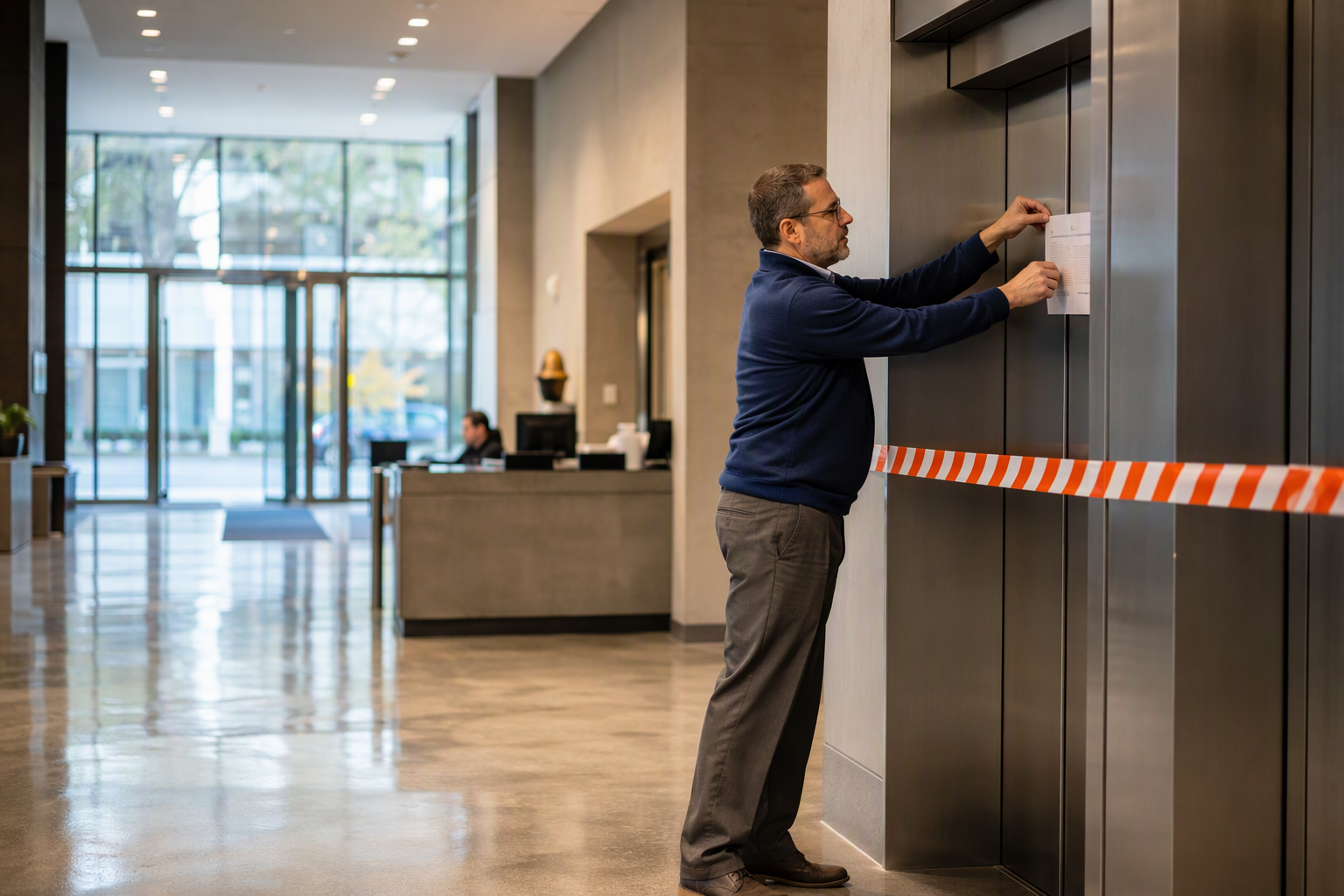
- Secure the elevator: If the car has stopped between floors or a door malfunction is detected, do not attempt self-repair. Place physical barriers and warning tape across all landing doors on every floor served by the unit.
- Account for trapped passengers: Check whether anyone is inside the car. If a passenger is trapped, call emergency services (911) immediately and stay in communication with the person through the car interphone. Do not attempt to force open doors.
- Post out-of-service notices: Place clear, visible signage at every elevator entrance on every floor, at the main lobby, and near any accessible entrance. Signage should state that the elevator is out of service, identify alternative access routes, and include contact information for building management.
- Notify your elevator service provider: Contact your contracted elevator maintenance company to dispatch a qualified technician. Provide a description of the malfunction, when it occurred, and any error codes displayed on the controller.
- Activate your ADA contingency plan: Identify tenants and residents with disabilities who may require immediate assistance accessing their unit or workplace. Arrange escort services or temporary relocation assistance as appropriate.
- Document everything: Log the exact time of failure, the nature of the malfunction, every communication with tenants, and every action taken by management. This documentation is critical for insurance purposes and potential regulatory review.
- Notify building ownership and legal counsel: If the outage affects an elevator that serves accessible units or is the sole means of vertical access for tenants with disabilities, inform ownership and legal counsel of potential ADA exposure immediately.
- Establish a communication cadence: Commit to providing tenants with a status update at a defined interval — at minimum once every 24 hours — until service is restored.
What should out-of-service elevator notices include?

Effective out-of-service notices must communicate what happened, how long the outage is expected to last, where alternative access is located, and who tenants can contact for assistance.
A notice that simply reads “Elevator Out of Order” is legally and practically inadequate. Under the ADA, building operators have an obligation to provide program access to individuals with disabilities. A complete notice should include: the date and time the outage began, a plain-language description of the issue (e.g., “mechanical door malfunction”), the estimated restoration date if one is available, directions to the nearest accessible stairwell or alternate elevator, a direct phone number for tenants with disabilities to request immediate assistance, and the name and contact information of the building management contact handling the outage. Notices should be posted in large, high-contrast print at eye level at every elevator landing and at all building entrances.
How should building managers communicate elevator outages to tenants in writing?
Written tenant communications during an elevator outage should be sent within 24 hours of the outage beginning, delivered through every channel available — email, text, posted notices, and building management portals — and updated whenever the repair timeline changes.
A written outage notice serves multiple purposes: it demonstrates the building’s duty of care, creates a documented communication record, and reduces the volume of individual tenant inquiries that burden building staff. The initial written notice should include all of the elements listed above for posted signage, plus a statement that updates will follow at defined intervals. Subsequent updates should be sent whenever a new diagnosis is available, whenever a repair timeline changes, and again when service is restored. For residential buildings, consider slipping paper notices under unit doors for tenants who may not check email regularly. For commercial tenants, coordinate with office managers who can relay information internally.
What are the ADA obligations when a building elevator is out of service?
Under the ADA, building operators must maintain accessible features in operable working condition and, when a feature is temporarily out of service, must make a good-faith effort to provide equivalent access for individuals with disabilities.
The ADA requires that accessible routes remain accessible. Title III (public accommodations) and Title II (government facilities) both address elevator maintenance obligations. When an elevator is the only accessible means of reaching a floor, the building operator must implement a contingency plan. Acceptable interim measures may include: relocating services to an accessible floor, providing staff assistance to individuals who need it, arranging temporary alternative meeting spaces for tenants with mobility impairments, or using a temporary platform lift where code allows. The key standard is that individuals with disabilities must not be excluded from participating in programs or accessing services solely because the elevator is undergoing repair. Buildings in Washington DC, Baltimore MD, Philadelphia PA, and Richmond VA that receive federal funding or are places of public accommodation have particularly clear obligations under the ADA that building counsel should review.
What state and local regulations govern elevator outages in Maryland, Washington DC, Pennsylvania, and Virginia?
Each jurisdiction in Quality Elevator Company’s service area has its own elevator safety authority and reporting requirements that govern how long an elevator may remain out of service and when inspectors must be notified.
In Maryland, elevator safety is regulated by the Maryland Department of Labor, Licensing and Regulation’s Division of Labor and Industry. In Washington DC, the DC Department of Consumer and Regulatory Affairs (DCRA) oversees elevator permits and inspections. In Pennsylvania, the Bureau of Occupancy and Compliance under the Pennsylvania Department of Labor and Industry administers elevator safety. In Virginia, the Virginia Department of Labor and Industry enforces elevator safety standards. All four jurisdictions adopt versions of the ASME A17.1 Safety Code for Elevators and Escalators and reference ASME A17.3 Safety Code for Existing Elevators and Escalators for in-service units. Building owners should consult directly with their respective state authority having jurisdiction (AHJ) regarding specific reporting obligations when an elevator is taken out of service for extended repairs, as requirements and timelines vary by jurisdiction. When in doubt, engaging a certified elevator company such as Quality Elevator Company to coordinate with the AHJ on the owner’s behalf is a practical approach.
How long does an elevator repair typically take?
Repair duration depends entirely on the nature of the failure: a simple door operator adjustment may be resolved in a few hours, while a hydraulic cylinder replacement or full modernization can take days to weeks.
The table below provides general benchmarks for common elevator repair categories. These ranges reflect the typical scope of work under normal parts availability conditions and should be used for planning purposes only. Actual timelines depend on the specific equipment, parts lead times, permit processing times required by the AHJ, and inspector availability for required reinspection.
| Repair Category | Typical Duration | Common Cause | Permit / Inspection Required? |
|---|---|---|---|
| Door operator adjustment / replacement | 2–8 hours | Worn rollers, misaligned tracks, faulty sensors | Generally no (minor adjustment) |
| Controller board / software repair | 1–3 days | Power surge, component failure | May require AHJ notification |
| Hydraulic jack / cylinder seal repair | 2–5 days | Oil leak, aged seals | Typically yes |
| Hydraulic cylinder replacement | 1–3 weeks | Corrosion, structural failure | Yes — full permit and reinspection |
| Traction machine / motor replacement | 3–7 days | Winding failure, bearing wear | Yes |
| Full modernization | 3–8 weeks | Obsolete equipment, major code upgrade | Yes — full permit, phased inspections |
| Safety device / governor replacement | 1–3 days | Failed safety test, worn components | Yes — reinspection required |
What information should building managers share with tenants about the repair timeline?
Building managers should provide tenants with a realistic estimated restoration date, an explanation of what repair is being performed, and an honest assessment when delays occur — even if the update is simply that the timeline is not yet known.
Tenant frustration during an outage spikes most when communications go silent. Sharing uncertainty is far less damaging than failing to communicate at all. When a definitive repair date is not available — for example, while awaiting a parts delivery or an AHJ inspection date — communicate that explicitly: “We are awaiting delivery of a replacement controller board. We will update you within 24 hours of receiving an estimated arrival date from our elevator service provider.” This approach demonstrates active management and good faith, which are relevant factors in the event of a tenant dispute or regulatory inquiry.
How should building managers handle tenant complaints during an elevator outage?
All tenant complaints during an outage should be acknowledged promptly, logged formally, and routed to a single designated building contact who has authority to escalate issues to building ownership or the elevator service provider.
Designating a single point of contact for outage-related communications prevents conflicting information from reaching tenants and ensures that high-priority situations — such as a tenant with a disability who is unable to access their unit — are identified and addressed quickly. A complaint log should capture the tenant’s name, unit or suite number, the nature of the complaint, the date and time received, and the response provided. This log becomes part of the outage documentation record and can be valuable if a complaint escalates to a regulatory agency or legal claim.
What interim accommodation measures are available for tenants with disabilities during an elevator outage?
Interim accommodations for tenants with disabilities may include temporary relocation of services to accessible floors, staff-assisted access arrangements, use of portable or temporary lifts where permitted, and direct case-by-case coordination with affected individuals.
Under the ADA, the obligation is to provide equivalent access — not necessarily identical access. Building managers should proactively contact every known tenant with a mobility impairment at the start of the outage to understand their specific needs and arrange appropriate accommodations. For residential buildings, this may mean coordinating with a ground-floor neighbor to offer a temporary meeting point, arranging for meal deliveries to bypass upper-floor access barriers, or working with the tenant to identify whether the disability creates an imminent safety concern requiring relocation assistance. Documenting every accommodation offered and the tenant’s response is important protection for building ownership.
What role does preventive maintenance play in reducing elevator downtime?
A consistent preventive maintenance program is the single most effective strategy for reducing unplanned elevator downtime, because it catches worn components before they cause failures and keeps safety systems operating within the parameters required by code.
The ASME A17.1 Safety Code for Elevators and Escalators establishes maintenance requirements for elevator systems, including the inspection and testing of safety devices, brakes, buffers, and door systems. Regular maintenance visits allow qualified technicians to identify early-stage wear on high-failure-rate components such as door operators, sheaves, guide rails, and controller contactors. Buildings that operate under a comprehensive maintenance agreement with a qualified provider such as Quality Elevator Company are better positioned to schedule planned outages during low-impact periods — overnight or on weekends — rather than experiencing unplanned failures during peak building use hours.
What should a building manager look for when choosing an elevator service provider for repairs?
Building managers should evaluate elevator service providers on the basis of licensing and certification status in the applicable jurisdiction, parts inventory capabilities, familiarity with the specific equipment installed in the building, and demonstrated experience managing AHJ reinspection processes.
In all four jurisdictions served by Quality Elevator Company — Maryland, Washington DC, Pennsylvania, and Virginia — elevator mechanics must be properly licensed or certified under the applicable state or local authority. Building managers should request proof of licensure before authorizing repair work. Beyond credentials, the provider’s ability to source proprietary parts quickly is a critical factor in repair duration. A company with established relationships with major elevator manufacturers and a robust regional parts inventory can significantly reduce the wait times that extend outages. Quality Elevator Company maintains operations across the Baltimore, Washington DC, Philadelphia, and Richmond markets specifically to support rapid regional response for its clients.
When is an AHJ inspection required before an elevator can return to service?
An Authority Having Jurisdiction (AHJ) inspection is generally required before an elevator returns to service whenever a permit was issued for the repair, when a safety device was replaced or adjusted, or when the repair scope triggers reinspection requirements under the applicable state elevator code.
This is one of the most common sources of unexpected outage extensions. A building manager may believe repairs are complete, but the elevator cannot legally return to service until the AHJ inspector has conducted the required reinspection and issued a new operating certificate. The inspection scheduling process varies by jurisdiction: in some markets it can be arranged within days, while in others the queue may extend the outage by a week or more. Working with an experienced elevator service provider who proactively coordinates with the AHJ — submitting permit applications early, providing complete documentation, and following up on inspection scheduling — is the most reliable way to minimize this delay. Referencing ASME A17.1 requirements accurately in permit applications also helps avoid rejected submissions that restart the clock.
How should building managers document an elevator outage for insurance and legal purposes?
Building managers should maintain a contemporaneous outage log that captures every event, communication, and decision from the moment the elevator goes out of service through the completion of reinspection and return to service.
This log should include: the date and time of failure, the name of the individual who first reported the issue, the nature of the reported malfunction, the time at which the elevator service provider was contacted, the technician’s diagnosis and recommended action, copies of all written tenant communications, records of all ADA accommodation measures taken, copies of any permit applications and inspection reports, and the date and time of service restoration. In the event of a personal injury claim, an ADA complaint, or an insurance dispute, this documentation demonstrates that the building operator acted reasonably and in compliance with applicable codes. It is advisable to store outage records for a minimum of several years and to consult legal counsel regarding specific retention requirements in the applicable jurisdiction.
What are the most common causes of unplanned elevator outages?
The most common causes of unplanned elevator outages are door system failures, hydraulic system malfunctions, controller and electrical faults, and safety device activations triggered by code-required monitoring systems.
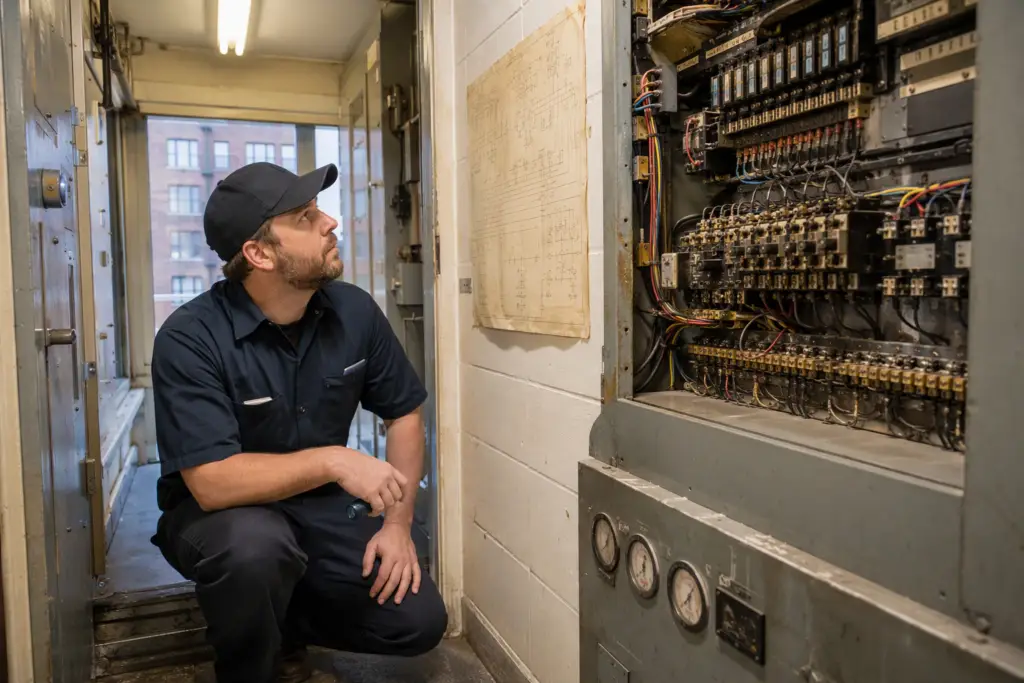
Door system components — including door operators, rollers, gibs, and safety edges — are subject to the highest cycle frequency of any elevator component and represent the leading source of service calls. Hydraulic systems in older buildings are vulnerable to seal degradation, oil leaks, and submersible pump failures. Controller faults, including failures of printed circuit boards and contactors, are increasingly common in aging equipment that has not been modernized. Safety devices such as governors, safeties, and oil buffers are designed to trigger an out-of-service condition when they detect an unsafe operating state — this is a protective function, not a malfunction, but it requires qualified service to diagnose and resolve before the AHJ will permit return to service. Understanding these common failure modes helps building managers set realistic expectations for repair timelines when discussing the situation with tenants.
How can building managers minimize the impact of elevator outages on daily operations?
Building managers can minimize the operational impact of elevator outages through a combination of proactive maintenance scheduling, a written elevator emergency plan prepared in advance, and clear internal protocols that activate automatically when a unit goes offline.
The worst time to develop an outage communication protocol is during an active outage. Buildings with more than one elevator should identify in advance which unit serves as the primary accessible route so that planned maintenance can be scheduled on the secondary unit first. Buildings with a single elevator should work with their service provider to identify the most failure-prone components and develop a component replacement schedule that addresses them before failure occurs. An internal emergency plan should designate who contacts the elevator service provider, who notifies tenants, who manages ADA accommodations, and who coordinates with the AHJ — with clear backup designations in case the primary contact is unavailable.
What OSHA obligations apply to building staff and contractors working on an elevator that is out of service?
Under OSHA standards, elevator shafts and machine rooms are recognized as permit-required confined spaces and fall protection hazard areas, meaning that all work must be performed by qualified personnel following applicable lockout/tagout and confined space entry procedures.
Building managers and property owners bear responsibility for ensuring that only properly credentialed elevator mechanics perform work on out-of-service units. Allowing unqualified maintenance staff to attempt repairs — even minor adjustments — exposes the building owner to OSHA violations and personal injury liability. Elevator machine rooms must remain locked and accessible only to authorized personnel while repair work is underway. The elevator service provider’s technicians are responsible for their own lockout/tagout compliance, but building management retains responsibility for controlling site access and ensuring that no unauthorized individuals enter the machine room or shaft area during the repair.
How should building managers handle media or public inquiries about a long-term elevator outage?
For outages that extend beyond a few days — particularly in high-profile commercial or residential buildings — building managers should prepare a brief, factual public statement, designate a single spokesperson, and avoid speculative comments about cause or liability.
Extended outages in large multi-tenant buildings occasionally attract media attention, particularly when they affect tenants with disabilities or occur in publicly visible locations. A prepared statement should acknowledge the outage, describe the steps being taken to restore service, identify the accommodation measures in place for affected tenants, and provide a contact for further inquiries. The statement should not speculate about the cause of the failure, assign fault, or make promises about restoration timelines that cannot be guaranteed. Directing inquiries to building legal counsel before public statements are issued is advisable for outages that have generated complaints or formal ADA accommodation requests.
What records must be kept after an elevator returns to service?
After an elevator returns to service, building managers should retain the AHJ’s signed inspection report, all repair invoices and work orders, the updated maintenance log, copies of all tenant communications sent during the outage, and any accommodation records generated under the ADA.
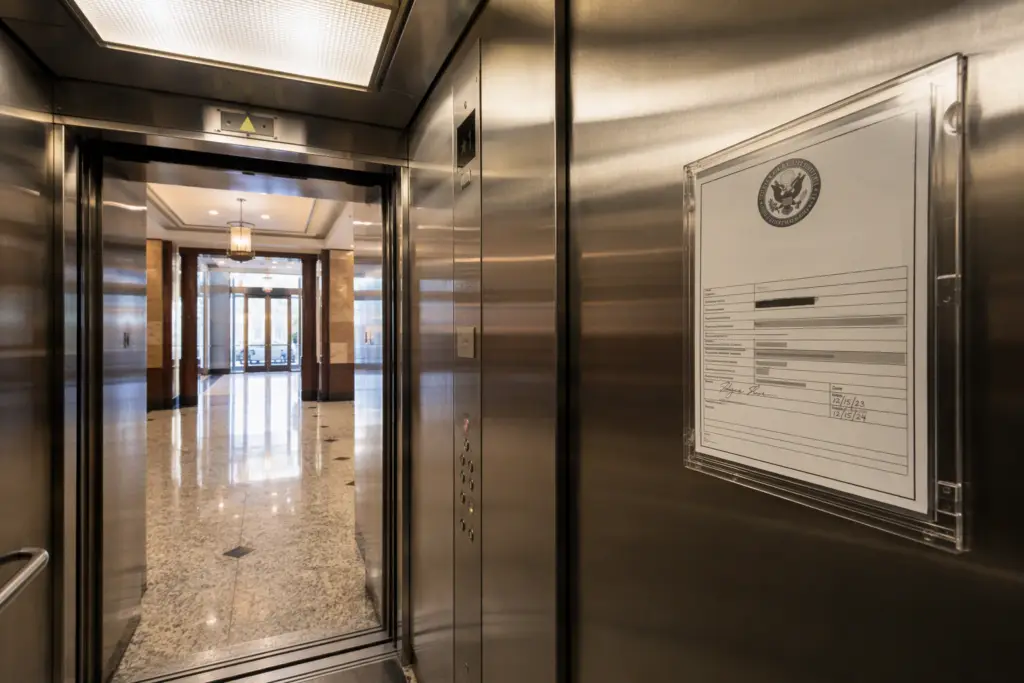
The ASME A17.1 Safety Code for Elevators and Escalators requires that certain inspection and test certificates be kept on file and available for review by the AHJ. Depending on the jurisdiction — Maryland, Washington DC, Pennsylvania, or Virginia — the certificate or operating permit may also be required to be posted in or near the elevator. Building managers should confirm posting requirements with their AHJ or their elevator service provider following the reinspection. The complete outage record, including all tenant communications and accommodation documentation, should be retained in the building’s management files as described in the documentation section above.
How can Quality Elevator Company help manage elevator downtime in Baltimore, Washington DC, Philadelphia, and Richmond?
Quality Elevator Company provides certified elevator maintenance, repair, and modernization services across its full service area — Baltimore MD, Washington DC, Philadelphia PA, and Richmond VA — and supports building managers through every phase of an elevator outage, from initial diagnosis through AHJ reinspection and return to service.
Quality Elevator Company’s technicians are qualified to work on a wide range of elevator systems and are familiar with the AHJ inspection processes in each market the company serves. When a building managed through Quality Elevator Company’s maintenance program experiences an outage, the company coordinates directly with the relevant authority — whether that is Maryland’s Division of Labor and Industry, the DC DCRA, Pennsylvania’s Bureau of Occupancy and Compliance, or Virginia’s Department of Labor and Industry — to manage the permit and reinspection process on the building owner’s behalf. This reduces the administrative burden on building management during a period when internal resources are already stretched by tenant communications and accommodation logistics. Building managers who do not yet have a maintenance agreement in place are encouraged to contact Quality Elevator Company for an assessment of their current equipment condition and maintenance needs.
What questions should building managers ask their elevator service provider at the start of a repair?
At the start of any elevator repair, building managers should ask their service provider for a clear diagnosis, a written repair scope, an estimated timeline, a parts availability confirmation, an explanation of whether a permit is required, and the expected reinspection process before the unit can return to service.
These questions establish accountability and create a shared understanding of the repair process that can be communicated directly to tenants. A reputable elevator service provider will be able to answer all of these questions with specificity. If a provider is unable to provide a clear diagnosis or declines to discuss the permit and reinspection process, that is a signal that additional due diligence may be warranted. Building managers should request written documentation of the diagnosis and repair plan before authorizing work on any significant repair — this protects both the building owner and creates a clear scope of work that prevents disputes over what was and was not included in the repair.
How does a building’s age and elevator modernization status affect outage frequency and duration?
Older, unmodernized elevator systems experience outages more frequently and with longer repair durations than modernized systems, primarily because obsolete components are harder to source, control systems are less diagnostically transparent, and aging mechanical assemblies are operating beyond their intended service life.
Buildings throughout Baltimore, Washington DC, Philadelphia, and Richmond contain a significant proportion of elevator inventory that was installed decades ago and has not undergone comprehensive modernization. While ASME A17.3 governs the safety requirements for existing elevators in service, compliance with minimum safety code does not mean an elevator is operating at optimal reliability. Building owners who are experiencing recurring outages should discuss a modernization assessment with their elevator service provider. Quality Elevator Company conducts elevator condition assessments that evaluate the remaining service life of key system components and provide building owners with a prioritized capital planning framework to address the highest-risk items first.
Ready to Minimize Elevator Downtime in Your Building?
Whether your building is experiencing an active outage or you want to prevent the next one, the right service partner makes all the difference. Contact Quality Elevator Company for a free elevator assessment — covering maintenance gaps, modernization needs, and emergency response readiness for your building in Baltimore MD, Washington DC, Philadelphia PA, or Richmond VA.
Call us today: 301-779-9116
Quality Elevator Company — Certified Elevator Service for the Mid-Atlantic Region.
Need elevator service you can rely on? Quality Elevator Company is ready to help.