How Fast Can an Elevator Be Repaired? Complete FAQ Guide for Building Owners
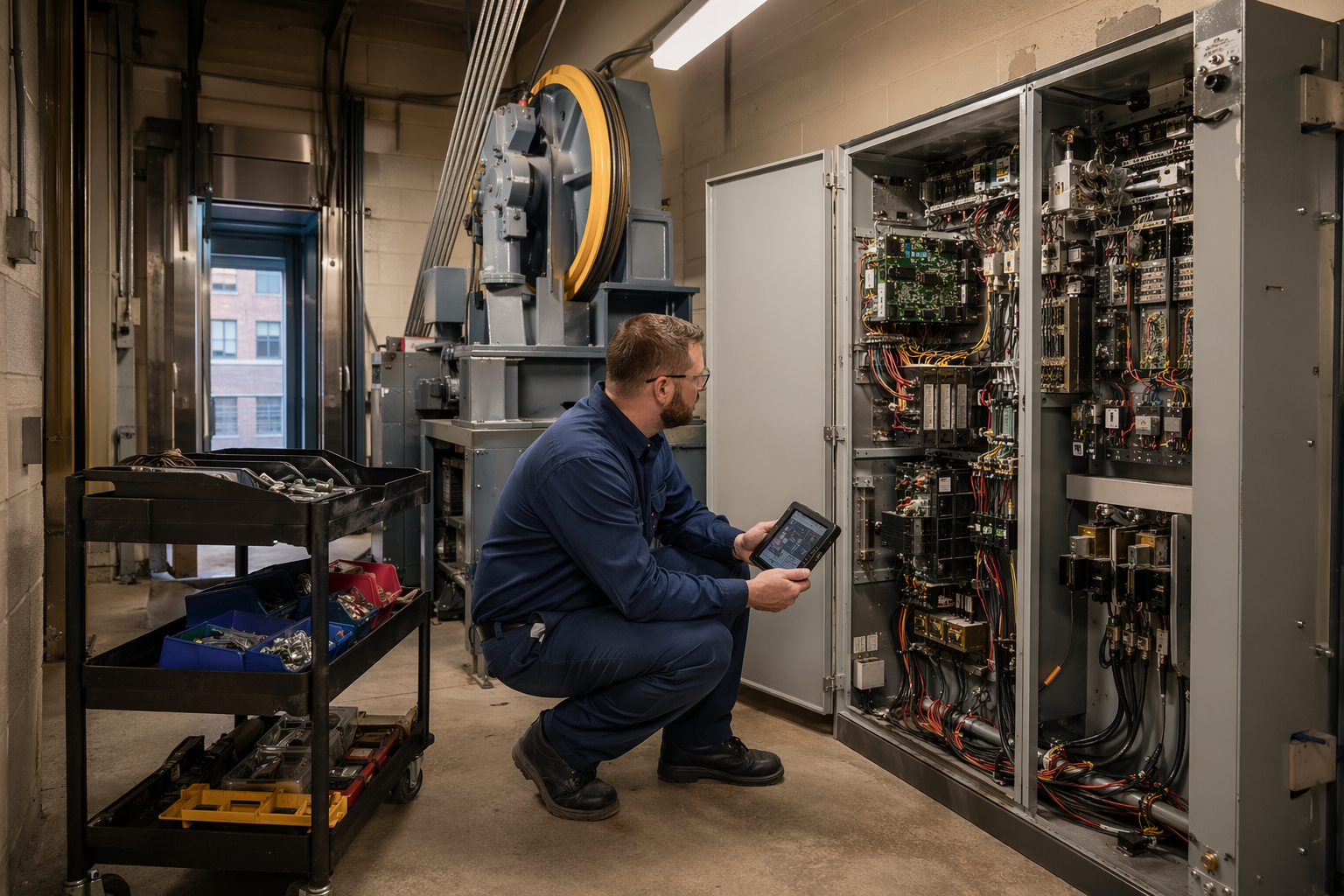
After 15 years of diagnosing and repairing elevators across Baltimore, Washington DC, Philadelphia, and Richmond, we have answered this question hundreds of times. Building managers want certainty. Tenants want their elevator back. And everyone wants a straight answer about how long they will be dealing with an “Out of Service” sign. This comprehensive FAQ breaks down every factor that influences elevator repair timelines — from a tripped breaker to a full controller replacement — so you know exactly what to expect.
How Fast Can a Typical Elevator Be Repaired?
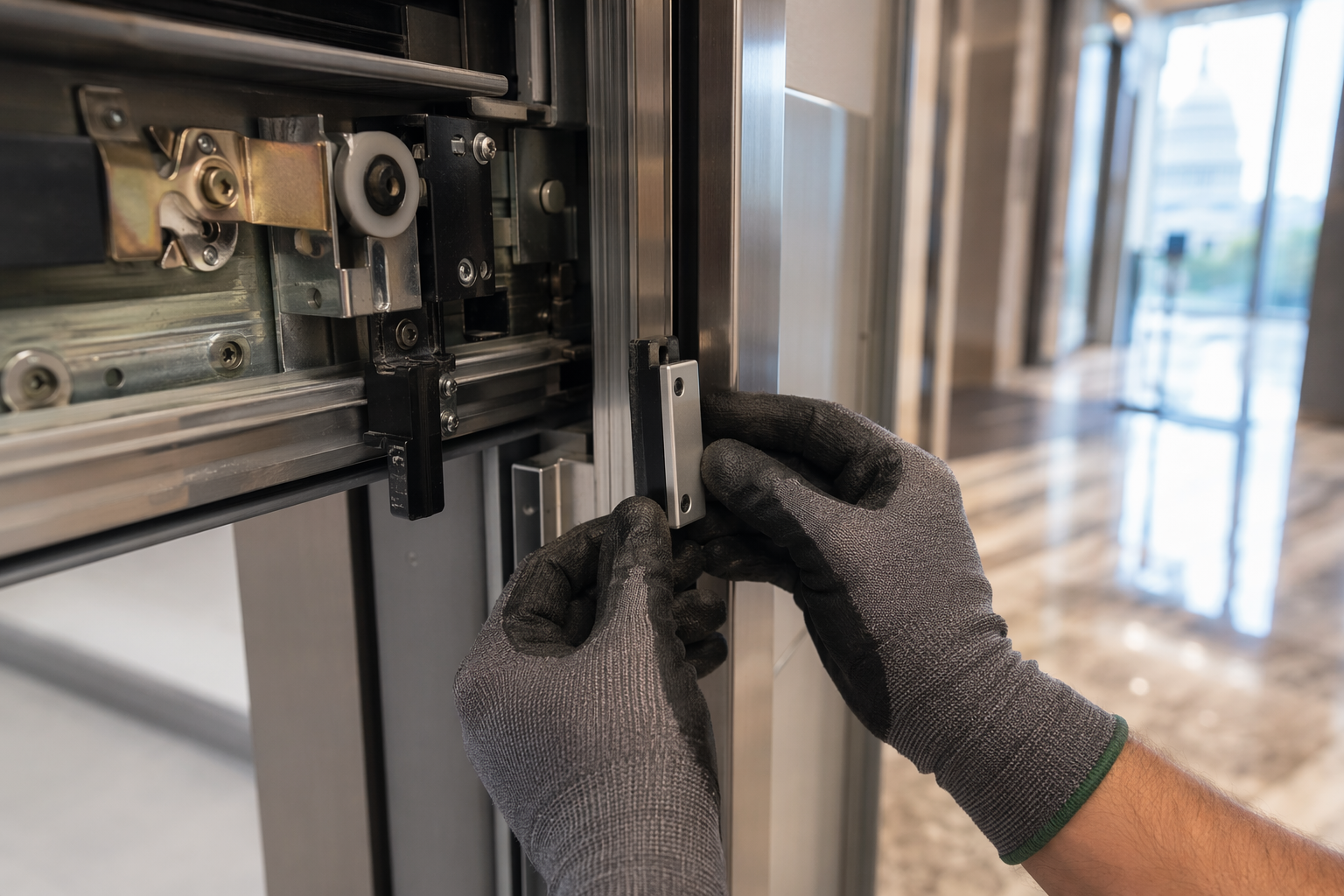
The majority of elevator service calls are resolved the same day, with technicians completing repairs in 2 to 8 hours for the most common issues.
In our experience serving the Mid-Atlantic region, the majority of service calls involve issues that a certified technician can diagnose and resolve within a single visit: door operator malfunctions, door contact problems, minor hydraulic leaks, tripped safety circuits, or burned-out lighting components. These repairs move quickly because the parts are standard and technicians carry them on their trucks.
When parts must be ordered — as is common for hydraulic jack replacements, proprietary controller boards, or traction drive motors — timelines extend from days into weeks. A hydraulic jack replacement can require 3 to 10 business days for the part to arrive before a full-day installation begins. Proprietary controllers for older units from major OEM manufacturers can carry extended lead times if the manufacturer is backordered, particularly for equipment manufactured before 2010.
What Are the Most Common Elevator Repairs and How Long Do They Take?

Door-related issues are the single most frequent repair category, typically resolved in 1 to 3 hours on-site.
The benchmark data table below reflects repair time ranges and cost estimates based on Quality Elevator Company service records for the Mid-Atlantic region as of 2026. Cost ranges are estimates only and vary by building configuration, labor rates, and parts sourcing. Contact our team for a site-specific quote.
| Repair Type | Average Repair Time | Parts Commonly in Stock | Estimated Cost Range |
|---|---|---|---|
| Door operator adjustment | 1–2 hours | Yes | $150–$400 |
| Door contact / sensor replacement | 1–3 hours | Yes | $200–$600 |
| Safety circuit reset / diagnosis | 1–4 hours | Yes | $175–$500 |
| Hydraulic fluid leak repair | 2–6 hours | Usually | $400–$1,200 |
| Motor starter / contactor replacement | 3–6 hours | Often | $500–$1,800 |
| Controller board replacement | 4–12 hours | Rarely | $1,500–$8,000 |
| Hydraulic jack replacement | 1–3 days | No (must order) | $3,000–$12,000 |
| Traction drive motor replacement | 2–5 days | No (must order) | $4,000–$15,000 |
| Full controller modernization | 3–7 days | No (must order) | $15,000–$40,000 |
| Wire rope / hoist cable replacement | 1–2 days | No (must order) | $2,000–$8,000 |
What Factors Determine How Quickly an Elevator Can Be Repaired?

Five primary variables control elevator repair speed: parts availability, elevator age, technician response time, building access conditions, and the regulatory inspection requirements that apply after certain repairs are completed.
- Parts availability: Stock parts on a technician’s truck mean same-day resolution. Proprietary or discontinued components can add days to weeks to any timeline.
- Elevator age and make: Equipment manufactured before 2005 frequently requires sourced, refurbished, or custom-fabricated parts. ASME A17.1-2019/CSA B44-19, the current governing safety code adopted across Maryland, DC, Pennsylvania, and Virginia, also requires that replacement components meet current code specifications, which can complicate sourcing for legacy systems.
- Technician response time: A maintenance contract with a local elevator company like Quality Elevator Company typically guarantees a 2- to 4-hour emergency response window, compared to 24 hours or longer for on-demand service calls without a contract.
- Machine room and pit access: Locked, obstructed, or flooded machine rooms and pits add diagnostic time before repair work can begin.
- Post-repair inspection requirements: In Maryland, DC, Pennsylvania, and Virginia, certain major repairs — including full controller replacements and hydraulic jack replacements — require a state or jurisdictional inspection before the elevator can return to service. Inspection scheduling can add 1 to 5 business days after the physical repair is complete.
Does an Elevator Repair Require a Code Inspection Before It Can Return to Service?
Yes — in many cases, and this is one of the most overlooked reasons elevators remain out of service longer than building owners expect.
Under ASME A17.1/CSA B44 and the state-level elevator safety codes adopted in Maryland, Virginia, Washington DC, and Pennsylvania, specific repair categories trigger a mandatory third-party or state inspection before the elevator can be returned to passenger service. These categories typically include:
- Full controller replacement or modernization
- Hydraulic cylinder or jack replacement
- Hoist rope or wire rope replacement on traction elevators
- Drive motor replacement
- Any structural modification to the hoistway or pit
In the Mid-Atlantic region, inspection scheduling timelines with state elevator inspection offices vary. Maryland’s Department of Labor elevator inspection unit, for example, may schedule inspections within 3 to 7 business days depending on workload and jurisdiction. Building owners should factor this window into their total downtime estimate when planning major repairs.
Quality Elevator Company coordinates permit filings and inspection scheduling directly on behalf of building owners in Maryland, DC, Virginia, and Pennsylvania to minimize administrative delays.
How Much Does Emergency Elevator Repair Cost Compared to Scheduled Repair?
Emergency elevator repair — defined as after-hours, weekend, or holiday response — typically carries a labor premium of 1.5x to 2x the standard hourly rate, in addition to any parts costs.
For building owners without a service contract, after-hours call-out fees from elevator companies in the Mid-Atlantic market generally range from $250 to $600 for the first hour of labor, with standard hourly rates of $150 to $300 applying for each additional hour. These figures reflect Quality Elevator Company’s observations from the Baltimore, DC, Philadelphia, and Richmond markets as of 2026 and are not industry-published benchmarks.
Scheduled repairs — those booked during standard business hours with advance notice — avoid call-out premiums and allow technicians to pre-stage parts, which often reduces total repair time by 20 to 40 percent compared to emergency dispatches where parts must be sourced on short notice.
A full-service preventive maintenance contract is the most cost-effective way to reduce both emergency repair frequency and per-incident cost. Elevators under active maintenance contracts experience fewer unplanned outages because technicians identify and replace wear components — door gibs, buffers, roller guides, and hydraulic seals — before they fail completely.
How Do You Choose the Right Elevator Repair Company to Minimize Downtime?

The right elevator repair company will have four capabilities that directly shorten your downtime: local parts inventory, certified technicians, guaranteed response windows, and jurisdiction-specific code knowledge.
When evaluating elevator repair vendors — whether in Baltimore, Washington DC, Philadelphia, Richmond, or surrounding markets — ask each company the following questions before signing a service agreement:
- What is your guaranteed emergency response time, and is it contractually defined? Some national elevator companies advertise response times but do not guarantee them in writing. Quality Elevator Company provides contractually committed response windows for all maintenance contract customers.
- Do your technicians carry parts inventory on their trucks? A technician who arrives with commonly needed parts — door contacts, sensors, hydraulic seals, fuses, and contactors — resolves the majority of service calls in a single visit.
- Are your technicians NEIEP-trained and state-licensed for this jurisdiction? Maryland, DC, Virginia, and Pennsylvania each have separate elevator mechanic licensing requirements. Verify that your vendor’s technicians hold the appropriate licenses for your location.
- Can you handle permit filing and inspection coordination for major repairs? Vendors who manage this process internally eliminate scheduling delays that add unnecessary downtime after major component replacements.
- What is your average first-visit resolution rate? A reputable company should be able to share an honest benchmark. Our team resolves the majority of standard service calls within a single visit when parts are available.
Quality Elevator Company has served commercial and residential building owners across Maryland, Washington DC, Virginia, and Pennsylvania since 2009. Our licensed technicians carry stocked service trucks, respond to emergency calls with contractually defined windows, and manage all permit and inspection coordination for major repairs. Contact our team to discuss a service agreement or request a repair estimate for your building.
What Should a Building Owner Do Immediately When an Elevator Goes Out of Service?
Taking the right steps in the first 30 minutes after an elevator goes out of service can meaningfully shorten your total downtime and protect you from liability.
- Post “Out of Service” signage immediately on all affected floors. This is a basic liability protection step and is required under building codes in Maryland, DC, Virginia, and Pennsylvania.
- Check whether anyone is trapped. If a passenger is trapped in the cab, call 911 and your elevator company’s emergency line simultaneously. Do not attempt to open hoistway doors manually without a licensed technician present.
- Call your elevator service company’s emergency line. If you have a maintenance contract, use the dedicated emergency number — not the general office line — to ensure priority dispatch.
- Note and document the fault code or error display on the controller panel if accessible. Providing this information to the technician before arrival can reduce diagnostic time.
- Restrict access to the machine room and pit until the technician arrives. Unauthorized access to elevator mechanical spaces creates safety hazards and can void insurance coverage.
- Notify affected tenants or residents with an estimated response window. Transparency reduces complaints and demonstrates proactive building management.
- Request a written service report after every repair. Documentation of the fault, parts replaced, and technician findings is essential for maintenance records, insurance claims, and future repair planning.
For building owners managing multiple elevators or high-traffic properties in Baltimore, Washington DC, Philadelphia, or Richmond, Quality Elevator Company offers priority dispatch agreements that guarantee technician arrival within 2 hours of your emergency call. Reach out to our team to learn more about service contract options for your property.
Need elevator service you can rely on? Quality Elevator Company is ready to help.