
How Much Does Elevator Maintenance Cost? A Complete FAQ Guide
Elevator maintenance is one of the most significant operational expenses for building owners and facility managers. Understanding what drives costs, what compliance requires, and how to evaluate service contracts can mean the difference between a predictable maintenance budget and unexpected emergency repair bills. This guide answers the most common questions about elevator maintenance costs for commercial, residential, and institutional properties — with specific insight for owners in Baltimore, Washington DC, Philadelphia, and Richmond.
How Much Does Elevator Maintenance Cost Per Year?
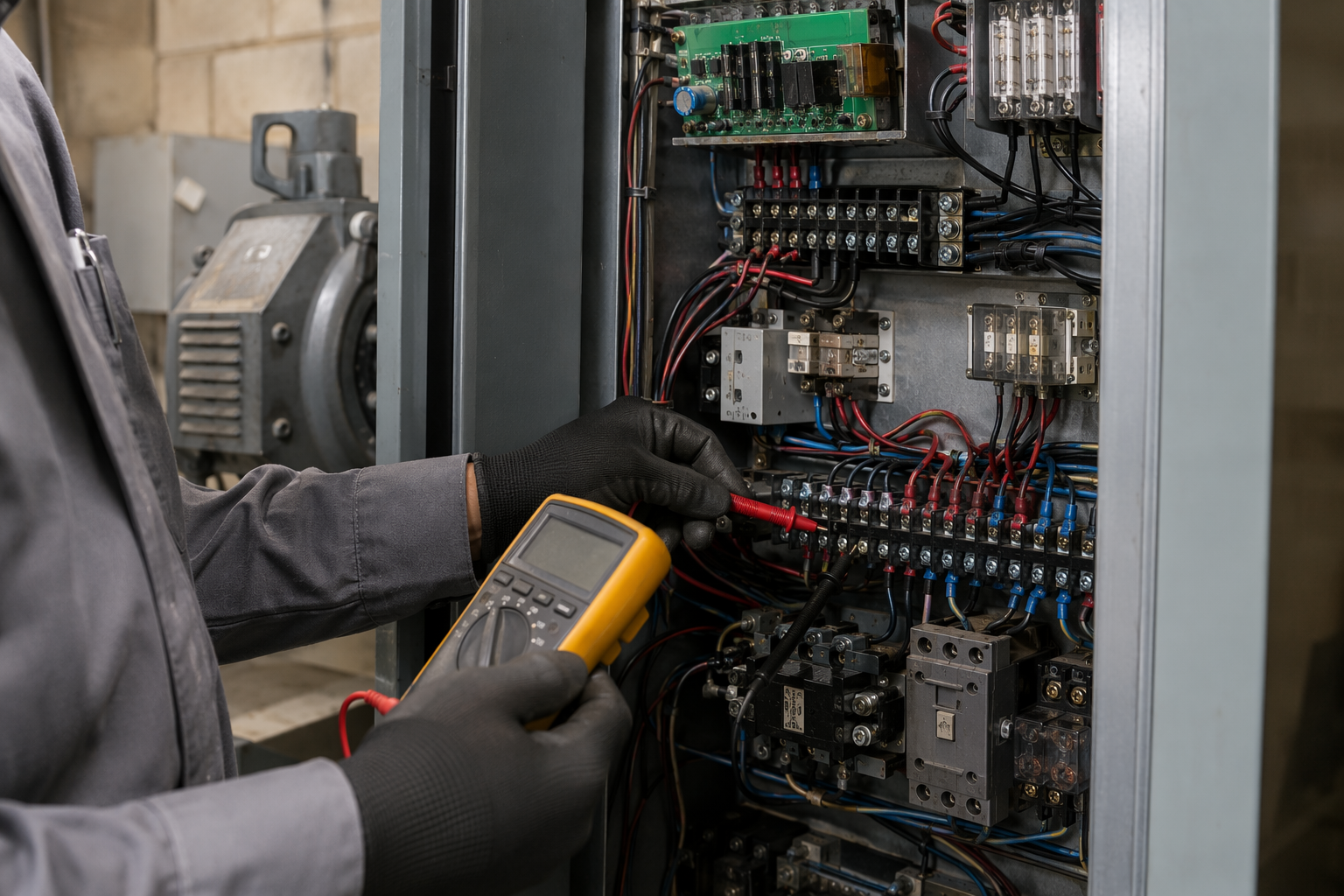
Annual elevator maintenance costs vary widely based on elevator type, age, usage volume, and contract scope, but building owners should expect a meaningful recurring investment to maintain safe, code-compliant equipment.
Several factors drive the range in annual costs. A basic preventive maintenance agreement for a low-use hydraulic elevator in a small commercial building will cost considerably less than a full-service contract covering a high-rise traction elevator system in a busy urban office tower. Contract type — oil-inclusive, parts-inclusive, or fully comprehensive — also significantly affects pricing. Buildings with older equipment, high call volume, or a history of deferred maintenance tend to fall toward the higher end of cost ranges.
Regional labor markets matter as well. Elevator mechanics in major metropolitan areas including Washington DC, Baltimore, Philadelphia, and Richmond operate under prevailing wage and union rate structures that influence service pricing. Owners in these markets should budget accordingly and evaluate contracts that reflect local labor costs rather than national averages.
What Are the Main Types of Elevator Maintenance Contracts?

Elevator maintenance contracts typically fall into four categories: oil-and-grease (basic lubrication only), parts-and-labor, oil-inclusive, and full-service or comprehensive agreements — each representing a different cost-risk tradeoff for the building owner.
A basic oil-and-grease contract is the least expensive option on paper but leaves the building owner responsible for all parts, components, and labor costs outside routine lubrication. For older elevators or high-traffic equipment, this can result in unpredictable out-of-pocket repair expenses that quickly eclipse the savings on the contract premium.
A parts-and-labor contract covers the cost of many — though not necessarily all — replacement components and technician labor during scheduled service visits. Exclusions vary significantly between providers and should be reviewed carefully before signing.
Full-service or comprehensive contracts represent the highest monthly cost but the most predictable total spend. These agreements typically cover preventive maintenance, emergency callbacks, most parts and components, and labor for unscheduled repairs. For busy commercial buildings, hospitals, multi-family residential properties, and ADA-dependent facilities, a comprehensive agreement is often the most cost-effective long-term choice.
What Factors Drive Elevator Maintenance Costs Up or Down?
The primary cost drivers are elevator type, age and condition, traffic volume, contract scope, local labor rates, and the number of units in a building — with aged equipment and high usage generally pushing costs significantly higher.
Elevator type plays a foundational role. Hydraulic elevators, common in low-rise buildings, have different maintenance profiles than geared or gearless traction systems found in mid-rise and high-rise construction. Machine-room-less (MRL) traction elevators present their own service considerations. Each drive system has distinct lubrication, inspection, and component replacement intervals.
Age and condition are equally important. Equipment that has not received consistent preventive maintenance accumulates deferred wear on components including controller boards, door operators, safeties, buffers, and rope systems. Bringing neglected equipment back into good condition often requires a remediation investment before routine maintenance costs normalize.
Traffic volume — the number of starts per day — accelerates wear on door systems, guides, and mechanical components. A residential elevator in a three-story building may see a fraction of the daily starts of a hospital elevator serving hundreds of patients, staff, and visitors. Contracts and budgets should reflect actual usage patterns rather than assumptions.
How Does Elevator Type Affect Maintenance Costs?
Hydraulic elevators, traction elevators, and MRL elevators each carry different maintenance cost profiles due to their distinct mechanical systems, lubrication requirements, and component complexity.
Hydraulic elevators require periodic fluid checks and replacement, cylinder inspections, and attention to the power unit and valve system. Environmental regulations in Maryland, DC, Virginia, and Pennsylvania govern hydraulic fluid containment and disposal, and compliance with environmental standards adds a layer of cost and documentation responsibility.
Geared traction elevators involve gear oil, rope inspections, brake adjustments, and sheave assessments. Gearless traction systems — common in high-rise buildings — eliminate the gearbox but require attention to the machine, motor windings, and sophisticated drive electronics. MRL elevators concentrate mechanical components in the hoistway, which can complicate access for service technicians and affect labor time per visit.
The table below provides a general comparative overview of maintenance considerations by elevator type. Note that actual costs depend on local market conditions, contract scope, and equipment-specific factors.
| Elevator Type | Common Applications | Key Maintenance Focus Areas | Relative Maintenance Complexity |
|---|---|---|---|
| Hydraulic (Conventional) | Low-rise commercial, residential | Fluid system, cylinder, power unit, valve | Moderate |
| Geared Traction | Mid-rise commercial, multifamily | Gear oil, ropes, brake, sheaves, controller | Moderate-High |
| Gearless Traction | High-rise commercial, hotels | Machine, motor windings, drive electronics, ropes | High |
| MRL Traction | Mid-rise commercial, multifamily | Hoistway-mounted machine, drive, door operator | Moderate-High |
| Winding Drum | Older low-rise, freight | Drum, ropes, limit switches, brake | Moderate |
| Pneumatic (Vacuum) | Residential, limited use | Seal integrity, turbine system, pressure sensors | Low-Moderate |
What Does Elevator Inspection Cost, and Is It Separate from Maintenance?
Elevator inspections are typically a separate line item from routine maintenance contracts and are required by state and local authorities having jurisdiction (AHJ) on a mandatory schedule — usually annually or semi-annually depending on elevator type and jurisdiction.
In Maryland, DC, Virginia, and Pennsylvania, elevator inspections must be conducted by licensed inspectors and results filed with the relevant state agency. Inspection fees vary by jurisdiction and elevator type. Building owners are responsible for ensuring inspections occur on schedule and that any violations identified are corrected within the timeframes specified by the AHJ.
Routine preventive maintenance visits — performed by the elevator service contractor — are distinct from third-party inspections. Maintenance visits keep the equipment operating safely and help ensure it is ready for inspection. A well-maintained elevator is far less likely to generate violation notices or require costly corrective work following an inspection.
Quality Elevator Company coordinates with building owners to ensure equipment in Baltimore, Washington DC, Philadelphia, and Richmond is appropriately prepared for annual and periodic inspections under each jurisdiction’s requirements.
How Often Should Elevators Receive Preventive Maintenance Visits?
Preventive maintenance visit frequency depends on elevator type, traffic volume, and contract terms, but most commercial elevators benefit from monthly or quarterly service visits at minimum.
High-traffic elevators in hospitals, hotels, office towers, and transit-adjacent buildings may require more frequent attention due to accelerated wear from high daily starts. Residential elevators in smaller buildings may be adequately served by quarterly maintenance under a well-structured contract. The goal of preventive maintenance is to identify and correct developing issues before they cause entrapments, callbacks, or inspection violations.
Deferred or infrequent maintenance does not reduce costs — it transfers them to future repair invoices and emergency callback charges, which typically carry premium labor rates outside of contracted hours.
What Are the Compliance Requirements That Affect Elevator Maintenance Costs?
Elevator maintenance is governed by the ASME A17.1 Safety Code for Elevators and Escalators, adopted and enforced at the state level, as well as ADA requirements and OSHA workplace safety standards — all of which create non-negotiable baseline maintenance obligations for building owners.
The ASME A17.1 code establishes minimum requirements for elevator design, installation, inspection, testing, and maintenance. Each state in Quality Elevator Company’s service territory — Maryland, DC, Virginia, and Pennsylvania — adopts and enforces a version of ASME A17.1, with possible local amendments. Building owners and their service providers must be current on the applicable edition in each jurisdiction.
The Americans with Disabilities Act (ADA) requires that elevators in covered buildings remain accessible and operational. Extended elevator outages in ADA-required installations can expose building owners to compliance risk beyond the mechanical inconvenience. This is a significant reason why response time for callbacks and expedited repair capability matter when selecting a maintenance provider.
OSHA standards apply to elevator service technicians and affect how maintenance work is performed in occupied buildings. Owners should confirm that their service provider operates in compliance with applicable OSHA requirements for confined spaces, lockout/tagout, and fall protection.
What Is the Cost of Elevator Repairs Versus a Maintenance Contract?
Emergency elevator repairs conducted outside of a comprehensive maintenance contract carry significantly higher per-incident costs than proactive maintenance, making contract coverage a financially protective strategy for most building owners.
Out-of-contract repair scenarios require building owners to pay for technician dispatch, travel, labor at non-contract rates, and the full cost of replacement parts without any volume or agreement-based pricing advantage. For common but costly repairs — such as door operator replacement, controller board repair, or rope replacement — the difference between contract and non-contract pricing can be substantial.
Beyond direct repair costs, elevator downtime has secondary costs including tenant dissatisfaction, potential ADA compliance exposure, and in some facilities, operational disruption that carries its own financial consequences. A comprehensive maintenance agreement functions as both a cost-management tool and a risk mitigation strategy.
How Do I Evaluate and Compare Elevator Maintenance Proposals?
Evaluating maintenance proposals requires examining contract scope, exclusions, callback response provisions, parts coverage definitions, escalation clauses, and the service provider’s qualifications — not simply comparing monthly rates.
The lowest-quoted monthly rate often reflects a narrower scope of coverage, more exclusions, or a lower service visit frequency. Building owners should request a detailed breakdown of what is and is not included, including which specific parts are covered and under what conditions. Aging equipment with known wear items may have those components explicitly excluded from otherwise broad-sounding agreements.
Contract escalation clauses determine how pricing changes over the life of a multi-year agreement. Some agreements include automatic annual increases tied to labor cost indices; understanding the escalation mechanism is essential to accurate long-term budget projection.
Service provider qualifications matter independently of price. Technicians should hold appropriate state licenses for each jurisdiction where work is performed. Maryland, the District of Columbia, Virginia, and Pennsylvania each maintain licensing requirements for elevator mechanics and contractors. Building owners should confirm current licensure before entering into service agreements.
What Is Included in a Full-Service Elevator Maintenance Contract?
A full-service contract typically includes all scheduled preventive maintenance visits, lubrication and adjustments, most replacement parts and components, emergency callback labor, and minor repairs — giving building owners the most comprehensive protection against unplanned elevator costs.
The specific parts and systems covered vary by provider and agreement. Common inclusions in comprehensive contracts are door operators and components, controllers and boards, drive systems, safety devices, buffers, guide shoes, and lighting. Common exclusions may include cab interior finishes, structural components, hydraulic cylinder replacement, and modernization-level upgrades.
Callback provisions define what happens when an elevator malfunctions between scheduled visits. A strong callback clause specifies response conditions, including provisions for entrapment situations. Building owners should understand the callback structure in any agreement before signing.
What Is Elevator Modernization and How Does It Affect Long-Term Maintenance Costs?
Elevator modernization — the partial or full upgrade of aging elevator systems — typically reduces ongoing maintenance costs by replacing worn, obsolete, or parts-scarce components with current technology, often improving reliability and energy efficiency in the process.
As elevators age beyond their design service life, maintenance costs tend to increase as components become harder to source, failure rates rise, and service time per visit lengthens. At some threshold, the cumulative cost of maintaining aging equipment — particularly when factoring in lost productivity from downtime — may justify a modernization investment.
Modernization scope ranges from controller and drive upgrades to complete system replacement. A qualified elevator service company can assess the condition of existing equipment and present an objective analysis of maintenance-versus-modernization economics. Quality Elevator Company provides equipment assessments for building owners across its service territory to support informed capital planning decisions.
How Do Maintenance Costs Differ for Residential Versus Commercial Elevators?
Residential elevators generally carry lower maintenance costs than commercial installations due to lower traffic volume, simpler mechanical systems, and less demanding duty cycles, though compliance obligations still apply to covered installations.
Home elevators and limited-use/limited-application (LULA) elevators have their own code classifications under ASME A17.1 and related standards. Maintenance intervals and inspection requirements may differ from those of full commercial equipment. Building owners and condominium associations with residential-scale elevators should not assume that the same maintenance frequency or contract structure appropriate for a commercial installation applies to their equipment.
Multi-family residential buildings — apartment complexes, condominiums, and assisted living facilities — occupy a middle ground, with elevator usage patterns more intensive than single-family residential but sometimes less demanding than high-rise commercial. In these settings, elevator reliability is directly tied to tenant satisfaction and ADA obligations for covered buildings.
What Should Building Owners in Baltimore, Washington DC, Philadelphia, and Richmond Know About Local Elevator Regulations?
Each jurisdiction in Quality Elevator Company’s service territory enforces its own elevator safety regulations, inspection schedules, and licensing requirements — making local regulatory knowledge a key factor when selecting a maintenance provider.
Maryland enforces elevator safety through the Maryland Department of Labor, which administers the state’s elevator safety program and requires periodic inspections by licensed inspectors. The District of Columbia maintains its own elevator inspection program administered through the DC Department of Consumer and Regulatory Affairs. Pennsylvania’s elevator safety program is administered by the Department of Labor and Industry. Virginia’s Elevator Safety Program operates under the Department of Labor and Industry as well.
Each of these programs establishes inspection intervals, certificate requirements, and violation correction timelines that directly affect building owner obligations and, consequently, maintenance priorities. A service provider with active operations in all four markets — as Quality Elevator Company maintains — can navigate these regulatory environments without requiring building owners to manage jurisdictional differences independently.
How Can Deferred Elevator Maintenance Lead to Higher Costs?
Deferred maintenance allows minor wear and developing faults to progress into major component failures, entrapments, and inspection violations — all of which carry costs that far exceed what proactive maintenance would have required.
A door operator showing signs of wear, for example, will eventually fail. If that failure occurs mid-cycle with passengers aboard, it results in an entrapment callback, emergency technician dispatch at premium rates, potential passenger safety concerns, and possible regulatory notification depending on jurisdiction. The total cost of that sequence — including reputational consequences — substantially exceeds the cost of addressing the door system during a routine scheduled visit when symptoms first appeared.
Inspection violations compound this effect. When an elevator fails inspection due to deferred maintenance items, the building owner must correct violations within a specified timeframe, often under compressed scheduling that limits the ability to obtain competitive pricing on parts and labor. In some cases, repeat violations can result in mandatory shutdown orders, which carry their own operational consequences.
What Should Building Owners Do When an Elevator Fails or Becomes Unsafe?
When an elevator malfunction occurs — particularly one involving a passenger entrapment or suspected safety hazard — building owners and facility managers should follow a defined response protocol immediately.
- If passengers are trapped, contact emergency services (911) immediately and do not attempt to force open elevator doors or extract passengers without trained assistance.
- Notify the elevator maintenance contractor’s emergency callback line to dispatch a qualified technician.
- Post clear out-of-service signage on all entrance doors to the affected elevator to prevent additional passengers from attempting to use the unit.
- Do not restore the elevator to service until a qualified technician has inspected the equipment and confirmed it is safe to operate.
- Document the incident, including time, nature of the malfunction, passengers involved (if any), and steps taken — this documentation may be required by the AHJ or in connection with any liability review.
- Report the incident to the relevant state or local elevator authority if required by jurisdiction-specific regulations.
- Retain all documentation of corrective work performed for inclusion in the elevator’s maintenance records, which are subject to inspection under ASME A17.1 requirements.
How Does the Number of Elevators in a Building Affect Per-Unit Maintenance Cost?
Buildings with multiple elevators often benefit from economies of scale in maintenance contracting, as service providers can structure visits more efficiently when multiple units in the same location are covered under a single agreement.
A building with six elevators sharing a single maintenance agreement may achieve a lower per-unit cost than a building with one elevator, because technician travel and setup time is amortized across multiple units per visit. This effect varies by provider and contract structure, but multi-unit buildings should request per-unit pricing in proposals and explore whether a portfolio agreement covering multiple buildings across a campus or ownership group offers additional efficiencies.
Conversely, buildings with mixed elevator types — for example, a combination of passenger traction elevators and a hydraulic freight elevator — may see less economies-of-scale benefit if the equipment requires different technician skill sets or separate visit schedules.
Are There Ways to Reduce Elevator Maintenance Costs Without Compromising Safety?
Building owners can manage elevator maintenance costs strategically by maintaining complete service records, addressing known issues proactively, optimizing contract scope to match actual equipment age and usage, and consolidating service agreements where multiple units are involved — without cutting corners on safety or compliance.
Complete and organized maintenance records enable service technicians to work efficiently by providing context on prior repairs, parts replaced, and developing trends. Technicians who walk into a service visit with full equipment history can direct their attention to the highest-priority items rather than spending time reconstructing the maintenance timeline from scratch.
Proactively communicating observed equipment behavior to the maintenance contractor between scheduled visits — unusual noises, door hesitation, leveling discrepancies — allows issues to be addressed during the next scheduled visit rather than escalating to callback scenarios. Many building managers underutilize this channel, allowing developing faults to worsen when a simple communication could have scheduled a targeted inspection.
Building owners should also revisit their maintenance contract scope periodically as equipment ages or as usage patterns change. A contract structured for a building at 60% occupancy may need adjustment as occupancy increases and elevator demand rises. Quality Elevator Company recommends periodic reviews of maintenance agreement scope to ensure alignment with current operating conditions.
How Does Energy Efficiency Factor Into Elevator Maintenance and Operating Costs?
Elevator energy consumption is a meaningful component of a building’s total operating cost, and a well-maintained elevator operates more efficiently than one with worn components, misadjusted systems, or outdated drives — making maintenance a factor in energy cost management.
Drive systems, in particular, affect energy consumption. Older variable-voltage variable-frequency (VVVF) drives that are in poor condition or operating out of optimal adjustment can consume more energy than necessary. Door systems that are misadjusted and cycling repeatedly, or hydraulic power units with pump inefficiencies, contribute to avoidable energy draw.
Regenerative drive technology — available in modern traction elevator modernizations — captures energy during descent and regenerates it back to the building’s electrical system. While this is a modernization consideration rather than a routine maintenance item, it illustrates how decisions about elevator systems intersect with broader energy management goals in commercial buildings.
How Should Building Owners Budget for Elevator Maintenance in Capital Plans?
Effective capital planning for elevator maintenance requires accounting for both recurring annual maintenance contract costs and the longer-term capital replacement cycle of major components and eventual modernization — treating the elevator system as a depreciating asset requiring planned reinvestment.
Major elevator components — including controllers, drive systems, door operators, and in hydraulic systems the power unit — have finite service lives. A capital plan that treats elevator maintenance as a flat annual expense without accounting for component replacement cycles will eventually encounter large unbudgeted expenditures when major items reach end of service life simultaneously.
A qualified elevator service company can support capital planning by providing condition assessments that identify components approaching end of useful life, estimate replacement timelines and costs, and help building owners sequence expenditures in a planned rather than reactive manner. This approach is particularly valuable for property managers overseeing multiple buildings or large portfolios in markets like Washington DC, Baltimore, Philadelphia, and Richmond where labor and materials costs reflect major metropolitan market conditions.
Why Should Building Owners Choose a Local, Certified Elevator Service Company?
A locally established, certified elevator service company brings jurisdictional knowledge, established relationships with state and local inspection authorities, and the operational infrastructure to provide consistent service across a defined geographic area — advantages that national providers with distributed service networks may not replicate reliably in every market.
In the Mid-Atlantic region, elevator regulations, inspection schedules, and AHJ relationships vary between Maryland, DC, Virginia, and Pennsylvania. A service company with active, established operations in all four markets — and familiarity with each jurisdiction’s specific requirements — reduces the administrative and compliance burden on building owners who manage properties across state lines.
Quality Elevator Company serves building owners and facility managers throughout Baltimore MD, Washington DC, Philadelphia PA, and Richmond VA, providing maintenance, inspection preparation, modernization assessment, and repair services for commercial, residential, and institutional elevator systems. The company’s focus on the Mid-Atlantic region allows it to maintain current knowledge of local regulatory requirements and respond effectively to the needs of clients across its service territory.
Ready to Get an Accurate Elevator Maintenance Cost Assessment for Your Building?
Every building’s elevator maintenance requirements are different. The most reliable way to understand what maintenance will cost — and what scope of coverage makes sense for your equipment — is a professional assessment by a qualified elevator service company.
Contact Quality Elevator Company for a free elevator assessment. Quality Elevator Company serves building owners, property managers, and facility directors throughout Baltimore MD, Washington DC, Philadelphia PA, and Richmond VA.
Call today: 301-307-5363
Need elevator service you can rely on? Quality Elevator Company is ready to help.