Residential elevators bring independence and convenience to homes of all sizes, but they require the same disciplined maintenance and regulatory attention as commercial equipment. The questions below cover everything a homeowner or property manager needs to know about residential elevator service — from equipment types and inspection schedules to state licensing rules and compliance requirements across Maryland, the District of Columbia, Pennsylvania, and Virginia.
What types of residential elevators does Quality Elevator Company service?
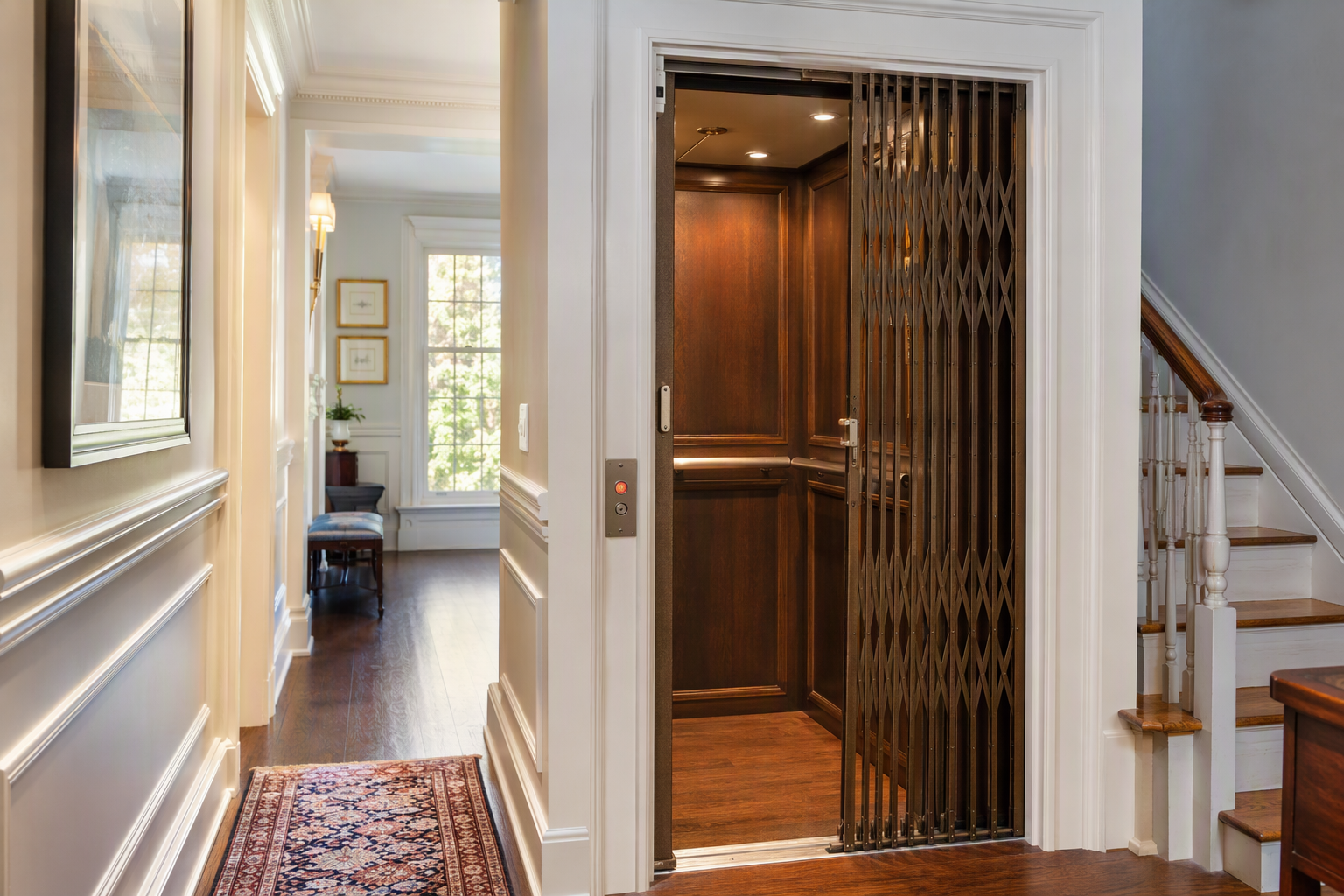
Quality Elevator Company services the most common residential elevator configurations found in the mid-Atlantic region, including hydraulic, traction (cable-drum), and pneumatic vacuum elevators.
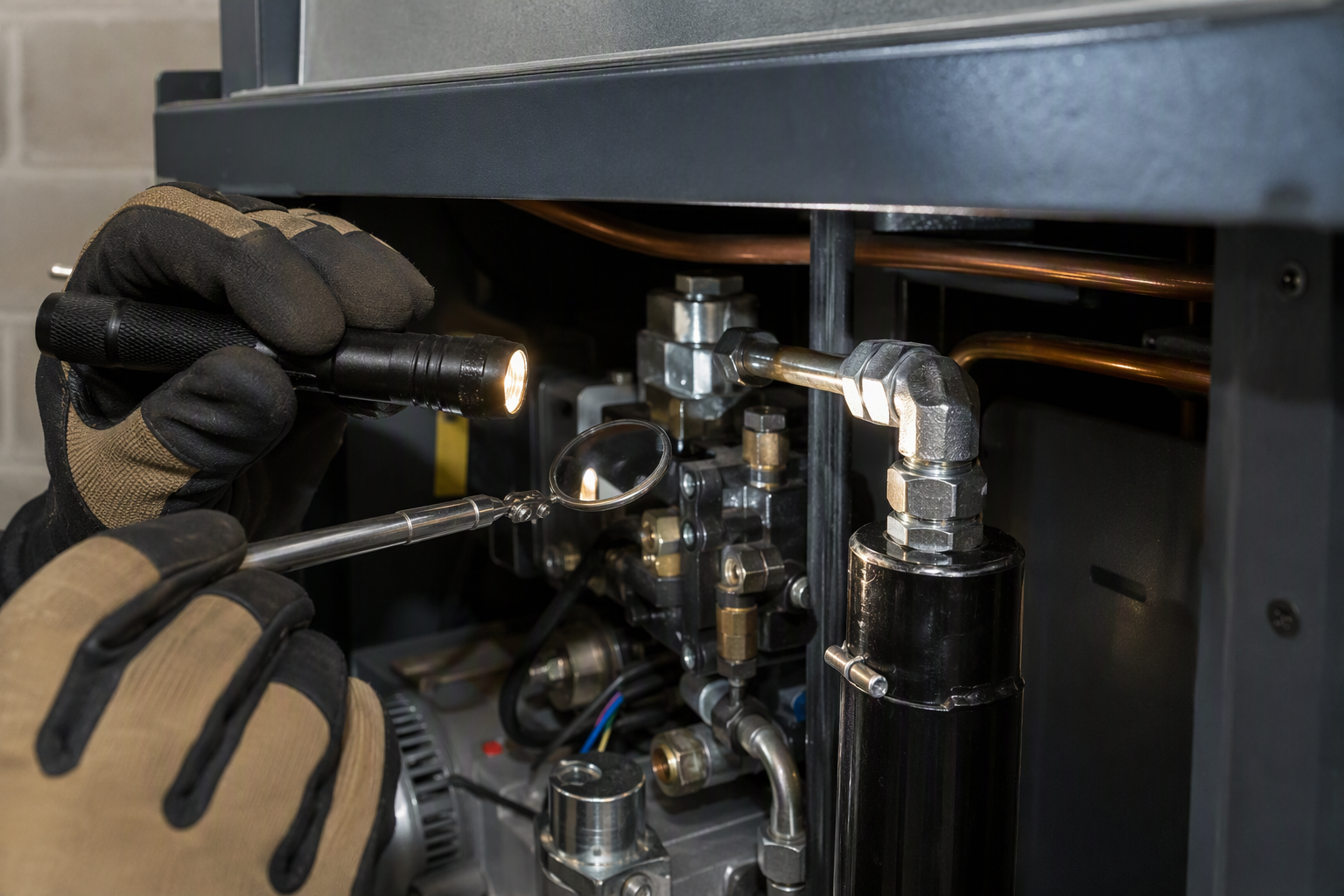
Each technology has distinct maintenance requirements. Hydraulic residential elevators use a fluid-powered piston and require periodic fluid-level checks, cylinder integrity inspections, and valve testing. Traction and cable-drum units depend on the condition of wire ropes or cables, sheaves, and counterweights, all of which are inspected against the safety requirements in the ASME A17.1 Safety Code for Elevators and Escalators. Pneumatic vacuum elevators, a newer category, use air-pressure differentials and require seal, turbine, and controller inspections unique to that platform.
Service technicians evaluate each system against the applicable edition of ASME A17.1 that was in force when the unit was permitted, because requirements in effect at the time of original certification continue to govern that elevator throughout its service life in most jurisdictions.
Are residential elevators subject to the same safety codes as commercial elevators?

Residential elevators are generally covered by the ASME A17.1 Safety Code for Elevators and Escalators, although each state and the District of Columbia determines which edition applies and whether single-family exemptions exist.
ASME A17.1 is the foundational safety standard in all four jurisdictions Quality Elevator Company serves. Maryland has adopted ASME A17.1-2022/CSA B44:22 with state changes, effective June 17, 2026, administered by the Maryland Department of Labor, Division of Labor and Industry, Elevator and Escalator Safety. Virginia adopted ASME A17.1/CSA B44-2019 through the 2021 Uniform Statewide Building Code, effective January 18, 2024, enforced by local building departments. The District of Columbia references ASME A17.1-2013/CSA B44-13 under the 2017 DC Building Code with District amendments, enforced by the DC Department of Buildings. Pennsylvania operates under ASME A17.1-2000 with A17.1a-2002 addenda until December 20, 2026, after which ASME A17.1-2016 applies to new permit applications, enforced statewide by the Pennsylvania Department of Labor and Industry.
Important exemptions exist. Maryland’s inspection and certificate law generally does not apply to units in privately owned single-family homes. Pennsylvania’s Uniform Construction Code elevator rules do not apply to lifting devices used only by the occupants of a single dwelling unit. Virginia local building departments inspect elevators except those in single-family homes, two-family homes, and townhouses. Homeowners should verify their specific situation with their jurisdiction, because exemptions from state inspection programs do not eliminate the manufacturer’s maintenance requirements or the underlying ASME safety standard.
How often should a residential elevator be inspected?
Inspection frequency depends on the jurisdiction, the type of equipment, and the specific edition of ASME A17.1 that governs the unit, but annual periodic inspections are the standard benchmark across the mid-Atlantic region for elevators that fall under state oversight.
In Maryland, each elevator unit must have a periodic annual inspection by a state inspector or a third-party qualified elevator inspector, with a comprehensive five-year inspection required for elevators suspended by wire ropes, belts, chains, or similar means and for rack-and-pinion units. In Virginia, all elevators and escalators require an annual periodic inspection under 13VAC5-63, and a locality may require inspections every six months. In the District of Columbia, a Category 1 inspection is required every 12 months and a Category 5 inspection every 60 months, each by an ASME QEI-certified inspector. In Pennsylvania, electric and hydraulic elevators must have periodic inspections at intervals of no more than six months.
Even when a residential unit falls under a statutory exemption, adhering to an annual maintenance schedule is consistent with the ASME A17.1 standard’s intent and protects equipment longevity and occupant safety.
What inspection and testing intervals apply under ASME A17.1?
The ASME A17.1 Safety Code for Elevators and Escalators establishes a tiered testing schedule — Category 1, Category 3, and Category 5 — that governs periodic, no-load, and full-load safety tests at defined intervals.
Category 1 tests involve operation under no load and verify safety devices, buffers, and stopping accuracy. Category 5 tests are the most comprehensive, requiring full-load, full-speed tests of all safety mechanisms including governor and safeties. DC’s rules require a Category 1 test annually and a Category 5 test every 60 months. Virginia requires periodic tests at the intervals in ASME A17.1 Appendix N, witnessed by the code official. Pennsylvania, once the December 20, 2026 update takes effect, will require Category 1 tests every year as a stand-alone requirement under ASME A17.1-2016 Table N-1. Maryland requires the five-year comprehensive inspection for wire-rope and similar units, with tests performed by a licensed elevator mechanic and witnessed physically by the third-party qualified elevator inspector.
Owners should maintain complete maintenance, repair, test, and inspection records. In Maryland, these records must be kept at a readily accessible central location in the building where the elevator is located.
Does Quality Elevator Company handle both maintenance contracts and one-time repairs?
Quality Elevator Company provides both ongoing maintenance agreements and individual repair visits for residential elevator owners across Baltimore, Washington DC, Philadelphia, and Richmond.
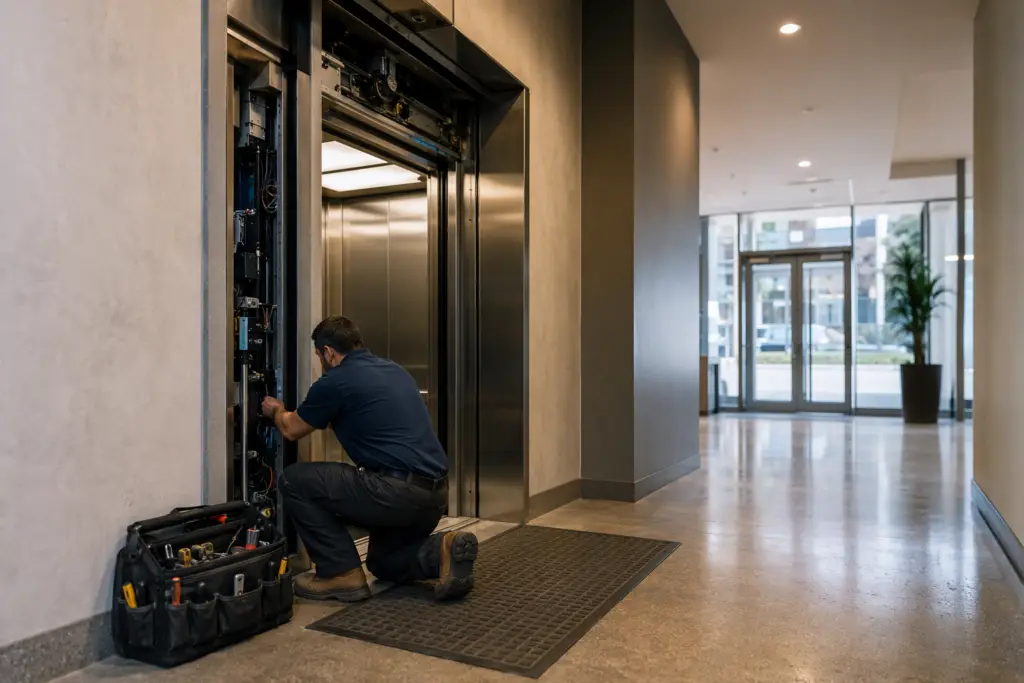
A planned maintenance agreement keeps a service record current, supports state inspection compliance, and allows technicians to identify wear patterns before they become failures. One-time repairs address specific component failures — door operators, hydraulic valves, rope and sheave wear, control boards, and safety devices — for owners who prefer to manage their own maintenance schedule. In either arrangement, work must be performed by properly licensed or certified personnel under the rules of the governing jurisdiction, and Quality Elevator Company coordinates compliance documentation accordingly.
What licenses and certifications are required to work on residential elevators in Maryland, DC, Pennsylvania, and Virginia?
Each jurisdiction imposes distinct licensing requirements on elevator mechanics and contractors, and owners should verify compliance before engaging any service provider.
| Jurisdiction | Mechanic Requirement | Contractor Requirement | Governing Authority |
|---|---|---|---|
| Maryland | Licensed elevator mechanic required before working on elevator units | Licensed elevator contractor required; minimum $1,000,000 general liability and $500,000 property damage insurance | Maryland Department of Labor, Division of Labor and Industry; Maryland Elevator Safety Review Board |
| District of Columbia | Elevator mechanics licensed by the DC Board of Industrial Trades (within DLCP); inspector must meet ASME QEI-1 or equivalent | Elevator contracting license required; DOB permits require a copy of the elevator contracting license and master electrician license | DC Department of Buildings; DC Board of Industrial Trades |
| Pennsylvania | Inspections by UCC-certified elevator inspector; third-party agencies must be certified by the Department | Permits required from L&I for construction, alteration, replacement, or repair | Pennsylvania Department of Labor and Industry |
| Virginia | State certification required; at least three years of experience and a passing examination; eight hours of continuing education per renewal cycle | Elevator/Escalator Contracting (EEC) specialty license required from the Virginia Board for Contractors (DPOR) | Local building department; Virginia Board for Contractors (DPOR) |
What are the most common residential elevator repairs?
The most frequent residential elevator service calls involve door and gate malfunctions, hydraulic fluid issues, worn cables or ropes, control system faults, and safety device failures.
Door and gate problems are the leading cause of service interruptions. Residential units often use swing-type or folding gates rather than the automatic horizontal-sliding doors common in commercial settings, and hinges, rollers, latches, and interlock contacts all wear over time. Hydraulic units are susceptible to slow descent caused by valve wear or fluid contamination, and any oil seepage warrants immediate attention because a compromised cylinder is a structural and environmental concern. Cable-drum units experience sheave groove wear and rope fatigue, particularly on machines operated in damp environments. Control boards on older residential units may no longer have manufacturer support, requiring either component-level repair or controller modernization. Safety devices — governors, safeties, buffers, and oil buffers — must function correctly to pass Category 1 and Category 5 tests, and any device that fails a test must be repaired before the elevator returns to service.
What should a homeowner do if a residential elevator stops working?
When a residential elevator stops unexpectedly, the priority is passenger safety and proper documentation before any repair attempt.
- Confirm whether any occupant is trapped in the car. If someone is inside, call emergency services — do not attempt to force open doors or manually lower a hydraulic unit without trained technician guidance.
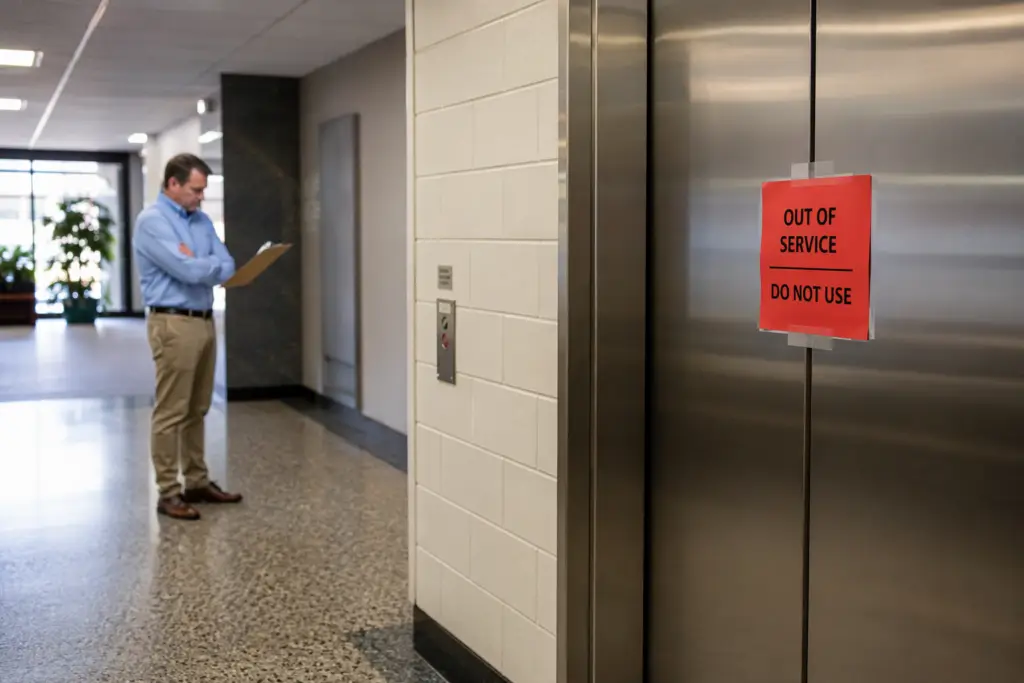
- Place the elevator out of service by posting a clear notice at each landing entrance and, where possible, switching the unit to a locked-out state per the controller’s service mode.
- Record the time, floor position, error codes displayed (if any), sounds heard before the stoppage, and any recent maintenance work performed.
- Contact a licensed elevator service company to dispatch a qualified technician. In Maryland and Virginia, work must be performed by a licensed mechanic. In DC, personnel must hold the appropriate trades license issued by the DC Board of Industrial Trades.
- Do not reset the unit and return it to service without a technician’s evaluation. In Pennsylvania, after a major repair, replacement, or alteration, an elevator may not return to service until the Department of Labor and Industry inspects and passes it.
- If the malfunction involves an accident that causes a fatality or requires professional medical care, Pennsylvania owners must submit an accident report to the Department of Labor and Industry. Owners in other jurisdictions should review their state agency’s incident reporting requirements.
- Retain all service reports and repair invoices in the building’s elevator maintenance file.
Do ADA accessibility requirements apply to residential elevators?
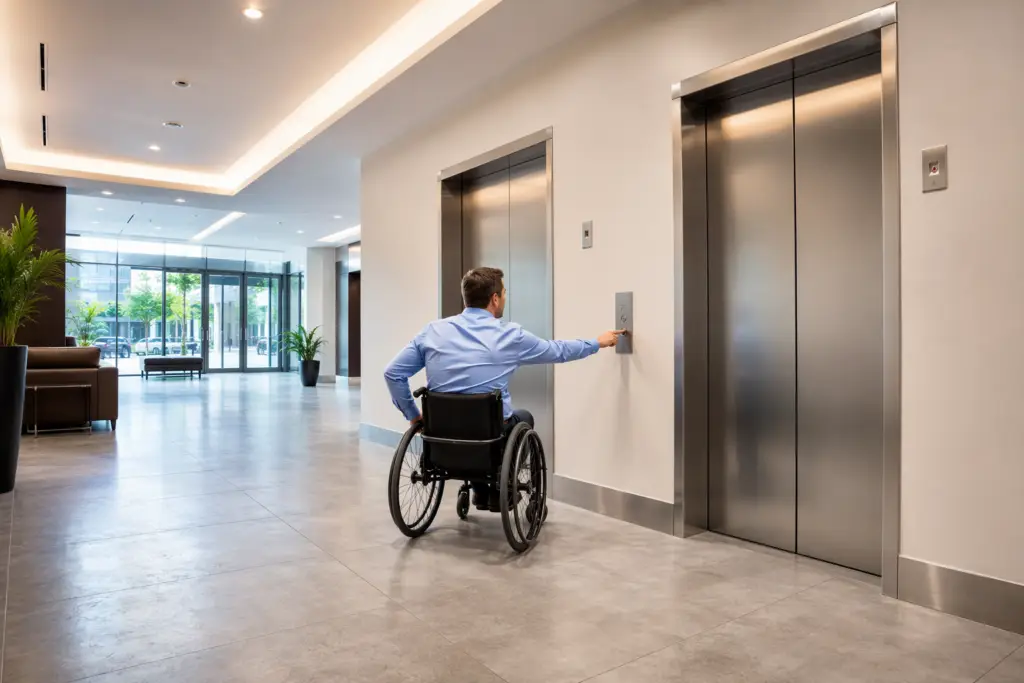
The Americans with Disabilities Act primarily governs places of public accommodation and commercial facilities rather than private single-family residences, but residential elevators in multi-family housing and mixed-use buildings may trigger ADA or Fair Housing Act accessibility obligations.
Multi-family residential buildings covered by the Fair Housing Act are required to provide accessible and adaptable design features in covered units, and an elevator serving those units must meet the relevant accessibility standards. In buildings that qualify as places of public accommodation — such as a hotel with guest rooms, a assisted living facility, or a multi-tenant residential building with common areas open to the public — the ADA Standards for Accessible Design apply to the elevator serving those spaces. Cab dimensions, door clear-width requirements, control panel height and tactile labeling, and leveling accuracy are the most common accessibility considerations that surface during a residential-to-commercial or adaptive-reuse project. Quality Elevator Company evaluates these requirements as part of any modernization assessment.
How long does a residential elevator last, and when should modernization be considered?
The useful service life of a residential elevator depends on the equipment type, installation quality, maintenance history, and usage volume, but modernization is typically warranted when repair costs become recurring, parts become unavailable, or the unit cannot pass required safety tests.
Hydraulic residential elevators often see cylinder and power unit modernization considered after many years of service, particularly if the unit uses an older single-bottom cylinder design that poses environmental concerns from potential hydraulic fluid migration into soil. Traction and cable-drum units may require sheave replacement, rope renewal, and controller upgrades as original equipment reaches end-of-life. Control system modernization — replacing relay logic or early-generation solid-state controllers with modern microprocessor-based systems — often extends a unit’s reliable service life significantly while improving diagnostic capability. Any alteration or modernization in Maryland, DC, or Pennsylvania triggers a state acceptance inspection before the unit returns to service. In Virginia, the local building department conducts a final acceptance inspection after an elevator is modified or altered.
What permits are required to install or modify a residential elevator?
Installing, altering, or significantly repairing a residential elevator requires permits from the applicable state or local authority in all four jurisdictions Quality Elevator Company serves.
In Maryland, each new elevator unit must be registered with the Commissioner of Labor and Industry at least 60 days before its planned completion and before it is placed in service. The state conducts a final acceptance inspection after installation, modification, or alteration. In DC, a permit from the DC Department of Buildings is required, and permit applications must include a copy of the elevator contracting license and the master electrician license. A DOB permit is also required to take an elevator out of service or place it in temporarily dormant status. In Pennsylvania, construction, alteration, replacement, or repair of an elevator requires a permit application to the Department of Labor and Industry, and a new elevator may not be placed in service until the Department conducts an acceptance inspection. In Virginia, installing, repairing, improving, or removing elevators requires a contractor with the Elevator/Escalator Contracting (EEC) specialty license, and the local building department conducts acceptance inspections for new or modernized equipment. In Richmond specifically, the City of Richmond Department of Planning and Development Review, Bureau of Permits and Inspections, runs the elevator program and conducts final acceptance inspections.
How are residential elevator certificates of inspection obtained and displayed?
Certificate requirements vary by jurisdiction, but in all cases the certificate must be obtained before the elevator is placed or returned to service, and it must be accessible to occupants or available for inspection.
In Maryland, an elevator unit may not be operated unless the Maryland Department of Labor’s Commissioner of Labor and Industry has issued a certificate, which must be posted conspicuously in or on the elevator unit. Maryland’s inspection law generally does not apply to units in privately owned single-family homes, so many purely residential units fall outside this requirement. In DC, owners submit third-party inspection reports for the past two years to the Department of Buildings through the Citizen Access Portal; a DC elevator certificate of inspection is valid for two years, and a copy must be conspicuously displayed in the elevator car or attached to the conveyance unless the building operator’s office is in the same building and the certificate is kept available for public inspection there. In Pennsylvania, the certificate of operation or a copy must be posted in the elevator car or attached to the controller in the machine room; certificates are valid for 24 months for equipment on a six-month inspection cycle and 48 months for equipment on a twelve-month cycle. In Virginia, the current certificate of inspection must be displayed in the elevator, kept available in the building operator’s office, or posted in an approved conspicuous location.
What is a Category 5 test and does a residential elevator need one?
A Category 5 test is the most comprehensive periodic safety test defined in the ASME A17.1 Safety Code for Elevators and Escalators, requiring full-load, full-speed operation and physical actuation of all safety devices, and it applies to traction and similar rope-suspended elevators at five-year intervals.
In the District of Columbia, a Category 5 inspection is required every 60 months for all covered elevators, conducted by an ASME QEI-certified inspector. In Maryland, owners must ensure that elevators suspended by wire ropes, belts, chains, or similar means and rack-and-pinion elevators receive a comprehensive five-year inspection — tests must be performed by a licensed elevator mechanic, physically witnessed by the third-party qualified elevator inspector. Pneumatic residential elevators and purely hydraulic units have different periodic test categories, but owners should confirm which category applies to their specific equipment type with a qualified service provider. Category 5 tests require advance planning because the elevator must be taken out of service for a period that accommodates the full test sequence.
Can a residential elevator be modernized to meet current accessibility or code standards?
Yes — residential elevators can be modernized to improve accessibility, reliability, and code compliance, though any alteration triggers the prevailing code edition for that jurisdiction and requires an acceptance inspection before return to service.
Common modernization scopes include cab renovations (flooring, lighting, wall panels, handrails), door and gate system upgrades, control system replacement, drive unit modernization for hydraulic units, and rope and sheave renewal for traction units. Accessibility improvements — such as lowering control panels to ADA-compliant heights, adding Braille and tactile signage, and improving leveling accuracy — are frequently incorporated during modernization. In DC, an elevator’s certificate may be temporarily suspended while it is under permit for alteration or modernization. In Pennsylvania, after a major repair, replacement, or alteration, an elevator may not return to service until the Department of Labor and Industry inspects and passes it. Maryland’s adoption of ASME A17.1-2022 as of June 17, 2026 means that recent alterations are evaluated against updated requirements, with the applicable edition determined by the date the installation or alteration contract was signed.
What documentation should a residential elevator owner maintain?
Owners should maintain a complete maintenance file that includes inspection reports, test records, repair invoices, permits, certificates of inspection, and service contracts.
In Maryland, maintenance, repair, test, and inspection records must be kept at a readily accessible central location in the building where the elevator is located. While single-family exemptions may relieve homeowners of some statutory obligations, maintaining thorough records is essential for warranty claims, property transactions, insurance purposes, and future service. DC requires owners to submit third-party inspection reports for the prior two years to the Department of Buildings when seeking a certificate renewal. Pennsylvania requires owners to submit an accident report when an elevator incident causes a fatality or requires professional medical care. Third-party elevator inspection reports in Virginia must include the name and certification number of the elevator mechanic who performed the witnessed tests. A well-maintained documentation file accelerates compliance reviews and supports transparent disclosure during real estate transactions involving homes equipped with elevators.
How does Quality Elevator Company approach safety assessments for older residential elevators?
Quality Elevator Company conducts safety assessments that evaluate the mechanical, electrical, and structural condition of a residential elevator against the applicable edition of ASME A17.1 and any jurisdiction-specific requirements in Maryland, DC, Pennsylvania, or Virginia.
An assessment typically examines the hoistway enclosure, pit condition and pit lighting, guide rails and brackets, suspension means (ropes, hydraulic cylinder, or pneumatic seals), drive machine or power unit, controller and wiring, door and gate systems, interlocks, buffers, governor and safeties (where applicable), and cab interior. Findings are documented in a written report that distinguishes immediately hazardous conditions from deferred maintenance items, allowing owners to prioritize remediation. For elevators installed before current code editions took effect, assessments note the original applicable code and identify any voluntary upgrades that would improve safety margins. In Maryland, requirements in effect when an elevator was first certified remain in effect for that elevator, though standard hoistway entrance protection is required on all units regardless of age.
What happens if a residential elevator fails a required inspection?
A failed inspection results in the elevator being placed out of service until the identified deficiencies are corrected and the unit passes a follow-up inspection or test.
In Maryland, an elevator unit may not be operated unless the Commissioner of Labor and Industry has issued a current certificate, meaning a unit that cannot pass inspection is legally prohibited from operation. In DC, an elevator operating without a valid certificate of inspection is in violation of 12-A DCMR Chapter 30 and D.C. Official Code § 6-1409. In Pennsylvania, the Department of Labor and Industry must inspect and pass a unit after a major repair before it may return to service. In Virginia, local building departments enforce compliance, and the local code official has authority to require corrective action. For owners who disagree with a code official’s determination in Pennsylvania, an appeal may be filed with the Elevator Safety Board within 30 days of the decision. A licensed elevator service company can prepare a written corrective action plan, perform the required repairs, and coordinate the follow-up inspection to restore the unit to service as efficiently as possible.
What is the difference between a maintenance contract and a full-service agreement for a residential elevator?
A maintenance contract typically covers scheduled preventive visits and lubrication, while a full-service agreement extends coverage to parts and labor for repairs identified during those visits or arising between scheduled calls.
For residential owners, the right agreement level depends on the age of the equipment, availability of replacement parts, frequency of use, and budget. Older units with proprietary components may benefit from more comprehensive coverage because sourcing parts for discontinued equipment can add significant lead time and cost to repairs. Full-service agreements generally include priority scheduling for service calls. Regardless of agreement type, annual or semi-annual preventive visits should include lubrication of guide rails and rollers, inspection and adjustment of door and gate mechanisms, safety device function checks, hydraulic fluid or tension inspection, and controller diagnostics. Maintaining a consistent service schedule also supports the documentation record that state inspectors and future property buyers will review.
How does the regulatory environment differ for residential elevators in a multi-family building versus a single-family home?
Residential elevators in multi-family buildings are almost universally subject to state inspection, certification, and licensing requirements, while elevators in privately owned single-family homes benefit from statutory exemptions in several jurisdictions.
Maryland’s inspection and certificate law generally does not apply to units in privately owned single-family homes or in buildings under federal control, but it fully applies to multi-family residential buildings. Pennsylvania’s UCC elevator rules do not apply to lifting devices used only by the occupants of a single dwelling unit, making purely owner-occupied single-family installations exempt, though any unit accessible to multiple tenants or the public falls under full L&I jurisdiction. Virginia local building departments inspect elevators in all buildings except single-family homes, two-family homes, and townhouses. DC’s rules apply broadly to elevators and conveyances in the District, and any covered residential elevator must comply with inspection and certification requirements. Regardless of statutory exemptions, ASME A17.1 remains the applicable safety standard for the equipment itself, and manufacturer maintenance requirements remain in force. Multi-family building owners should treat their residential elevators with the same compliance rigor as any commercial installation.
How do I choose a qualified residential elevator service company in Baltimore, Washington DC, Philadelphia, or Richmond?
Selecting a residential elevator service company requires verifying that the company employs licensed mechanics, holds the appropriate contractor credentials in each jurisdiction, carries adequate insurance, and has demonstrated experience with the specific elevator type installed in the home or building.
In Maryland, the company must be licensed as an elevator contractor by the Maryland Elevator Safety Review Board and must carry at least $1,000,000 in general liability insurance and at least $500,000 in property damage insurance. In DC, the company must hold an elevator contracting license from the DC Board of Industrial Trades, and permits require that license to be on file with the DC Department of Buildings. In Virginia, the company must hold an Elevator/Escalator Contracting (EEC) specialty license from the Virginia Board for Contractors. Owners should request copies of current licenses, insurance certificates, and references from comparable residential projects before signing any service agreement. Quality Elevator Company serves homeowners and multi-family property managers across all four markets and coordinates inspection scheduling, permit applications, and compliance documentation as part of its service offering.
Contact Quality Elevator Company for a free elevator assessment at 301-779-9116.
Need elevator service you can rely on? Quality Elevator Company is ready to help.