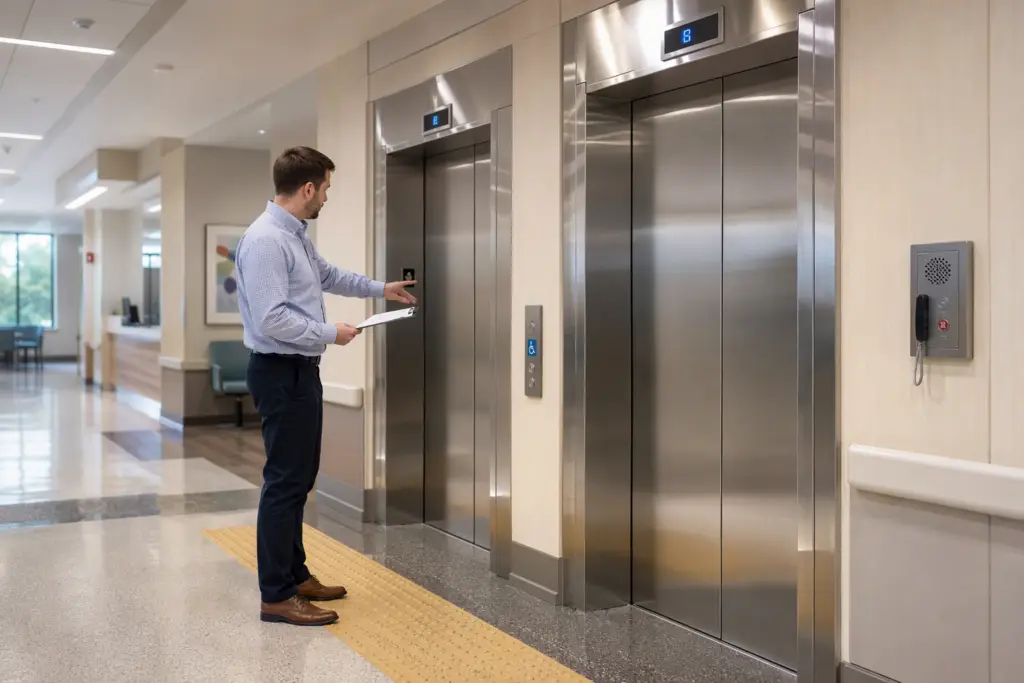
How to Get a Proposal for Elevator Service at a New Location
Getting a proposal for elevator service at a new location involves more than simply calling a contractor and asking for a price. Building owners, property managers, and facility directors in Baltimore, Washington DC, Philadelphia, and Richmond need to understand what information to gather, what compliance obligations apply in their jurisdiction, and how to compare proposals accurately. This FAQ hub answers the most common questions about the proposal process so building stakeholders can move forward with confidence.
What is the first step to get an elevator service proposal for a new location?
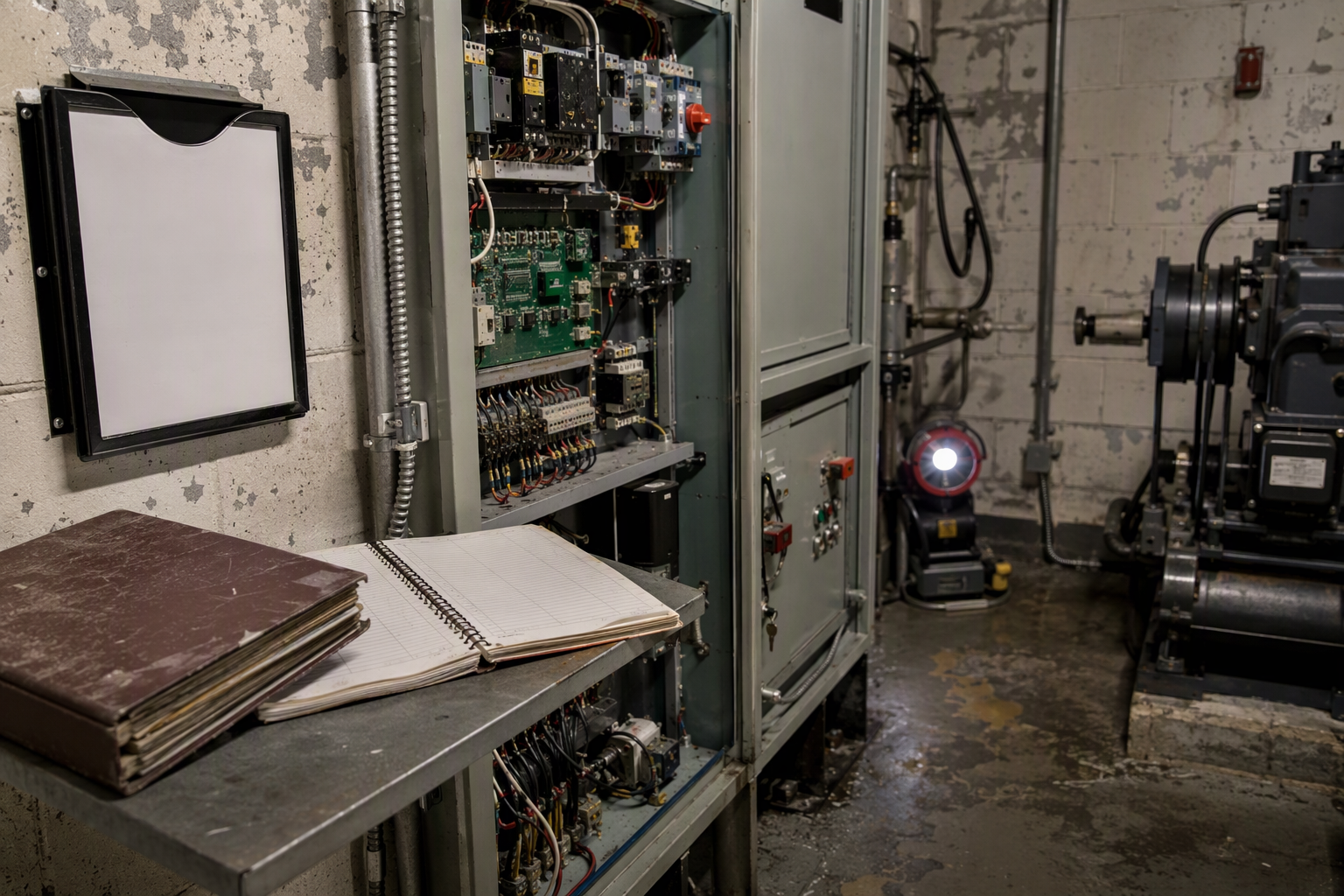
The first step is to gather the basic facts about the building and its elevator equipment before contacting any service contractor.
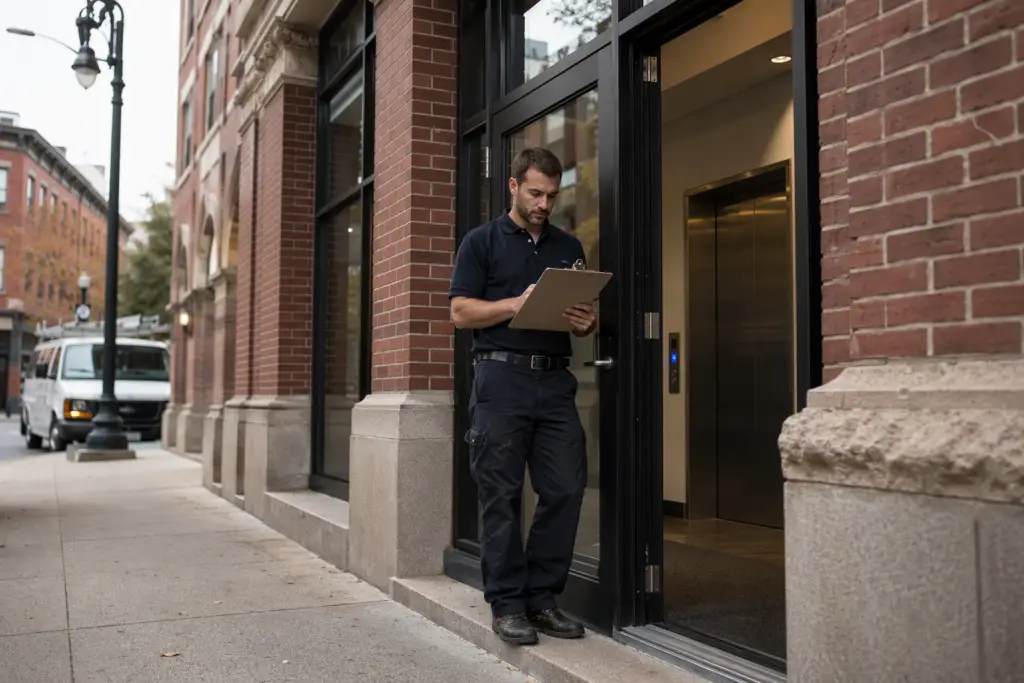
Before a qualified elevator service company can provide a meaningful proposal, it needs to know the type of equipment installed (traction, hydraulic, escalator, or limited-use/limited-application), the number of units, the number of stops, the age of the equipment, the current maintenance status, and whether a valid certificate of inspection is in place. Having this information ready shortens the site assessment process and allows the contractor to prepare a more accurate scope of work.
Building owners who do not have maintenance records or equipment documentation should note that location and permit history can often be retrieved from the applicable state or local authority having jurisdiction. In Maryland, records are managed by the Maryland Department of Labor, Division of Labor and Industry, Elevator and Escalator Safety. In Pennsylvania, permit and inspection history is tracked by the Pennsylvania Department of Labor and Industry, Bureau of Occupational and Industrial Safety, Elevator Section. In the District of Columbia, certificates and inspection records are managed through the DC Department of Buildings (DOB), Elevator and Conveyance program. In Virginia, records are held by the local building department for the relevant city or county, with the governing code found at 13VAC5-63, Virginia Uniform Statewide Building Code.
What information does an elevator service company need to prepare a proposal?
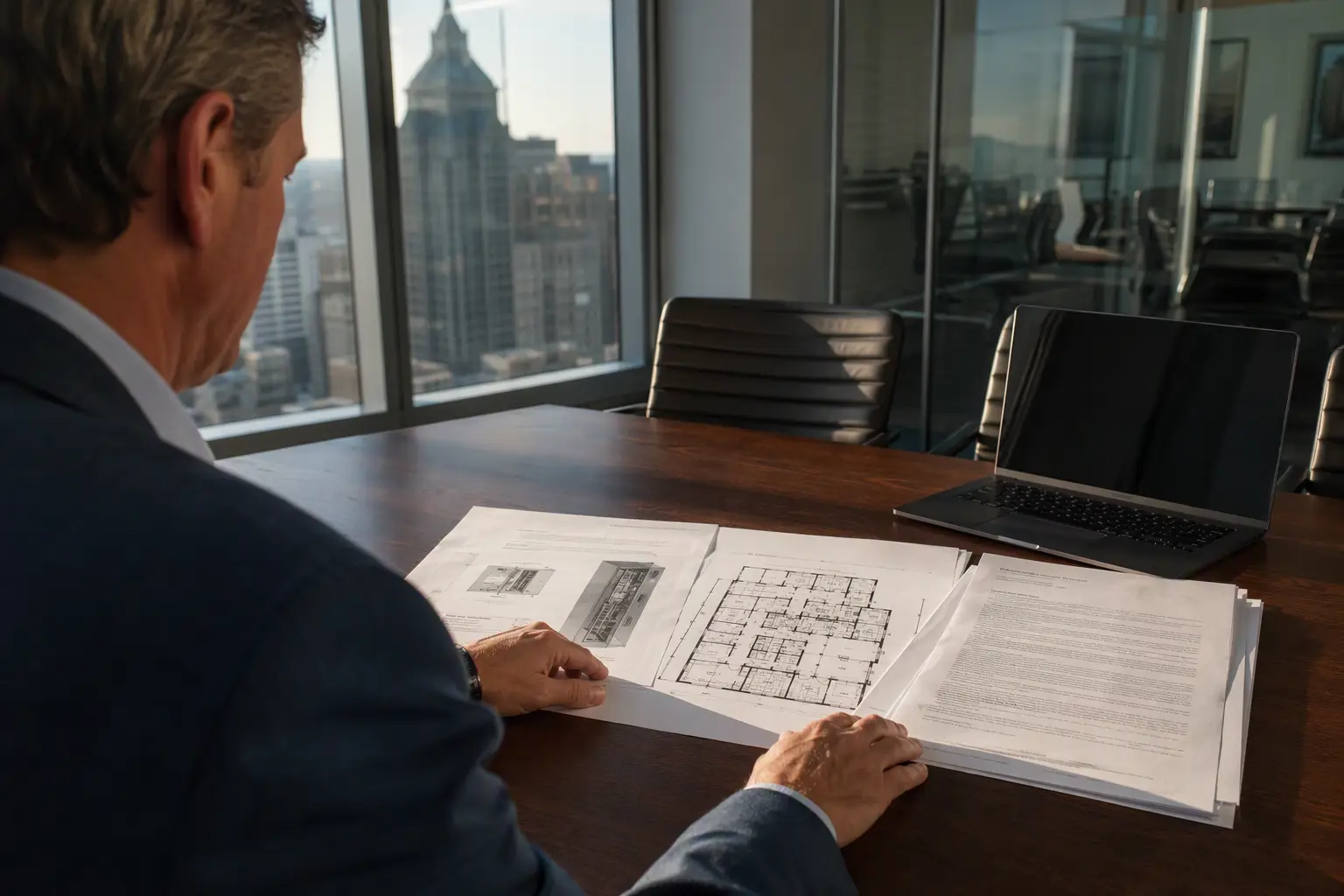
A complete proposal requires equipment details, building characteristics, current compliance status, and the owner’s service objectives.
Specifically, an elevator contractor will typically request:
- The make, model, and approximate installation year of each unit
- The number of floors served and travel distance
- The drive type (geared traction, gearless traction, hydraulic, MRL)
- The current or most recent maintenance provider
- Copies of the current certificate of inspection and any recent inspection reports
- Known deficiencies or outstanding violations cited by the authority having jurisdiction
- Whether the building is owner-occupied, multi-tenant commercial, residential, or mixed-use
- Whether the owner is seeking maintenance only, full-service coverage, or a modernization assessment
The more accurate the information provided upfront, the more precise and comparable the resulting proposals will be. Gaps in documentation often lead to allowances or exclusions in proposals that can create cost uncertainty later.
What does a site assessment involve, and is it required before a proposal?
A site assessment is a physical inspection of the elevator equipment and machine room conducted by a qualified technician before a contract is finalized, and it is strongly recommended even when documentation is available.
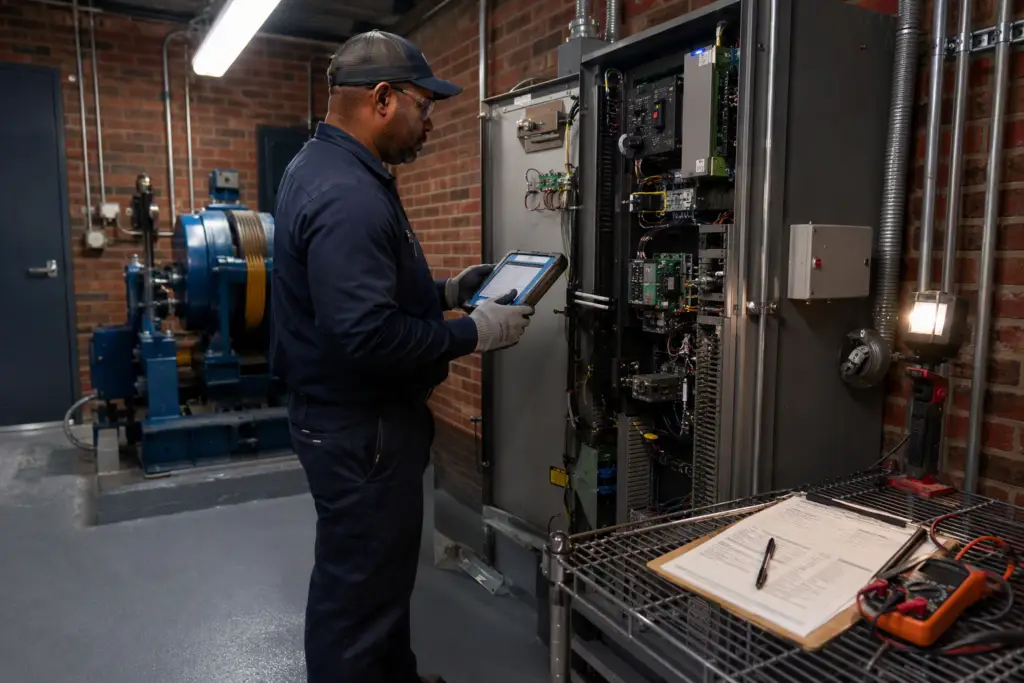
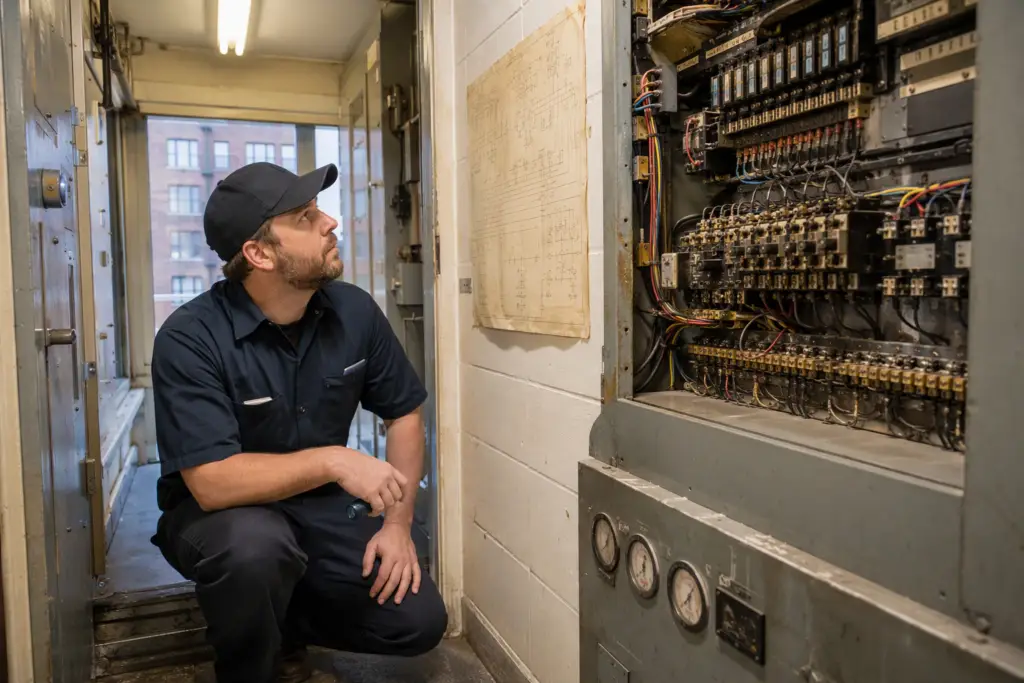
During a site assessment, the technician evaluates the mechanical and electrical condition of the equipment, reviews the machine room environment, checks safety devices, and notes any code deficiencies relative to the applicable edition of the ASME A17.1 Safety Code for Elevators and Escalators or the state-adopted equivalent. This evaluation allows the contractor to identify items that may require repair or modernization outside the scope of routine maintenance, ensuring the proposal reflects the true cost of keeping the equipment in compliant, safe operation.
Quality Elevator Company conducts site assessments across its service markets in Baltimore, Washington DC, Philadelphia, and Richmond so that proposals reflect actual field conditions rather than assumptions based on equipment age alone.
How long does it take to receive an elevator service proposal after a site assessment?
Proposal turnaround depends on the complexity of the equipment, the number of units, and whether outstanding compliance issues need to be researched, but a straightforward maintenance proposal for a single-building account can typically be expected within a few business days of the site assessment.
For larger portfolios, buildings with multiple elevator types, or properties with known code deficiencies requiring a detailed remediation scope, the proposal development process takes longer because the contractor must research applicable regulatory requirements for the specific jurisdiction, price parts and labor for any recommended repairs, and structure the proposal in a way that separates ongoing maintenance costs from one-time remediation costs. Owners should ask for a clear timeline when scheduling the assessment.
What types of elevator service contracts are typically included in a proposal?
Elevator service proposals generally offer a spectrum of contract types ranging from basic oil-and-grease maintenance to comprehensive full-service agreements that cover parts and labor for repairs.
Common contract structures include:
- Examination and lubrication (oil-and-grease): Covers periodic visits to lubricate, adjust, and inspect the equipment but excludes parts and repair labor.
- Maintenance and repair: Adds coverage for labor on routine repairs, with parts billed separately.
- Full-service (comprehensive): Covers scheduled maintenance plus parts and labor for most repairs, excluding modernization-level components.
- Modernization and repair: A project-based scope addressing major equipment upgrades or code-compliance retrofits.
The right contract type depends on the age and condition of the equipment, the owner’s risk tolerance, and the applicable regulatory inspection requirements in the jurisdiction. Newer equipment in good condition may be appropriate for a maintenance-only agreement; aging or deficiency-laden equipment may require a comprehensive agreement or a phased modernization plan.
What compliance requirements must the proposal address in Maryland?
In Maryland, a compliant elevator service proposal must account for annual periodic inspections, five-year comprehensive inspections, annual re-registration with the Commissioner of Labor and Industry, and the use of licensed elevator mechanics for all tests.
Under the Annotated Code of Maryland, Public Safety Article, Title 12, Subtitle 8, no elevator may be operated in Maryland without a certificate issued by the Commissioner of Labor and Industry. Each unit must undergo a periodic annual inspection, and the owner must hire a third-party qualified elevator inspector to conduct those inspections as required by the Safety Code. Tests must be performed by a licensed elevator mechanic, and the inspector must be physically present for the entire test. Owners must also re-register elevator units every year, at the time of the periodic inspection.
Maryland adopted the ASME A17.1/CSA B44, 2022 edition effective June 17, 2026, with Maryland modifications, and the applicable edition depends on when the installation contract was signed. The Maryland Department of Labor, Division of Labor and Industry, Elevator and Escalator Safety oversees the inspection and certification program statewide, while the Maryland Elevator Safety Review Board licenses elevator mechanics and contractors. Records of maintenance, repair, tests, and inspections must be kept at a readily accessible central location in the building.
What compliance requirements must the proposal address in Washington DC?
In the District of Columbia, a compliant elevator service proposal must account for annual Category 1 inspections, five-year Category 5 inspections, a certificate of inspection valid for two years, and the use of DOB-approved third-party inspection agencies staffed by ASME QEI-certified inspectors.
Under D.C. Official Code § 6-1409 and 12-A DCMR Chapter 30, all elevators and escalators in the District must be inspected and certified for operation. Owners must engage a DOB-approved third-party elevator inspection agency that inspects elevators on behalf of the DC Department of Buildings (DOB). The DC elevator program operates under the 2017 DC Building Code, which references the ASME A17.1/CSA B44, 2013 edition with District amendments effective May 29, 2020. To obtain a certificate of inspection, owners submit third-party inspection reports for the prior two years through the DOB Citizen Access Portal. A copy of the current certificate must be displayed conspicuously in the elevator car. In buildings with passenger elevators, at least one elevator must remain in operation whenever the building is occupied, except in single-elevator buildings.
The DC Board of Industrial Trades licenses elevator contractors, mechanics, and inspectors, and DOB elevator permits require copies of the master electrician license and the elevator contracting license. A compliant service proposal for a DC property should confirm that the contractor holds the appropriate DC licensing.
What compliance requirements must the proposal address in Pennsylvania?
In Pennsylvania, a compliant elevator service proposal must account for periodic inspections at intervals of no more than six months for electric and hydraulic elevators and escalators, a certificate of operation issued by the Department of Labor and Industry, and acceptance inspections by the Department before any repaired or altered elevator returns to service.
Pennsylvania elevator regulation is governed by 34 Pa. Code Chapter 405 under the Pennsylvania Construction Code Act, 35 P.S. § 7210.101 et seq. The Pennsylvania Department of Labor and Industry, Bureau of Occupational and Industrial Safety, Elevator Section has statewide jurisdiction, including in Philadelphia. The certificate of operation must be posted in the elevator car or, for equipment with a machine room, attached to the controller in the machine room.
Pennsylvania’s updated elevator regulation (Regulation #12-123) takes effect December 20, 2026. For permit applications made on or after that date, the applicable code transitions to ASME A17.1-2016 with Pennsylvania modifications. Permit applications made before December 20, 2026, remain under ASME A17.1-2000 with the A17.1a-2002 addenda. Starting December 20, 2026, Category 1 tests must be performed every year as a stand-alone requirement. A service proposal for a Philadelphia or statewide Pennsylvania property should clearly address how the contractor will manage the regulatory transition.
What compliance requirements must the proposal address in Virginia?
In Virginia, a compliant elevator service proposal must account for annual periodic inspections enforced by the local building department, periodic tests at the intervals specified in ASME A17.1 Appendix N witnessed by the local code official, and the use of state-certified elevator mechanics for all work.
Virginia elevator inspection authority rests with local building departments under the Virginia Uniform Statewide Building Code, 13VAC5-63, adopted under Code of Virginia § 36-97 et seq. The 2021 USBC, effective January 18, 2024, incorporates ASME A17.1/CSA B44-2019 for new installations. Localities may require six-month periodic inspections in addition to the standard annual requirement. In Richmond specifically, the City of Richmond Department of Planning and Development Review, Bureau of Permits and Inspections, runs the elevator program, including final acceptance inspections of new or modernized elevators and annual inspections with testing.
No one may work as an elevator mechanic in Virginia without certification from the Virginia Board for Contractors (DPOR), which requires at least three years of industry experience and a passed examination. Contractors must hold an Elevator/Escalator Contracting (EEC) specialty license. A compliant proposal for a Virginia location should confirm that all technicians hold valid state certifications. The current certificate of inspection must be displayed in the elevator or kept available in the building operator’s office.
How does ADA compliance factor into an elevator service proposal?
Any elevator service proposal for a commercial building subject to the Americans with Disabilities Act should identify whether existing equipment meets ADA accessibility requirements and flag deficiencies that may require remediation.
The Americans with Disabilities Act establishes accessibility requirements for elevators in places of public accommodation and commercial facilities. Key ADA elevator requirements include minimum car dimensions, door width, door timing, leveling accuracy, call button height and size, floor designation signage, and audible and visual indicators. When a building changes tenants, undergoes renovation, or transfers ownership, ADA compliance is commonly revisited as part of due diligence. A qualified elevator service company should note ADA-related deficiencies in the site assessment and include remediation options in the proposal where applicable.
What questions should a building owner ask when comparing elevator service proposals?
Building owners should compare proposals on scope, exclusions, compliance obligations, licensing, and escalation terms rather than on base price alone.
Key questions to ask each contractor include:
- Does the proposal clearly define what is included and excluded from routine maintenance?
- Does the contractor hold all licenses required by the applicable jurisdiction (Maryland Elevator Safety Review Board, DC Board of Industrial Trades, Pennsylvania L&I certification, or Virginia DPOR EEC specialty)?
- How does the contractor handle code-required inspections — do they coordinate with third-party inspection agencies on the owner’s behalf?
- What is the process for obtaining or renewing the certificate of inspection?
- How are repair callbacks handled, and is callback labor included in the contract?
- Does the proposal address the upcoming Pennsylvania regulatory transition effective December 20, 2026?
- Are parts sourced OEM or aftermarket, and how does that affect warranty obligations?
- Does the contract include annual escalation clauses, and if so, how are they calculated?
- What documentation will the contractor provide after each maintenance visit?
- Does the contractor carry the minimum insurance required by the jurisdiction (e.g., Maryland requires at least $1,000,000 in general liability and at least $500,000 in property damage for licensed elevator contractors)?
How does the proposal process differ for a newly installed elevator versus existing equipment?
A proposal for newly installed equipment focuses on ongoing maintenance and inspection coordination, while a proposal for existing equipment must also assess current condition, compliance status, and any remediation needed before routine maintenance can begin.
For new installations, the authority having jurisdiction in each market conducts an acceptance inspection before the elevator is placed in service — in Maryland, the State conducts the final acceptance inspection; in Pennsylvania, the Department of Labor and Industry performs acceptance inspections; in Virginia, the local building department conducts acceptance inspections; and in DC, the DOB-approved third-party agency performs this function. The maintenance contract typically begins after that acceptance inspection is passed and the initial certificate of inspection is issued.
For existing equipment acquired through a property purchase or lease assumption, the incoming owner or tenant should request a condition assessment as part of the due-diligence process. Outstanding violations, expired certificates, or deferred maintenance discovered during the assessment should be addressed in the proposal as a precondition or initial remediation scope before the standard maintenance agreement takes effect.
What is the step-by-step process for getting an elevator service proposal at a new location?
The process of obtaining a complete elevator service proposal follows a logical sequence from initial inquiry to contract execution.
- Gather all available equipment documentation: equipment tags, prior maintenance logs, current certificate of inspection, and any violation notices from the authority having jurisdiction.
- Identify the applicable regulatory authority for the location — Maryland Department of Labor, DC DOB, Pennsylvania L&I, or the local Virginia building department — and verify the current certificate status.
- Contact a licensed elevator service contractor serving the jurisdiction and provide the preliminary equipment details.
- Schedule a site assessment with the contractor’s technician to allow a physical evaluation of the equipment and machine room.
- Review the site assessment findings with the contractor, noting any code deficiencies, safety concerns, or deferred maintenance items.
- Request a written proposal that separates ongoing maintenance costs from one-time remediation or repair costs.
- Compare proposals from qualified contractors on scope, exclusions, licensing, and escalation terms rather than on headline price alone.
- Verify that the selected contractor holds all jurisdiction-specific licenses, certifications, and insurance required.
- Execute the contract and coordinate the transition from the prior service provider, including transfer of maintenance records as required by the applicable jurisdiction.
- Confirm with the contractor how ongoing inspection scheduling, certificate renewal, and regulatory reporting will be managed going forward.
How should maintenance records be handled when switching elevator service providers?
Maintenance records belong to the building owner and must be retained at the building in a readily accessible location; a change in service contractor does not eliminate the owner’s recordkeeping obligations.
In Maryland, COMAR 09.12.81 requires that maintenance, repair, test, and inspection records be kept at a readily accessible central location in the building. In DC, inspection reports submitted to DOB through the Citizen Access Portal become part of the regulatory record. In Pennsylvania, records associated with the certificate of operation are tied to the equipment permit. In Virginia, inspection reports must include the name and certification number of the certified elevator mechanic who performed the witnessed tests, creating a traceable record at the local code office.
When transitioning to a new service provider, building owners should request complete documentation from the outgoing contractor before the contract ends, including all maintenance logs, inspection reports, test records, and any outstanding deficiency notices. Quality Elevator Company assists new clients in compiling and organizing equipment records as part of the onboarding process.
What factors affect the cost of an elevator maintenance proposal?
The primary cost drivers in an elevator maintenance proposal are the type and age of equipment, the number of units, the inspection frequency required by the jurisdiction, and the scope of coverage selected.
| Factor | Lower Cost Range Indicators | Higher Cost Range Indicators |
|---|---|---|
| Equipment type | Modern hydraulic, single-stop | High-rise gearless traction, multiple units |
| Equipment age | Newer equipment, recent modernization | Aging equipment, deferred maintenance |
| Inspection frequency | Annual (12-month cycle) | Semi-annual (6-month cycle, required in PA and optionally in VA) |
| Contract scope | Examination and lubrication only | Full-service comprehensive coverage |
| Compliance status | Current certificate, no known violations | Expired certificate, outstanding violations, ADA deficiencies |
| Jurisdiction | Localities with streamlined inspection coordination | Markets with mandatory third-party inspection agencies and multi-step certification processes |
| Number of units | Single unit, single location | Portfolio of units across multiple buildings or markets |
Because cost variables are significant, owners should be cautious about accepting a proposal without a site assessment — a price quoted without a physical inspection may not account for condition-related factors that will affect the true cost of service.
What are the insurance and licensing requirements a contractor must meet to service elevators in Quality Elevator Company’s markets?
Licensing and insurance requirements vary by jurisdiction, and owners should verify that any contractor they engage meets all applicable requirements before signing a service agreement.
In Maryland, elevator contractors must be licensed by the Maryland Elevator Safety Review Board and carry at least $1,000,000 in general liability insurance and at least $500,000 in property damage insurance. Elevator mechanics must hold individual licenses from the same Board. In the District of Columbia, elevator contractors and mechanics must be licensed by the DC Board of Industrial Trades, and DOB permits require copies of the master electrician license and the elevator contracting license. In Virginia, contractors must hold an Elevator/Escalator Contracting (EEC) specialty license issued by the Virginia Board for Contractors (DPOR), and all mechanics must be individually certified by the same Board. In Pennsylvania, building owners should confirm that inspections are conducted by a UCC-certified elevator inspector and that any third-party inspection agency used is certified by the Pennsylvania Department of Labor and Industry.
Can a building owner manage elevator compliance obligations without a full-service maintenance contract?
A building owner can technically separate maintenance from inspection coordination, but doing so significantly increases the administrative burden of managing certificate renewals, test scheduling, and regulatory reporting across jurisdictions.
Each jurisdiction served by Quality Elevator Company imposes distinct obligations on building owners. Maryland owners must re-register units annually and coordinate with a third-party qualified elevator inspector for periodic inspections. DC owners must submit inspection reports through the DOB Citizen Access Portal and ensure certificates are renewed on the two-year cycle. Pennsylvania owners must track the six-month inspection interval, manage certificate-of-operation renewals, and coordinate with the state for acceptance inspections after any repair or alteration. Virginia owners must work with the local building department for annual inspections and test witnessing.
A full-service maintenance contract with a contractor experienced in the applicable jurisdiction typically includes administrative coordination of these obligations, reducing the risk that a certificate lapses or a required test is missed. An elevator that operates without a valid certificate is a regulatory violation in every market Quality Elevator Company serves.
What should a building owner do if the elevator has an expired certificate of inspection at a new location?
An expired certificate of inspection must be addressed before the elevator is returned to regular service; the building owner should contact a licensed elevator contractor immediately and notify the applicable authority having jurisdiction.
- Confirm whether the elevator is currently in service. Operating an elevator without a valid certificate violates state law in Maryland, Pennsylvania, and DC, and local building code in Virginia.
- Take the elevator out of service if the certificate has lapsed and the equipment has not been recently inspected, to limit liability exposure.
- Contact a licensed elevator contractor in the jurisdiction to schedule an emergency site assessment and identify any deficiencies that prevented certificate renewal.
- Coordinate with the applicable authority — Maryland Department of Labor, DC DOB, Pennsylvania L&I, or the local Virginia building department — to understand the steps required to reinstate the certificate.
- Arrange for the required inspections and tests with a qualified inspector, ensuring all prerequisites (licensed mechanics, proper documentation) are in place.
- Submit the required documentation to the regulatory authority and obtain the reinstated or renewed certificate before returning the elevator to service.
How does Quality Elevator Company handle the proposal process for multi-location accounts?
For building owners or property managers with elevator equipment across multiple locations in different jurisdictions, the proposal process requires coordination of jurisdiction-specific licensing, inspection schedules, and certificate renewal timelines across each market.
A multi-location proposal from Quality Elevator Company covers each jurisdiction individually, identifying the applicable regulatory authority, the required inspection frequency, the current compliance status of each unit, and the licensing requirements that apply in that market. This prevents a single-market maintenance agreement from being applied incorrectly to equipment governed by different state or local rules. For example, a portfolio that includes buildings in both Maryland and Pennsylvania will have different inspection intervals — annual in Maryland, semi-annual in Pennsylvania — different certificate renewal cycles, and different licensing frameworks for the mechanics performing the work.
Owners managing multi-location accounts should ask whether the proposed contractor has established relationships with third-party inspection agencies in each market and can coordinate all inspection scheduling and certificate reporting from a single account management structure.
What role does OSHA play in elevator maintenance and what should a proposal address?
OSHA regulations apply to worker safety during elevator maintenance, inspection, and repair work, and a compliant elevator service contractor must follow applicable OSHA requirements as part of its standard operating procedures.
The Occupational Safety and Health Administration (OSHA) establishes requirements that govern how elevator mechanics perform work in hoistways, machine rooms, and pits, including lockout/tagout procedures, fall protection, and confined space entry. These are employer obligations for the elevator service contractor, not the building owner, but owners benefit from confirming that the contractor they engage has documented safety programs and follows OSHA requirements during all work performed at the property. A contractor without adequate safety protocols creates liability exposure for the building owner in addition to risk of harm to workers. A well-drafted service proposal should note that all work will be performed in compliance with applicable OSHA standards.
Contact Quality Elevator Company for a free elevator assessment at 301-779-9116.
Need elevator service you can rely on? Quality Elevator Company is ready to help.