Elevator Service Contract FAQ: Full Maintenance vs. Lubrication & Adjustment Agreements Explained
Understanding exactly what your elevator service contract covers — and what it does not — is one of the most consequential decisions a building owner or facility manager can make. Contract language in the elevator industry is notoriously inconsistent across vendors, and the difference between contract types can mean thousands of dollars in unexpected repair bills or, more seriously, a gap in safety compliance. This FAQ covers every critical aspect of elevator service agreements, from contract structure and compliance obligations under ASME A17.1 Safety Code for Elevators and Escalators to what to look for when comparing vendors in Baltimore MD, Washington DC, Philadelphia PA, and Richmond VA.
1. What is the difference between a full maintenance agreement and a lubrication and adjustment contract?
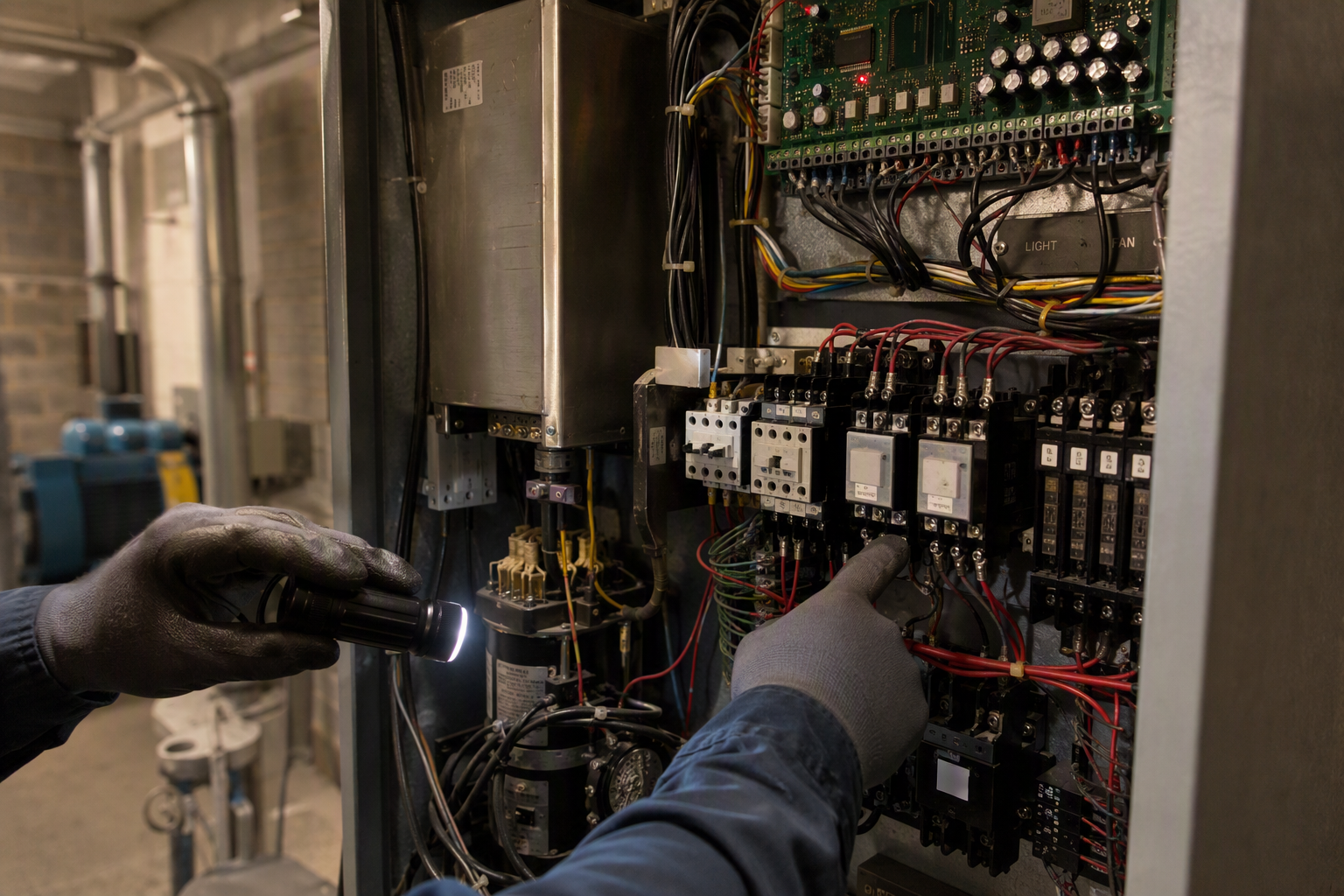
A full maintenance agreement (FMA) includes labor, most or all parts, emergency callback service, and proactive component replacement, while a lubrication and adjustment contract covers only routine lubrication, minor mechanical adjustments, and basic code-required safety tests.
The distinction matters enormously over the life of an elevator. Under a lubrication and adjustment (L&A) contract — sometimes called an “oil and grease” contract — the building owner absorbs the cost of every part, every repair call, and every emergency visit. The service company visits periodically, applies lubricants, makes small adjustments, and performs safety checks, but does not take financial responsibility for component failure or replacement.
A full maintenance agreement shifts a significant portion of that risk to the service contractor. The contractor is incentivized to maintain the equipment proactively because they bear the cost of neglect. FMAs typically include defined callback response obligations, coverage for a specified list of parts or “all parts,” and regular documented inspections that satisfy jurisdictional requirements.
Neither contract type exempts the building owner from the mandatory periodic inspections and certificates required by state and local authorities having jurisdiction (AHJ). Those are legal obligations of the building owner regardless of contract structure.
2. How can I read my existing elevator contract to determine which type it is?
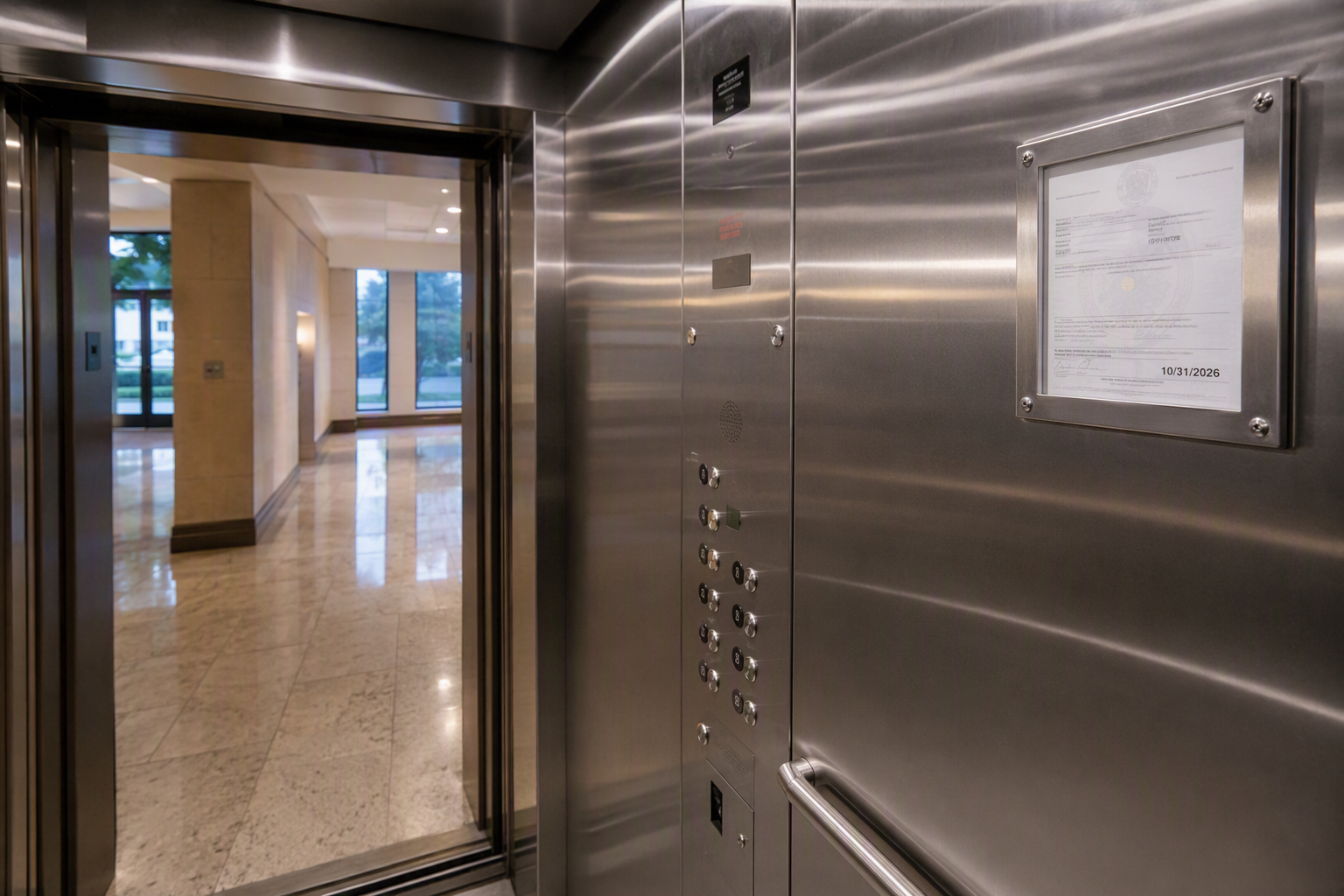
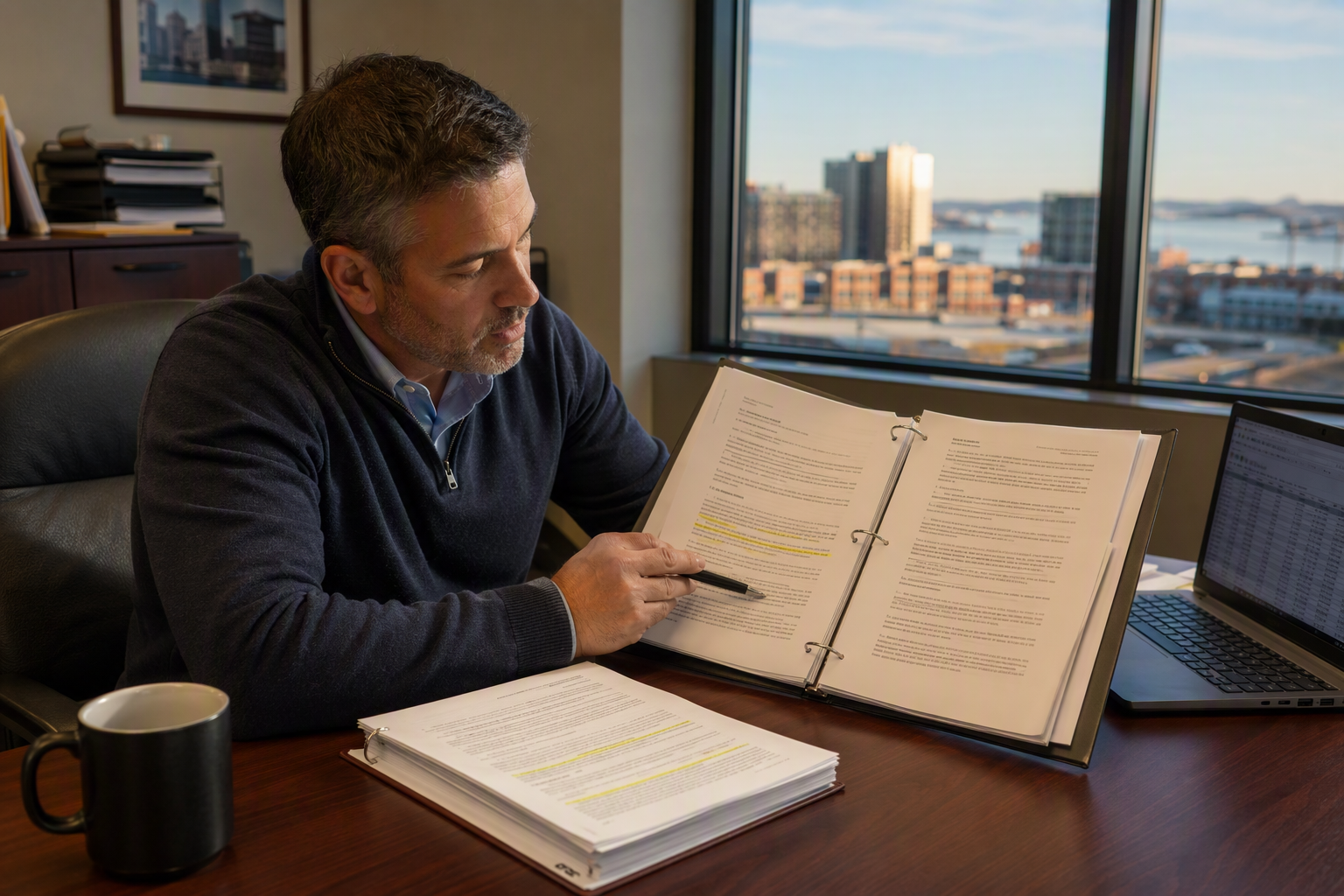
Look for specific language in the “Scope of Services” or “Services Included” section — if the contract lists “lubrication, adjustments, and safety tests” without mentioning parts coverage or callback service, it is almost certainly an L&A contract.
Practical contract review steps follow a predictable pattern. First, locate the services schedule or exhibit — this is usually an attachment to the base contract. Second, look for any exclusion lists. Full maintenance agreements sometimes define what is not covered (e.g., cab finishes, structural repairs, vandalism), while L&A contracts may be silent on exclusions because almost everything beyond oiling and adjusting is already excluded by default. Third, check whether the contract mentions “callback service” or “emergency service” and whether it specifies any charge for those calls. Billable callbacks are a hallmark of the L&A model. Finally, look for a parts coverage clause — phrases like “all parts furnished and installed,” “parts included except consumables,” or “parts are the owner’s responsibility” each signal very different obligations.
3. What services are typically included in a lubrication and adjustment contract?
A standard L&A contract typically covers periodic lubrication of guide rails, ropes, and sheaves; adjustment of brakes, door operators, and leveling devices; cleaning of pits and machine rooms; and performance of mandated safety tests.
It is important to understand that “adjustment” under an L&A contract refers to calibration and tuning of existing components, not replacement. If a brake lining is worn beyond adjustment, or a contactor fails, those repairs become owner-expense items billed at the contractor’s time-and-material rate. In some markets, L&A contracts also include annual safety tests as required by the applicable AHJ, but building owners should verify this explicitly rather than assuming it.
4. What does a full maintenance agreement actually cover, and what is typically excluded?
A full maintenance agreement generally covers all labor, emergency callbacks, and a defined set of parts for covered components, but typically excludes cosmetic items, structural cab elements, damage from misuse or vandalism, and major modernization work.
The breadth of parts coverage is the key variable that differentiates FMAs from one vendor to the next. Some agreements cover “all parts” with very few exceptions; others define a covered-parts list that excludes higher-cost components such as main drive motors, solid-state controllers, or hydraulic cylinders. Building owners negotiating an FMA should request a written covered-parts list and ask the contractor to identify any part that, if it failed, would be billed separately. Quality Elevator Company recommends that building owners request this disclosure as a standard step in any contract negotiation.
5. Which contract type is required by ASME A17.1 or local codes?
Neither ASME A17.1 nor most state codes mandate a specific contract type — they mandate inspection frequencies, safety test intervals, and code compliance, which the building owner must ensure regardless of what service contract is in place.
ASME A17.1, the foundational Safety Code for Elevators and Escalators adopted (sometimes with amendments) by Maryland, the District of Columbia, Pennsylvania, and Virginia, specifies testing intervals for safety devices, governors, buffers, and other critical components. The code places the duty of compliance on the equipment owner, not the service contractor. This means that if a building has an L&A contract and a required safety test goes undone, the building owner — not the contractor — faces the legal and regulatory consequence. Building owners should confirm in writing that their service contract explicitly assigns responsibility for scheduling and completing all AHJ-required tests.
6. How do state regulations in Maryland, DC, Pennsylvania, and Virginia affect elevator service contracts?
Each jurisdiction served by Quality Elevator Company has its own elevator safety program that governs inspection frequency, certificate requirements, and the licensing of elevator mechanics, all of which affect what a compliant service contract must accomplish.
Maryland administers its elevator safety program through the Division of Labor and Industry. The District of Columbia requires periodic inspections under DC Municipal Regulations. Pennsylvania’s elevator safety program is administered by the Department of Labor and Industry. Virginia enforces elevator safety through the Department of Labor and Industry’s Amusement and Carnival Rides and Boiler and Pressure Vessels (ACBPV) unit, and more broadly through its Uniform Statewide Building Code. In all four jurisdictions, operating a passenger elevator without a valid certificate of inspection is illegal. A service contract — of any type — does not substitute for that certificate, which is issued only after a successful inspection by a licensed inspector. Building owners should confirm that their service contract specifies who is responsible for scheduling required inspections and maintaining certificate currency.
7. What is a “callback” clause, and why does it matter in an elevator service contract?
A callback clause defines whether the contractor will respond to a service disruption or breakdown at no additional charge and, in some agreements, specifies a maximum response time — the absence of a callback clause is a strong indicator that the contract is L&A-based.
In a full maintenance agreement, callback service is typically included during normal business hours and, in comprehensive agreements, around the clock. The contractor’s financial incentive to keep the elevator running aligns with the building owner’s operational need. In an L&A environment, every callback generates an additional invoice at time-and-material rates, which can accumulate quickly in older equipment with frequent nuisance calls. Building owners with aging elevator systems should calculate the expected callback frequency and cost before selecting the L&A model purely on its lower monthly rate.
8. How do I compare elevator service contracts from different vendors on an apples-to-apples basis?
Request a written scope-of-work matrix from each vendor listing every service category — lubrication, adjustments, parts, callbacks, safety tests, modernization components — and whether each is included, excluded, or available as an optional add-on.
The following comparison table illustrates the typical differences between contract types across key service categories:
| Service Category | Lubrication & Adjustment (L&A) | Comprehensive Full Maintenance (FMA) |
|---|---|---|
| Periodic lubrication of rails, ropes, sheaves | Included | Included |
| Minor mechanical adjustments | Included | Included |
| Pit and machine room cleaning | Typically included | Included |
| Code-required safety tests | Sometimes included; verify in writing | Typically included |
| Replacement parts (wear items) | Owner’s cost | Included (defined list or all parts) |
| Replacement parts (major components) | Owner’s cost | Included or defined exclusion list |
| Emergency callback labor | Billed at T&M rate | Included (hours may be defined) |
| After-hours emergency callback | Billed at premium T&M rate | Included in comprehensive agreements |
| Entrapment response | Billed at T&M rate | Included |
| Modernization / obsolete parts | Owner’s cost | Excluded (separate proposal required) |
| Cab finishes, flooring, handrails | Owner’s cost | Excluded |
| Vandalism / misuse damage | Owner’s cost | Owner’s cost (typically excluded) |
When reviewing proposals, pay attention to escalation clauses that allow the contractor to increase the monthly fee annually. Some agreements cap escalation at a fixed percentage; others reference a labor cost index. Uncapped escalation clauses in multi-year agreements can significantly alter the total cost of ownership.
9. What are the most common hidden costs in a lubrication and adjustment contract?
The most common hidden costs in an L&A contract are billable callback labor (including after-hours premiums), parts markups on replacement components, and charges for safety tests that the building owner assumed were included.
Older elevator systems are particularly vulnerable to L&A cost creep. As components age, the frequency of adjustments that cross into repairs increases. A technician who tightens a brake adjustment during a scheduled visit is performing an included service; a technician who replaces the brake lining during that same visit may immediately shift to billing time-and-material. Understanding where that line is drawn — and getting it defined in writing — is essential before signing any L&A contract.
Parts markups are another significant variable. Some contractors apply substantial markups to parts procured on the building owner’s behalf under an L&A arrangement. Owners who have not negotiated a capped parts markup may find that the same component costs considerably more through their service contractor than through a direct-purchase channel.
10. What questions should I ask before signing an elevator service contract?
Before signing, ask specifically: Is this a full maintenance agreement or a lubrication and adjustment contract? What is the covered-parts list? How are callbacks handled and billed? Who schedules AHJ inspections? What is the escalation clause?
A structured pre-signature review process should include the following steps:
- Request written confirmation of the contract classification (FMA or L&A) from the contractor.
- Ask for a complete covered-parts list or, in an L&A context, a list of all services that are billable extras.
- Confirm in writing who schedules and bears cost for all AHJ-required safety tests and inspections.
- Clarify callback terms: Is it included? What hours? What is the billing rate for calls outside covered hours?
- Review the escalation clause and calculate the maximum possible annual increase over the contract term.
- Ask whether the contractor is licensed in each jurisdiction where your equipment operates.
- Confirm the notice period required to cancel or renegotiate if service performance is unsatisfactory.
- Request documentation of the technician’s qualification to work on your specific equipment type (hydraulic, traction, MRL, etc.).
11. How does equipment age affect which contract type makes more financial sense?
For elevators older than roughly 15–20 years, a full maintenance agreement is generally more financially protective for the building owner because older systems experience higher component failure rates that would be entirely at-owner-cost under an L&A contract.
Contractors are aware of this dynamic, which is why FMA pricing for aging equipment is higher than for modern systems. However, the alternative — absorbing unpredictable repair costs under an L&A contract — can produce larger and more disruptive expenditures. For newer systems still within manufacturer warranty periods, an L&A contract may be a reasonable short-term approach, but building owners should reassess as equipment ages and warranty coverage lapses.
Equipment type also matters. Hydraulic elevators, for example, involve fluid system maintenance, cylinder integrity, and environmental compliance considerations that add complexity to what “maintenance” means compared to a traction system. Any contract for a hydraulic elevator should explicitly address oil sampling, fluid disposal compliance under applicable environmental regulations, and cylinder inspection protocols.
12. What does ADA compliance have to do with elevator service contracts?
The Americans with Disabilities Act (ADA) requires that elevators in covered facilities remain accessible and operational, meaning prolonged outages due to inadequate maintenance may create legal exposure for building owners beyond the service contract itself.
The ADA does not prescribe a specific elevator service contract type, but its accessibility mandate creates an indirect obligation on building owners to maintain elevator availability. A service contract that fails to provide timely callback response, leaving an elevator out of service for extended periods, may contribute to an ADA accessibility gap, particularly in buildings where the elevator is the only accessible route to upper floors. Building owners of multi-story facilities covered by the ADA should evaluate callback response terms in any service contract with this risk in mind.
Additionally, ADA requirements address specific operational features — door timing, floor call signals, Braille markings, cab dimensions — that may need maintenance attention. A well-structured FMA should address these components explicitly, while an L&A contract may treat them as owner-cost items.
13. What role does OSHA play in elevator maintenance obligations?
The Occupational Safety and Health Administration (OSHA) sets standards for safe operation of elevators in workplaces, and service contractors working in machine rooms and pits must comply with applicable OSHA confined space, electrical safety, and lockout/tagout standards.
While OSHA does not dictate contract structure between building owners and service providers, its standards govern the safety of maintenance work itself. Building owners should verify that any service contractor they retain follows OSHA-compliant work practices, including proper documentation of lockout/tagout procedures and confined space entry protocols for pit work. This is a risk management consideration independent of whether the contract is FMA or L&A.
14. How often should elevator maintenance visits occur under each contract type?
Under both contract types, maintenance visit frequency should be sufficient to satisfy the inspection and testing intervals required by the applicable jurisdiction’s adoption of ASME A17.1, with more complex or higher-use equipment generally warranting more frequent visits.
Low-use residential elevators in a two-story building have very different maintenance needs than a high-rise traction elevator running dozens of trips per hour in a commercial office tower. Contract visit frequency — whether monthly, quarterly, or at another interval — should be calibrated to actual usage, equipment type, and equipment age. A contract that specifies only one annual visit for a busy commercial elevator, regardless of type, is almost certainly inadequate and may fail to meet jurisdictional requirements. Conversely, a low-volume residential lift may not require monthly service visits.
Quality Elevator Company works with building owners across its service markets to establish visit schedules appropriate to each installation’s specific duty cycle and regulatory requirements.
15. Can I switch from an L&A contract to a full maintenance agreement mid-term?
Switching contract types mid-term is possible but typically requires renegotiation with the existing contractor or waiting until the contract’s expiration and renewal period, at which point competitive bids should be solicited.
Most elevator service contracts include automatic renewal clauses and specific notice windows — commonly 60 to 90 days before the renewal date — within which the building owner must provide written notice of intent not to renew. Missing that window can lock the owner into another full term under the existing contract structure. Building owners who want to upgrade from L&A to FMA coverage should calendar the notice deadline and begin market outreach well in advance. If service performance is poor or the contractor fails to meet code compliance obligations, legal counsel familiar with service contract termination provisions should be consulted before acting.
16. What documentation should my elevator service contractor provide under either contract type?
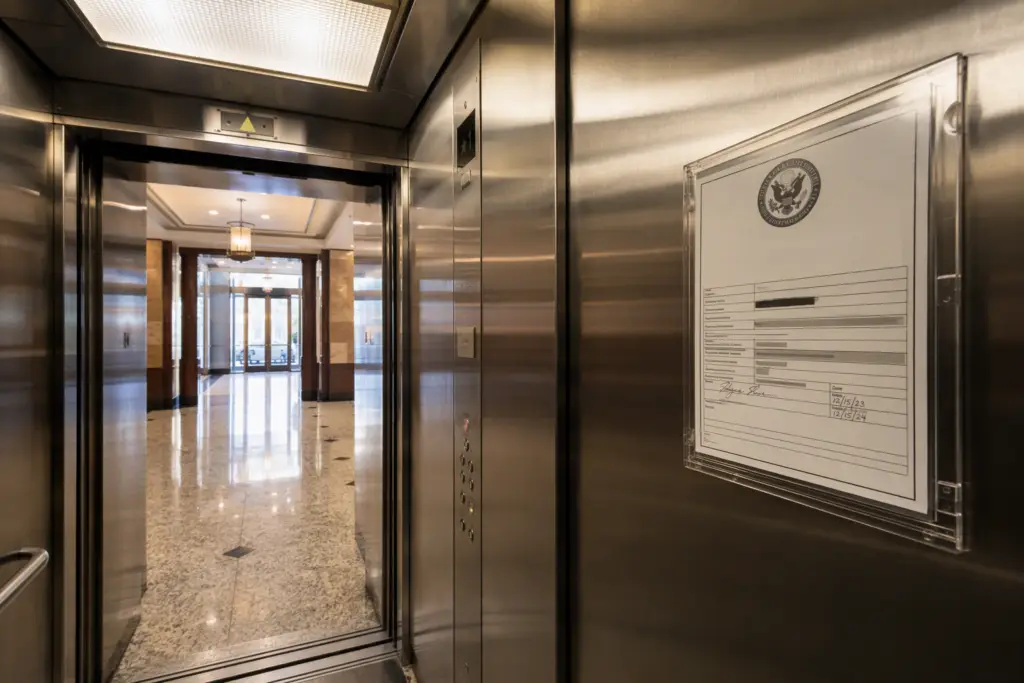
A compliant contractor should provide a written service log or maintenance record for every visit, documentation of safety test results, and proof of valid state licensing for all technicians working on the equipment.
Under ASME A17.1 and the adopting state and local regulations applicable in Maryland, DC, Pennsylvania, and Virginia, maintenance and inspection records must be kept and made available to inspectors. A service contractor who does not provide detailed written records after each visit is a compliance risk, regardless of contract type. Building owners should insist on receiving these records and retaining them for the periods required by their AHJ. Digital maintenance logs, which some contractors now provide through customer portals, can streamline this documentation and make audit preparation significantly easier.
17. What should I do if my elevator fails inspection and my service contract is L&A-based?
If an elevator fails a required inspection while under an L&A contract, the building owner is responsible for authorizing and funding the necessary corrective work, and the elevator must be taken out of service until it passes re-inspection.
The following steps outline the recommended response process when an elevator fails inspection:
- Immediately post the out-of-service notice and take the elevator out of passenger service as directed by the inspector or AHJ.
- Obtain a written inspection report detailing all deficiencies cited.
- Contact the service contractor and request a written scope and estimate to correct each cited deficiency.
- If the quoted repair cost is significant, consider obtaining a second opinion from another qualified contractor.
- Authorize and schedule corrective repairs promptly — operating an elevator with a failed inspection can result in fines and legal liability.
- After repairs are completed, schedule the required re-inspection with the AHJ.
- Retain all repair documentation and the new certificate of inspection in the building’s compliance records.
- Use the incident as an opportunity to evaluate whether upgrading to a full maintenance agreement would reduce future inspection failure risk.
18. How does proprietary versus non-proprietary equipment affect my service contract options?
Elevators with proprietary control systems — where the original manufacturer controls diagnostic tool access or parts availability — can limit a building owner’s ability to solicit competitive bids for full maintenance agreements, effectively reducing leverage in contract negotiations.
Proprietary equipment lock-in is a well-documented issue in the elevator industry. When a manufacturer uses software keys or specialized diagnostic tools that only their affiliated service organization can access, independent contractors may be unable to service the controls effectively. This reduces competition and can result in higher service contract pricing. Building owners considering new elevator installations or modernizations should weigh the long-term service contract implications of proprietary versus non-proprietary control systems. Specifying open, non-proprietary equipment provides greater flexibility in the maintenance marketplace for the life of the installation.
19. Are there red flags in elevator service contract language that building owners should avoid?
Yes — key red flags include overly broad exclusion clauses, undefined callback response terms, automatic renewal periods with short cancellation windows, and language that transfers all parts and repair costs to the owner without explicit disclosure of that intent.
Contracts that use vague terms like “normal wear and tear excluded” without defining what components fall under that exclusion create significant ambiguity that typically resolves in the contractor’s favor. Similarly, agreements that describe the service as “preventive maintenance” without specifying whether that includes parts, callbacks, and safety tests are often L&A contracts using more flattering language. Building owners should require plain-language addenda that state explicitly: (a) whether parts are included or excluded, (b) how callback calls are billed, and (c) who bears responsibility for compliance with AHJ inspection and testing requirements. Quality Elevator Company recommends that building owners have any multi-year elevator service agreement reviewed by a facilities management professional familiar with the local regulatory environment before signing.
20. How can Quality Elevator Company help me evaluate and replace my current elevator service contract?
Quality Elevator Company provides elevator assessments for building owners in Baltimore MD, Washington DC, Philadelphia PA, and Richmond VA that include a review of existing contract coverage, identification of compliance gaps, and recommendations for appropriate service agreement structures.
Building owners who are uncertain whether their current contract provides adequate coverage can benefit from an independent review that looks at the scope of services against the actual maintenance needs of the installed equipment, the jurisdictional compliance requirements of the local AHJ, and the age and condition of the elevator system. Quality Elevator Company’s service teams are familiar with the regulatory environments in each of its operating markets and can help building owners understand not just what their contract says, but what it should say given the specific equipment and occupancy type in their building. Whether a building owner ultimately needs an L&A contract with supplemental coverage, a full maintenance agreement, or a modernization plan that resets the maintenance baseline, an honest assessment of current conditions is the right starting point.
Summary: Key Takeaways for Building Owners
- Always identify in writing whether your contract is an FMA or L&A before signing.
- Confirm that all AHJ-required safety tests and inspections are assigned to a responsible party in the contract.
- Evaluate callback terms carefully — they represent significant cost exposure under an L&A arrangement.
- Review your contract’s escalation clause and automatic renewal provisions.
- Consider equipment age when choosing between contract types — older systems carry higher unplanned repair exposure.
- Ensure your contractor complies with ASME A17.1, ADA, and OSHA requirements applicable in your jurisdiction.
- Maintain complete maintenance and inspection records as required by your local AHJ.
Get a Free Elevator Assessment from Quality Elevator Company
Building owners in Baltimore MD, Washington DC, Philadelphia PA, and Richmond VA can schedule a no-cost elevator assessment with Quality Elevator Company. The assessment covers existing contract scope review, equipment condition evaluation, and compliance status against current jurisdictional requirements — giving building owners the information they need to make confident decisions about their elevator service agreements.
Contact Quality Elevator Company for a free elevator assessment: 301-779-9116
Need elevator service you can rely on? Quality Elevator Company is ready to help.