Best Elevator Maintenance Company in Baltimore: Complete FAQ Guide
The best elevator maintenance company in Baltimore is one that holds current certifications, performs preventive maintenance aligned with ASME A17.1 Safety Code for Elevators and Escalators, understands Maryland state elevator regulations, and provides transparent documentation. Quality Elevator Company meets all of these criteria while serving commercial and residential property owners across Baltimore and the surrounding region.
What makes an elevator maintenance company the best choice in Baltimore?
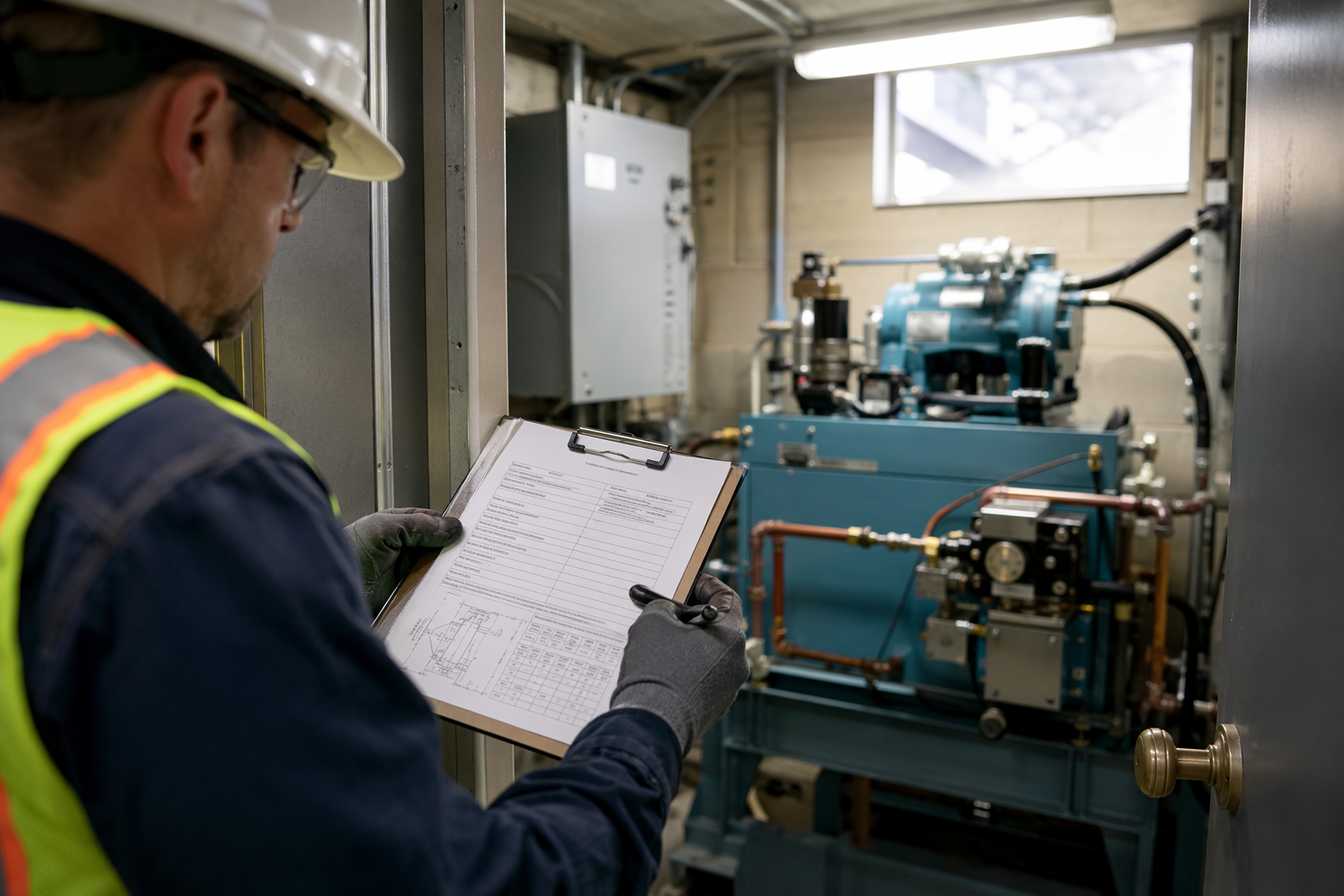
The best elevator maintenance company in Baltimore demonstrates verifiable code compliance, documented preventive maintenance protocols, and deep familiarity with Maryland’s elevator inspection and licensing requirements.
Baltimore property managers and building owners face a specific regulatory environment governed by the Maryland Department of Labor’s Elevator Safety Unit. A qualified maintenance provider must coordinate inspections with state-licensed inspectors, maintain accurate maintenance logs, and ensure elevators comply with the current edition of the ASME A17.1 Safety Code for Elevators and Escalators. Beyond licensing, the best providers prioritize minimizing equipment downtime, which directly affects tenant satisfaction, building accessibility obligations under the Americans with Disabilities Act (ADA), and the long-term capital cost of elevator ownership.
Quality Elevator Company brings all of these elements together for Baltimore commercial buildings, multifamily residential properties, healthcare facilities, and public-access structures.
How often should elevators be inspected in Baltimore, Maryland?

In Maryland, elevators are required to undergo periodic inspections by a state-licensed elevator inspector, with the frequency and scope governed by state regulations and ASME A17.1 standards.
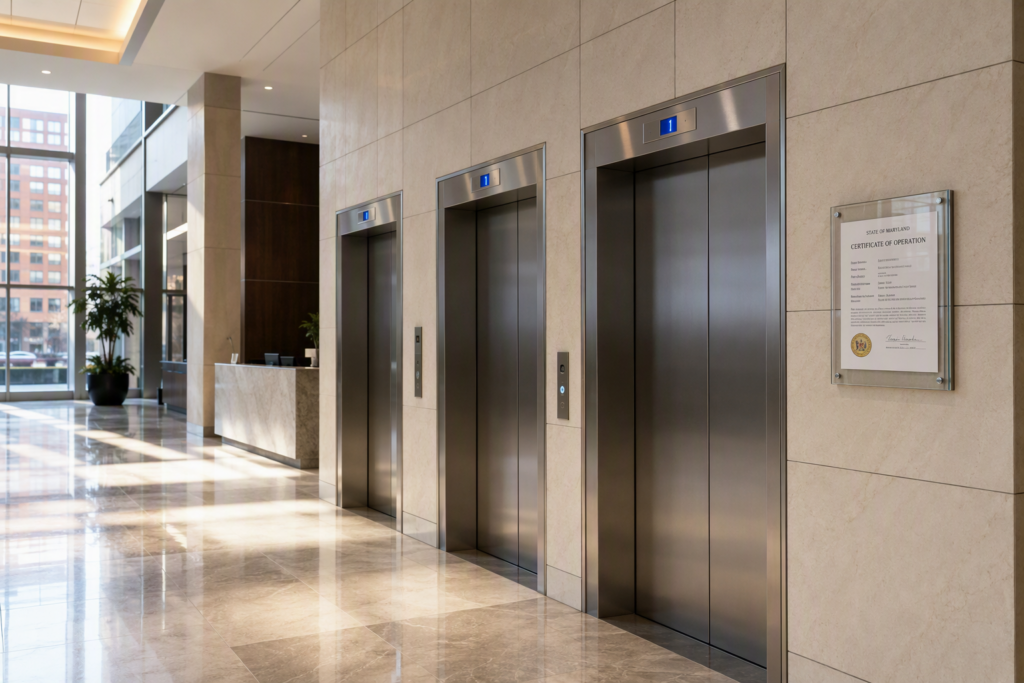
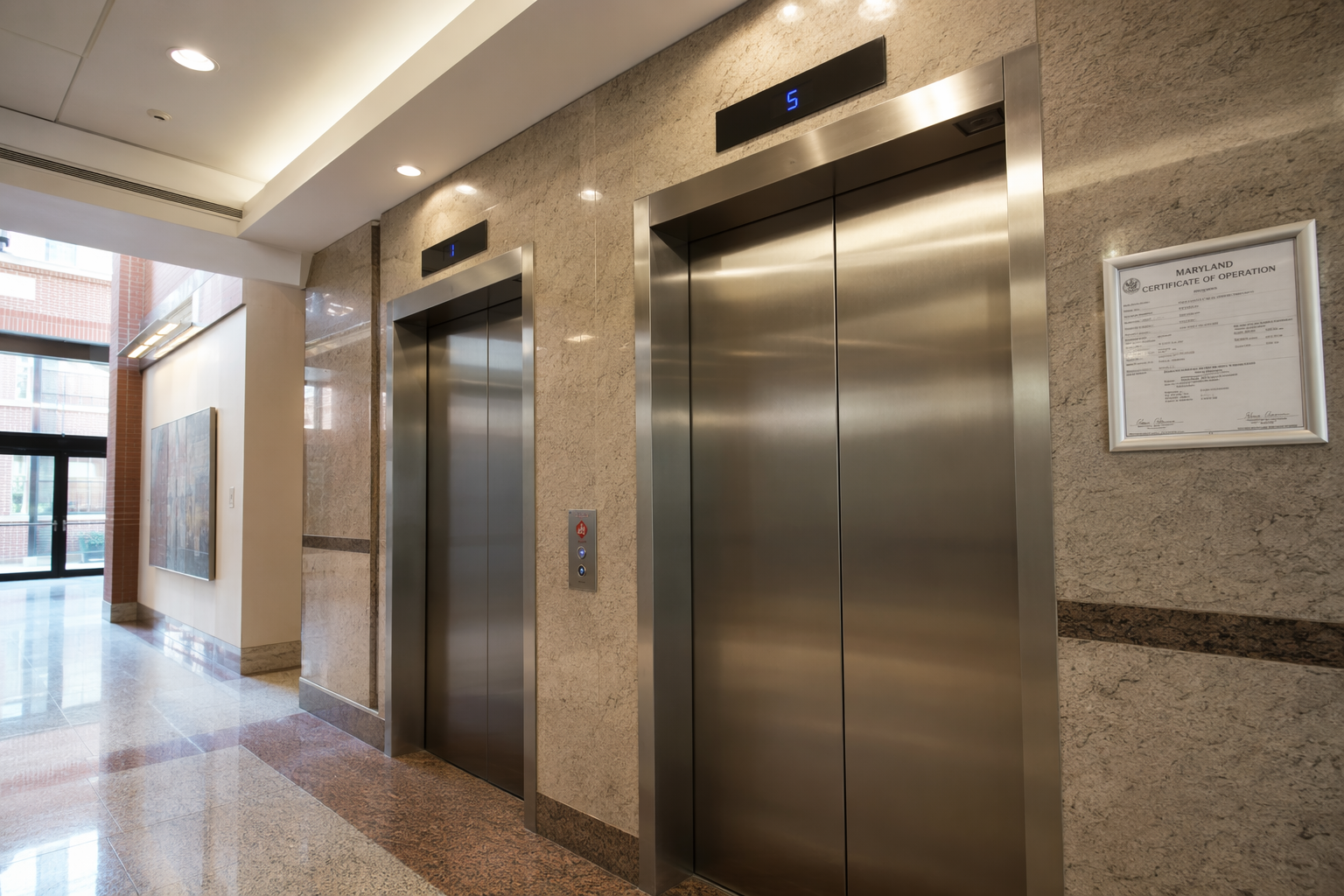
The ASME A17.1 Safety Code for Elevators and Escalators establishes minimum inspection and test intervals. Maryland’s elevator safety program, administered through the Department of Labor, enforces these intervals and requires that a Certificate of Operation be maintained for each elevator. Annual inspections are the standard baseline for most passenger elevators, while certain tests — such as the five-year hydraulic pressure and safety tests — occur on longer cycles.
A comprehensive maintenance contract with a qualified company like Quality Elevator Company typically includes coordination of all required inspections, so building owners do not need to manage the scheduling burden independently. Proper recordkeeping also ensures that inspection certificates are available on demand, which is particularly important during real estate transactions or regulatory audits.
What is included in a professional elevator maintenance contract?
A professional elevator maintenance contract covers scheduled preventive maintenance visits, lubrication and adjustment of mechanical components, safety device testing, and documentation of all work performed.
A well-structured maintenance agreement typically encompasses the following service categories:
- Preventive maintenance visits: Scheduled inspections and adjustments to mechanical, electrical, and hydraulic systems based on manufacturer specifications and ASME A17.1 guidelines.
- Lubrication and cleaning: Regular application of appropriate lubricants to guide rails, sheaves, and other moving parts to reduce wear.
- Safety device testing: Verification that safeties, buffers, interlocks, and emergency lighting function correctly.
- Code compliance review: Ongoing monitoring of equipment against current ASME A17.1 and applicable ADA requirements.
- Inspection coordination: Scheduling and documentation support for state-required inspections.
- Parts and repair coverage: Depending on contract tier, coverage may include parts replacement for routine wear items.
Quality Elevator Company structures its maintenance contracts to match the specific equipment type, age, usage level, and compliance status of each elevator in a building portfolio.
What types of elevators does a Baltimore maintenance company service?
A full-service Baltimore elevator maintenance company should be equipped to service hydraulic elevators, traction elevators, machine-room-less (MRL) systems, limited-use/limited-application (LULA) elevators, and accessibility lifts.
Each elevator type has distinct maintenance requirements. Hydraulic elevators, common in low-rise Baltimore commercial and residential buildings, require periodic fluid inspection, jack packing maintenance, and power unit servicing. Traction elevators, found in mid- and high-rise buildings throughout downtown Baltimore, require rope and sheave inspections, brake adjustments, and controller diagnostics. MRL systems, which house drive machinery in the hoistway rather than a dedicated machine room, require technicians familiar with space-constrained service environments.
LULA elevators and vertical platform lifts used to meet ADA accessibility requirements at historic Baltimore properties present their own code and maintenance considerations. Quality Elevator Company maintains the technical knowledge across all of these categories to serve a diverse Baltimore building stock.
How does elevator maintenance affect ADA compliance in Baltimore buildings?
Elevator maintenance directly affects ADA compliance because a non-operational or malfunctioning elevator in a building where it is the primary accessible route constitutes a barrier to access under the Americans with Disabilities Act.
Title III of the ADA requires that places of public accommodation maintain accessible features in working order. For multi-story buildings where the elevator is the only accessible means of reaching upper floors, extended downtime can expose building owners to complaints and legal liability. Routine maintenance reduces unplanned outages, while documentation of maintenance activities provides evidence of good-faith compliance efforts. Beyond availability, maintenance visits should also verify that cab controls meet ADA height and reach requirements, that audio and visual signals function properly, and that door timing complies with applicable standards. Linking a structured preventive maintenance program to ADA audit checklists is a practice that well-qualified providers like Quality Elevator Company integrate into their service protocols.
What are the most common elevator problems found during Baltimore maintenance visits?
The most common elevator problems identified during maintenance visits in Baltimore include door misalignment and interlock failures, hydraulic fluid leaks, worn brake components, controller errors, and guide rail lubrication deficiencies.
Baltimore’s climate — with its humid summers and cold winters — accelerates certain types of wear. Hydraulic fluid viscosity can shift with temperature swings, affecting leveling accuracy. Door operator mechanisms exposed to temperature fluctuations may require more frequent adjustment than in more temperate climates. Older Baltimore building stock, particularly mid-century commercial and residential towers, often contains legacy elevator equipment where obsolete parts require proactive sourcing strategies.
A structured preventive maintenance program addresses these issues before they cause equipment failures. Technicians checking for early signs of wear on ropes, sheaves, brake linings, and electrical contacts can schedule targeted repairs at a controlled cost rather than responding to emergency breakdowns.
How do you compare elevator maintenance companies in Baltimore?
Comparing Baltimore elevator maintenance companies requires evaluating their licensing status, contract terms, code compliance capabilities, service documentation practices, and experience with your specific equipment type.
| Evaluation Criteria | What to Look For | Red Flags |
|---|---|---|
| Licensing & Certification | Maryland state elevator mechanic and contractor licensing; technicians trained to ASME A17.1 standards | No verifiable state license; vague references to “certifications” without specifics |
| Contract Transparency | Clearly defined scope, exclusions, parts coverage, and escalation procedures | Evergreen clauses, automatic multi-year renewals without opt-out windows |
| Code Compliance Knowledge | Demonstrated familiarity with ASME A17.1, Maryland elevator regulations, and ADA requirements | No mention of code compliance in proposal documents |
| Documentation Practices | Detailed maintenance logs, inspection coordination records, parts replacement history | Paper-only or informal records with no digital backup |
| Equipment Breadth | Experience with hydraulic, traction, MRL, LULA, and platform lifts | Specializes only in one manufacturer’s equipment |
| Local Market Knowledge | Familiarity with Maryland DOL inspection process, Baltimore building stock, local permit requirements | Out-of-area provider with no demonstrated local regulatory knowledge |
| References and Track Record | Verifiable Baltimore area building references; portfolio of property types similar to yours | References available only from outside the local market |
Quality Elevator Company invites prospective clients to request a side-by-side contract comparison and full disclosure of technician qualifications before making a selection.
What should a Baltimore property owner do immediately after an elevator breakdown?
When an elevator breaks down in a Baltimore building, the property owner or manager should follow a specific sequence of steps to protect occupant safety, meet notification obligations, and initiate the repair process correctly.
- Confirm no occupants are trapped. If passengers are trapped in the cab, contact emergency services (911) immediately. Do not attempt a self-rescue procedure.
- Take the elevator out of service. Place the elevator in independent service or secure the lobby call buttons to prevent further use until the malfunction is diagnosed.
- Post clear signage. Place out-of-service notices at all landings and, where applicable, direct users to accessible alternative routes per ADA guidelines.
- Contact your licensed elevator maintenance contractor. Provide a description of symptoms, the elevator type, and any error codes displayed on the controller panel.
- Document the incident. Record the time, nature of the failure, any witness accounts, and all communications for your maintenance and liability records.
- Notify the Maryland Department of Labor if required. Certain failures, accidents, or injuries associated with elevator operation may trigger mandatory reporting obligations under Maryland state regulations.
- Do not allow return to service without a qualified technician clearance. Confirm the repair is complete and documented before resuming passenger operation.
How does ASME A17.1 apply to elevator maintenance in Maryland?
The ASME A17.1 Safety Code for Elevators and Escalators is the foundational technical standard that Maryland adopts as the basis for elevator safety regulations, governing equipment design, installation, inspection, testing, and maintenance requirements.
Maryland’s elevator safety regulations reference ASME A17.1 as the controlling technical standard. The code covers everything from the mechanical specifications of safety devices and buffers to the electrical requirements for controllers and wiring. For maintenance providers, ASME A17.1 specifies the intervals and methods for required periodic tests, including governor and safety tests, hydraulic pressure tests, and brake tests. It also defines the qualifications and responsibilities of maintenance personnel.
Building owners benefit from understanding that a maintenance provider who demonstrates working knowledge of ASME A17.1 — not just familiarity with it by name — is better positioned to keep equipment compliant and help owners avoid citation during state inspections. Quality Elevator Company incorporates ASME A17.1 test and inspection requirements directly into its maintenance scheduling protocols.
What is the difference between a maintenance contract and a full-service contract for elevators?
A basic maintenance contract typically covers labor and lubrication for routine visits, while a full-service or comprehensive contract additionally includes parts, adjustments, and repair labor for covered components at no extra cost per service call.
The distinction matters significantly for budget planning. Under a basic or “oil and grease” contract, building owners pay separately for parts and repair labor beyond routine lubrication and adjustment. A full-service contract shifts more cost risk to the service provider but typically commands a higher monthly fee. For older Baltimore buildings with aging elevator equipment, a full-service contract can provide valuable predictability in maintenance budgeting, since aging systems tend to require more frequent component replacements.
Mid-tier contracts — sometimes called “parts and labor” agreements — cover certain repair categories while excluding others (such as major modernization components). Carefully reviewing the exclusions list in any contract is essential before signing. A reputable company will explain these distinctions transparently and recommend the tier that matches the equipment’s age and condition.
How does elevator maintenance affect property value and tenant retention in Baltimore?
Well-maintained elevators contribute directly to tenant satisfaction, lease renewal rates, and building marketability, while deferred maintenance leads to costly unplanned failures and potential code violations that can affect certificate of occupancy status.
In Baltimore’s competitive commercial and multifamily real estate markets, elevator reliability is frequently cited by tenants as a factor in renewal decisions for upper-floor units and office suites. A building with a documented, consistent maintenance history is also more attractive to prospective buyers and lenders during due diligence. From a capital planning perspective, proactive maintenance extends equipment service life, deferring the substantial cost of full modernization. Conversely, deferred maintenance accelerates wear, increases the frequency and severity of breakdowns, and can result in state-ordered shutdowns if inspection deficiencies are not addressed.
What are Maryland’s elevator permit and licensing requirements for maintenance work?
Maryland requires elevator contractors and mechanics performing maintenance, repair, or installation work to hold licenses issued by the Maryland Department of Labor, and all work must be performed under a licensed elevator contractor’s permit.
The Maryland Department of Labor’s Division of Labor and Industry oversees elevator safety and licensing in the state. Elevator mechanics must hold a state-issued mechanic’s license, and elevator contractors must hold a contractor’s license to legally perform work on elevators in Maryland. Maintenance contracts signed with unlicensed providers expose building owners to regulatory liability and may invalidate insurance coverage for elevator-related incidents. Prospective clients should verify contractor and mechanic licensing status through the Maryland Department of Labor before executing any maintenance agreement. Quality Elevator Company operates in full compliance with Maryland licensing requirements across all service areas.
How does elevator maintenance relate to workplace safety and OSHA requirements?
Elevator maintenance work must be performed in compliance with OSHA standards for construction and general industry, which govern technician safety during inspection, repair, and maintenance activities in elevator pits, hoistways, and machine rooms.
OSHA standards applicable to elevator maintenance work include lockout/tagout (LOTO) procedures for controlling hazardous energy, confined space entry protocols for elevator pits, and fall protection requirements for hoistway work. Building owners have a duty to ensure that the maintenance contractors they engage enforce these safety protocols on their property. A maintenance provider that maintains rigorous OSHA compliance protects both its technicians and the building owner from liability exposure. Proper LOTO documentation and confined space permits are part of a professional maintenance workflow and should be standard practice for any qualified provider.
What questions should Baltimore building owners ask before signing an elevator maintenance contract?
Before signing an elevator maintenance contract in Baltimore, building owners should ask about licensing verification, contract exclusions, documentation practices, inspection coordination, parts sourcing, and contract exit terms.
Specific questions to ask any prospective elevator maintenance provider include:
- Can you provide proof of current Maryland elevator contractor and mechanic licensing?
- What is specifically excluded from this contract, and how are excluded repairs priced?
- How do you document each maintenance visit, and can I access those records digitally?
- Will you coordinate scheduling and paperwork for required state inspections?
- How do you source parts for older or proprietary elevator systems?
- What are the contract term, renewal conditions, and early termination provisions?
- Do you have references from Baltimore buildings with similar equipment to mine?
- How do you handle major repairs or modernization recommendations that fall outside routine maintenance?
A qualified provider will answer each of these questions clearly and in writing. Vague or evasive answers to any of them warrant further scrutiny before a contract is signed.
What is elevator modernization and when does a Baltimore building need it?
Elevator modernization is the process of replacing or upgrading major elevator system components — such as the controller, drive, cab interior, or door operator — to improve performance, extend service life, and bring equipment into compliance with current code requirements.
Modernization becomes relevant when equipment reaches an age or condition where ongoing maintenance costs outpace the financial benefit of continued repairs, when replacement parts for legacy components become unavailable, or when code changes require specific upgrades. In Baltimore, many mid-century commercial buildings contain elevator equipment that has reached or surpassed typical service life benchmarks. A qualified maintenance provider will identify modernization needs during regular maintenance visits and provide documentation that supports capital planning decisions. Importantly, modernization work must comply with the ASME A17.1 Safety Code for Elevators and Escalators and applicable Maryland regulations, and requires permits from the state. Quality Elevator Company provides modernization assessments as part of its comprehensive service offering in Baltimore.
How does elevator maintenance differ for hydraulic versus traction elevators in Baltimore?
Hydraulic and traction elevators have fundamentally different mechanical systems, which means their maintenance protocols, inspection intervals, and common failure modes differ significantly from each other.
Hydraulic elevators use a piston and cylinder system driven by hydraulic fluid under pressure. Key maintenance tasks include monitoring and replacing hydraulic fluid, inspecting the jack cylinder for signs of leakage, maintaining the power unit and valve assembly, and conducting required pressure tests per ASME A17.1. Underground hydraulic cylinders in older Baltimore buildings may require periodic assessment for casing integrity.
Traction elevators use steel ropes or belts running over a sheave driven by an electric motor. Maintenance priorities include wire rope or belt inspection for wear and fatigue, sheave groove measurements, brake lining assessment, machine bearing lubrication, and controller and drive system diagnostics. High-cycle traction elevators in busy Baltimore office or residential towers may require more frequent maintenance visits than lower-traffic hydraulic units.
How can Baltimore building owners reduce elevator maintenance costs without compromising safety?
Baltimore building owners can reduce elevator maintenance costs by entering structured preventive maintenance agreements, maintaining accurate equipment records, addressing minor issues promptly before they escalate, and coordinating maintenance scheduling to minimize overtime and emergency call charges.
Preventive maintenance is consistently more cost-effective than reactive repair because it replaces components at the end of their service life rather than after they fail — often taking other components with them. Maintaining complete maintenance and repair records also enables more accurate capital planning, so that major expenditures like modernization are budgeted in advance rather than absorbed as emergency capital. Engaging a provider that services multiple elevators in the same building or portfolio can also create efficiencies in scheduling and parts inventory. Quality Elevator Company works with multi-building property managers across Baltimore to structure maintenance programs that optimize service coverage against cost.
Does Quality Elevator Company serve buildings outside of Baltimore city limits?
Yes, Quality Elevator Company serves elevator maintenance clients across a regional footprint that includes Baltimore, MD, Washington, DC, Philadelphia, PA, and Richmond, VA.
This regional coverage is particularly valuable for property management companies and real estate portfolios that operate buildings across multiple Mid-Atlantic markets. A single qualified maintenance provider handling all locations reduces vendor management complexity, creates consistent documentation standards, and simplifies compliance tracking across different state regulatory environments. Each of these markets has its own elevator licensing and inspection framework, and Quality Elevator Company maintains the regulatory knowledge required to operate compliantly in all four service areas.
What should Baltimore building owners know about elevator safety incident reporting?
In Maryland, certain elevator-related accidents, injuries, and equipment malfunctions must be reported to the state elevator safety authority, and building owners bear primary responsibility for ensuring these reports are filed accurately and on time.
The Maryland Department of Labor’s elevator safety program establishes reporting obligations for incidents that result in injury or that involve serious equipment failures. Failure to report required incidents can result in regulatory penalties. A professional maintenance provider can assist building owners in understanding their reporting obligations and in preparing accurate documentation following any incident. Workplace safety protocols governed by OSHA also require employers to record and report certain work-related injuries, which may include injuries occurring in or around elevator equipment. Maintaining thorough maintenance records is the first line of defense in demonstrating that a building owner met the applicable standard of care in the event of an incident investigation.
How do I get started with Quality Elevator Company for elevator maintenance in Baltimore?
Getting started with Quality Elevator Company begins with a free elevator assessment, during which a qualified representative reviews your equipment inventory, current maintenance status, compliance documentation, and specific building requirements to develop a tailored maintenance proposal.
The assessment process typically involves reviewing the existing maintenance history and inspection certificates for each elevator in the building, identifying any outstanding code compliance items under ASME A17.1 or ADA standards, and documenting equipment make, model, age, and current condition. This information forms the basis for a transparent, scope-specific maintenance proposal that aligns with your equipment, budget, and compliance timeline. Building owners in Baltimore, Washington DC, Philadelphia, and Richmond are encouraged to initiate the process before their current contract expires or their next inspection comes due.
Contact Quality Elevator Company for a Free Elevator Assessment
Whether you manage a single elevator in a Baltimore mid-rise or a multi-building portfolio across the Mid-Atlantic region, Quality Elevator Company is ready to provide a no-obligation assessment of your equipment’s maintenance status, compliance standing, and service needs. Speak with a qualified representative today.
Call Quality Elevator Company: 301-307-5363
Serving Baltimore, MD • Washington, DC • Philadelphia, PA • Richmond, VA
Need elevator service you can rely on? Quality Elevator Company is ready to help.