Elevator Maintenance and Compliance for Schools and Universities: A Complete Guide
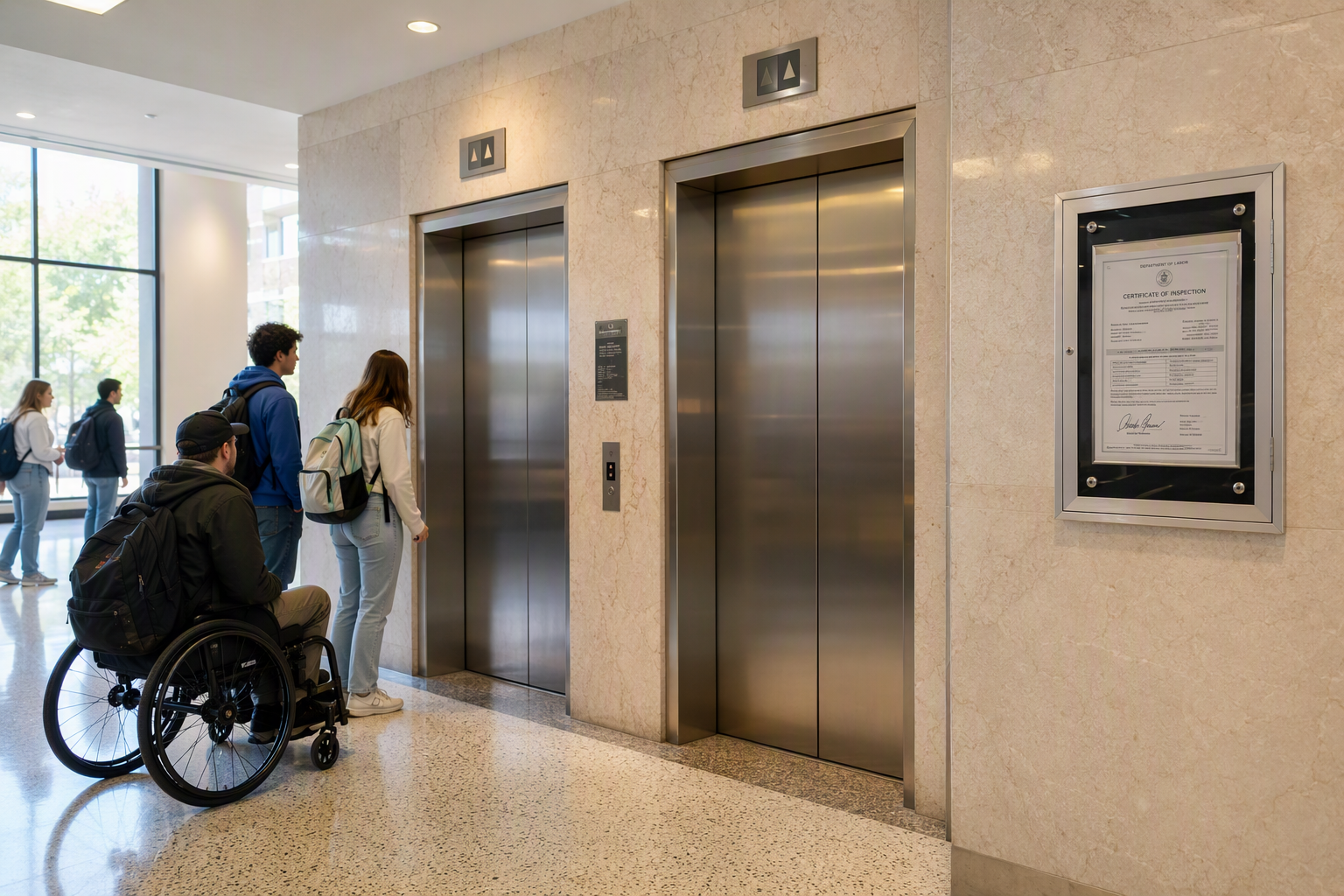
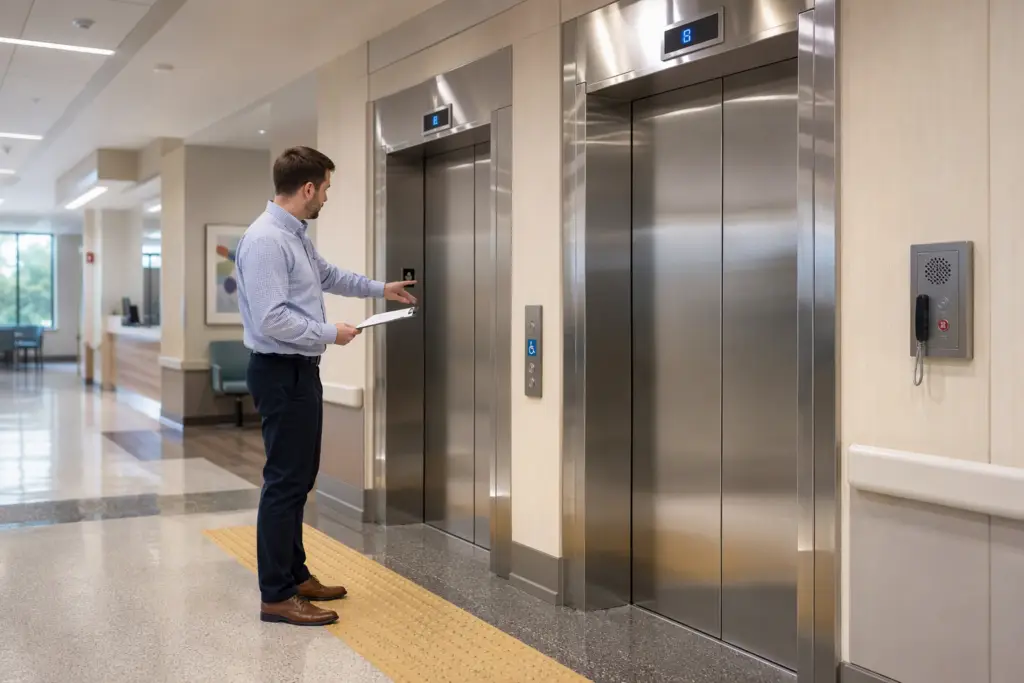
Schools, colleges, and universities operate some of the most heavily used vertical transportation equipment in any building category. Lecture halls, dormitories, athletic facilities, and administrative towers all depend on reliable, compliant elevators to serve students, faculty, staff, and visitors — including those with disabilities. Whether you manage a single academic building in Baltimore or an entire university campus spanning Washington DC, understanding your compliance obligations and maintenance responsibilities is essential to avoiding liability, citations, and service disruptions.
Quality Elevator Company supports educational facilities across Maryland, Washington DC, Pennsylvania, and Virginia with comprehensive elevator maintenance, inspection coordination, and compliance management tailored to the demands of campus environments.
What Federal and State Codes Apply to Elevators in Schools and Universities?
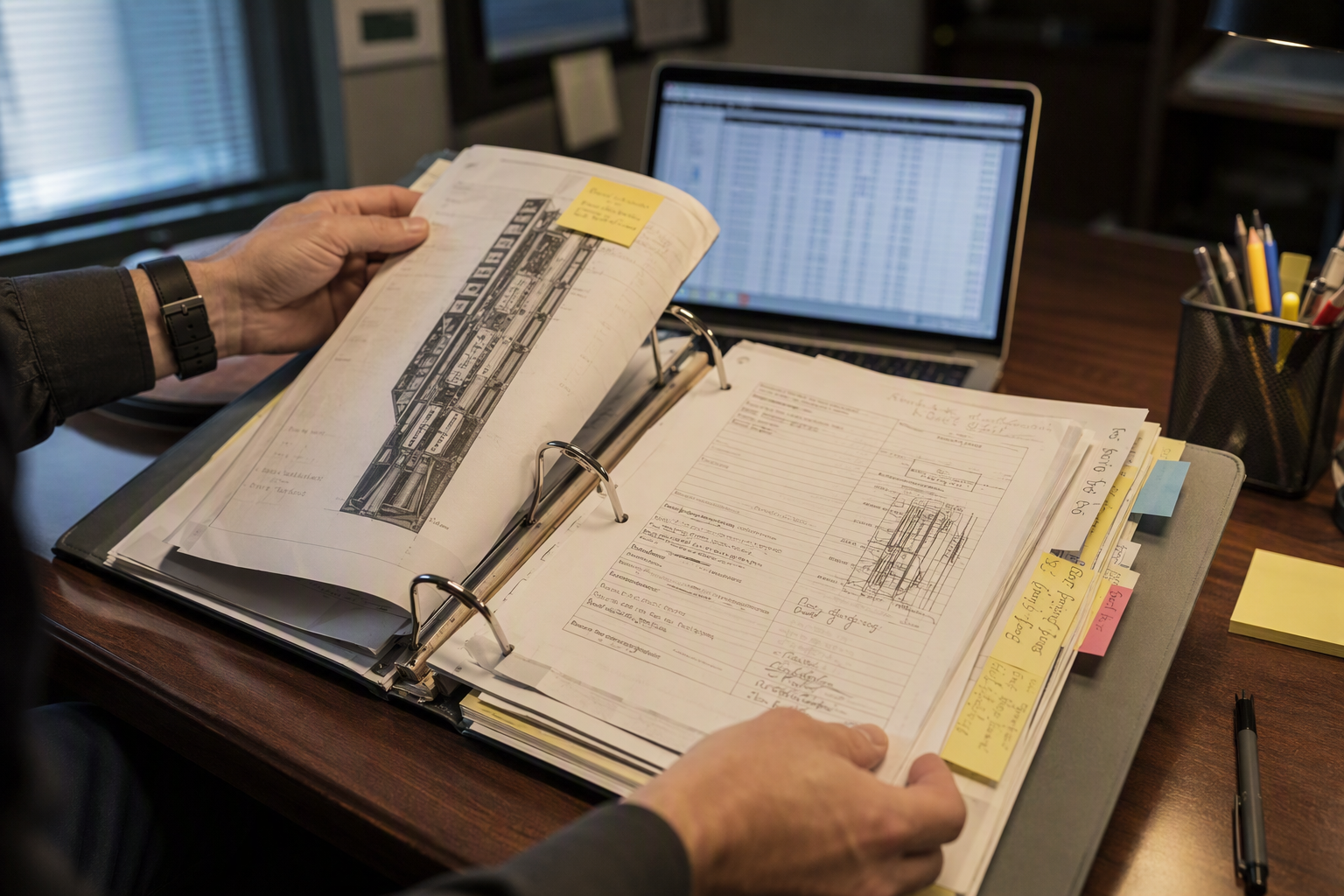
Educational facilities in Maryland, Washington DC, Pennsylvania, and Virginia must comply with several overlapping code frameworks:
- ASME A17.1 Safety Code for Elevators and Escalators: This is the primary national standard governing the design, construction, installation, operation, inspection, testing, and maintenance of elevators in the United States. New installations must meet the current edition. Existing equipment is typically evaluated under ASME A17.3, the Safety Code for Existing Elevators and Escalators, which sets requirements for modernization and continued safe operation.
- Americans with Disabilities Act (ADA): Educational institutions receiving federal funding — which includes the vast majority of public schools and universities — must ensure elevator accessibility for individuals with disabilities. This covers cab dimensions, door timing, control panel height, audible and visual signals, and Braille markings.
- State Authorities Having Jurisdiction (AHJ): Each state enforces elevator codes through its own licensing and inspection body. In Maryland, the Division of Labor and Industry oversees elevator safety. In Virginia, the Department of Labor and Industry administers the Virginia Elevator Safety Law. In Pennsylvania, the Department of Labor and Industry enforces elevator regulations under the Elevator Safety Law. In Washington DC, the Department of Consumer and Regulatory Affairs (DCRA) regulates elevator inspections and permits. All four jurisdictions adopt and locally enforce versions of ASME A17.1 and A17.3.
- OSHA Standards: While elevator equipment itself is governed by ASME and state AHJs, OSHA regulations apply to maintenance technician safety during service work, including lockout/tagout procedures and confined space protocols.
How Often Do School and University Elevators Need to Be Inspected?
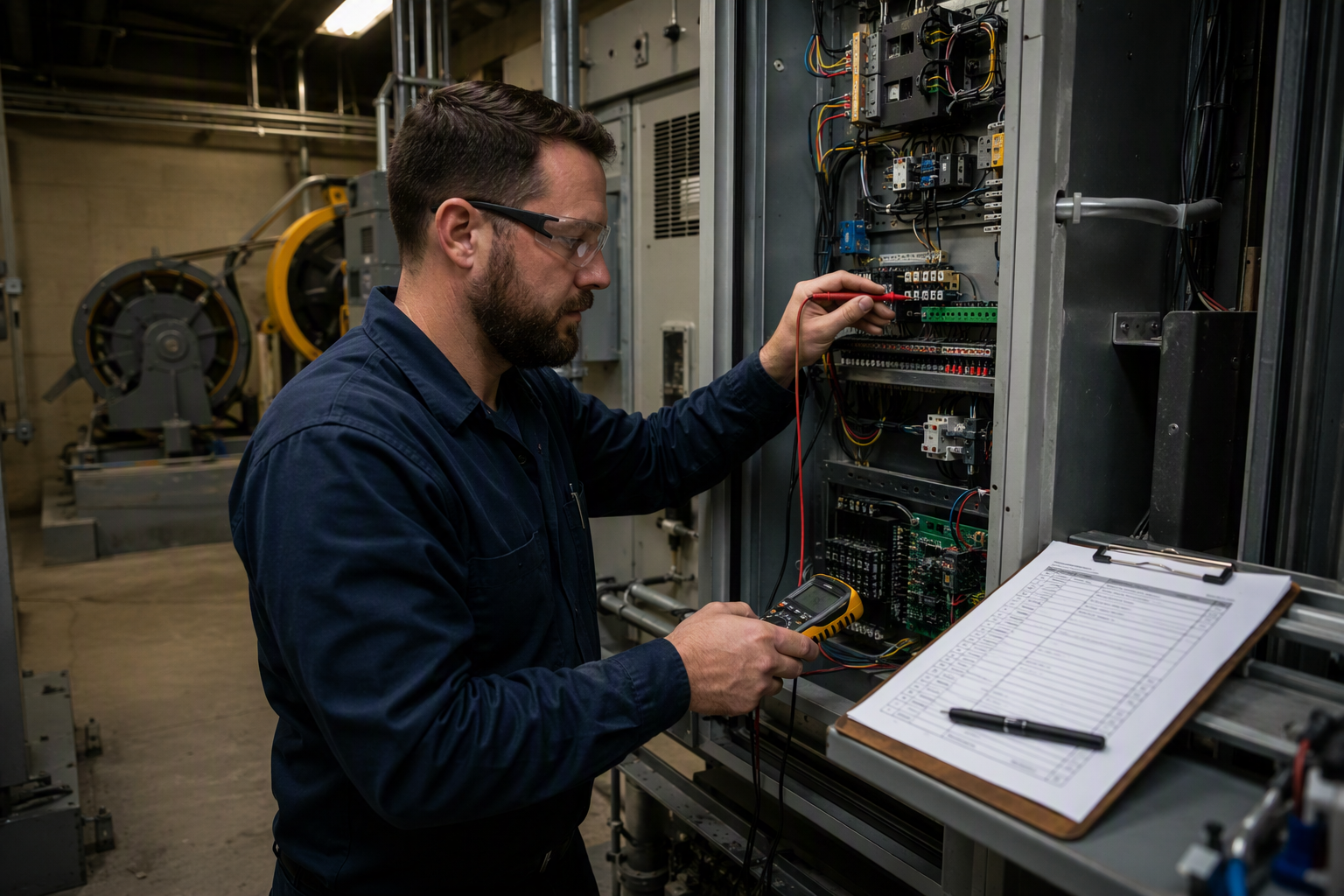
Inspection frequency is set by each state’s AHJ and generally aligns with ASME A17.1 and A17.3 requirements. In all four jurisdictions served by Quality Elevator Company — Maryland, Washington DC, Pennsylvania, and Virginia — elevators in public and commercial buildings, including schools and universities, are typically required to undergo periodic inspections and tests on a regular cycle. This commonly includes annual safety inspections and periodic five-year load and safety device tests, though exact intervals vary by jurisdiction and elevator type.
Facility managers should confirm specific intervals directly with their state AHJ, as requirements can differ based on elevator type (hydraulic, traction, limited-use/limited-application), building occupancy classification, and any conditions noted during prior inspections. Operating an elevator with an expired inspection certificate is a violation and can result in mandatory shutdown orders.
What Are the Most Common Compliance Failures Found in School Elevators?
Inspectors frequently identify the following deficiencies in educational facility elevators:
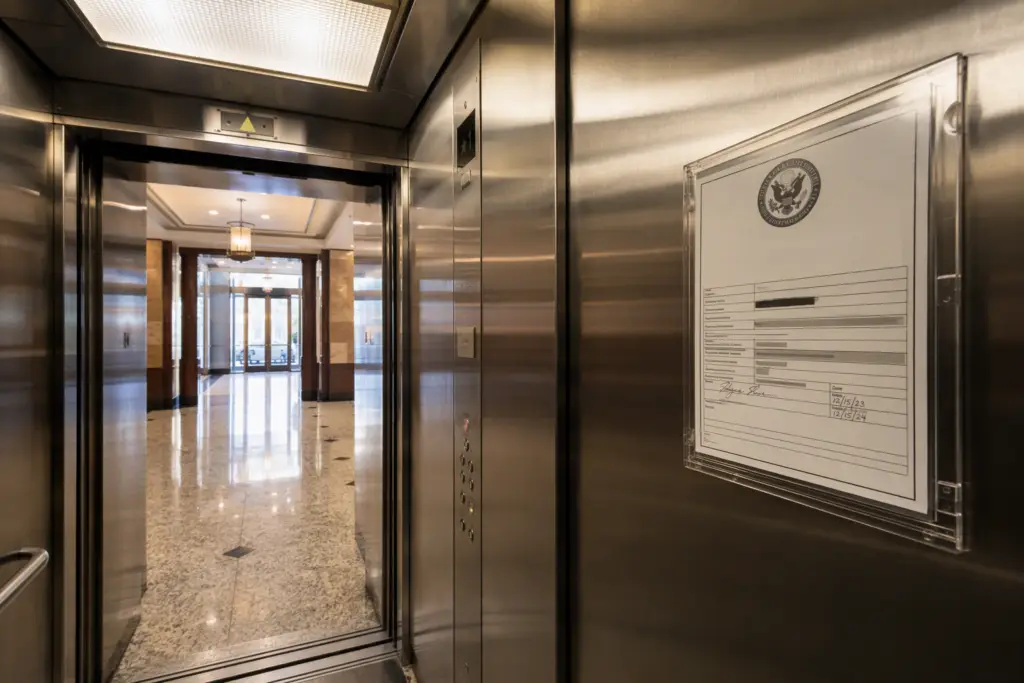
- Expired or missing inspection certificates posted in the cab
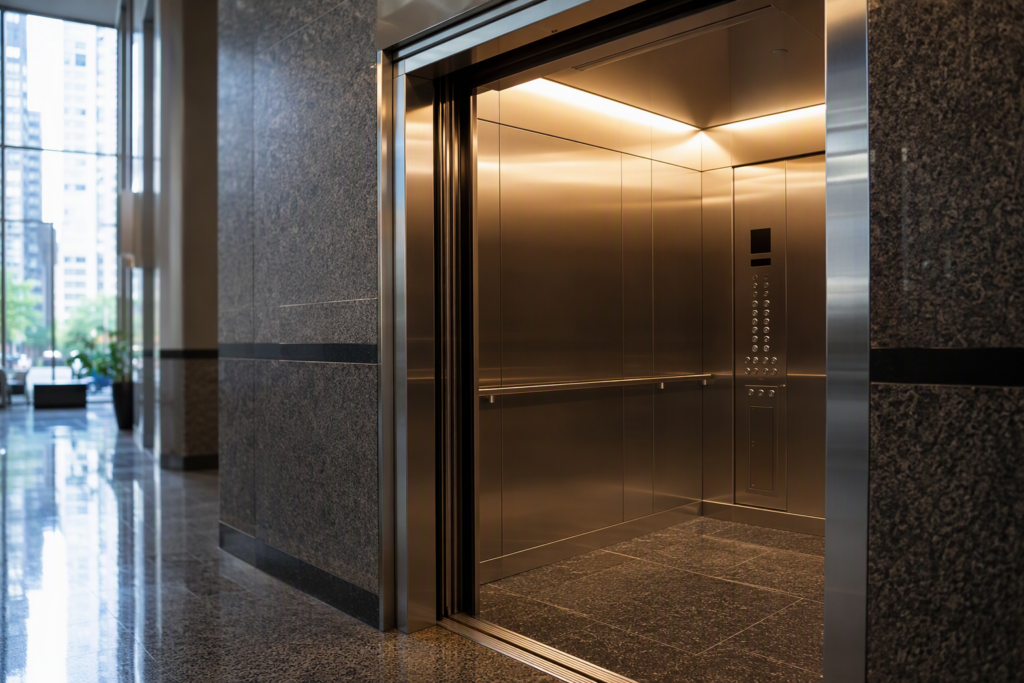
- Non-functional or incorrectly positioned ADA-compliant cab controls
- Worn door operator components causing improper closing force or timing
- Inoperative emergency lighting or communication devices
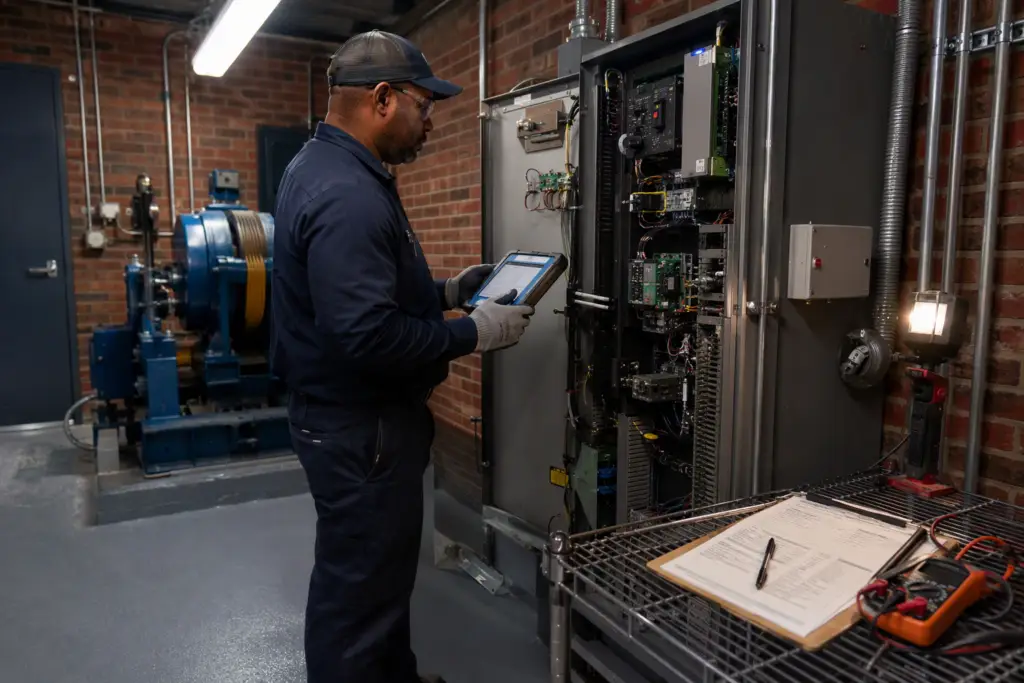
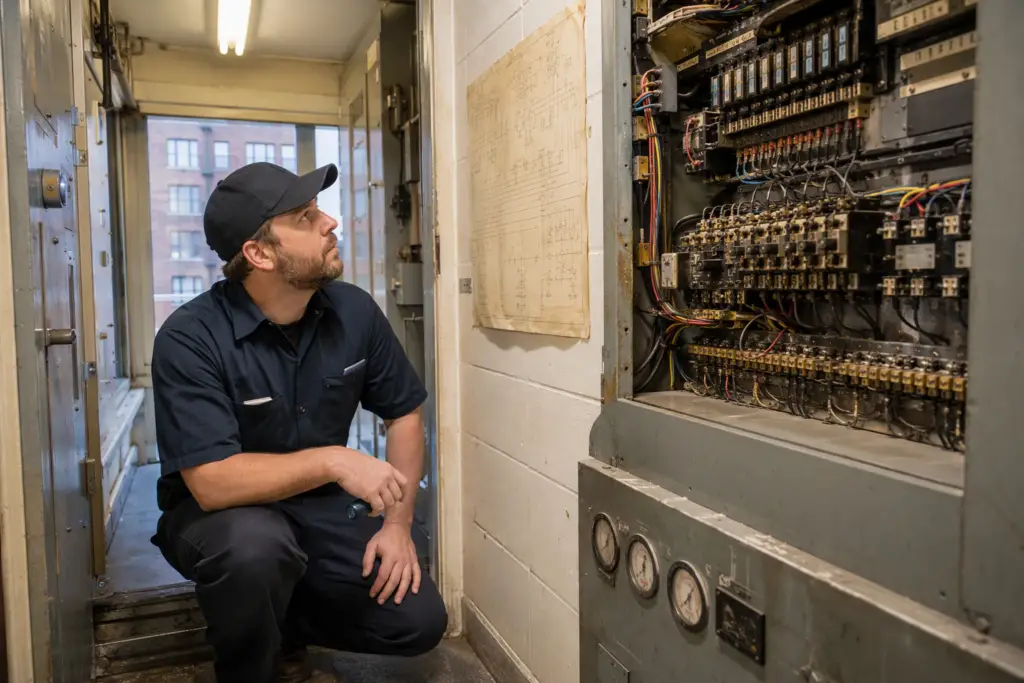
- Deteriorated machine room conditions, including improper storage of non-elevator materials
- Missing or illegible Braille markings on control panels
- Outdated hydraulic fluid or corroded cylinders in older hydraulic units
- Failure to maintain required machine room temperature ranges
Many of these issues are preventable through consistent preventive maintenance contracts, which Quality Elevator Company structures specifically for institutional clients managing multiple units across large campuses.
What Does an Elevator Maintenance Contract for a University Should Include?
A comprehensive maintenance agreement for a school or university should cover:
- Scheduled preventive maintenance visits at defined intervals
- Lubrication, adjustment, and cleaning of all mechanical and electrical components
- Testing of safety devices, door operators, and emergency systems
- Coordination with the state AHJ for required periodic inspections
- Detailed maintenance logs and inspection records retained for review
- Callback response for service interruptions
- Modernization planning and code compliance review for aging equipment
Universities managing multiple buildings should seek a provider capable of consolidating service records across all units, simplifying compliance documentation for institutional risk management and accreditation reviews.
How Does ADA Compliance Specifically Affect University Elevator Requirements?
Under the Americans with Disabilities Act, elevators serving multiple floors in most educational buildings must meet accessibility standards covering cab size, door width and timing, floor designation signage, raised and Braille characters on control panels, audible floor announcements, and emergency two-way communication accessible to individuals who are deaf or hard of hearing.
Universities undergoing renovations or new construction face particularly close ADA scrutiny, as alterations to an area of primary function — such as a renovated library or academic building — can trigger a requirement to improve the accessibility path of travel, including elevators. Facility managers planning capital projects should evaluate elevator ADA compliance as part of every renovation scope, not as an afterthought.
What Steps Should a Facilities Manager Take When an Elevator Fails Inspection?
- Obtain the written violation notice from the inspector and review each cited deficiency carefully.
- Remove the elevator from service immediately if the AHJ has issued an out-of-service order — operating a condemned elevator exposes the institution to significant legal liability.
- Notify building occupants and post clear signage directing to alternative accessible routes in compliance with ADA requirements.
- Contact a licensed elevator service contractor — such as Quality Elevator Company — to evaluate each cited deficiency and provide a corrective action scope of work.
- Obtain required repair permits from the state AHJ before beginning work, as most corrective repairs on inspected equipment require a permit.
- Complete repairs with a licensed contractor and document all work performed.
- Schedule a follow-up inspection with the AHJ to obtain a new certificate of operation before returning the elevator to service.
- Update maintenance records and review preventive maintenance protocols to prevent recurrence.
How Long Does Elevator Modernization Take for a School Building?
Modernization timelines vary based on the scope of work, elevator type, equipment lead times, and permitting schedules. A targeted modernization — such as upgrading a controller or door operator — may be completed within days. A full cab modernization including new controls, fixtures, cab interior, and safety systems on a traction elevator typically requires several weeks of planning, permitting, and installation. For institutions planning capital improvements, coordinating modernization during academic breaks minimizes disruption to building users.
Quality Elevator Company works with facilities teams in Maryland, Washington DC, Pennsylvania, and Virginia to plan modernization projects around institutional calendars, ensuring minimal impact on academic operations.
What Records Should a University Keep for Elevator Compliance?
Proper recordkeeping is both a regulatory requirement and a critical risk management practice. Educational facilities should maintain:
- Current and historical certificates of inspection issued by the state AHJ
- Maintenance logs for every service visit, including dates, technician documentation, and work performed
- Records of any corrective repairs, parts replacements, and permit documentation
- Test records for periodic five-year safety tests and load tests as required by ASME A17.1 and A17.3
- ADA compliance documentation, particularly following any renovations
- Machine room access logs
- Emergency service call records
These records should be retained for the duration required by the applicable AHJ and made available upon inspector request. Gaps in documentation can result in citations even when the equipment itself is mechanically sound.
Questions Your Inspector Will Ask
During a state AHJ inspection of a school or university elevator, inspectors commonly evaluate the following — and facility managers should be prepared to answer:
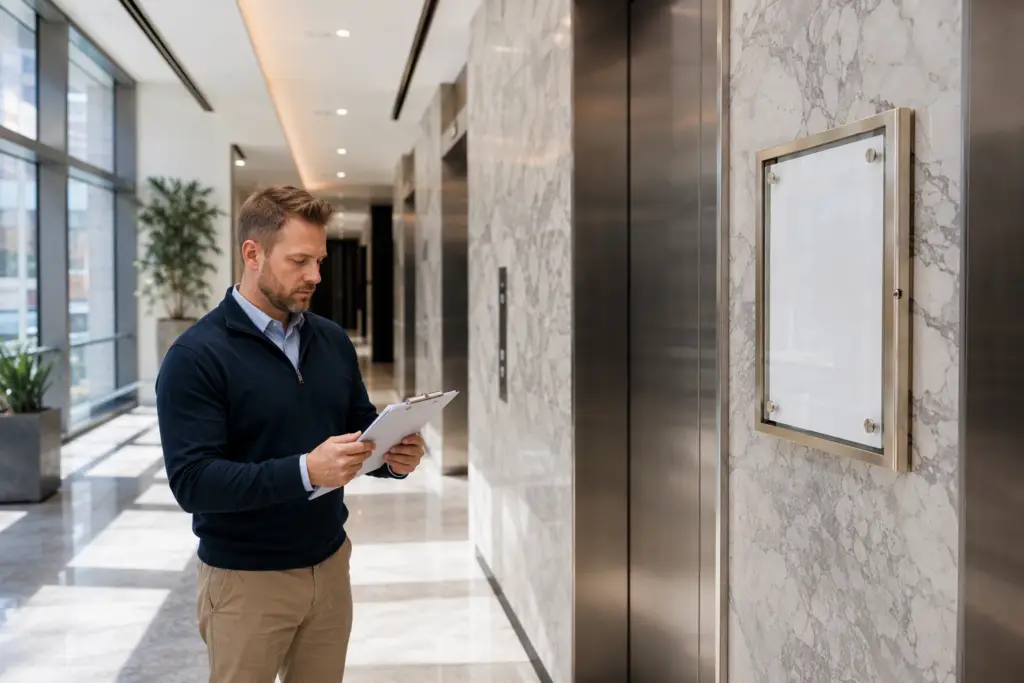
- Is the current certificate of inspection posted in the elevator cab? Inspectors will look for a valid, unobstructed certificate.
- When was the last periodic five-year test performed, and where are the records? ASME A17.1 and A17.3 require documented periodic testing of safety systems and rated load.
- Is the machine room free of non-elevator storage? Codes prohibit storing materials unrelated to elevator operation in machine rooms.
- Are the emergency lighting and two-way communication systems operational? Inspectors will test these in the cab and machine room.
- Is the door reopening device functioning correctly? Inspectors will verify that door safety edges or light curtains prevent contact with passengers.
- Are all cab controls and signage compliant with ADA requirements? This includes Braille markings, control heights, and audible signals.
- Is a current maintenance contract in place, and who is the licensed contractor? Some jurisdictions require documentation of a maintenance agreement.
- Has any work been performed since the last inspection, and were permits obtained? Unpermitted modifications are a common cause of citation.
How Do You Choose the Right Elevator Service Company for a Campus Environment?
Selecting an elevator service provider for a school or university is a decision that affects student safety, regulatory compliance, and long-term facility costs. Key criteria include:
- Licensing in good standing with the relevant state AHJ in Maryland, Washington DC, Pennsylvania, or Virginia
- Experience servicing the specific makes and models of equipment on campus
- Demonstrated familiarity with ASME A17.1, A17.3, and ADA compliance in educational settings
- Capacity to manage multi-unit service contracts and provide consolidated recordkeeping
- Transparent documentation practices that support audit readiness
- References from comparable institutional clients
Quality Elevator Company serves educational and institutional clients across the Baltimore, Washington DC, Philadelphia, and Richmond markets, providing maintenance, inspection coordination, modernization, and compliance support for campus elevator programs of all sizes.
What Happens If a School Operates an Elevator Without a Valid Inspection Certificate?
Operating an elevator without a valid certificate of inspection is a violation of state elevator safety laws in Maryland, Virginia, Pennsylvania, and Washington DC. Consequences can include stop-operation orders requiring immediate removal from service, civil penalties assessed by the AHJ, institutional liability in the event of a passenger injury, and complications with insurance coverage. Institutions facing upcoming certificate expirations should proactively schedule inspections rather than allowing certificates to lapse.
Get Expert Elevator Compliance Support for Your School or University
Managing elevator compliance across an educational campus requires ongoing attention to federal codes, state regulations, and ADA requirements. Quality Elevator Company provides certified elevator maintenance, inspection coordination, and compliance management for schools and universities throughout Baltimore, Washington DC, Philadelphia, and Richmond.
Contact Quality Elevator Company for a free elevator assessment: 301-779-9116
Need elevator service you can rely on? Quality Elevator Company is ready to help.