State Elevator Inspection Frequency: Requirements, Standards & Compliance Guide
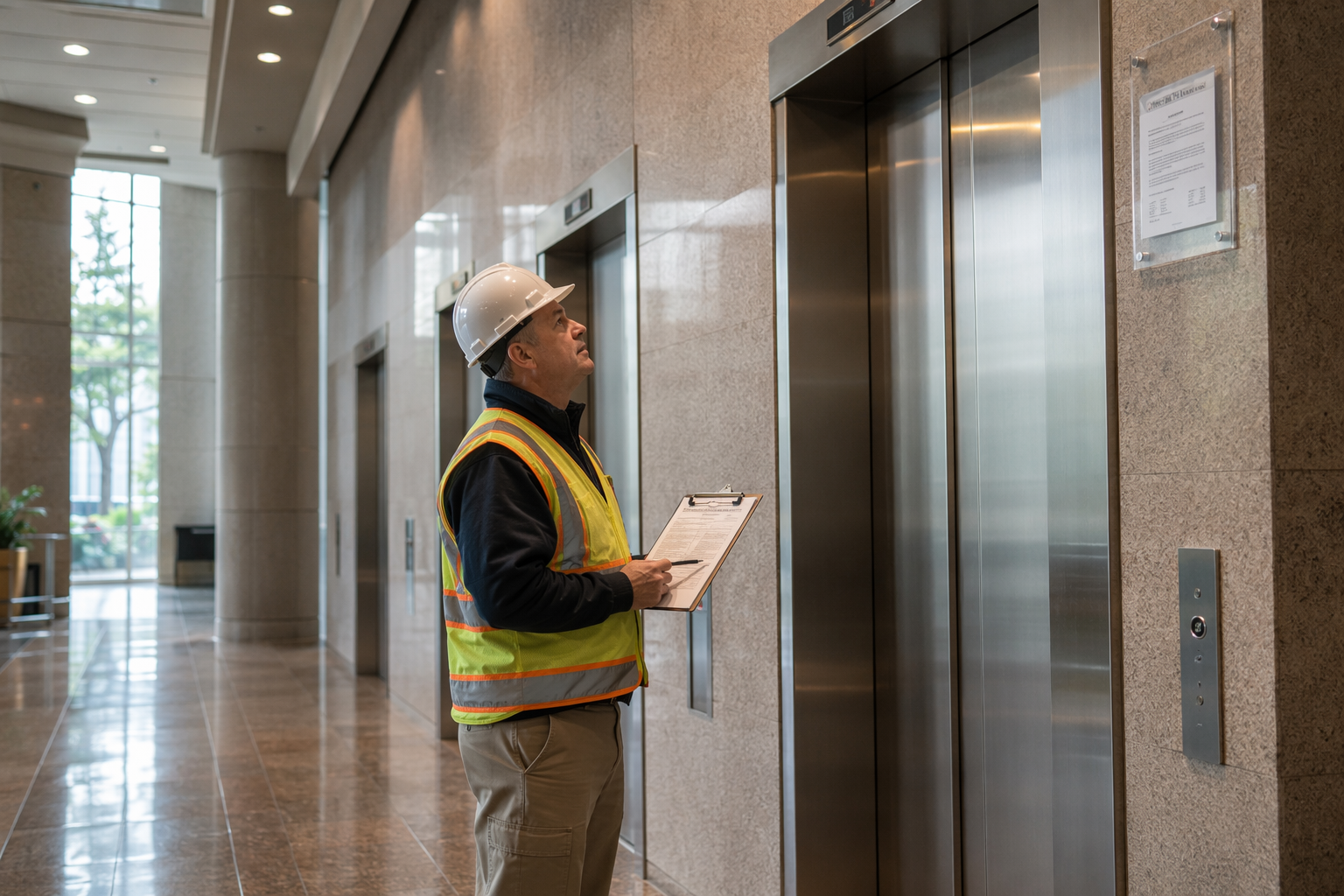
State elevator inspection frequency is one of the most consequential compliance variables a building owner or facilities manager must track. Miss an inspection deadline and the consequences range from permit violations and fines to mandatory shutdowns. Understand the requirements and your elevator stays operational, safe, and legally compliant. This guide synthesizes what the national model code requires, how states adapt those requirements, what drives frequency differences, and what building operators must do to stay ahead of their inspection calendar.
What Does the National Model Code Say About Inspection Frequency?
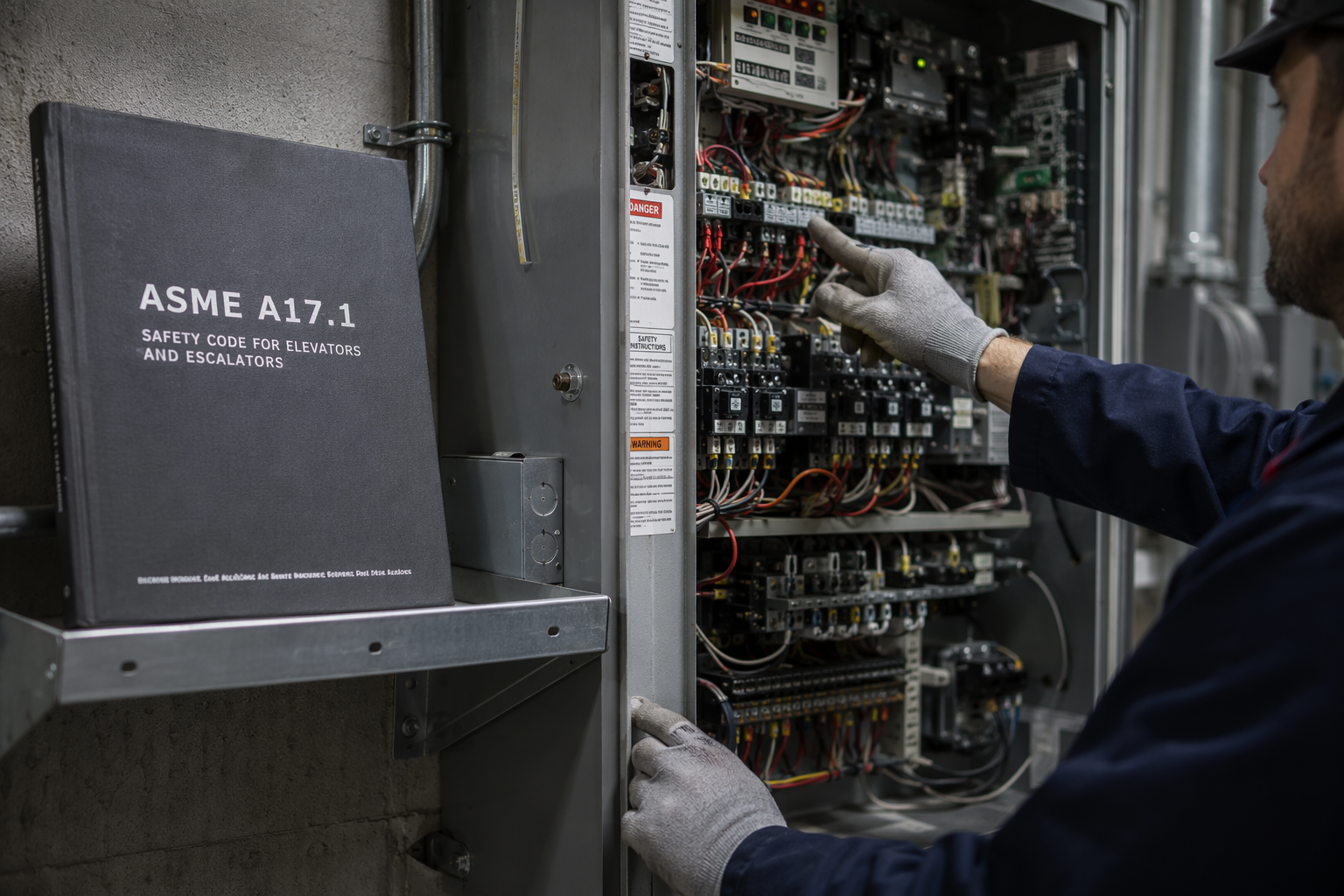
The governing document for elevator safety in the United States is the ASME A17.1 Safety Code for Elevators and Escalators. This code, published and maintained by the American Society of Mechanical Engineers, establishes the baseline safety requirements that most state and local jurisdictions adopt, reference, or adapt into their own regulatory frameworks.
Under the ASME A17.1 framework, periodic inspections and tests are classified by type and interval. The code distinguishes between routine periodic inspections — typically annual — and more intensive periodic tests that occur on longer cycles, such as every five years for certain hydraulic and safety system tests. States that adopt ASME A17.1 as their reference standard use these intervals as the legal minimum, though they retain authority to require more frequent inspections based on local conditions, occupancy types, or incident history.
It is important to note that ASME A17.1 is a model code, not a federal law. The Occupational Safety and Health Administration (OSHA) addresses elevator safety in workplace contexts, particularly during construction and maintenance, but does not set universal civilian elevator inspection schedules. Jurisdiction over operational elevators in buildings open to the public resides with state and local authorities.
How Do State Inspection Frequencies Actually Vary?

Because each state administers its own elevator safety program, inspection frequency requirements are not uniform across the country. The variation is meaningful and building operators with properties in multiple states must track each jurisdiction separately. The following patterns describe how states typically structure their requirements — without fabricating jurisdiction-specific figures that may have since been updated:
- Annual inspection states: The most common model. A licensed elevator inspector must perform a full periodic inspection once every twelve months. This aligns with the baseline interval referenced in the ASME A17.1 Safety Code for Elevators and Escalators.
- Semi-annual inspection states: Some jurisdictions require inspections every six months, particularly for elevators serving high-occupancy buildings, hospitals, schools, or facilities with vulnerable populations.
- Inspection-on-alteration states: Beyond routine periodic inspections, virtually every state also requires a separate inspection whenever an elevator undergoes a major alteration, modernization, or repair — regardless of when the last periodic inspection occurred.
- Self-certifying or third-party certified states: A smaller number of jurisdictions allow qualified elevator contractors to perform and certify inspections without a separate state inspector, provided the contractor meets licensure and reporting requirements.
- States without a state-level program: A small number of states delegate elevator inspection authority entirely to local municipalities or counties, meaning the effective inspection frequency depends entirely on local ordinance.
Because these requirements change as states update their codes — often by adopting newer editions of ASME A17.1 — building owners should verify current requirements directly with their state elevator safety authority rather than relying solely on information published in prior years.
What Types of Elevators Are Subject to Inspection Requirements?
State inspection programs typically cover a broad range of conveyance equipment, not just traditional passenger elevators. Understanding which equipment in a building is subject to mandatory inspection schedules is essential for complete compliance. Equipment categories that commonly fall under state elevator inspection authority include:
- Traction (cable) elevators — both geared and gearless
- Hydraulic elevators — both holed and holeless configurations
- Limited-use/limited-application (LU/LA) elevators
- Freight elevators
- Escalators and moving walks
- Dumbwaiters
- Platform lifts and inclined stairway chairlifts in some jurisdictions
- Residential elevators in certain states
Accessibility compliance for equipment serving the public also intersects with elevator inspection obligations. The Americans with Disabilities Act (ADA) establishes accessibility requirements for elevators in public accommodations and commercial facilities. While ADA compliance is not the same as a state safety inspection, elevators that fall out of ADA compliance during a safety inspection can trigger additional remediation requirements.
What Happens During a State Elevator Inspection?
A state periodic inspection is a structured evaluation conducted by a licensed or certified elevator inspector. The scope follows the requirements of the adopted code — typically the ASME A17.1 Safety Code for Elevators and Escalators — and generally includes examination of the following systems and components:
- Car and hoistway — door operation, clearances, lighting, ventilation
- Safety devices — governor, safeties, buffers, and interlocks
- Driving machine and brake — condition, lubrication, stopping performance
- Control systems — wiring, controllers, and emergency stop function
- Machine room or machine space — access, temperature, fire protection compliance
- Pit equipment — pit lighting, stop switch, ladder, sump pump condition
- Load and speed performance — confirming the unit operates within rated parameters
- Emergency communication — functional test of the two-way communication system
After inspection, the inspector issues either a certificate of operation (pass), a conditional certificate with required corrections within a defined timeframe, or an order to remove the unit from service pending remediation. The operating certificate must typically be posted in or near the elevator car and is the document building operators reference when asked to demonstrate compliance.
What Should Building Owners Do to Prepare for an Elevator Inspection?
- Confirm the applicable jurisdiction. Identify whether your state operates a centralized program or delegates authority to local municipalities, and locate the correct inspecting authority.
- Locate your current operating certificate. Confirm it is posted as required and note the expiration date so you can schedule your next inspection before expiration.
- Review the prior inspection report. Any items noted as advisories or corrections in the previous inspection should be addressed before the next periodic inspection to avoid a conditional certificate.
- Conduct a pre-inspection walkthrough with your elevator maintenance contractor. A qualified maintenance provider can identify deficiencies that an inspector is likely to flag.
- Ensure machine room access is unobstructed. Inspectors require unimpeded access to the machine room, pit, and all equipment spaces. Storage in these areas is a common compliance deficiency.
- Verify emergency communication functionality. Test the in-car two-way communication system in advance. Non-functional emergency phones are among the most cited deficiencies in routine inspections.
- Confirm lighting in the pit and machine room meets code. Both spaces require functioning, code-compliant lighting at inspection time.
- Gather maintenance records. Some inspectors and jurisdictions require evidence of ongoing maintenance as part of the inspection process. Have records organized and available.
- Schedule the inspection proactively. In many jurisdictions, inspector availability is limited and backlogs exist. Scheduling well in advance of certificate expiration prevents inadvertent lapses.
- Address any open violation orders before the inspection date. Outstanding violation orders from prior inspections can complicate the issuance of a new certificate, even if new deficiencies are minor.
How Does Inspection Frequency Relate to Maintenance Frequency?
State inspection frequency and maintenance frequency are related but distinct obligations. An annual state inspection is a regulatory compliance event — a point-in-time examination by a qualified third party. Maintenance is an ongoing operational responsibility that occurs between inspections and is typically governed by the maintenance contract between the building owner and the elevator service provider.
The ASME A17.1 Safety Code for Elevators and Escalators includes requirements for maintenance, including the maintenance of a maintenance control program (MCP) for covered equipment. The MCP requires documented maintenance tasks performed at defined intervals — some monthly, some quarterly, some annual — regardless of whether a state inspection is imminent.
A well-maintained elevator is more likely to pass its periodic inspection without deficiencies or conditional citations. Conversely, buildings that treat the state inspection as the only maintenance event they plan around tend to face higher remediation costs and more frequent conditional certificates.
What Are the Consequences of Missing a State Inspection?
The consequences of operating an elevator with an expired operating certificate or failing to schedule required periodic inspections vary by jurisdiction but commonly include:
- Fines and civil penalties assessed per day of non-compliance
- Mandatory shutdown orders requiring the elevator to be taken out of service until inspected and certified
- Increased liability exposure in the event of an incident during a period when the elevator was operating without a valid certificate
- Insurance implications — some commercial property and liability insurers treat lapsed elevator certificates as a coverage condition issue
- Tenant and occupant complaints that can escalate to regulatory complaints filed by third parties
In jurisdictions where local authorities have active enforcement programs, elevator compliance is increasingly tracked through digital permitting systems that generate automatic notices when certificates approach expiration. Building operators who rely on paper-based tracking systems alone face elevated risk of inadvertent lapses.
How Are Inspection Requirements Changing in 2025 and 2026?
Several trends are shaping how state elevator inspection frequency and protocols evolve heading into 2025 and 2026:
Adoption of newer ASME A17.1 editions: States update their adopted code editions on irregular cycles. A state that currently enforces an older edition of ASME A17.1 may move to a more current edition, which can introduce new inspection requirements or modify existing intervals. Building owners in states undergoing code adoption updates should monitor rulemaking activity.
Remote monitoring and condition-based maintenance: The elevator industry is increasingly deploying remote monitoring technology that provides real-time data on equipment performance. Regulators in some jurisdictions are exploring how condition-based data might inform inspection scheduling, though formal risk-based inspection frameworks remain in early stages across most states.
Inspector workforce constraints: Many state elevator inspection programs face challenges related to licensed inspector availability. This is driving some states to expand the role of qualified elevator contractor inspections, third-party inspection organizations, and digital record-keeping requirements to help manage inspection backlogs without reducing oversight quality.
Increased scrutiny of modernization compliance: As aging elevator fleets undergo modernization, inspections triggered by alterations are occurring at higher rates. States are tightening requirements around how modernization projects are permitted, inspected, and certified before returning to service.
Intersection with accessibility enforcement: Growing awareness of ADA compliance requirements is creating additional inspection-adjacent obligations for building operators, particularly in public accommodations and commercial facilities undergoing renovation.
How Does Elevator Type Affect Inspection Frequency?
Inspection frequency requirements can differ based on equipment type even within the same jurisdiction. States that adopt the ASME A17.1 Safety Code for Elevators and Escalators apply different inspection and test intervals to different equipment classifications. For example, the code distinguishes between inspections of the equipment itself and periodic tests of specific safety systems — such as the five-year category tests for certain safety components — which run on separate cycles from the annual periodic inspection.
Escalators, moving walks, dumbwaiters, and platform lifts each have their own applicable code sections and may carry different inspection intervals than full passenger elevators in the same building. Facilities managers responsible for mixed fleets of conveyance equipment must track each equipment type’s inspection cycle independently.
What Role Does an Elevator Maintenance Contractor Play in the Inspection Process?
In most states, the building owner is the legally responsible party for ensuring that periodic inspections are completed on schedule and that any required corrections are made. The elevator maintenance contractor — the service company under contract to maintain the equipment — plays a critical supporting role but does not replace the building owner’s compliance obligation.
A qualified maintenance contractor can provide:
- Pre-inspection preparation and deficiency identification
- Coordination with the state inspector or third-party inspection organization
- Remediation of deficiencies identified during inspection
- Documentation support for maintenance control program compliance under ASME A17.1
- Tracking of certificate expiration dates and proactive scheduling support
Quality Elevator Company works with building owners and facilities teams as a data-driven service partner, helping clients understand their inspection obligations, prepare equipment for successful inspections, and remediate deficiencies efficiently. The company’s approach emphasizes documented, code-referenced maintenance practices aligned with applicable state requirements.
Frequently Asked Questions About State Elevator Inspection Frequency
How often are elevators inspected by the state?
Most states require a full periodic inspection at least once per year, aligning with the baseline interval in the ASME A17.1 Safety Code for Elevators and Escalators. Some states require semi-annual inspections for certain elevator types or occupancy classifications. The specific frequency in any given location is set by state statute, regulation, or locally adopted code.
Is elevator inspection frequency federally mandated?
No. There is no federal law that sets a uniform inspection frequency for operational elevators in buildings open to the public. OSHA addresses elevator safety in workplace and construction contexts but does not govern the periodic inspection schedules of commercial or residential building elevators. Authority rests with individual states and, in some cases, local jurisdictions.
What happens if my elevator fails a state inspection?
If an inspector identifies deficiencies, the outcome depends on severity. Minor deficiencies may result in a conditional certificate with a correction deadline. Serious or immediately hazardous conditions can result in an order to take the elevator out of service until repairs are made and the equipment passes a follow-up inspection. Operating an elevator under a shutdown order exposes the building owner to significant legal and financial liability.
Do new elevators require inspection before they can be used?
Yes. New elevator installations require a pre-operational inspection and approval before the equipment can be placed into public service. This is separate from ongoing periodic inspections and is triggered by the installation permit process. The ASME A17.1 Safety Code for Elevators and Escalators includes specific requirements for acceptance inspections and tests of new equipment.
Does elevator modernization require a new inspection?
Yes. A major alteration or modernization of an existing elevator triggers an inspection requirement in virtually every jurisdiction, regardless of when the last periodic inspection occurred. The scope of the alteration-triggered inspection is typically proportional to the scope of the work performed.
Who is qualified to perform a state elevator inspection?
State elevator inspections must be performed by individuals who meet the licensure or certification requirements established by the adopting jurisdiction. Many states require inspectors to hold a Qualified Elevator Inspector (QEI) certification or equivalent. Some states allow qualified elevator contractors to perform and certify certain inspections. Requirements vary by state.
How do I find out the specific inspection frequency requirement for my state?
The most reliable approach is to contact the state agency responsible for elevator safety directly — typically a department of labor, building safety, or public safety. State elevator safety program websites often publish current code adoptions, fee schedules, and inspection frequency requirements. Your elevator maintenance contractor should also be familiar with the requirements in the jurisdictions where they operate.
Can a building owner be fined for an expired elevator certificate even if the elevator is safe?
Yes. In most jurisdictions, the obligation to maintain a current operating certificate is a strict compliance requirement independent of actual equipment condition. An elevator that is mechanically safe but operating with an expired certificate is still in violation of applicable law and subject to penalties.
What is the difference between an inspection and a test for elevator compliance purposes?
Under the ASME A17.1 Safety Code for Elevators and Escalators, inspections and tests are distinct activities. An inspection is a visual and operational examination of equipment condition and function. A test involves the functional actuation of specific safety devices — such as safeties, governors, or buffers — to verify they operate as designed. Tests are categorized (Category 1 and Category 5 are the most common) and occur on different cycles, with some tests required annually and others on five-year intervals.
How does Quality Elevator Company help with state inspection compliance?
Quality Elevator Company supports building owners and facilities managers through the full inspection compliance cycle — from pre-inspection preparation and deficiency remediation to documentation support and certificate tracking. The company’s service approach is grounded in current code requirements and designed to help clients avoid compliance lapses, reduce the likelihood of conditional certificates, and maintain continuous lawful elevator operation.
Do residential elevators require state inspections?
The answer varies significantly by state. Private residential elevators in single-family homes are exempt from state inspection requirements in many jurisdictions. However, elevators in multi-family residential buildings — apartments, condominiums — are typically subject to the same inspection requirements as commercial elevators. Some states have created a separate regulatory category for residential elevators that carries different requirements. Building owners should verify the applicable requirements for their specific property type and jurisdiction.
Summary: Key Points on State Elevator Inspection Frequency
- Annual periodic inspection is the most common baseline requirement across U.S. states, reflecting the model intervals in ASME A17.1 Safety Code for Elevators and Escalators.
- Some states require semi-annual inspections for high-traffic, high-risk, or high-occupancy installations.
- Alteration-triggered inspections apply in virtually every jurisdiction whenever major work is performed, separate from the periodic inspection cycle.
- Elevator type matters — escalators, dumbwaiters, platform lifts, and freight elevators may carry different inspection intervals than passenger elevators.
- OSHA governs workplace and construction elevator safety; state agencies govern operational building elevator inspections.
- ADA accessibility compliance intersects with inspection obligations for elevators serving public accommodations.
- Operating an elevator with an expired certificate carries legal, financial, and insurance consequences regardless of actual equipment condition.
- Proactive maintenance aligned with the ASME A17.1 maintenance control program framework is the most effective strategy for consistent inspection success.
- Inspection frequency requirements are evolving as states update code adoptions and the industry explores technology-enabled compliance tools.
Get Expert Guidance on Elevator Inspection Compliance
Staying current with state elevator inspection frequency requirements protects your building, your occupants, and your organization from compliance risk. Quality Elevator Company provides data-driven elevator assessment, maintenance, and compliance support tailored to the specific requirements of your jurisdiction and equipment type.
Contact Quality Elevator Company for a free elevator assessment — call 301-307-5363 today.