What Is the Best Way to Monitor Elevators?
After 15+ years servicing elevators across Baltimore, Washington DC, Philadelphia, and Richmond, I can tell you that most elevator failures are preventable. The difference between a building that experiences frequent outages and one that runs smoothly almost always comes down to how well the elevator is monitored. This comprehensive guide covers everything facility managers, building owners, and property managers need to know about elevator monitoring in 2026.
Why Is Elevator Monitoring So Important for Building Safety?
Elevator monitoring is critical because undetected mechanical faults are the leading cause of elevator entrapments, injuries, and costly emergency shutdowns.
According to industry data, the United States has approximately 900,000 elevators in service, and those elevators make roughly 18 billion passenger trips per year. The U.S. Bureau of Labor Statistics and consumer safety reports estimate that elevators cause around 27 deaths and over 10,000 injuries annually — the majority of which are preventable with proper monitoring and maintenance protocols.
Beyond safety, unplanned downtime in commercial buildings carries a significant financial cost. A single elevator outage in a multi-story office building or hospital can disrupt operations, expose property owners to liability, and violate local compliance requirements. Monitoring eliminates the guesswork and puts you in a proactive position rather than a reactive one.
What Are the Different Types of Elevator Monitoring Systems?

The three primary types of elevator monitoring systems are remote monitoring (IoT-based), on-site controller diagnostics, and manual inspection-based monitoring — each serving a different function in a complete monitoring strategy.
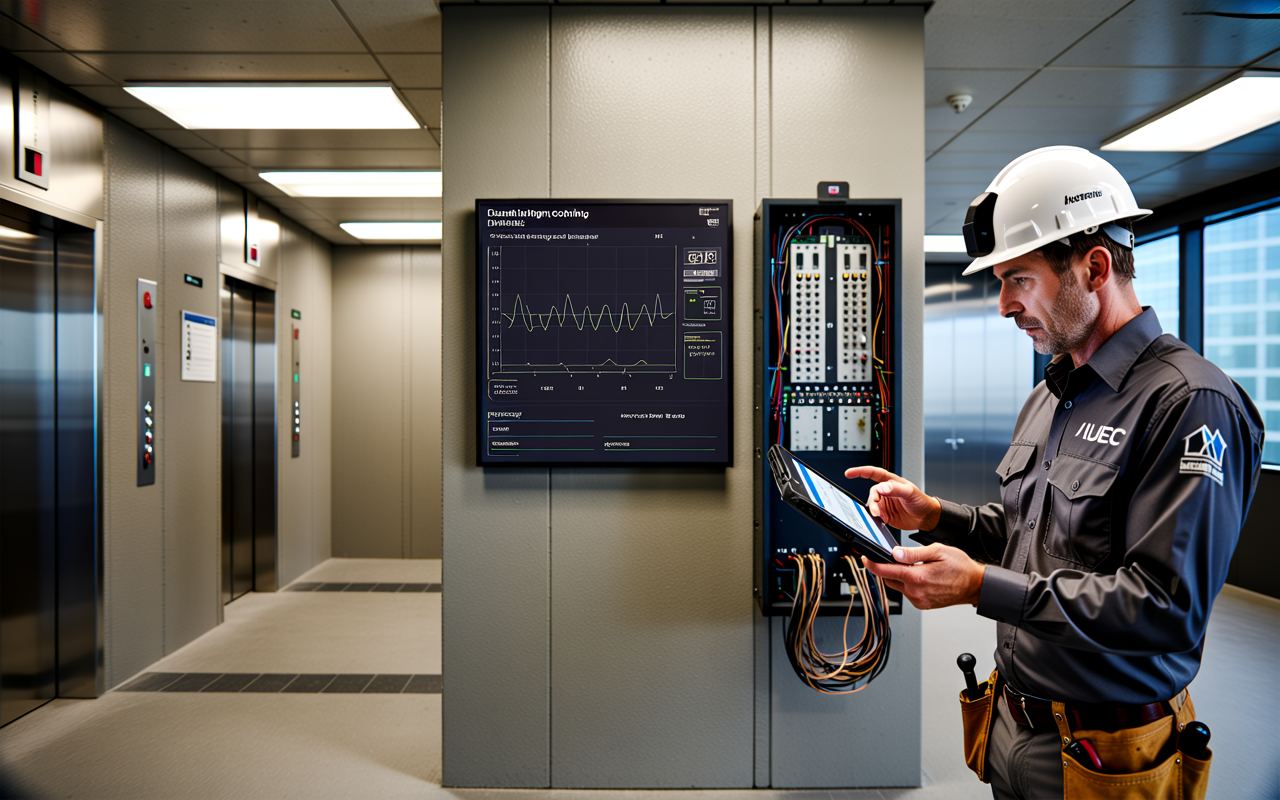
Remote Monitoring Systems use IoT sensors installed on key elevator components — doors, motors, cables, control boards — to transmit real-time performance data to a cloud dashboard. Facility managers and service companies can view fault codes, door cycle counts, motor temperature, and ride quality metrics from any device.
On-Site Controller Diagnostics are built into modern elevator control panels and log error codes locally. Technicians retrieve and analyze these logs during scheduled visits. While not real-time, they provide granular fault histories that help predict component wear.
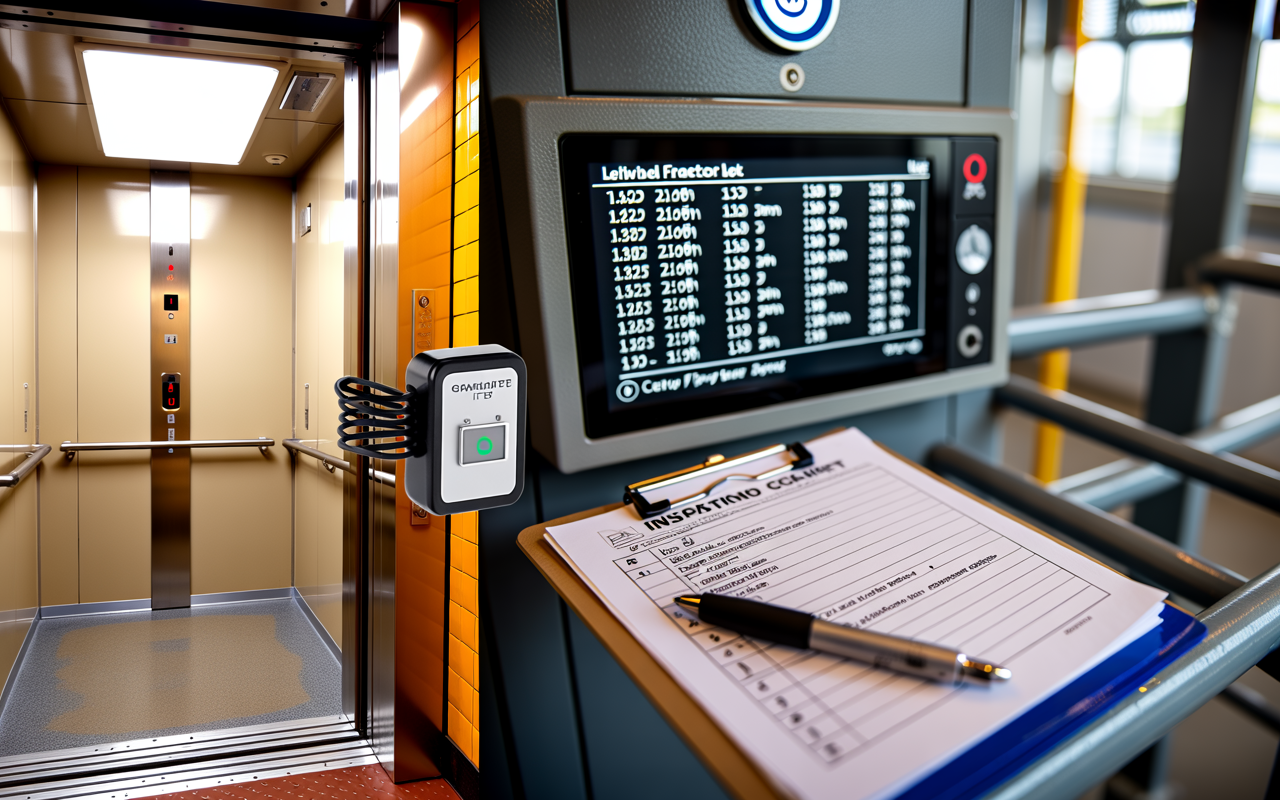
Manual Inspection-Based Monitoring is the traditional method — a certified technician physically inspects the cab, machine room, pit, and hoistway on a defined schedule. This remains legally required in all jurisdictions and complements, but cannot replace, technology-based monitoring.
How Does Remote Elevator Monitoring Technology Work?
Remote elevator monitoring works by attaching wireless or wired IoT sensors to critical elevator components that continuously stream data to a centralized cloud platform where algorithms flag anomalies and alert technicians in real time.
Modern remote monitoring platforms typically track the following data points:
- Door open/close cycle counts and timing
- Motor current draw and temperature
- Leveling accuracy (floor-to-floor positioning)
- Ride quality via accelerometers (vibration, jerk, bounce)
- Controller fault codes
- Emergency phone connectivity status
- Car call and hall call response times
When a data point falls outside pre-set thresholds, the system generates an alert — either an email, SMS, or a ticket pushed directly to a service provider’s dispatch system. This means a technician can often arrive to address a developing fault before the elevator ever fails in service.
What Is the Difference Between Predictive and Preventive Elevator Maintenance?
Preventive maintenance follows a fixed schedule regardless of equipment condition, while predictive maintenance uses real-time data from monitoring systems to service components only when data indicates wear or impending failure.
Traditional preventive maintenance (PM) contracts typically call for monthly or quarterly visits where a technician lubricates, adjusts, and inspects components on a checklist. This is the industry standard and required by most service contracts and local codes.
Predictive maintenance is the next evolution. By analyzing data trends — for example, a door operator that’s drawing 15% more current than its 90-day baseline — a technician knows to replace that operator before it jams and traps a passenger. Studies from the elevator industry indicate that predictive maintenance programs can reduce unplanned downtime by up to 30–40% compared to time-based PM alone.
Quality Elevator Company offers hybrid maintenance programs that combine scheduled preventive visits with continuous remote monitoring — giving clients in Baltimore, DC, Philadelphia, and Richmond the benefits of both approaches.
What ASME and Code Requirements Govern Elevator Monitoring and Inspection?
Elevator monitoring and inspection in the United States is governed primarily by ASME A17.1/B44 Safety Code for Elevators and Escalators, with each state adopting their own enforcement schedules and inspection frequencies.
Key ASME A17.1 requirements relevant to monitoring include:
- Rule 8.6: Periodic inspections and tests — most jurisdictions require annual or semi-annual inspections by a qualified inspector
- Rule 2.27: Emergency communication requirements — all elevators must have a functioning two-way communication system (monitored phone line or cellular)
- Rule 8.10: Maintenance, repair, and replacement requirements including documented maintenance records
- ASME A17.6: Standard for elevator suspension, compensation, and governor systems — includes monitoring recommendations for wire rope condition
The Americans with Disabilities Act (ADA) also has implications for elevator monitoring — specifically, buildings must ensure elevators remain operational and accessible. Frequent outages in a building with no other means of vertical access can constitute an ADA violation.
What Are the State-Specific Inspection Requirements in Maryland, DC, Virginia, and Pennsylvania?
Each jurisdiction served by Quality Elevator Company has distinct inspection intervals and governing bodies — Maryland requires annual inspections, DC requires semi-annual, Virginia follows ASME A17.1 with annual inspections, and Pennsylvania requires annual inspections enforced by the Department of Labor & Industry.
| Jurisdiction | Governing Body | Inspection Frequency | Governing Code | Certificate Required |
|---|---|---|---|---|
| Maryland (Baltimore) | MD Dept. of Labor | Annual | ASME A17.1 / COMAR 09.12.31 | Yes — posted in cab |
| Washington DC | DC DCRA | Semi-Annual | ASME A17.1 / DC Municipal Regs | Yes — posted in cab |
| Virginia (Richmond) | VA DOLI | Annual | ASME A17.1 / VA Code 40.1 | Yes — posted in cab |
| Pennsylvania (Philadelphia) | PA Dept. of Labor & Industry | Annual | ASME A17.1 / PA Act 34 | Yes — posted in cab |
Failure to maintain a current inspection certificate in any of these jurisdictions can result in fines, forced shutdown, and increased liability exposure. Our team at Quality Elevator Company manages inspection scheduling and documentation for clients across all four markets.
How Often Should Elevators Be Inspected Beyond State Requirements?
Beyond mandatory annual or semi-annual state inspections, industry best practice calls for monthly preventive maintenance visits, quarterly internal audits of monitoring data, and immediate inspections following any reported safety incident or entrapment.
Here is the monitoring and inspection cadence I recommend to every building owner I work with:
- Continuous (24/7): Remote IoT monitoring of door cycles, motor performance, fault codes
- Monthly: Full preventive maintenance visit by a certified elevator technician
- Quarterly: Review of monitoring data trends and wear analysis
- Annually (minimum): State-required third-party inspection
- As-needed: Callback response within 2–4 hours for any reported issue
High-traffic elevators — such as those in hospitals, hotels, high-rise residential buildings, or transit hubs — should receive more frequent attention. A hospital elevator making 500+ trips per day ages components significantly faster than an elevator in a low-traffic office building.
What Are the Most Common Elevator Faults That Monitoring Systems Detect?
The most common elevator faults detected by monitoring systems include door malfunctions (accounting for approximately 70–80% of all elevator service calls), motor overheating, leveling errors, controller faults, and emergency phone failures.
Based on my field experience and industry data, here is how common faults break down by system:
- Door system issues (70–80% of calls): Door operator wear, safety edge failures, worn tracks, misaligned gibs
- Drive system faults (8–12%): Motor overheating, drive board errors, encoder failures
- Leveling and positioning errors (5–8%): Selector tape damage, floor sensor drift
- Control system faults (4–6%): Controller board issues, software errors, relay failures
- Safety system alerts (2–4%): Governor overspeed, buffer compression, safety gear engagement
Remote monitoring systems are most effective at catching door and drive system issues early — the two categories responsible for nearly 90% of all in-service failures. By the time a door operator trips a circuit 12–15 times in a 24-hour window, the monitoring system has already flagged it and a technician is scheduled before passengers notice a problem.
How Much Does Elevator Remote Monitoring Cost?
Remote elevator monitoring systems typically cost between $50–$200 per elevator per month for subscription-based cloud monitoring platforms, with hardware installation costs ranging from $500–$2,500 per elevator depending on the system’s complexity and the elevator’s age.
Here is a 2026 cost breakdown for different monitoring approaches:
| Monitoring Method | Setup Cost (Per Elevator) | Monthly Cost (Per Elevator) | Best For |
|---|---|---|---|
| Basic Remote Monitoring (fault alerts only) | $500–$900 | $50–$80 | Low-traffic commercial buildings |
| Advanced IoT Monitoring (full diagnostics) | $1,200–$2,500 | $100–$200 | High-rise, healthcare, hospitality |
| Emergency Phone Monitoring Only | $200–$500 | $20–$40 | Code compliance minimum |
| Full Maintenance Contract with Monitoring | Included | $300–$700 | All building types (recommended) |
When weighed against the average cost of an emergency elevator repair call ($500–$2,500) or the liability exposure from an entrapment incident, remote monitoring is one of the highest-ROI investments a building owner can make. Many of our clients at Quality Elevator Company recoup the monitoring cost within the first prevented emergency call.
What Should Building Managers Look for in an Elevator Monitoring Dashboard?
A quality elevator monitoring dashboard should provide real-time fault alerts, historical trend analysis, door cycle counts, motor performance data, uptime/downtime reports, and direct integration with a service provider’s dispatch system.
When evaluating platforms, building managers should verify the following features are included:
- Real-time fault code alerts via SMS and email
- Historical data logging with at least 12 months of retention
- Uptime percentage reporting (industry benchmark: >99.5% uptime for well-maintained elevators)
- Door performance metrics (open/close time, number of reversals per day)
- Ride quality scoring (measured in ft/s² for acceleration and jerk)
- Maintenance log integration
- Mobile-friendly interface
- API access for building management system (BMS) integration
Avoid platforms that only provide reactive notifications without historical context. Trend data is what separates a monitoring system that prevents failures from one that just reports them after the fact.
How Do You Monitor Older Elevators That Lack Modern Controllers?
Older elevators without modern microprocessor-based controllers can still be monitored through add-on sensor kits, external IoT gateways, and machine room monitoring modules that interface with legacy relay-logic systems without requiring a full controller modernization.
Many buildings in Baltimore, Philadelphia, and Washington DC operate elevators that are 20–40 years old with relay-based control systems that predate digital diagnostics. Fortunately, retrofit monitoring solutions have advanced significantly. Third-party monitoring modules can be installed in the machine room to monitor:
- Motor current and temperature via current transformers
- Door status via contact sensors
- Car position via ultrasonic or laser distance sensors
- Emergency phone line status
- Machine room temperature and humidity
That said, if an elevator is approaching 20–25 years of service age, the monitoring conversation should include a modernization assessment. Modern controllers with built-in diagnostics significantly reduce monitoring hardware costs and provide far more data resolution than retrofit solutions.
What Is Elevator Entrapment Monitoring and Is It Required by Code?
Elevator entrapment monitoring — specifically the continuous monitoring of the two-way emergency communication system — is required by ASME A17.1 Rule 2.27 and must provide a connection to a monitoring center staffed 24 hours a day, 7 days a week.
This is one of the most commonly overlooked compliance requirements I see in the field. The emergency phone in an elevator cab must connect to a live monitoring center — not just ring to a building manager’s cell phone. The 2020 edition of ASME A17.1 (still enforced in 2026) explicitly requires that the emergency communication system connect to an authorized monitoring center that can dispatch emergency personnel.
Key compliance points for emergency monitoring:
- Two-way voice communication must be maintained at all times
- Cellular-based emergency phones are acceptable but must have cellular signal verification monitoring
- Monthly testing of the emergency communication system is recommended best practice
- Monitoring center must be available 24/7/365
- ADA Section 4.10.14 requires that emergency communication systems be usable by individuals with hearing impairments
How Does Elevator Monitoring Reduce Liability for Building Owners?
Elevator monitoring reduces liability by creating a documented record of maintenance activity, fault detection, and response times that demonstrates a building owner exercised reasonable care — the legal standard required to defend against negligence claims.
In personal injury litigation involving elevators, one of the first things plaintiff attorneys request is the maintenance and monitoring log. If you can show that your elevator was under continuous remote monitoring, received monthly PM visits, and that fault alerts were addressed promptly, you have a significantly stronger defense position than a building with no documentation.
Monitoring data can specifically demonstrate:
- The elevator was functioning within normal parameters before an incident
- No fault codes were ignored or left unaddressed
- Emergency communication systems were tested and functional
- Response times to reported issues met industry standards
Several liability insurance carriers in 2026 now offer premium discounts for buildings with certified remote monitoring programs in place — recognizing the risk reduction value of proactive monitoring.
What Metrics Indicate an Elevator Needs Immediate Attention?
An elevator needs immediate attention when monitoring data shows door safety edge failures, repeated motor overcurrent faults, leveling errors exceeding ±3/8 inch, emergency phone failures, or any governor or safety gear activation.
As a rule of thumb, here are the red-flag thresholds I use when reviewing monitoring data:
- Door reversals >20 per day: Indicates door obstruction or failing safety edge
- Motor current >110% of nameplate rating: Overloading condition requiring inspection
- Leveling error >±3/8 inch (per ASME A17.1): Trip-and-fall hazard, mandatory correction
- Emergency phone test failure: Code violation, must be corrected before elevator stays in service
- Governor overspeed activation: Elevator must be taken out of service immediately
- Pit water intrusion alert: Electrical hazard requiring immediate assessment
- Consecutive fault codes in a 4-hour window: Indicates systemic failure developing
How Should Building Managers Choose an Elevator Monitoring and Maintenance Vendor?
Building managers should choose an elevator monitoring vendor based on their local service coverage, IUEC technician certification, average response time, monitoring platform capabilities, and their familiarity with local code requirements.
Here is a checklist of questions to ask any elevator monitoring vendor before signing a contract:
- Are your technicians IUEC (International Union of Elevator Constructors) certified?
- What is your guaranteed emergency response time in our market?
- Do you have experience with our elevator’s specific OEM (Otis, KONE, Schindler, ThyssenKrupp, etc.)?
- What monitoring platform do you use and what data do I have access to?
- How do you handle state inspection scheduling and documentation?
- What are the terms for after-hours emergency service?
- Can you provide references from similar buildings in our area?
Quality Elevator Company serves Baltimore, Washington DC, Philadelphia, and Richmond with IUEC-certified technicians, guaranteed 4-hour emergency response times, and a full-featured monitoring platform with client dashboard access. We have OEM-specific training across all major elevator brands and manage state inspection compliance for our full contract clients.
What Is the Role of Machine Room Monitoring in a Complete Elevator Safety Program?
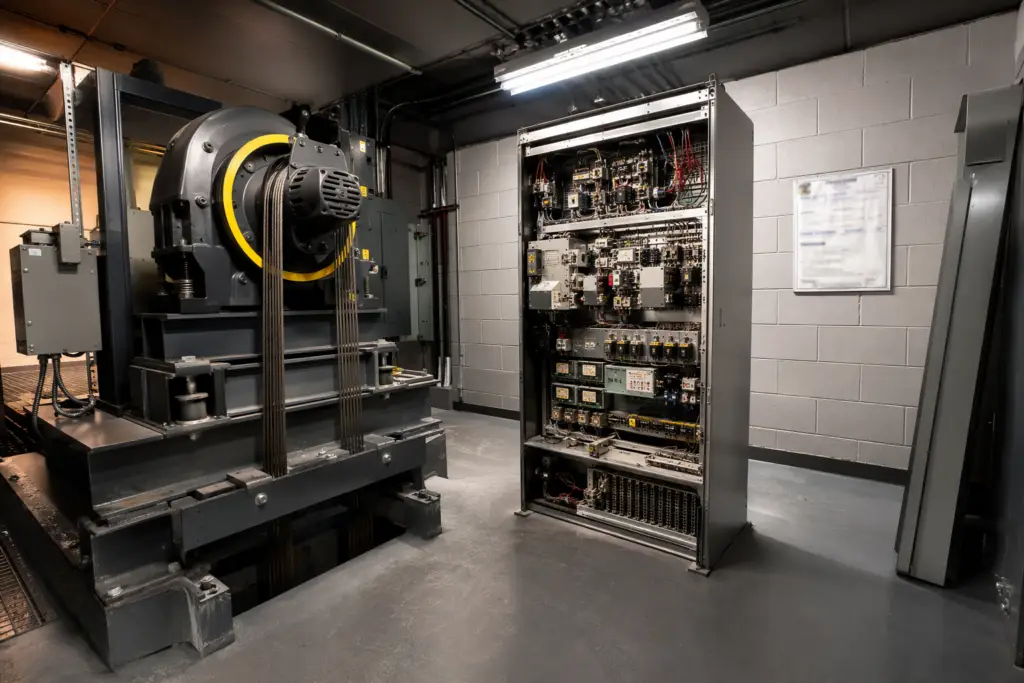
Machine room monitoring — tracking temperature, humidity, and unauthorized access — is a critical but often overlooked component of comprehensive elevator monitoring because machine room environmental conditions directly affect controller reliability and motor longevity.
Elevator machine rooms house the drive, controller, and in hydraulic systems, the power unit. These components have specific environmental requirements:
- Temperature: Most elevator controllers are rated for 32°F–104°F (0°C–40°C). Exceedances accelerate component failure.
- Humidity: Relative humidity above 85% non-condensing can cause controller board corrosion and ground faults
- Access control: ASME A17.1 requires machine rooms be locked and accessible only to authorized personnel
Adding a simple environmental monitoring sensor to the machine room — temperature, humidity, and a door contact sensor for unauthorized entry — costs under $200 and can prevent thousands of dollars in controller damage from HVAC failures or inadvertent access.
How Long Does It Take to Install a Remote Elevator Monitoring System?
A remote elevator monitoring system can typically be installed in 4–8 hours per elevator by a certified technician, with the monitoring platform going live within 24–48 hours after installation and calibration.
The installation timeline varies based on several factors:
- Elevator age and controller type: Modern microprocessor controllers have data ports that simplify integration. Older relay-logic systems require more sensor work.
- Building infrastructure: Cellular signal strength in machine rooms, available power outlets, conduit routing
- Number of elevators: Multi-car installations in a single machine room can often be completed in a full day
- Platform configuration: Calibrating baseline thresholds for alerts typically takes 2–4 weeks of data collection after installation
There is minimal disruption to elevator service during installation. Most installations are completed with only a 1–2 hour out-of-service window per elevator for wiring and sensor attachment.
Can Elevator Monitoring Systems Integrate with Building Management Systems (BMS)?
Yes — most modern elevator monitoring platforms support integration with building management systems via BACnet, Modbus, or API protocols, allowing elevator status, fault alerts, and uptime data to be consolidated into a single building operations dashboard.
BMS integration is increasingly standard in Class A commercial buildings, hospitals, and large residential complexes. Benefits include:
- Centralized visibility across all building systems (HVAC, access control, fire, elevators) in one interface
- Automated work order generation when elevator faults are detected
- Energy monitoring — identifying elevators with abnormally high power consumption indicating drive inefficiency
- Tenant-facing status pages showing elevator availability in real time
When specifying a new monitoring system for a building with an existing BMS, confirm that the elevator monitoring vendor supports your BMS protocol before installation. Not all platforms offer native BACnet support.
What Are the Signs That Your Current Elevator Monitoring Program Is Inadequate?
Your elevator monitoring program is inadequate if you are consistently responding to failures rather than preventing them, if you lack access to real-time fault data, if your state inspection documentation is incomplete, or if you have experienced more than two unplanned outages in the past 12 months.
Warning signs I commonly see when doing assessments for new clients include:
- No remote monitoring — relying entirely on passengers to report problems
- Inspection certificates that are expired or missing from the cab
- Maintenance logs that are incomplete or inconsistent
- Emergency phone lines that are disconnected or ringing to voicemail
- Technician visits that are reactive (callback-only) with no scheduled PM
- No written maintenance contract with defined response time commitments
- Machine rooms that are cluttered, unlocked, or showing environmental damage
If more than two of these apply to your property, a comprehensive elevator assessment is overdue. The good news is that most monitoring gaps can be addressed quickly and cost-effectively with the right service partner.
How Do You Monitor Hydraulic Elevators Differently from Traction Elevators?
Hydraulic elevators require monitoring of fluid levels, cylinder integrity, power unit temperature, and underground hydraulic leak detection in addition to the standard door and control system monitoring required for all elevator types.
The monitoring differences between hydraulic and traction elevators are significant:
| Monitoring Parameter | Traction Elevator | Hydraulic Elevator |
|---|---|---|
| Motor/Drive | Motor current, encoder, drive board | Power unit motor, pump pressure |
| Suspension | Wire rope/belt wear sensors | Hydraulic cylinder pressure monitoring |
| Fluid Systems | N/A | Oil level, temperature, leak detection |
| Safety Systems | Governor, safeties, buffers | Pressure relief valve, PVC rupture valve |
| Environmental Risk | Low | High (underground oil leaks — EPA regulated) |
Underground hydraulic cylinders are subject to EPA regulations regarding fluid containment. Monitoring systems for in-ground hydraulic elevators should include fluid loss detection — a drop in hydraulic fluid level between PM visits can indicate a cylinder leak that creates both an environmental liability and a safety risk. Many states, including Maryland and Virginia, have specific regulations governing underground hydraulic elevator cylinders that our team at Quality Elevator Company stays current on.
Ready to Improve Your Elevator Monitoring Program?
Proper elevator monitoring is not optional — it is a safety imperative, a compliance requirement, and one of the smartest operational investments a building owner can make. Whether you manage a single commercial elevator in Richmond or a portfolio of high-rise buildings across Baltimore, Washington DC, and Philadelphia, the principles are the same: continuous monitoring, scheduled maintenance, documented compliance, and a certified service partner you can count on.
Quality Elevator Company provides comprehensive elevator monitoring programs, preventive maintenance contracts, remote monitoring installation, and state inspection management across Maryland, Washington DC, Virginia, and Pennsylvania. Our IUEC-certified technicians average 4-hour emergency response times and provide full client access to monitoring dashboards so you always know the status of your equipment.
Get a Free Elevator Assessment
Contact Quality Elevator Company for a free elevator assessment. Our certified technicians will evaluate your current monitoring program, identify compliance gaps, and provide a no-obligation recommendation tailored to your building’s specific needs.
Call us today: 301-307-5363
Serving Baltimore MD | Washington DC | Philadelphia PA | Richmond VA