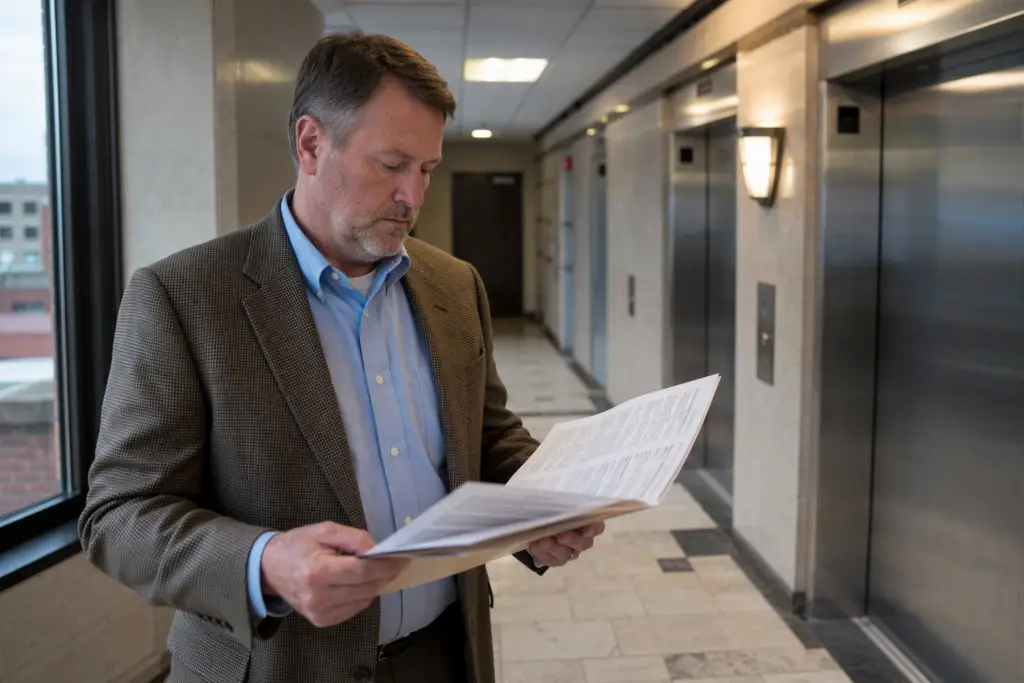
For top-rated elevator maintenance in Falls Church, VA, building owners need a licensed Virginia elevator contractor who complies with the Virginia Uniform Statewide Building Code (13VAC5-63) and ASME A17.1/CSA B44-2019, with annual inspections enforced by the local building department.
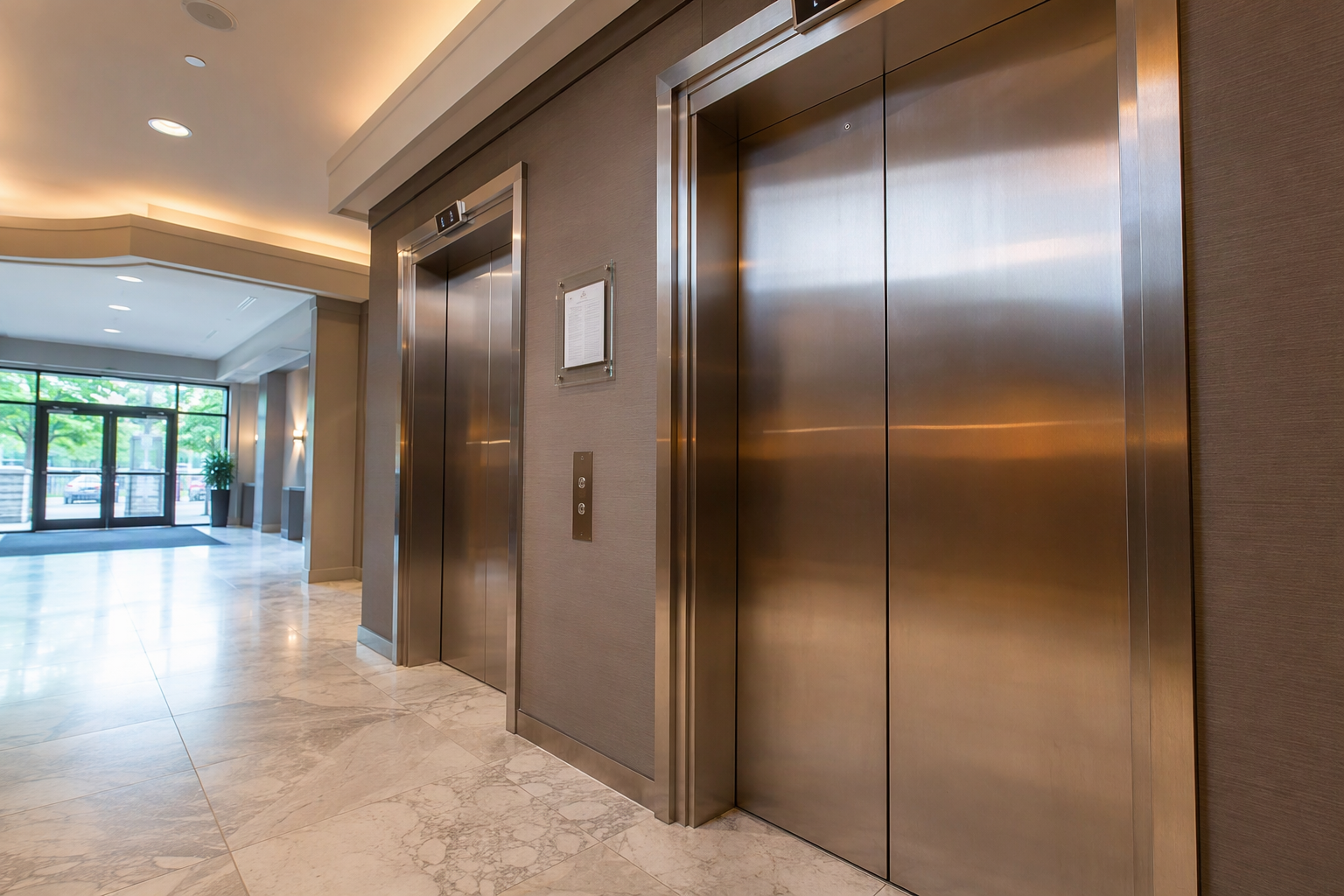
Top-Rated Elevator Maintenance Company Falls Church, VA: Complete FAQ Guide
Falls Church, VA building owners seeking top-rated elevator maintenance need a contractor licensed under Virginia’s Uniform Statewide Building Code (13VAC5-63) with certified elevator mechanics, proven compliance expertise, and deep familiarity with how local Virginia building departments enforce annual inspection requirements. Quality Elevator Company serves the broader Northern Virginia and Washington DC metro region, bringing that precise combination of credentials, regional code knowledge, and hands-on maintenance experience to every service call.
What makes an elevator maintenance company “top-rated” in Falls Church, VA?
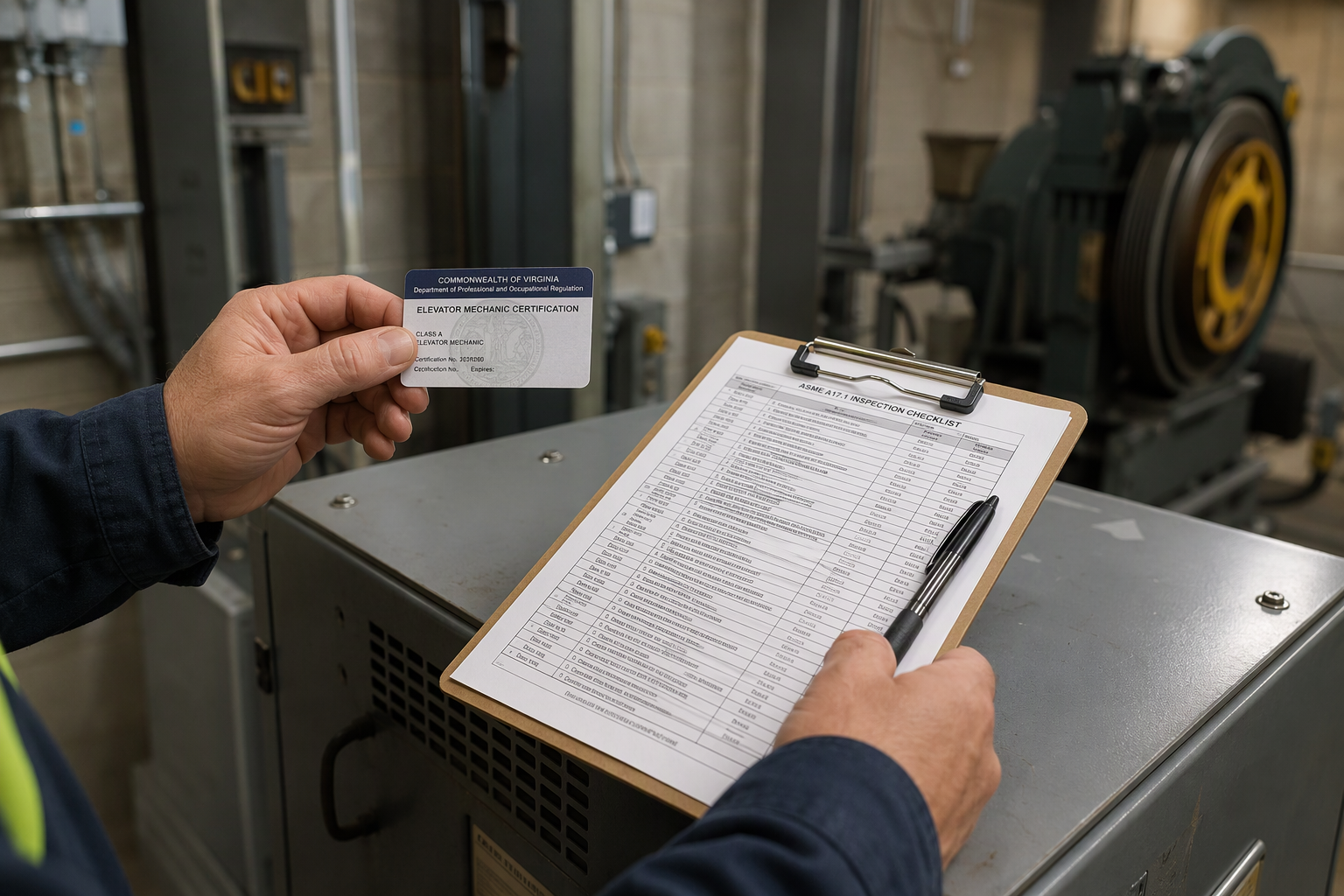
A top-rated elevator maintenance company in Falls Church, VA holds an Elevator/Escalator Contracting (EEC) specialty license through the Virginia Board for Contractors (DPOR), employs state-certified elevator mechanics, and demonstrates consistent compliance with annual inspection requirements enforced by the local building department under 13VAC5-63.
Virginia law is explicit: no one may work as an elevator mechanic without state certification, unless working under the direct and immediate supervision of a certified mechanic. Certification requires at least three years of industry experience and passage of an approved examination. Additionally, certified mechanics must complete at least eight hours of Board-approved continuing education at each renewal cycle. A company whose technicians carry those credentials and whose service record reflects zero lapses in certificate of inspection currency is the operational definition of “top-rated” in this jurisdiction.
Beyond licensure, top-rated providers distinguish themselves through thorough documentation, transparent communication with building owners, and proactive identification of code deficiencies before annual inspections — not after. Quality Elevator Company approaches every maintenance engagement in Northern Virginia with this compliance-first methodology.
What are Virginia’s legal requirements for elevator maintenance and inspection?
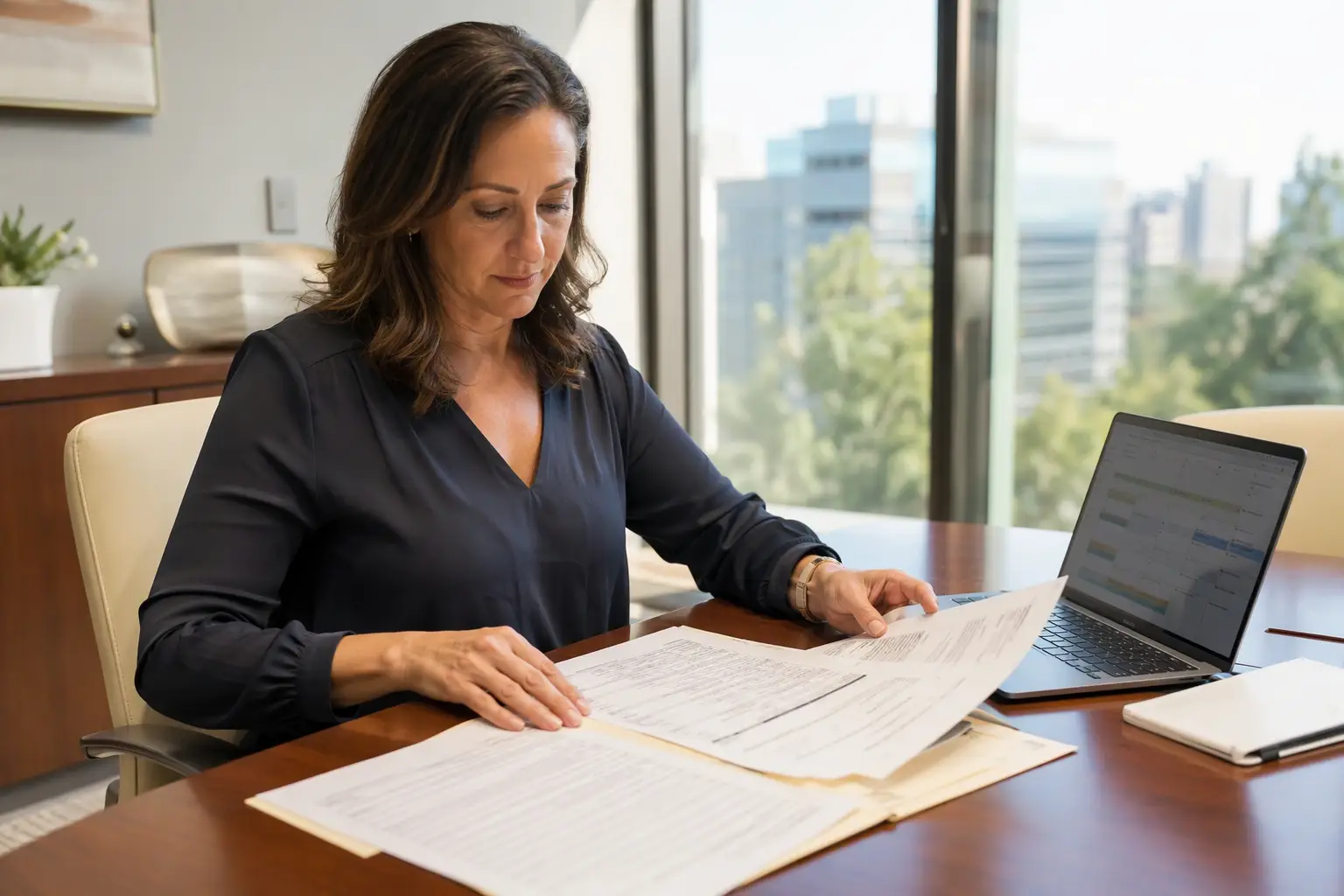
Virginia requires all elevators and escalators to receive at least an annual periodic inspection, enforced by the local building department under the Virginia Uniform Statewide Building Code (13VAC5-63), with the current certificate of inspection displayed in or near the elevator at all times.
Virginia adopted the ASME A17.1/CSA B44-2019 Safety Code for Elevators and Escalators as incorporated by the 2021 USBC, which took effect on January 18, 2024. This edition governs maintenance standards, test intervals, and safety device requirements for all covered conveyances. For existing elevators, the Virginia Existing Building Code’s referenced-standards table lists ASME A17.1/CSA B44-2016, so practitioners must be careful to apply the correct edition based on the elevator’s installation date and permit history.
Periodic tests must follow ASME A17.1 Appendix N intervals and be witnessed by the local code official. The local building department may delegate this witnessing role to an approved agency or certified local elevator inspector. Critically, third-party inspection reports must include the name and certification number of the elevator mechanic who performed the witnessed tests — a paperwork detail that matters enormously when a building owner submits documentation for certificate renewal.
The certificate of inspection must be displayed in the elevator, attached to the escalator, kept available in the building operator’s office, or posted in an approved conspicuous location. A building that cannot produce a current certificate is operating out of compliance and faces potential enforcement action from the local authority having jurisdiction (AHJ).
How often do elevators in Virginia need to be inspected and tested?
All elevators and escalators in Virginia require at minimum an annual periodic inspection, and a locality may require six-month periodic inspections; additional category tests follow the intervals prescribed in ASME A17.1 Appendix N, witnessed by the code official.
Beyond the annual periodic inspection, ASME A17.1 establishes a tiered testing schedule. Category 1 tests — which cover safety devices such as safeties and buffers at rated speed — are required annually. Category 5 tests, the most demanding full-load, full-speed safety tests, are required every five years. The exact test intervals for each category depend on the elevator type (traction, hydraulic, escalator, etc.) and are spelled out in ASME A17.1 Appendix N.
Falls Church building owners should work closely with their maintenance contractor to build a testing calendar that anticipates Category 1 and Category 5 due dates rather than scrambling to schedule them reactively. A well-structured maintenance agreement maps every required test to a date, so the building is never caught with an overdue inspection.
What is included in a comprehensive elevator maintenance contract?
A comprehensive elevator maintenance contract covers all routine lubrication, adjustment, parts inspection, safety device testing, code compliance monitoring, and documentation required to keep an elevator operating legally and safely between annual inspections.
At the mechanical level, a full-maintenance agreement typically addresses the following elements:
- Monthly lubrication of guide rails, sheaves, and door operator components
- Inspection and adjustment of door contacts, interlocks, and safety edges
- Verification of leveling accuracy and ride quality
- Controller and drive system diagnostics
- Testing of emergency lighting, alarm bells, and two-way communication systems (required under ADA for accessibility compliance)
- Governor and safety device inspection on the schedule required by ASME A17.1
- Wire rope or hydraulic oil condition monitoring
- Record-keeping at a readily accessible central location in the building
A parts-and-labor contract is the gold standard, covering the cost of most replacement parts in addition to labor. Building owners should carefully review exclusions — some agreements exclude hydraulic seals, ropes, or modernization components, which can represent significant surprise costs.
Regardless of contract type, Virginia requires maintenance, repair, test, and inspection records to be kept at a readily accessible location in the building. A maintenance provider that delivers clean, organized documentation at every visit protects the building owner during code official audits.
What ASME A17.1 safety code requirements apply to elevator maintenance in Virginia?
The ASME A17.1/CSA B44-2019 Safety Code for Elevators and Escalators, as incorporated by Virginia’s 2021 USBC effective January 18, 2024, sets the minimum maintenance, inspection, and testing standards for elevators in Virginia.
ASME A17.1 Section 8 governs maintenance, inspection, and testing of in-service elevators. It requires that maintenance be performed only by qualified elevator mechanics — in Virginia’s case, state-certified mechanics — and that the elevator owner be responsible for ensuring the work is carried out in accordance with the code. The code also addresses the process for taking an elevator out of service, including requirements for notices, partial operation, and restart procedures.
Key maintenance-related requirements under ASME A17.1 that directly affect day-to-day operations in Falls Church include proper lubrication intervals, brake adjustment tolerances, door timing parameters, and the operational requirements for safety devices like safeties, buffers, and car and counterweight guiding systems. When a maintenance contractor deviates from these standards — for example, by over-lubricating guide rails or leaving door closing force above the permitted threshold — it creates both a safety hazard and a code violation that can surface at the next annual inspection.
How does ADA compliance relate to elevator maintenance?
Under the Americans with Disabilities Act, elevators in covered multi-story buildings must remain operational and accessible, meaning routine maintenance must address not just mechanical function but also ADA-required features such as cab dimensions, control reach ranges, two-way communication, and door timing.
ADA Title III (places of public accommodation) and Title II (state and local government facilities) require that accessible elevators be kept in working order. While the ADA does not set elevator inspection intervals, it does require that when an accessible elevator is out of service, building operators provide an equivalent alternative where readily achievable. From a maintenance perspective, this means that door operator failures, leveling problems, and communication system malfunctions are not merely mechanical inconveniences — they are potential ADA compliance events.
Specific ADA elevator requirements that maintenance teams must keep functional include: audible and visual floor indicators, two-way emergency communication with a location-identifying message (not dependent on handset use), Braille and raised character floor designations, and door re-opening devices triggered by the door safety edge or light curtain. Regular testing of these elements should be built into every maintenance visit.
What should building owners look for when comparing elevator maintenance companies?
Building owners comparing elevator maintenance companies in the Falls Church, VA area should evaluate Virginia Board for Contractors licensure, elevator mechanic state certification, documented inspection history, contract scope, and familiarity with the local AHJ’s specific inspection and documentation requirements.
| Evaluation Criterion | Minimum Acceptable Standard | Best-Practice Standard |
|---|---|---|
| Contractor Licensing | Virginia EEC specialty license (DPOR) | EEC license with current standing, no enforcement actions |
| Mechanic Certification | Virginia-certified elevator mechanics on staff | All field technicians individually certified; 8-hr CE maintained |
| Adopted Code Familiarity | ASME A17.1/CSA B44-2019 (2021 USBC) | Proficiency with both 2016 and 2019 editions for mixed-age portfolios |
| Inspection Documentation | Mechanic name and certification number on all test reports | Digital recordkeeping with building-accessible portal |
| Test Scheduling | Annual Category 1 and 5-year Category 5 tracked | Proactive calendar provided to owner at contract start |
| ADA Compliance Checks | Included at annual inspection | Included at every maintenance visit |
| Multi-Jurisdiction Capability | Virginia-only coverage | Virginia, DC, Maryland, Pennsylvania coverage for portfolio owners |
| Contract Transparency | Written exclusion list provided | Full-maintenance (parts and labor) with itemized exclusions |
Building owners with properties in multiple Mid-Atlantic jurisdictions benefit significantly from a single maintenance provider who understands each state’s regulatory framework. Quality Elevator Company operates across Virginia, Washington DC, Maryland, and Pennsylvania — eliminating the coordination burden of managing multiple vendors with different compliance calendars.
What are the consequences of skipping elevator maintenance in Virginia?
Skipping elevator maintenance in Virginia can result in failed annual inspections, suspension of the certificate of inspection, a legally non-operational elevator, enforcement action by the local building department, and elevated liability exposure in the event of an incident.
Virginia’s local building departments are the authority having jurisdiction for elevator enforcement. When an elevator fails its annual inspection or its certificate lapses, the AHJ has authority to order the unit out of service. In a multi-story commercial building, a non-operational elevator can trigger ADA compliance issues for tenants with mobility limitations and may constitute a lease default depending on the lease agreement terms.
Beyond regulatory consequences, deferred maintenance accelerates component wear. Door operators, guide shoe liners, brake linings, and hydraulic seals all have service lives that are substantially shortened when lubrication and adjustment intervals are missed. The cost of a component failure — including emergency labor, parts, and downtime — typically far exceeds the cumulative cost of the preventive maintenance that would have prevented it.
What is the difference between elevator maintenance and elevator modernization?
Elevator maintenance preserves the current operating condition of an elevator through routine service and repairs, while modernization replaces major systems or components — such as controls, drive systems, or cab interiors — to meet updated code requirements, improve performance, or extend the equipment’s service life.
Virginia’s USBC and ASME A17.1 treat modernization as an alteration, which typically triggers a permit requirement from the local building department and an acceptance inspection before the elevator returns to service. Maintenance work performed within the scope of the existing installation does not generally require a separate permit, but the line between maintenance and alteration can blur when replacing major components. A knowledgeable contractor identifies which scope triggers permit obligations before work begins — protecting the building owner from unauthorized alterations.
Signs that an elevator may need modernization rather than continued maintenance include: frequent door entrapments, recurring drive system faults, outdated relay-logic controllers that lack diagnostic capability, guide shoe wear that cannot be corrected by adjustment, and ride quality that cannot be restored by standard adjustment. A qualified elevator contractor can assess whether continued maintenance is the most cost-effective path or whether modernization delivers better long-term value.
What should building owners do immediately if an elevator malfunctions or traps a passenger?
If an elevator malfunctions or traps a passenger in Falls Church, VA, building management must follow a specific sequence to protect passenger safety, comply with Virginia law, and preserve the evidence chain for investigation.
- Immediately contact emergency services (911) if a passenger is injured, medically distressed, or cannot be communicated with through the two-way communication system in the cab.
- Use the elevator’s two-way communication system to speak with the trapped passenger, confirm their condition, and advise them to remain calm and not attempt to exit the cab.
- Contact the elevator maintenance contractor to dispatch a certified mechanic to perform a controlled, safe passenger release — do not allow untrained building staff to attempt manual release.
- Once the elevator is out of service, post clear signage at all landings indicating the elevator is not in operation.
- Preserve all controller fault logs, surveillance footage, and maintenance records from the period leading up to the malfunction.
- Notify the local building department (AHJ) of any elevator accident that results in injury or requires emergency response, in accordance with reporting obligations under the Virginia Uniform Statewide Building Code.
- Do not return the elevator to service until a certified mechanic has inspected it, identified the root cause, made all necessary repairs, and the local AHJ has cleared it for operation if required.
How does elevator maintenance in Virginia compare to DC and Maryland requirements?
Virginia delegates elevator inspection to local building departments under 13VAC5-63, while the District of Columbia requires DOB-approved third-party inspection agencies under DC DOB, and Maryland requires annual inspections under the Maryland Department of Labor, Division of Labor and Industry — each jurisdiction runs a distinct regulatory framework with different certificate cycles and adopted code editions.
The practical implication for portfolio building owners is significant. A building owner with properties in Falls Church, Bethesda, and DC cannot apply a single inspection schedule or documentation format across all three jurisdictions. Virginia’s local AHJ may have specific documentation preferences that differ from DC’s Citizen Access Portal submission process or Maryland’s annual re-registration requirement. Quality Elevator Company’s operational footprint across all three jurisdictions — plus Pennsylvania — means its compliance teams understand each framework natively rather than treating one state’s rules as the default template for others.
The table below summarizes the key regulatory differences across the jurisdictions Quality Elevator Company serves:
| Jurisdiction | Regulator | Adopted ASME Edition | Inspection Frequency | Certificate Cycle |
|---|---|---|---|---|
| Virginia | Local building department (13VAC5-63) | ASME A17.1/CSA B44-2019 (2021 USBC, eff. Jan 18, 2024) | Annual (locality may require semi-annual) | Varies by local AHJ |
| District of Columbia | DC Department of Buildings (DOB) | ASME A17.1-2013/CSA B44-13 (2017 DC Building Code, eff. May 29, 2020) | Category 1 every 12 months; Category 5 every 60 months | 2 years (certificate of inspection) |
| Maryland | Maryland Department of Labor, Division of Labor and Industry | ASME A17.1-2022/CSA B44:22 (eff. June 17, 2026) | Annual periodic; 5-year comprehensive | Annual re-registration required |
| Pennsylvania | Pennsylvania Department of Labor and Industry | ASME A17.1-2000/A17.1a-2002 (A17.1-2016 for permits from Dec 20, 2026) | Every 6 months (electric, hydraulic, escalators) | 24 months (6-mo cycle) / 48 months (12-mo cycle) |
What elevator types require maintenance in a typical Falls Church commercial building?
A typical Falls Church, VA commercial or mixed-use building may contain traction elevators, hydraulic elevators, escalators, wheelchair lifts, or limited-use/limited-application (LU/LA) elevators — each requiring maintenance protocols specific to its drive system and use classification under ASME A17.1.
Traction elevators — the most common type in mid-rise and high-rise commercial buildings — use a motor, sheave, and wire ropes to move the cab. Maintenance priorities include rope condition and tension, brake lining wear, governor calibration, and machine room temperature control. Gearless machine room-less (MRL) traction systems, increasingly common in newer Falls Church office and residential buildings, require maintenance of the permanent magnet motor and integrated brake system, which differ substantially from geared drive maintenance.
Hydraulic elevators, prevalent in low-rise buildings up to five or six stories, require attention to hydraulic fluid condition and level, cylinder and piston integrity, power unit maintenance, and underground cylinder corrosion protection where applicable. Virginia’s adoption of ASME A17.1-2019 incorporates requirements for hydraulic elevator pressure vessel integrity and power unit safety that maintenance contractors must monitor proactively.
Wheelchair lifts and LU/LA elevators in Falls Church facilities serving the public must be maintained to both ASME A17.1 and ADA standards, as accessibility obligations apply equally to these conveyances. Their smaller mechanical footprint does not reduce the compliance complexity.
How should a building owner evaluate an elevator maintenance contract before signing?
Before signing an elevator maintenance contract, a building owner should verify the contractor’s Virginia EEC license status, review the scope of included services against the full ASME A17.1 maintenance requirements, confirm that all Category 1 and Category 5 test scheduling is included, and understand exactly what parts and labor are excluded.
Contract review should address the following specific points:
- License verification: Confirm the contractor’s Elevator/Escalator Contracting (EEC) specialty license through the Virginia Board for Contractors (DPOR) is current and in good standing.
- Mechanic certification: Confirm that all mechanics who will service the building are individually Virginia-certified, not simply supervised by a certified mechanic.
- Test scheduling inclusion: Confirm that Category 1 annual tests and Category 5 five-year tests are included in the contract, with the contractor responsible for scheduling coordination with the local AHJ.
- Documentation delivery: Confirm that the contractor delivers signed, dated maintenance records after every visit, stored in a readily accessible central location in the building as required by code.
- Exclusion list review: Obtain a written list of all excluded parts and labor. Common exclusions include hydraulic seals, wire ropes, controller replacements, and cab interior components — exclusions that can represent significant unexpected costs.
- Termination and transition provisions: Understand what happens to the maintenance records if the contract is terminated, and whether the contractor has proprietary control codes that could make it difficult to switch providers.
What role does the local building department play in Falls Church elevator oversight?
Under Virginia’s Uniform Statewide Building Code, the local building department is the authority having jurisdiction (AHJ) for elevator inspections in Falls Church — meaning it enforces annual inspection requirements, witnesses required tests, issues certificates of inspection, and has authority to order an elevator out of service for code violations.
Virginia law specifically assigns elevator inspection and enforcement to local governments, not to a state labor or safety agency. This is a critical distinction for building owners and contractors who may be familiar with Maryland’s or DC’s state-level oversight models. In Falls Church, the local building department determines inspection scheduling preferences, documentation formats, and enforcement protocols. A maintenance contractor with direct working relationships and familiarity with the local AHJ’s specific procedures adds meaningful value over a contractor who treats every Virginia locality as interchangeable.
The local AHJ also has the authority to require six-month periodic inspections rather than annual inspections, and may delegate test-witnessing to an approved third-party agency or other certified local inspectors. Building owners should confirm with their contractor whether the local AHJ exercises these options in practice, as the answer directly affects the maintenance and testing calendar.
What records must Falls Church building owners keep for their elevators?
Virginia’s Uniform Statewide Building Code and ASME A17.1 require that maintenance, repair, test, and inspection records be kept at a readily accessible central location in the building, and that the current certificate of inspection be displayed in or near the elevator at all times.
At a minimum, records that should be maintained in the building include: the current certificate of inspection, all periodic inspection reports, all Category 1 and Category 5 test reports (including the name and certification number of the mechanic who performed tests), a log of all maintenance visits with dates and work performed, records of any repairs or parts replacements, and documentation of any incidents or entrapments.
When the local code official requests records during an enforcement action or routine audit, the building owner — not the maintenance contractor — bears the primary responsibility for producing them. Building owners who rely solely on their contractor’s office records rather than maintaining an in-building file are exposed to compliance gaps if the contractor relationship ends or records are misplaced. A well-organized, in-building documentation system is a low-cost risk management measure that is frequently overlooked.
How does elevator maintenance support overall building safety and liability management?
Consistent, documented elevator maintenance is one of the most effective risk management tools available to Falls Church building owners, because it establishes a record of reasonable care that is directly relevant to premises liability assessments following any elevator-related incident.
When an elevator incident results in a personal injury claim, the building owner’s maintenance records are among the first documents subject to discovery. A complete, contemporaneous maintenance log demonstrating that the elevator was regularly serviced, that all required inspections were passed, and that deficiencies were promptly corrected substantially strengthens the owner’s position. Conversely, gaps in maintenance records, overdue inspections, or uncorrected deficiency notices from prior inspections create significant liability exposure regardless of the actual cause of the incident.
Beyond litigation risk, well-maintained elevators reduce the frequency of tenant complaints, service disruptions, and emergency callbacks — all of which carry direct and indirect costs. The connection between maintenance quality and operational reliability is not incidental; it is the mechanical reality of complex equipment operating in continuous service.
What is the ASME A17.3 standard and does it apply to existing elevators in Virginia?
The ASME A17.3 Safety Code for Existing Elevators and Escalators provides retroactive safety requirements for elevators installed before the current edition of ASME A17.1 took effect, and Virginia’s Existing Building Code references ASME A17.1/CSA B44-2016 as the standard for existing installations.
Many Falls Church buildings contain elevators installed under earlier code editions. Virginia’s Existing Building Code framework, which references ASME A17.1/CSA B44-2016, governs the safety requirements that apply to these older installations — establishing which retroactive safety features must be present and functional even if they were not required when the elevator was first installed. A maintenance contractor who is only familiar with the latest code edition and not with the existing-building provisions applicable to older equipment can inadvertently miss required safety features or recommend unnecessary upgrades.
Building owners with elevators installed more than fifteen years ago should ask their maintenance contractor to perform a code compliance audit against the applicable existing-building standard, identifying any retroactive requirements that may need to be addressed.
What OSHA requirements apply to elevator maintenance workers in Virginia?
Elevator maintenance mechanics working in Virginia are subject to OSHA general industry and construction standards, including lockout/tagout (LOTO) requirements for controlling hazardous energy, confined space entry rules for pit work and machine room access, and fall protection requirements for work in hoistways.
OSHA’s lockout/tagout standard (29 CFR 1910.147) is particularly significant for elevator maintenance because elevator drive systems, hydraulic power units, and control systems all represent hazardous energy sources that must be properly isolated before maintenance work. A maintenance contractor whose mechanics are not rigorously trained on LOTO procedures for elevator-specific equipment creates safety risk for workers and regulatory exposure for the building owner as the host employer.
Falls Church building owners have an interest in confirming that their maintenance contractor’s safety program meets OSHA standards — not only because of the ethical obligation to workers, but because a contractor’s OSHA violations or workplace incidents can create complications for the building owner under multi-employer worksite doctrine.
How can Falls Church building owners prepare for their annual elevator inspection?
Preparing for a Virginia annual elevator inspection involves confirming that all maintenance records are current and available in the building, that the elevator is mechanically ready, and that the maintenance contractor has coordinated the inspection schedule with the local building department.
- Confirm with the maintenance contractor that all scheduled maintenance visits have been completed and documented for the inspection period.
- Verify that the current certificate of inspection is displayed in or near the elevator, or is otherwise available as required by the local AHJ.
- Ensure the machine room is clean, properly lit, and accessible, with no storage blocking access to equipment.
- Confirm that the pit is dry, properly lit, and that the pit stop switch and pit ladder are functional.
- Test the emergency lighting and two-way communication system in the cab to confirm both are operational.
- Review any deficiency notices or corrective action items from the prior inspection to confirm all required repairs were completed and documented.
- Confirm with the maintenance contractor that the Category 1 test (annual) has been scheduled and that the local AHJ or approved agency has been notified to witness the test.
- Have the mechanic’s name and Virginia certification number available for inclusion in test reports, as required by Virginia code.
Why should Falls Church building owners choose Quality Elevator Company for elevator maintenance?
Quality Elevator Company brings regional code expertise, Virginia-compliant maintenance practices, and multi-jurisdiction operational capability to Falls Church building owners who need a maintenance partner they can rely on across a complex regulatory environment.
Elevator maintenance in Northern Virginia sits at the intersection of ASME A17.1 technical requirements, Virginia USBC compliance obligations, local AHJ relationships, and ADA accessibility mandates. Building owners who manage properties across the Virginia, DC, and Maryland corridor face the additional challenge of navigating three distinct regulatory frameworks simultaneously. Quality Elevator Company’s service territory — covering Virginia, Washington DC, Maryland, and Pennsylvania — means its compliance teams apply each jurisdiction’s requirements accurately without defaulting to a one-size-fits-all approach.
The company’s approach emphasizes proactive compliance documentation, transparent communication with building owners about upcoming test deadlines, and thorough maintenance visit records that protect owners during AHJ audits and in the event of any incident investigation. For Falls Church commercial and residential building owners seeking a maintenance provider who treats regulatory compliance as a core service deliverable — not an afterthought — Quality Elevator Company represents the standard of care this market requires.
Contact Quality Elevator Company for a free elevator assessment at 301-779-9116.
Need elevator service you can rely on? Quality Elevator Company is ready to help.