Emergency Elevator Repair in Baltimore: Complete FAQ Guide
After 15+ years working on elevators across Baltimore, Washington DC, Philadelphia, and Richmond, I’ve responded to hundreds of emergency calls. The questions building managers and property owners ask in those stressful moments are nearly always the same. I’ve compiled the most important ones here so you can make informed decisions fast — whether you’re dealing with a passenger entrapment right now or planning ahead to avoid one.
What counts as an emergency elevator repair situation in Baltimore?
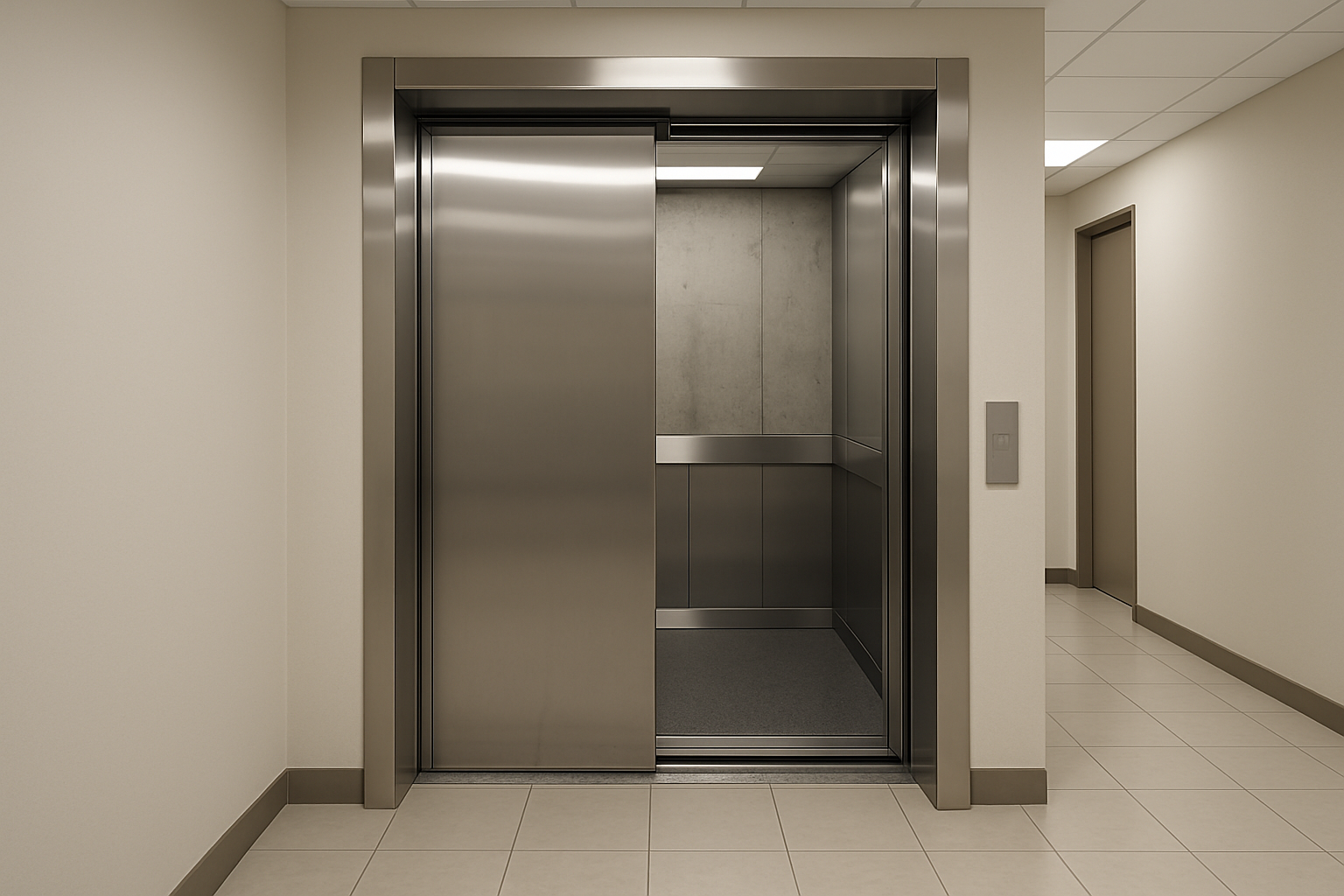
An emergency elevator repair is any condition that poses an immediate risk to passenger safety, traps occupants inside the cab, or renders the elevator completely inoperable in a building where it is the primary means of vertical access.
Under Maryland’s elevator safety regulations and ASME A17.1-2022 Safety Code for Elevators and Escalators, certain failures require immediate action and cannot wait for a standard scheduled service window. These include:
- Passenger entrapment — someone physically trapped inside the cab
- Complete elevator shutdown with the cab stopped between floors
- Door failure preventing the cab from closing or opening safely
- Hydraulic fluid leaks in hydraulic elevators
- Burning smells, smoke, or electrical arcing from the machine room
- Uncontrolled cab movement or leveling failure
- Broken hoist rope or cable visible abnormalities
- Safety circuit trips that won’t reset
Non-emergency issues — slow door closing, minor leveling drift, cosmetic damage — can typically be scheduled within normal business hours. When in doubt, call a certified technician immediately. The cost of a false alarm is always less than the liability of a preventable injury.
How fast can an emergency elevator technician reach a Baltimore property?
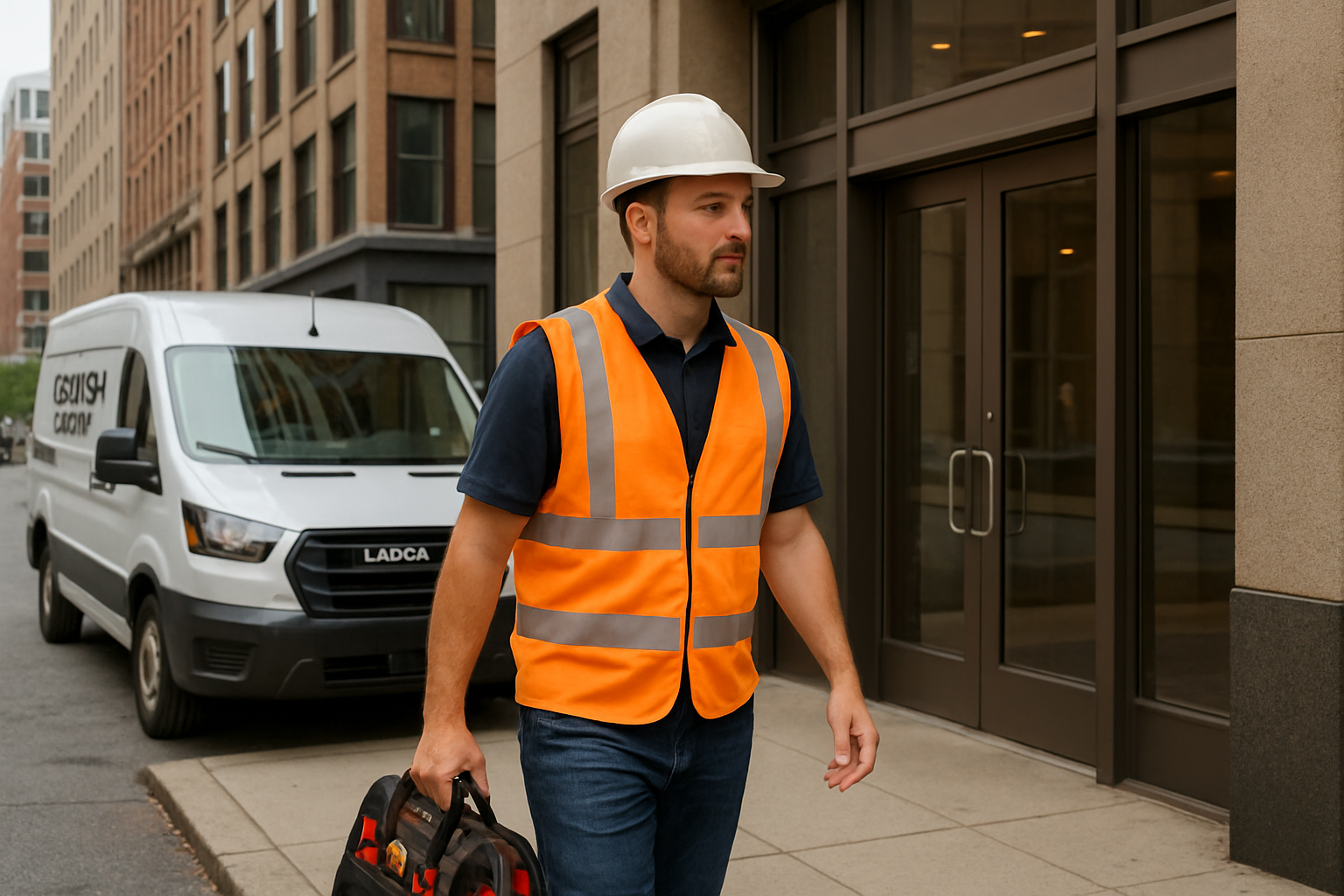
A qualified emergency elevator technician should reach most Baltimore locations within 60–120 minutes of your call, depending on time of day, traffic, and technician proximity.
Response time benchmarks vary significantly by provider. In 2026, the industry standard for life-safety emergencies such as entrapments is a sub-2-hour response. Quality Elevator Company maintains a dedicated dispatch network covering Baltimore City, Baltimore County, and surrounding areas, targeting a 90-minute or better response window for critical calls.
Factors that affect response time include:
- Whether you have an active maintenance contract (contract clients receive priority dispatch)
- Time of day — peak traffic hours between 4–7 PM can add 20–40 minutes
- Location within the metro area — downtown Baltimore vs. outer counties
- Availability of parts on the service truck for immediate repair vs. a temporary fix
Always ask a prospective elevator service company for their documented average response time before you sign a maintenance agreement. Any company that cannot produce that number should raise a red flag.
What are the most common causes of emergency elevator breakdowns in Baltimore?
The most common emergency breakdown causes in Baltimore buildings are door operator failures, hydraulic system malfunctions, controller board faults, and aging rope or cable systems — many directly tied to deferred maintenance and equipment that has exceeded its service life.
Based on service data across the Baltimore metro area through 2026, the breakdown distribution looks like this:
| Failure Type | % of Emergency Calls | Average Repair Time | Parts Typically Required On-Truck? |
|---|---|---|---|
| Door Operator / Door Board Failure | 34% | 1–3 hours | Yes (common models) |
| Hydraulic Fluid Leak / Pump Unit Failure | 22% | 2–6 hours | Partial |
| Controller / Circuit Board Fault | 18% | 2–8 hours | Depends on brand |
| Safety Circuit / Relay Trip | 12% | 1–4 hours | Yes |
| Rope / Cable Wear or Break | 7% | 4–16 hours | No — special order |
| Motor / Drive Unit Failure | 5% | 4–24 hours | No — special order |
| Other (leveling, brake, misc.) | 2% | 1–4 hours | Varies |
Door-related failures are by far the most frequent, and they are also the most preventable through routine lubrication and adjustment. If your elevator is experiencing repeated door issues, that is a strong sign your maintenance schedule needs to be reviewed.
What does emergency elevator repair cost in Baltimore in 2026?
Emergency elevator repair in Baltimore typically costs between $350 and $2,500 for the service call and labor, with parts costs ranging from $100 for minor components to $15,000+ for major drive or controller replacements.
Cost is driven by several factors:
- After-hours premium: Expect a 1.5x–2x labor rate multiplier for nights, weekends, and holidays
- Parts availability: Common parts on a service truck cost less and are repaired faster; obsolete or proprietary parts require sourcing time and shipping premiums
- Elevator type: Hydraulic, traction, and MRL (machine-room-less) systems have different parts cost profiles
- Contract vs. non-contract: Clients with active maintenance agreements typically receive capped emergency labor rates or no-charge emergency response depending on contract level
A preventive maintenance contract typically runs $150–$600 per month depending on elevator type and visit frequency, and it almost always saves money over the long run by reducing emergency call frequency and providing discounted labor rates when emergencies do occur.
Is my building legally required to have emergency elevator service available in Maryland?
Yes — Maryland law and local Baltimore City codes require that building owners maintain elevators in safe operating condition at all times and have a mechanism for responding to entrapments and safety failures, which in practice means having a documented emergency service agreement in place.
Maryland’s elevator safety program falls under the Maryland Department of Labor, Licensing and Regulation (DLLR). Key compliance requirements include:
- Annual inspection by a Maryland-licensed elevator inspector
- A current valid Certificate of Operation posted in or adjacent to the elevator
- Immediate shutdown of any elevator the inspector deems unsafe
- Compliance with ASME A17.1-2022 as adopted by the state
- Entrapment response procedures that meet ASME A17.1 Section 2.27 requirements
Under ADA Title III, buildings that rely on elevators for accessible vertical access have an additional legal obligation to restore elevator service promptly, as extended outages can constitute a denial of accessible services. This is an especially critical compliance consideration for multi-story commercial buildings, hospitals, and government facilities.
What should I do immediately if a passenger is trapped in an elevator in Baltimore?
If a passenger is trapped inside an elevator cab, call your elevator service company’s emergency line immediately, keep the passenger calm through the intercom or phone, never attempt to force the doors open or extract them without a trained technician present, and call 911 if the passenger reports a medical emergency.
The step-by-step protocol that building managers should follow:
- Establish voice contact with the trapped passenger through the in-cab emergency phone
- Reassure them that help is on the way and instruct them not to attempt self-rescue
- Call your elevator service provider’s 24/7 emergency line immediately
- Do not attempt to open the hoistway doors from the outside — this requires a special key and training
- Keep someone stationed at the elevator bank to guide the technician when they arrive
- If the passenger reports chest pain, difficulty breathing, or loss of consciousness, call 911
- Document the time of entrapment, the floor the cab is at, and any symptoms reported
ASME A17.1 Section 2.27.1 specifies that emergency personnel (trained technicians or fire department) must perform all passenger retrievals. Self-rescue attempts by passengers — such as forcing doors open and climbing out — are responsible for a significant percentage of serious elevator injuries annually.
How do I tell the difference between a problem I can reset myself and one that requires an emergency technician?
Building staff can safely attempt a single reset of a tripped circuit breaker or a lobby recall test, but any situation involving unusual sounds, burning odors, visible fluid, stopped cab between floors, or repeated safety trips must be handled by a certified technician.
Here is a practical decision matrix:
- Safe for building staff to attempt: Check that the main disconnect in the machine room is on; verify the pit stop switch hasn’t been bumped to “stop”; confirm the machine room door is fully closed (many installations have a door interlock)
- Call a technician during business hours: Elevator stops and automatically restarts with no entrapment; door opens and closes slowly; cab leveling is slightly off; interior lighting flickering
- Call emergency line immediately: Passenger trapped; cab stopped between floors; burning smell; unusual grinding or banging; elevator moving without a call registered; any visible sparking
Never bypass a safety circuit to restore service temporarily. Every ASME A17.1-compliant elevator has safety circuits that exist specifically to prevent catastrophic failures. Bypassing them — even for a few minutes — can result in criminal liability under Maryland law in addition to severe injury risk.
How long can a building legally operate without its elevator working in Baltimore?
There is no single fixed time limit in Maryland code, but under ADA accessibility requirements and building occupancy regulations, extended elevator outages in buildings that depend on vertical access can constitute violations subject to enforcement action and civil liability within 24–72 hours depending on occupancy type.
Practical timelines by building type:
- Healthcare facilities: Zero tolerance — any outage affecting patient transport requires immediate repair or alternative compliance measures
- Commercial office buildings: ADA accessible route must be maintained; outages beyond 3 days typically require documented corrective action plans
- Residential apartment buildings with elderly or disabled tenants: Courts have found liability in outages as short as 48 hours under Fair Housing Act provisions
- Low-rise buildings with stair alternatives: More flexibility, but Maryland DLLR still requires active pursuit of repair and documentation
Quality Elevator Company maintains a stocked parts inventory for the most common elevator models in the Baltimore metro market precisely to minimize these outage windows.
What certifications should an emergency elevator repair technician have in Maryland?
In Maryland, elevator mechanics must hold a state-issued Elevator Mechanic license from the Department of Labor, and any company performing elevator work must hold a Maryland Elevator Contractor license — verify both before authorizing any emergency repair work.
Legitimate certifications to look for:
- Maryland Elevator Mechanic License — issued by Maryland DLLR, required for all hands-on repair work
- IUEC (International Union of Elevator Constructors) Certification — industry’s gold standard for technical training
- QEI (Qualified Elevator Inspector) Certification — required for inspection personnel, issued through NAESA International
- ASME A17.1 Code Compliance Training — not a formal license but indicates technician is current on code requirements
Always ask for license numbers and verify them on the Maryland DLLR licensing portal before work begins. An unlicensed repair that results in a subsequent injury exposes the building owner to direct liability and may void insurance coverage.
Can an emergency elevator repair be performed on a hydraulic elevator the same way as a traction elevator?
No — hydraulic and traction elevators have fundamentally different mechanical systems requiring different tools, parts, training, and repair procedures, and a technician must have specific competency in the type of elevator they are working on.
Key differences that matter during an emergency:
- Hydraulic elevators: Use a fluid-driven piston system; emergencies often involve fluid leaks, pump failures, or valve malfunctions; lowering a trapped passenger requires manual lowering valve operation
- Traction elevators: Use cables, counterweights, and a motor drive; emergencies may involve rope issues, brake failures, or drive controller faults; manual lowering requires brake release procedures
- MRL (Machine Room Less) traction: Controller and drive are located in the hoistway or overhead — accessing them requires specific confined-space and electrical safety protocols
When you call for emergency service, always specify the type of elevator in your building. This helps the dispatcher send the right technician with the right equipment and parts stock.
What routine maintenance prevents the most emergency elevator calls in Baltimore?
The single highest-impact maintenance task for preventing emergency calls is monthly door system inspection and lubrication, followed by quarterly hydraulic fluid and controller checks — together these address over 70% of the conditions that become emergencies.
A well-structured preventive maintenance program under ASME A17.1 Part 8 standards should include:
- Monthly: Door operator adjustment and lubrication, safety device functionality test, cab lighting check
- Quarterly: Hydraulic fluid level and quality, brake adjustment, guide rail lubrication, controller inspection
- Semi-annually: Governor and safety device testing, rope/cable condition assessment, pit inspection
- Annually: Full category inspection per Maryland DLLR requirements, load testing where required
Buildings that maintain a structured monthly PM program experience 60–70% fewer emergency calls annually compared to those on a quarterly or as-needed basis, based on industry maintenance data published through 2026.
How do I choose a reliable 24/7 emergency elevator repair company in Baltimore?
Choose a company that holds a current Maryland Elevator Contractor license, employs IUEC-certified mechanics, can document their average emergency response time, carries parts inventory for your specific elevator model, and provides a clear written emergency service agreement.
A vetting checklist for Baltimore building managers:
- Verify Maryland Elevator Contractor license number with DLLR
- Ask for documentation of average emergency response time (should be under 2 hours)
- Confirm 24/7/365 dispatch — not an answering service that pages someone who may or may not respond
- Ask what elevator brands and models they stock parts for
- Request references from comparable properties in Baltimore (not just testimonials on their website)
- Review the emergency provisions in the proposed maintenance contract — specifically labor rate caps and response time guarantees
- Confirm that the technicians who respond to emergencies are employees, not subcontractors
Quality Elevator Company operates as a licensed elevator contractor in Maryland, DC, Pennsylvania, and Virginia, with IUEC-certified technicians and a stocked service fleet covering the Baltimore region around the clock.
Does my elevator insurance cover emergency repair costs in Baltimore?
Standard commercial property insurance policies typically cover emergency elevator repairs resulting from sudden and accidental damage, but exclude repairs due to mechanical breakdown, wear and tear, or deferred maintenance — which is why equipment breakdown (boiler and machinery) coverage is strongly recommended.
Insurance coverage breakdown for elevator emergencies:
- Commercial property insurance: May cover damage from fire, flood, or vandalism affecting the elevator system; generally does not cover mechanical failure
- Equipment breakdown / boiler and machinery coverage: Specifically designed to cover mechanical and electrical failures including elevator breakdowns — this is the policy type building owners need
- General liability insurance: Covers injury claims resulting from elevator failures but does not pay for the repair itself
- Elevator maintenance contract: Not insurance, but good contracts include emergency labor rate caps that functionally limit your out-of-pocket exposure
Review your policy with your broker annually. If you don’t have equipment breakdown coverage and your building has an elevator, you have a significant uninsured exposure. In 2026, equipment breakdown riders typically cost $500–$2,000 per year for most commercial properties — a fraction of a single major repair bill.
What Baltimore-specific regulations affect elevator emergency response requirements?
Baltimore City enforces elevator safety through the Maryland DLLR framework supplemented by Baltimore City Building Code requirements, with particular provisions for high-rise buildings, places of public accommodation, and residential occupancies requiring functioning accessible vertical access.
Key Baltimore-specific considerations include:
- Baltimore City Fire Code requires elevator emergency lighting and communication systems to meet specific standards in high-rise buildings (generally buildings over 75 feet)
- Baltimore City Housing Code provisions can create expedited enforcement timelines for elevator outages in residential rental properties
- Baltimore City Office of Buildings maintains its own elevator inspection schedule and can issue stop-use orders independently from state action
- The Baltimore City Health Department has separate authority to require elevator restoration in licensed healthcare and assisted living facilities
For building owners in Baltimore County, Howard County, or Anne Arundel County, the state DLLR framework applies directly with county building departments providing supplementary oversight. If you’re unsure which regulatory body has jurisdiction over your property, a licensed elevator contractor can help you navigate the compliance landscape.
What should I expect during an emergency elevator repair visit in terms of process and timeline?
Expect the technician to arrive, conduct a safety assessment before anything else, release any trapped passengers if applicable, diagnose the fault, provide a written scope of repair with estimated time and cost, and either complete the repair or place the elevator safely out of service pending parts — all typically within 2–6 hours for the most common failure types.
The typical emergency visit sequence:
- 0–15 min after arrival: Safety assessment — technician identifies if there are passengers trapped and evaluates immediate hazards
- 15–30 min: Passenger extraction if applicable, using approved ASME A17.1 retrieval procedures
- 30–60 min: Fault diagnosis — review of error codes, physical inspection of machine room, hoistway, and pit
- 60 min–end of visit: Repair or interim safe shutdown; written documentation of fault and corrective action
- Post-repair: Test run of 3–5 cycles before returning elevator to service; documentation provided for your compliance files
Always request written documentation after every emergency service visit. This documentation is required for your Maryland DLLR compliance records and is your evidence of due diligence in the event of any subsequent incident or inspection.
How does an aging elevator affect emergency repair risk and cost in Baltimore?
Elevators over 20–25 years old in Baltimore face significantly higher emergency repair risk and cost due to obsolete controller technology, discontinued parts, degraded mechanical components, and code compliance gaps — with modernization often becoming more cost-effective than continued emergency repair spending.
Age-related risk and cost escalation profile:
- 0–10 years: Low emergency risk, parts readily available, most repairs under $1,500
- 10–20 years: Moderate risk, increasing door and controller issues, some parts on extended lead times
- 20–30 years: High risk, obsolete controllers common, parts may require custom fabrication or salvage sourcing, individual repairs can exceed modernization ROI thresholds
- 30+ years: Very high risk, major components near or past rated service life, hydraulic systems may contain environmentally regulated fluids requiring special handling, modernization strongly recommended
A qualified elevator contractor should conduct an age-and-condition assessment for any elevator over 20 years old to help building owners make an informed decision between continued repair investment and phased modernization. Quality Elevator Company provides these assessments as part of a comprehensive elevator evaluation service.
Are there any elevator emergencies where I should call 911 before calling the elevator company?
Yes — call 911 first if there is any reported medical emergency involving a trapped passenger, visible fire or smoke from the elevator, or a structural collapse affecting the hoistway, and call the elevator company simultaneously or immediately after.
The 911-first scenarios:
- Trapped passenger reporting chest pain, shortness of breath, loss of consciousness, or severe anxiety attack
- Any visible smoke or fire in the machine room, hoistway, or cab
- Structural damage to the hoistway (e.g., from vehicle impact or building damage)
- Flooding entering the pit that is approaching electrical components
- A passenger who has fallen or been injured attempting to exit a stopped cab
Baltimore City Fire Department elevator rescue units are trained in basic entrapment rescue per ASME A17.1 Section 2.27 protocols, but they do not repair the elevator. You will still need a certified technician to restore service after fire department involvement — so call the elevator company as soon as you have called 911.
How do elevator emergency repairs in Baltimore compare to Washington DC and Philadelphia in terms of cost and regulation?
Baltimore elevator emergency repair costs are generally 10–15% lower than Washington DC rates and comparable to Philadelphia, while regulatory requirements are slightly more streamlined than DC’s multi-agency framework — though all three jurisdictions share ASME A17.1 as the base technical standard.
Regional comparison snapshot (2026):
- Baltimore, MD: Emergency labor rates $180–$260/hour; single regulatory authority (MD DLLR); annual inspection cycle
- Washington, DC: Emergency labor rates $210–$310/hour; DC DCRA oversight with additional OSHA compliance layer; semi-annual inspections for high-rise
- Philadelphia, PA: Emergency labor rates $190–$275/hour; PA L&I oversight; permit requirements for significant repairs more stringent than MD
- Richmond, VA: Emergency labor rates $165–$240/hour; Virginia DPOR oversight; generally least complex regulatory environment of the four markets
Quality Elevator Company operates across all four of these markets, which means our technicians are current on the specific code requirements and inspection expectations in each jurisdiction — a significant advantage for property management companies operating across multiple states.
What questions should I ask when calling for emergency elevator repair in Baltimore?
When making an emergency elevator repair call, ask specifically about the technician’s ETA, their license number, whether they stock parts for your elevator brand, what the after-hours labor rate is, and whether they will provide written documentation after the repair.
Your emergency call script:
- “What is your estimated time of arrival to [address]?”
- “Can you provide your Maryland Elevator Contractor license number?”
- “My elevator is a [brand/model/type]. Do you have parts for that system on your service truck?”
- “What is your after-hours emergency labor rate and how is it structured?”
- “Will you provide written documentation of the fault and repair for our compliance records?”
- “If the repair cannot be completed tonight, what is the process for safe shutdown and next steps?”
Any reputable emergency elevator contractor will answer all of these questions without hesitation. Reluctance to provide a license number or a clear rate structure is a significant warning sign.
What is the best way to prevent elevator emergencies at my Baltimore property going forward?
The most effective long-term prevention strategy is a structured ASME A17.1-compliant monthly preventive maintenance program combined with annual third-party condition assessments, budget planning for modernization of aging components, and staff training on proper elevator use and entrapment response procedures.
A proactive elevator reliability program for Baltimore building owners should include:
- Monthly PM visits with documented checklists retained for DLLR compliance
- Annual independent condition assessment separate from your maintenance contractor’s self-evaluation
- A rolling 5-year capital budget that accounts for major component replacement before failure (controllers, door operators, hydraulic units have predictable service lives)
- Building staff training on the entrapment response protocol and the regulatory prohibition on unauthorized reset attempts
- 24/7 emergency contact information posted in the machine room, at the main elevator lobby, and in your building management documentation
- Review of your equipment breakdown insurance coverage annually
In my 15+ years in this industry, the buildings with the fewest emergency calls are not the ones with the newest equipment — they are the ones with the most disciplined maintenance programs and the most informed building management teams. An investment in prevention consistently returns 3x–5x the value compared to reactive emergency spending.
Get Expert Emergency Elevator Service in Baltimore — 24/7/365
Quality Elevator Company provides certified 24/7 emergency elevator repair across Baltimore, Washington DC, Philadelphia, and Richmond. Our IUEC-certified technicians carry parts for the region’s most common elevator systems and are dispatched with a target 90-minute response time for life-safety emergencies.
Whether you have an active emergency right now, want to establish an emergency service agreement, or need a comprehensive condition assessment for an aging elevator — we’re ready to help.
Contact Quality Elevator Company for a free elevator assessment: 301-307-5363
Available 24 hours a day, 7 days a week, 365 days a year. Maryland Licensed Elevator Contractor. IUEC-Certified Technicians. Serving Baltimore, Washington DC, Philadelphia, and Richmond.