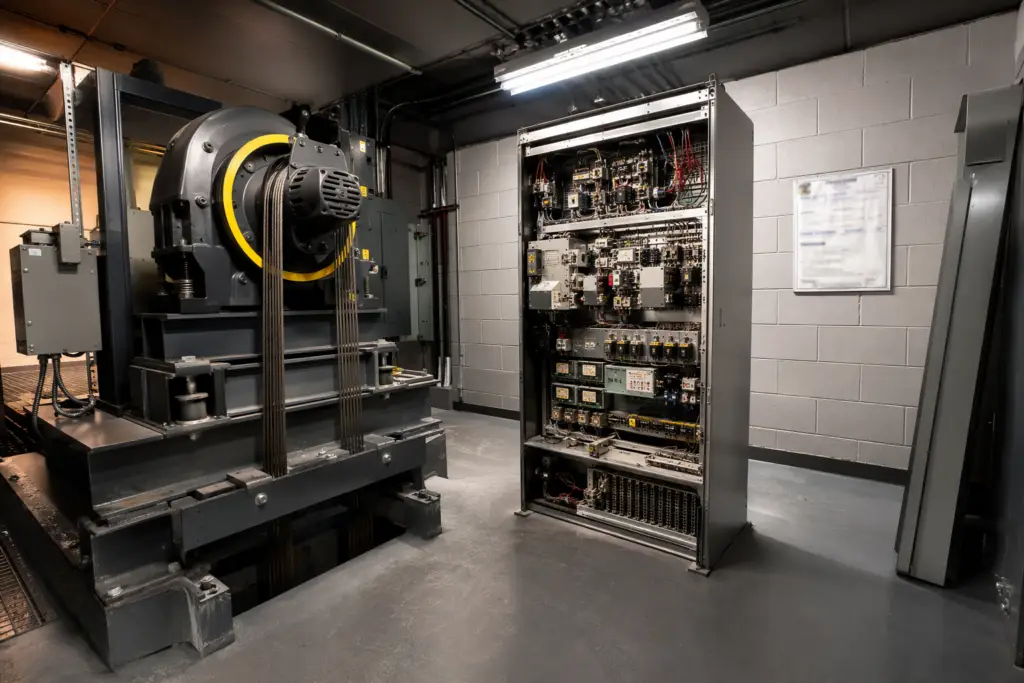
Elevator Stuck Between Floors: Who to Call and What to Do Right Now
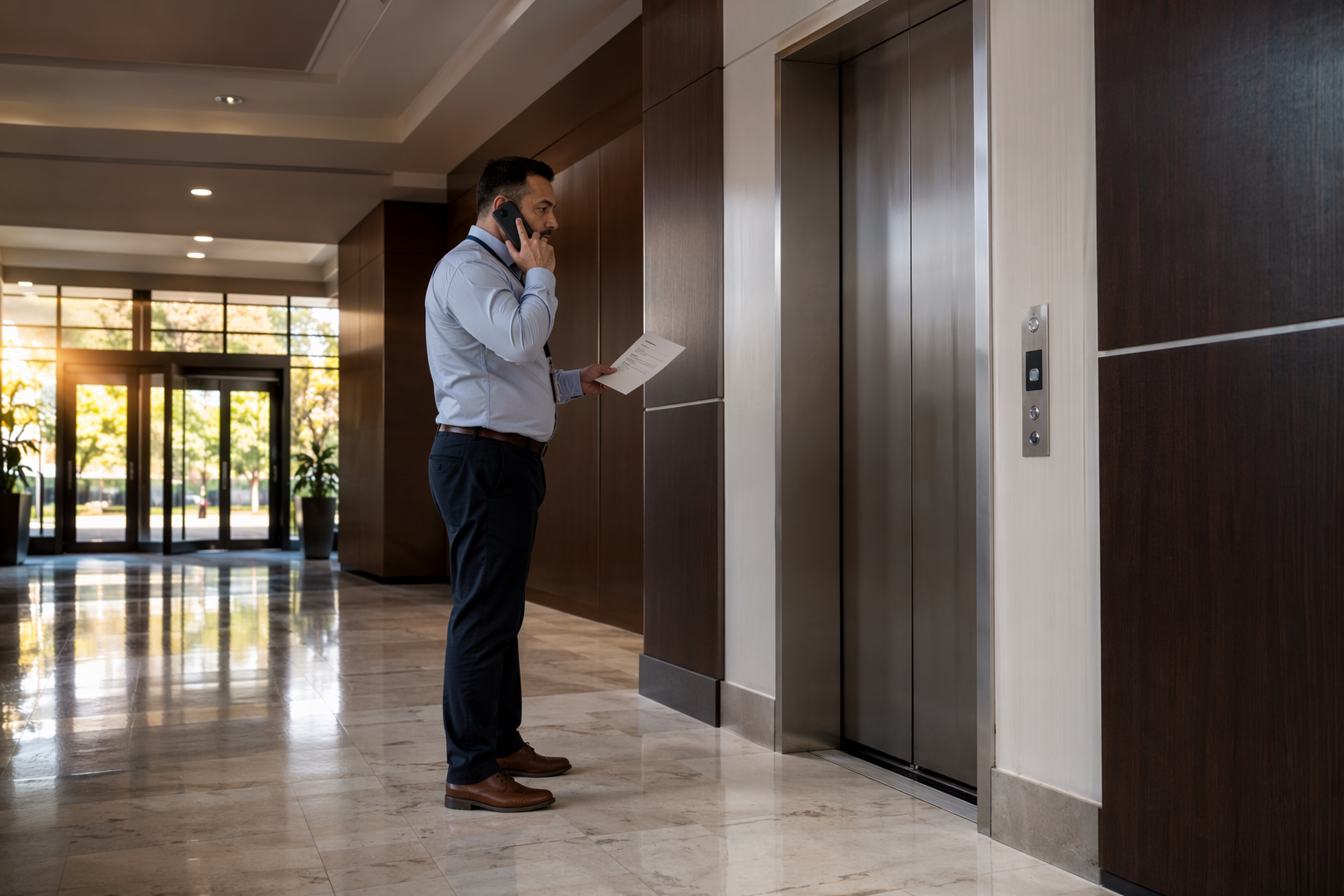
If you manage a building in Baltimore, Washington DC, Philadelphia, or Richmond and your elevator just stopped between floors, you need answers fast. After 15 years responding to entrapments and mechanical failures across the Mid-Atlantic region, I’ve put together this complete guide so you always know exactly who to call, what to say, and how to stay compliant before, during, and after an elevator stoppage.
Who Should I Call First When an Elevator Gets Stuck Between Floors?
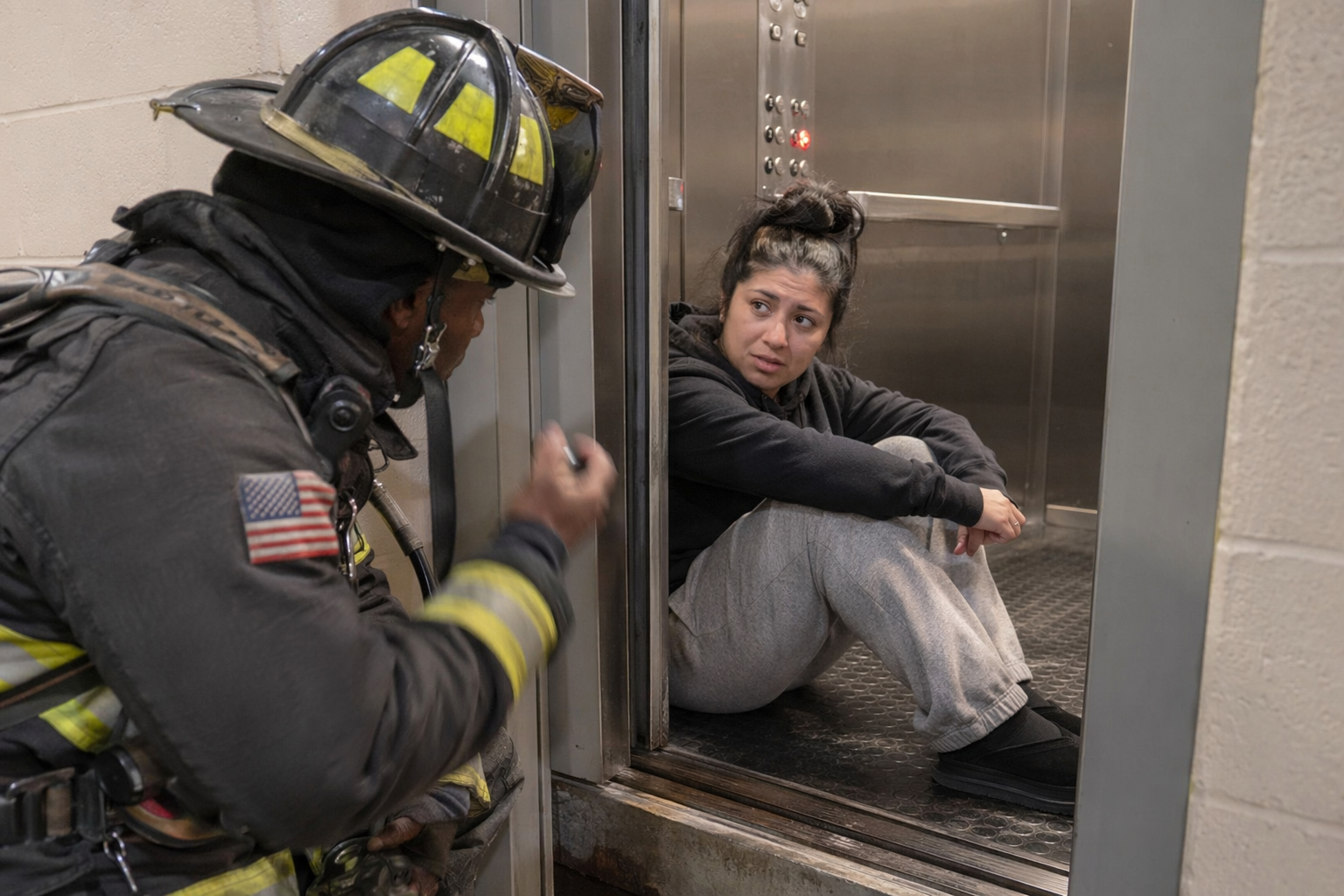
Call your licensed elevator service company immediately, and if passengers are trapped, dial 911 simultaneously so fire rescue can assist with safe extraction while your technician is in transit.
These are two separate but parallel calls, not a sequence. Fire departments in Baltimore, Washington DC, Philadelphia, and Richmond are trained in elevator entrapment rescue, but they cannot repair the elevator — that requires a licensed, ASME A17.1-compliant technician. Your elevator service contract should include a 24/7 emergency dispatch line. If you don’t have a service contract in place, that gap is exactly what creates dangerous delays during an entrapment.
Property managers should keep both numbers — their elevator service provider and local emergency dispatch — posted in the machine room, the main lobby, and the building management office. Response time from a local certified company like Quality Elevator Company averages 45 to 90 minutes for emergency calls in our service territories, depending on traffic and time of day.
Is It Safe to Try to Get Out of a Stuck Elevator on My Own?

No — self-evacuation from a stuck elevator is extremely dangerous and should never be attempted without trained personnel present.
Elevator shafts create unique hazards including moving counterweights, sudden car movement when power is restored, and fall distances that can be fatal. The ASME A17.1 Safety Code for Elevators and Escalators strictly defines evacuation procedures as the responsibility of trained personnel. In 2026, the Consumer Product Safety Commission continues to record elevator-related fatalities tied to unauthorized exit attempts.
Instruct anyone trapped to use the in-car emergency phone, press the alarm button, and remain calm. Modern elevators are designed to hold passengers safely for extended periods. The car will not fall, and ventilation will continue even during a power interruption. Reassure trapped passengers that help is on the way and that the elevator’s structural systems are holding them securely.
What Emergency Numbers Should a Building Manager Keep on File?
Every building manager should maintain at minimum four emergency contacts: their elevator service company’s 24/7 line, local fire/rescue dispatch, the building’s insurance carrier, and the relevant state elevator safety office.
| Contact Type | Who to Call | When to Call | Response Expectation |
|---|---|---|---|
| Elevator Service Company (24/7) | Your certified contractor (e.g., Quality Elevator Company) | Immediately upon any stoppage | 45–90 min emergency response |
| Local Fire/Rescue (911) | 911 | If passengers are trapped | 5–15 min typically |
| State Elevator Safety Office | MD DLLR, DC DCRA, PA L&I, VA DPOR | After incident for reporting | 24–72 hours for incident report review |
| Building Insurance Carrier | Your property insurer | After incident resolution | Varies by policy |
| Elevator Manufacturer Tech Line | OEM support (Otis, KONE, Schindler, etc.) | If service company requests it | Varies; not a first call |
In Maryland, elevator incidents must be reported to the Maryland Department of Labor (DLLR). In Virginia, oversight falls under the Virginia Department of Professional and Occupational Regulation (DPOR). Philadelphia and Pennsylvania fall under the Pennsylvania Department of Labor and Industry. Washington DC elevators are regulated by the DC Department of Consumer and Regulatory Affairs (DCRA).
What Are the Most Common Reasons an Elevator Gets Stuck Between Floors?
The most frequent causes are door sensor malfunctions, power interruptions, overloaded cars triggering safety circuits, worn leveling sensors, and failed control board components.
In my 15 years of field work, door-zone sensor faults account for roughly 40% of all entrapment calls I’ve responded to. When a door sensor detects a misalignment or obstruction — even a piece of debris on the sill — the controller halts the car mid-travel as a safety precaution. This is the system working as intended under ASME A17.1 Section 2.12.
Other common culprits include:
- Worn brake components: Hydraulic or traction brake deterioration can cause the car to drift or stop unexpectedly.
- Governor rope issues: The overspeed governor can trip under certain conditions, activating the safeties and stopping the car.
- Controller board failures: Aging printed circuit boards, especially in elevators more than 20 years old, are prone to logic faults.
- Thermal overload: Motors running in high-ambient-temperature machine rooms can trip thermal protection switches.
- Power quality issues: Voltage spikes, brownouts, and phase loss from the utility feed can all trigger controller shutdowns.
How Long Does It Typically Take for a Technician to Respond to a Stuck Elevator?
Emergency elevator response times average 45 to 90 minutes in urban markets like Baltimore, Washington DC, Philadelphia, and Richmond, though companies with local dispatch and stocked service vans can often arrive in under 60 minutes.
Response time is directly impacted by whether your service company has technicians stationed locally versus dispatching from a regional hub. Quality Elevator Company maintains technicians based across all four of our service territories, which minimizes transit time on emergency calls. When evaluating service contracts, always ask specifically about guaranteed emergency response windows — a reputable company will commit to a defined window in writing.
For context, the average fire rescue response for an entrapment is 8 to 12 minutes in urban areas, which is why coordinating both calls simultaneously makes sense. Firefighters can ensure passenger safety and provide ventilation while the technician is in route to perform the actual mechanical assessment and reset.
What Should Passengers Do While Waiting Inside a Stuck Elevator?
Passengers should press the emergency call button, use the in-car phone, stay calm, move away from the doors, and wait for trained personnel — never attempt to force open doors or climb out.
Per ASME A17.1-2019 Section 2.27.1, all elevators are required to have a means of two-way communication accessible to passengers. That phone connects either to a monitoring center or directly to building management. If the phone is non-functional, passengers should use their mobile device to call the building’s main number or 911.
From a comfort and safety standpoint, reassure passengers of these facts:
- Elevators are designed with multiple redundant safety systems and will not free-fall.
- Adequate air supply exists in the cab for hours, even if ventilation fans stop.
- The structural integrity of the car is independent of power supply.
- Trained help is on the way with an estimated arrival time.
Does a Stuck Elevator Need to Be Taken Out of Service After the Incident?
Yes — in most cases, a stuck elevator should be taken out of service and formally inspected before being returned to passenger use, especially if the stoppage was caused by a mechanical or electrical fault rather than a simple reset.
Under state elevator safety regulations in Maryland, Virginia, Pennsylvania, and DC, a documented mechanical failure may trigger a mandatory inspection before the unit can resume operation. Even if a technician performs an on-site reset, a written service record must be created and retained. For incidents involving injuries, reporting to the state authority having jurisdiction (AHJ) is mandatory within defined timeframes — typically 24 hours in most Mid-Atlantic jurisdictions.
Building owners who return an elevator to service without proper documentation after a stoppage risk fines, liability exposure, and potential license violations. Always require your service company to provide a written work order with the fault code identified, corrective action taken, and technician license number documented.
How Much Does Emergency Elevator Repair Typically Cost?
Emergency elevator service calls typically range from $350 to $900 for after-hours labor alone, with parts and any required follow-up repairs adding to the total depending on the root cause identified.
| Service Scenario | Estimated Cost Range (2026) | What’s Included |
|---|---|---|
| Standard hours service call (entrapment reset) | $200–$450 | Technician dispatch, diagnostic, reset |
| After-hours/emergency call | $350–$900 | Emergency dispatch, diagnostic, reset |
| Controller board replacement | $1,200–$4,500 | Parts + labor, may require downtime |
| Door operator/sensor repair | $400–$1,800 | Parts + labor |
| Governor/safety system service | $600–$2,500 | Parts + labor + mandatory load test |
| Full modernization (older equipment) | $35,000–$150,000+ | Controls, fixtures, code upgrades |
Buildings with a full-coverage service maintenance agreement often have emergency labor costs included or significantly discounted. This is one of the strongest financial arguments for maintaining an active service contract rather than relying on time-and-material calls.
Can a Building Owner Be Held Liable When an Elevator Gets Stuck?
Yes — building owners and property managers can face significant liability if an elevator entrapment results in injury, especially if the elevator was overdue for inspection or maintenance records are incomplete.
Premises liability law in Maryland, Virginia, Pennsylvania, and DC holds property owners to a duty of care standard that includes maintaining elevators in safe working condition. Failure to comply with mandatory state inspection schedules, ASME A17.1 maintenance requirements, and ADA accessibility standards can compound liability exposure significantly.
In 2026, elevator-related personal injury litigation continues to name building owners, property management companies, and service contractors. Maintaining current inspection certificates, documented maintenance logs, and a signed service agreement with a licensed contractor are your primary liability protections. I always tell property managers: your paper trail is your legal armor.
How Often Should Elevators Be Inspected to Prevent Getting Stuck?
Elevators should receive a licensed technician’s routine maintenance visit at least monthly, with formal state inspections required annually or semi-annually depending on jurisdiction and elevator type.
Here is a breakdown by jurisdiction for 2026 compliance:
- Maryland: Annual inspection required by DLLR; certificate must be posted in the elevator cab per COMAR 09.12.51.
- Washington DC: Annual inspection required by DCRA; elevators in buildings with 10+ floors may face additional requirements.
- Pennsylvania: Annual inspection required by PA Department of Labor and Industry under the Elevators and Kindred Equipment Act.
- Virginia: Annual inspection required by DPOR under the Virginia Uniform Statewide Building Code (VUSBC).
Monthly preventive maintenance performed by a certified technician — not just an annual inspection — is the single most effective way to prevent mid-travel stoppages. Routine PM identifies worn door contacts, degrading brake linings, and developing control faults before they become entrapments.
What Information Should I Have Ready When I Call the Elevator Service Company?
When calling your elevator service company during a stuck elevator emergency, have the building address, elevator unit number or location, number of passengers trapped, and any fault codes or error messages displayed on the panel ready to provide.
The more information you can give the dispatcher, the faster they can pre-stage the right parts and send the most qualified technician. Useful details include:
- The approximate floor the car is stopped between
- Whether the lights and emergency phone are functional inside the car
- Any unusual sounds heard before the stoppage (grinding, banging, clicking)
- Whether the stoppage was accompanied by a power outage or was isolated
- The elevator’s make and model if known (found in the machine room or on the cab data plate)
- When the elevator last received routine service
What Is the Difference Between a Hydraulic and Traction Elevator Entrapment Response?
Hydraulic and traction elevators require different rescue and reset procedures, which is why only a licensed technician should perform the actual recovery — the approach for each system is fundamentally different.
Hydraulic elevators — commonly found in low-rise buildings up to 5 stories — store fluid under pressure. A controlled lowering procedure can be performed by trained technicians using a manual lowering valve to bring the car to the nearest floor landing. This is also a procedure fire departments can perform with guidance from the service company.
Traction elevators — found in mid- and high-rise buildings — use cables, counterweights, and a motor-driven sheave. Recovery may involve manual brake release procedures using the machine room brake release handle, which requires two trained personnel and strict adherence to ASME A17.1 Section 2.26 procedures. Attempting this procedure without training is one of the most dangerous actions that can occur during an entrapment response.
Does ADA Compliance Affect How I Handle a Stuck Elevator?
Yes — under the Americans with Disabilities Act, elevators are often the primary means of accessible egress for people with disabilities, making prompt response and restoration of service both a safety and civil rights obligation.
When an elevator is taken out of service — whether due to a stuck car or scheduled maintenance — building owners must provide alternative accessible routes where reasonably possible and post notice at all call stations. For buildings where the elevator is the sole accessible path of travel, extended downtime may constitute an ADA violation under Title III (public accommodations) or Title II (government buildings).
ADA Standards for Accessible Design Section 407 also governs elevator cab dimensions, door timing, and communication systems — all of which interact with the systems most likely to cause entrapments when they malfunction. Regular PM ensures these systems remain compliant and functional simultaneously.
Should I Have a Written Emergency Response Plan for Elevator Entrapments?
Yes — every building with an elevator should have a written elevator emergency response plan, posted in accessible locations and reviewed with building staff annually.
A solid plan includes: the elevator service company’s 24/7 emergency number, 911 procedures, a designated building staff responder role, passenger communication scripts, and the location of the machine room key. OSHA and many state elevator regulations encourage or require documented emergency procedures for workplaces with elevators.
Quality Elevator Company includes emergency response plan templates and staff training as part of our full-service maintenance agreements, because we’ve seen firsthand how an unprepared building staff can extend an entrapment unnecessarily through hesitation or wrong actions.
What Questions Should I Ask When Hiring an Elevator Service Company?
When vetting an elevator service company, ask about state licensure, emergency response time guarantees, technician certifications, parts inventory practices, and whether they carry errors and omissions insurance.
Specific questions to ask any potential service provider:
- Are your technicians IUEC-certified and licensed in this state?
- What is your guaranteed emergency response window in writing?
- Do your service vans carry common parts for my elevator brand?
- Will I receive written work orders with fault codes after every visit?
- Do you provide inspection coordination and compliance documentation?
- What is your process if my elevator needs an emergency part not in stock?
These questions separate reactive, ticket-clearing operations from true maintenance partners. A company that hesitates on any of these answers is a company that will leave you waiting when your elevator is stuck and passengers are inside.
How Do I Know If My Elevator Is Approaching the End of Its Reliable Service Life?
Elevators typically have a reliable service life of 20 to 25 years before major component failures and entrapments become significantly more frequent, though with proper maintenance some systems operate safely well beyond that window.
Warning signs that your elevator is becoming unreliable include: increasing frequency of entrapments or service calls, difficulty sourcing replacement parts, controller boards that are no longer manufactured, recurring door faults despite repeated repairs, and leveling accuracy degrading over time. If your elevator was installed before 2000, a modernization assessment is worth scheduling regardless of current performance.
The ASME A17.3 Safety Code for Existing Elevators and Escalators provides the framework for evaluating whether existing equipment meets current safety requirements and what upgrades are mandated. In 2026, compliance with current A17.3 standards is increasingly enforced during annual state inspections across Maryland, DC, Pennsylvania, and Virginia.
What Happens If My Elevator Fails Its State Inspection After Being Stuck?
If an elevator fails a state inspection — whether triggered by a stuck-car incident or a routine annual inspection — it must be taken out of service immediately and cannot be returned to operation until all cited deficiencies are corrected and a re-inspection is passed.
The timeline from failed inspection to return-to-service depends on the severity of violations. Minor deficiencies may be corrected within days; major violations involving structural, brake, or control system failures can take weeks if parts must be sourced or custom fabricated. During this period, the elevator must remain locked out of service with clear posted notification per state requirements.
Fines for operating an elevator without a current valid inspection certificate range from $500 to $5,000 per day in most Mid-Atlantic jurisdictions. Proactive compliance — not reactive scrambling after a failure — is always the better financial and legal strategy.
Are There Special Considerations for Elevators in High-Rise or Government Buildings?
Yes — elevators in high-rise buildings, hospitals, government facilities, and schools are subject to enhanced inspection schedules, stricter code compliance requirements, and in some cases mandatory firefighter service operation testing.
Under ASME A17.1 Phase I and Phase II firefighter emergency operation requirements, all passenger elevators in buildings 25 feet or more above or below the designated level must be equipped with firefighter emergency recall and in-car operation systems. These systems must be tested annually as part of the inspection process. Failure of Phase I recall during an entrapment scenario can significantly complicate emergency response.
Government buildings in Washington DC face additional compliance layers under GSA facility standards and the DC Building Code. Hospitals in Maryland and Virginia must comply with CMS Life Safety Code requirements, which reference ASME A17.1 and impose additional documentation standards. Quality Elevator Company has extensive experience navigating these multi-layered compliance environments for institutional clients throughout the region.
How Can I Reduce the Risk of My Elevator Getting Stuck in the Future?
The most effective ways to prevent elevator entrapments are enrolling in a monthly preventive maintenance program, addressing deferred repairs immediately, modernizing aging control systems, and training building staff on proper elevator use and reporting procedures.
From a data perspective, buildings on monthly PM programs experience 60 to 70% fewer entrapments than buildings relying solely on annual inspections and reactive repair calls, based on service records compiled across our four-market territory. The math on maintenance contracts versus repeated emergency calls almost always favors a proactive agreement.
Additional risk-reduction steps include: installing remote monitoring systems that alert your service company to faults before they become entrapments, scheduling five-year hydraulic pressure tests on hydraulic units, and ensuring machine room environmental controls (cooling, humidity) are functioning properly to protect sensitive electronics.
Why Should I Choose a Local Certified Company Over a National Elevator Service Chain?
Local certified elevator companies typically offer faster emergency response times, more direct technician accountability, and better familiarity with regional code authorities compared to national chains that may dispatch from distant hubs.
When your elevator is stuck and passengers are inside, response time is everything. A company with technicians based in Baltimore, not routed through a national dispatch center, is going to reach you faster. Local companies also maintain direct relationships with state inspection offices in Maryland, DC, Pennsylvania, and Virginia — which matters when you need an expedited re-inspection to return to service after a repair.
Quality Elevator Company was built specifically to serve the Mid-Atlantic region with the speed, accountability, and technical depth that national chains struggle to match in our markets. Our technicians are IUEC-certified, state-licensed in every jurisdiction we serve, and stocked with parts for the most common elevator brands operating in Baltimore, Washington DC, Philadelphia, and Richmond.
Get Expert Help Before the Next Emergency
Don’t wait until your elevator is stuck between floors to find out your service company’s response time or whether your maintenance records are in order. Whether you manage a commercial office building, residential high-rise, government facility, or medical campus in Baltimore, Washington DC, Philadelphia, or Richmond — Quality Elevator Company is ready to assess your current equipment condition and put a proactive plan in place.
Contact Quality Elevator Company for a free elevator assessment. Call us now at 301-307-5363 — our certified technicians are available 24/7 for emergency response and available Monday through Friday for scheduled assessments and maintenance consultations.