Hydraulic vs. Traction Elevators for Healthcare Facilities: Which Is Right for Your Building?
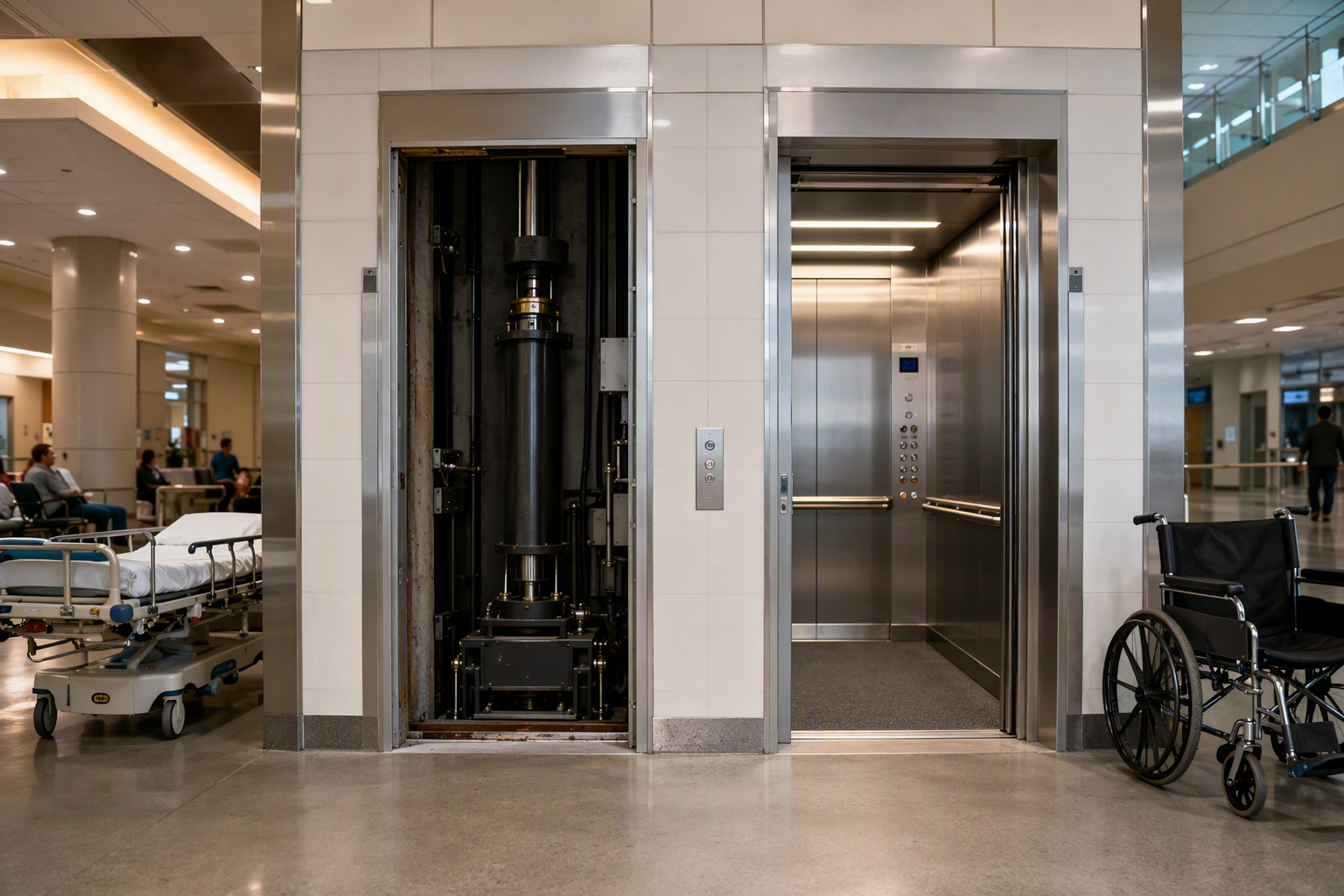
Choosing the wrong elevator system for a hospital, outpatient clinic, or assisted-living facility is not simply an inconvenience — it can compromise patient care, trigger compliance violations, and generate avoidable maintenance costs for decades. The sections below walk through every dimension of that decision so facility managers in Baltimore, Washington DC, Philadelphia, and Richmond can move forward with confidence.
—
What Is the Core Difference Between Hydraulic and Traction Elevators?
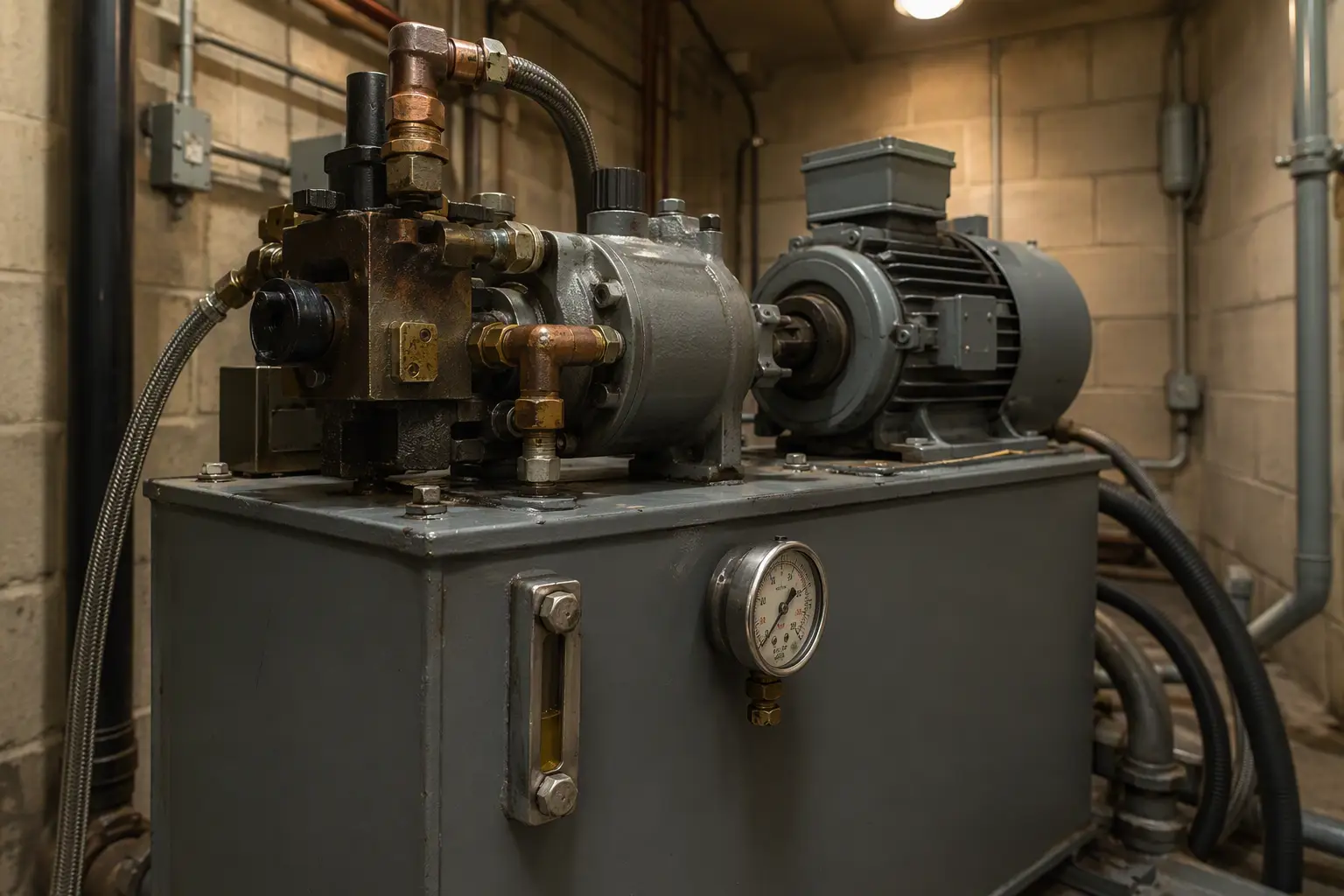
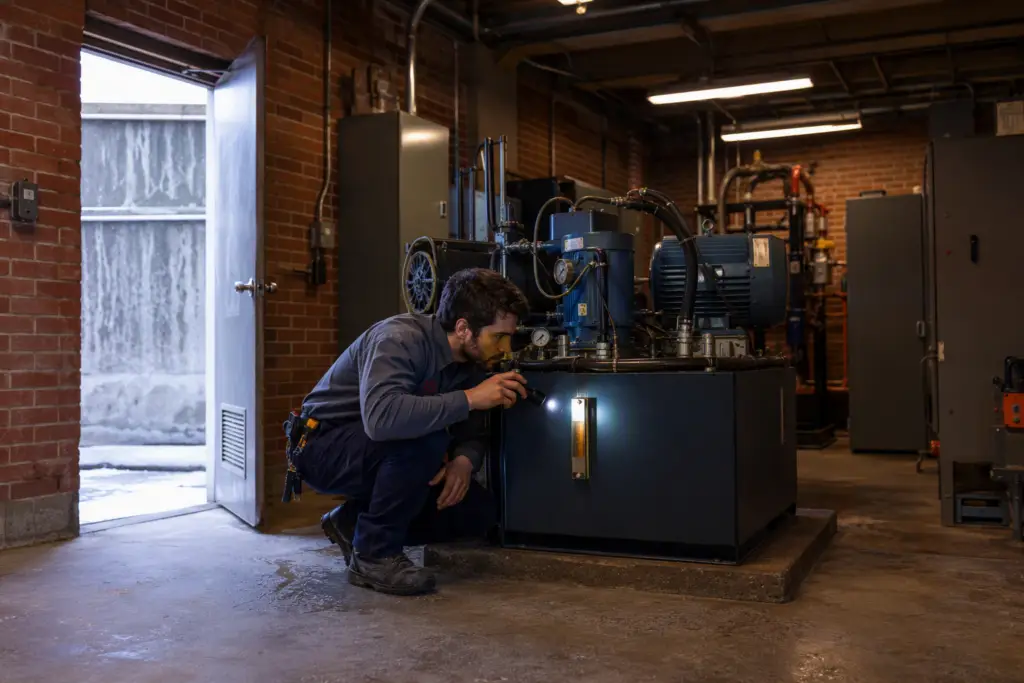
A hydraulic elevator raises and lowers its cab by pushing hydraulic fluid into a cylinder that extends or retracts a piston. Because the piston must fit beneath the car, the system requires either a below-ground cylinder (conventional hydraulic) or an above-ground holeless jack arrangement. Power consumption tends to be higher during ascent because the pump works against gravity, and heat is generated each time fluid is returned to the reservoir on descent.
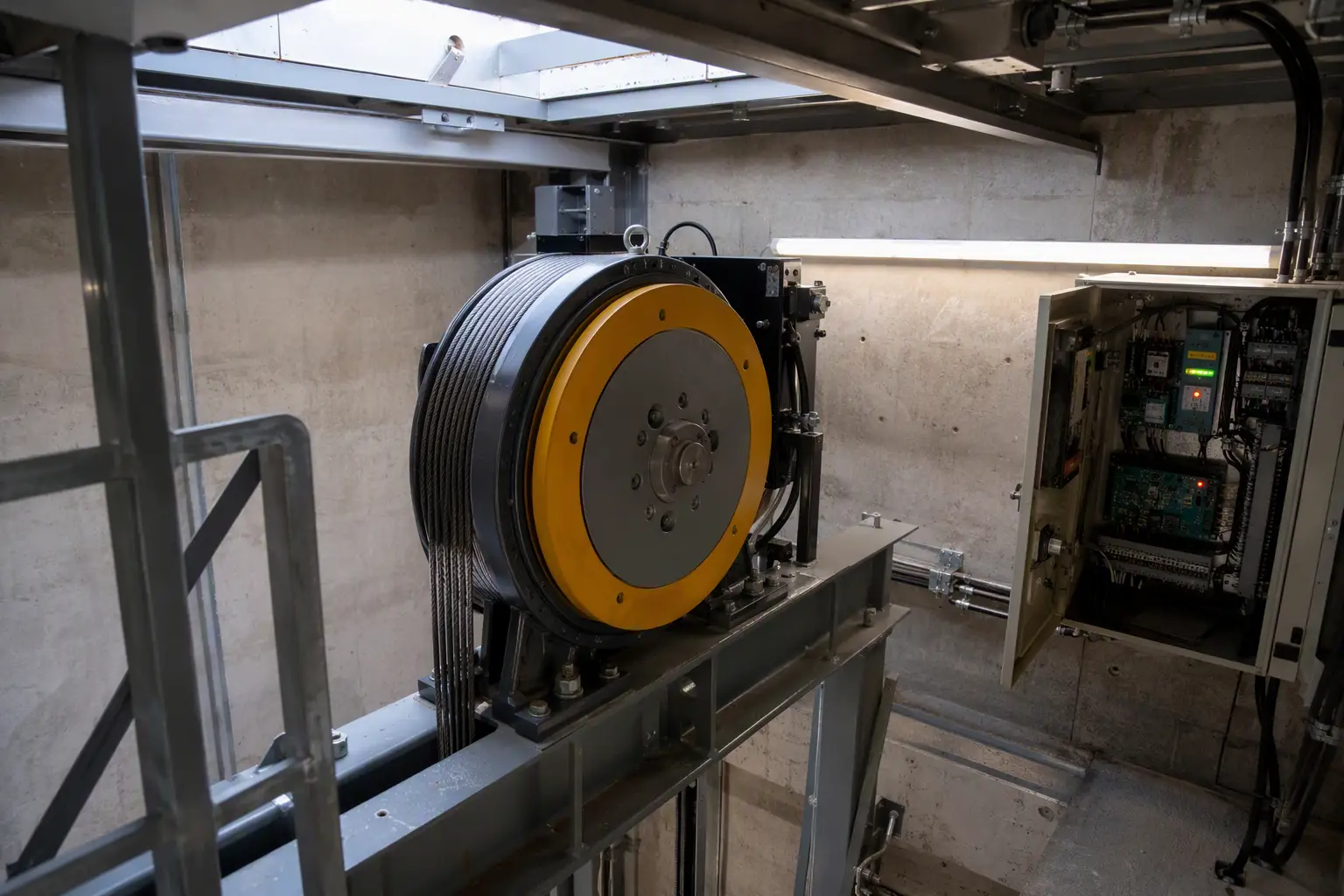
A traction elevator suspends the cab from steel wire ropes or flat belts that pass over a drive sheave connected to a machine room motor. A counterweight roughly equal to the cab weight plus a portion of rated load travels in the opposite direction, dramatically reducing the energy required to move the car. Machine-room-less (MRL) traction designs locate the drive machinery in the hoistway or overhead, preserving mechanical room space that is always at a premium in healthcare construction.
Both system types must conform to the ASME A17.1 Safety Code for Elevators and Escalators, and both must meet ADA accessibility standards for cab dimensions, door timing, and control placement — requirements that carry additional weight in healthcare settings where patients travel in beds and wheelchairs.
—
How Do Building Height and Traffic Volume Affect the Decision?
Hydraulic systems are mechanically straightforward and cost-effective for buildings of roughly two to six floors. Many community clinics, surgery centers, and small assisted-living communities fall in this range, making hydraulic technology a practical choice.
However, hydraulic elevators travel more slowly than traction units and are limited in the total rise they can achieve before cylinder depth or oil column pressure becomes a design constraint. A busy hospital campus where staff, patients, visitors, and supply carts share the same vertical circulation path needs higher speeds, faster door cycles, and the ability to coordinate multiple cars — advantages that traction systems, particularly those paired with group dispatching controls, deliver reliably.
Traffic analysis is therefore the first analytical step Quality Elevator Company recommends when a healthcare client asks which system to specify. Peak-hour demand, average wait-time targets, and the mix of passenger versus freight/service runs all feed into that calculation.
—
What Compliance Requirements Apply to Healthcare Elevators in Maryland, DC, Philadelphia, and Virginia?
Healthcare facilities in the mid-Atlantic region carry a layered set of code obligations:
- ASME A17.1 / A17.3: The ASME A17.1 Safety Code for Elevators and Escalators governs new installations, while ASME A17.3 addresses existing installations. Both Maryland and Virginia reference these codes in their elevator safety regulations; Pennsylvania’s Department of Labor & Industry and the District of Columbia’s Department of Consumer and Regulatory Affairs (DCRA) similarly adopt ASME standards as the baseline for elevator inspections and permits.
- ADA Title III / Title II: Hospitals and clinics open to the public must meet the cab size, leveling accuracy, tactile control, and audible signal requirements spelled out in the ADA Standards for Accessible Design. Cab leveling within one-half inch of floor level is critical when transporting patients in gurneys or power wheelchairs.
- FGI Guidelines: The Facility Guidelines Institute publishes recommendations on elevator quantities, sizes, and stretcher capacity for hospitals and outpatient facilities. While adoption varies by state, they inform how authorities having jurisdiction (AHJs) evaluate new construction plans in the mid-Atlantic region.
- OSHA General Industry Standards: Elevator machine rooms and hoistway access points must conform to OSHA lockout/tagout, confined-space, and electrical safety requirements that apply to service technicians working in any healthcare environment.
- Infection-control considerations: Joint Commission surveys evaluate whether elevator interiors — flooring, wall panels, handrails, and door systems — can be cleaned and disinfected to healthcare standards. This practical requirement influences cab finish specifications for both system types.
—
Which System Is More Energy-Efficient in a Healthcare Setting?
Traction elevators, especially those equipped with regenerative drives, return energy to the building’s electrical grid when the loaded cab descends or the counterweight rises. In a high-utilization healthcare environment where elevators cycle continuously through a long operating day, that recaptured energy can meaningfully reduce utility costs over time.
Hydraulic systems consume power only during the up-direction run but dissipate energy as heat during descent. Modern variable-voltage, variable-frequency (VVVF) pump units have improved hydraulic efficiency considerably, but traction still holds a measurable advantage in high-cycle applications. For a facility evaluating long-term total cost of ownership, the energy profile of each system over an expected service life is a key input.
—
What Are the Maintenance Differences Between the Two Systems?
Hydraulic elevators have fewer moving parts above ground and are generally straightforward to inspect and service. The primary maintenance concerns are hydraulic fluid integrity, cylinder corrosion (for in-ground units), and seal condition. Environmental regulations in Maryland, Virginia, Pennsylvania, and the District of Columbia require single- or double-bottom cylinders with leak detection to protect groundwater — a specification detail that adds upfront cost to conventional in-ground hydraulic installations.
Traction elevators involve ropes or belts, sheaves, brakes, and guide rail lubrication. Machine-room-less units locate equipment in the hoistway, which requires technicians trained in confined-space procedures. Rope and belt replacement intervals depend on inspection findings per ASME A17.1 criteria rather than a fixed calendar.
Quality Elevator Company maintains state-required certifications to perform inspections and maintenance on both system types across all four markets, ensuring that healthcare clients meet their annual and periodic inspection obligations without coordinating multiple vendors.
—
How Do Cab Size Requirements Differ for Healthcare Use?
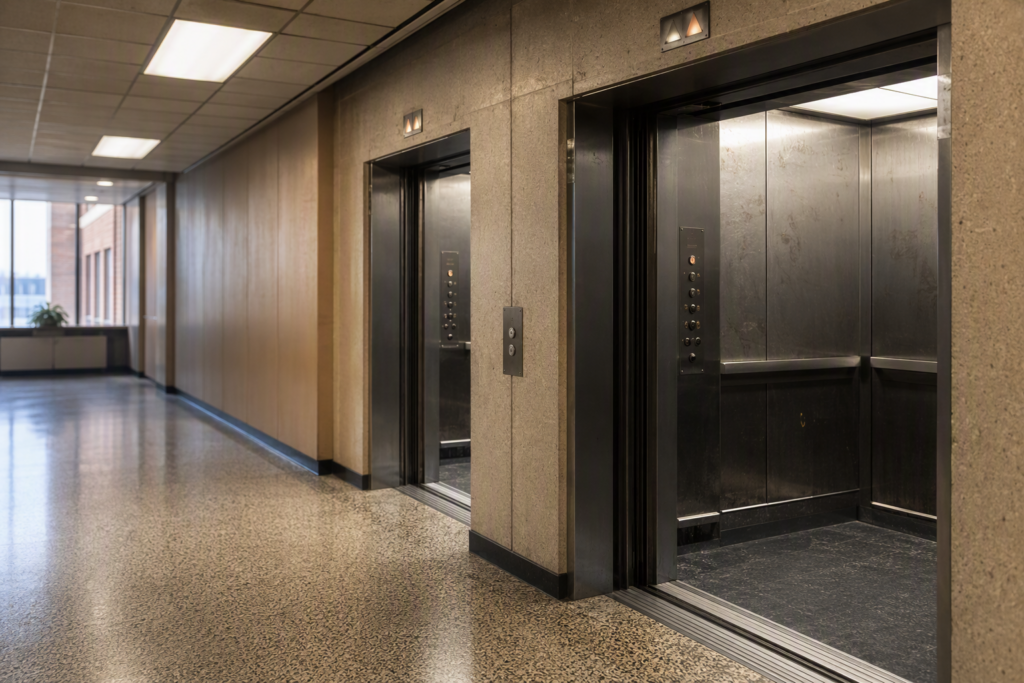
Healthcare stretcher elevators must accommodate a standard hospital gurney with attendants on both sides. Minimum interior cab dimensions for stretcher-capable units are significantly larger than those for a standard passenger elevator, and door clear openings must allow full-width passage. Both hydraulic and traction platforms can be engineered to these dimensions, but the structural implications differ: a larger, heavier cab increases the hydraulic system’s power demand and the counterweight sizing for traction units.
Door open-and-close timing parameters under ADA and ASME standards must also be adjusted for healthcare traffic so that patients transferring from wheelchairs or beds have sufficient time without triggering door-reversal cycles that delay the car.
—
What Is the Typical Installation Timeline for Each System Type?
Timeline varies with building type, permit jurisdiction, and site conditions, so the figures below are qualitative guidance rather than guarantees:
- A straightforward low-rise hydraulic installation in an existing medical office building typically involves shorter lead times for equipment delivery because the mechanical components are less complex.
- A traction installation — especially MRL — may involve longer lead times for the drive machinery and controls, but eliminates the need to construct or modify a dedicated machine room, which can offset scheduling differences on a project-level basis.
- Permit approval timelines through DCRA in Washington DC, Maryland’s elevator safety unit, Pennsylvania’s Department of Labor & Industry, or Virginia’s Department of Labor and Industry add weeks to months depending on jurisdiction and project scope. Early permit submission is essential for healthcare construction schedules that have regulatory certificate-of-occupancy milestones.
—
Questions Your Inspector Will Ask
When an authorized elevator inspector arrives at a healthcare facility in Maryland, DC, Philadelphia, or Richmond, facility managers should be prepared to answer the following:
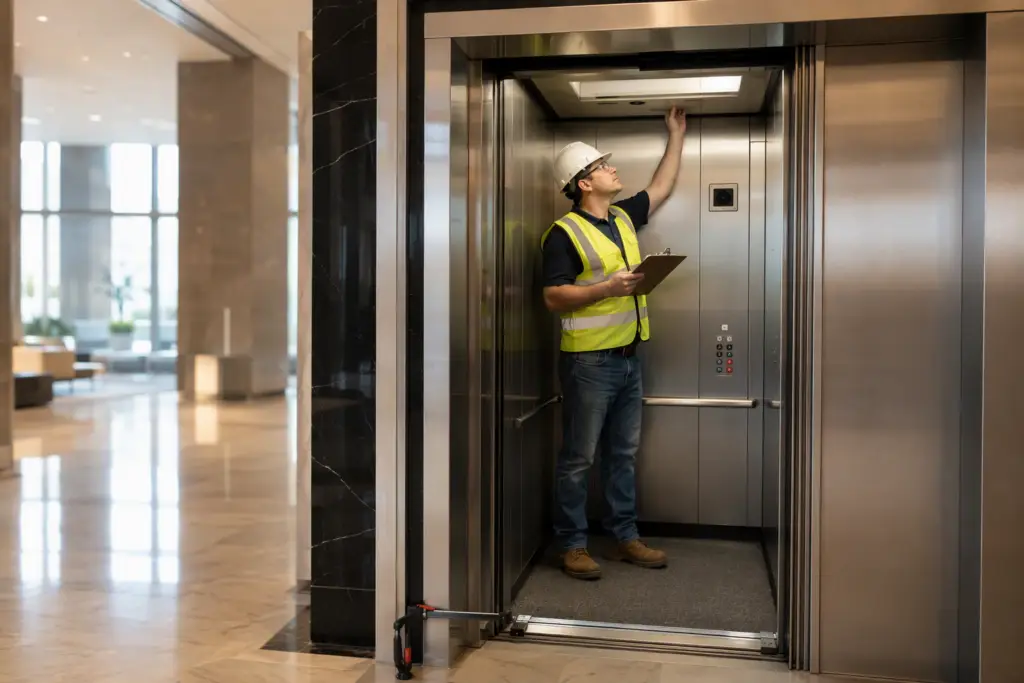
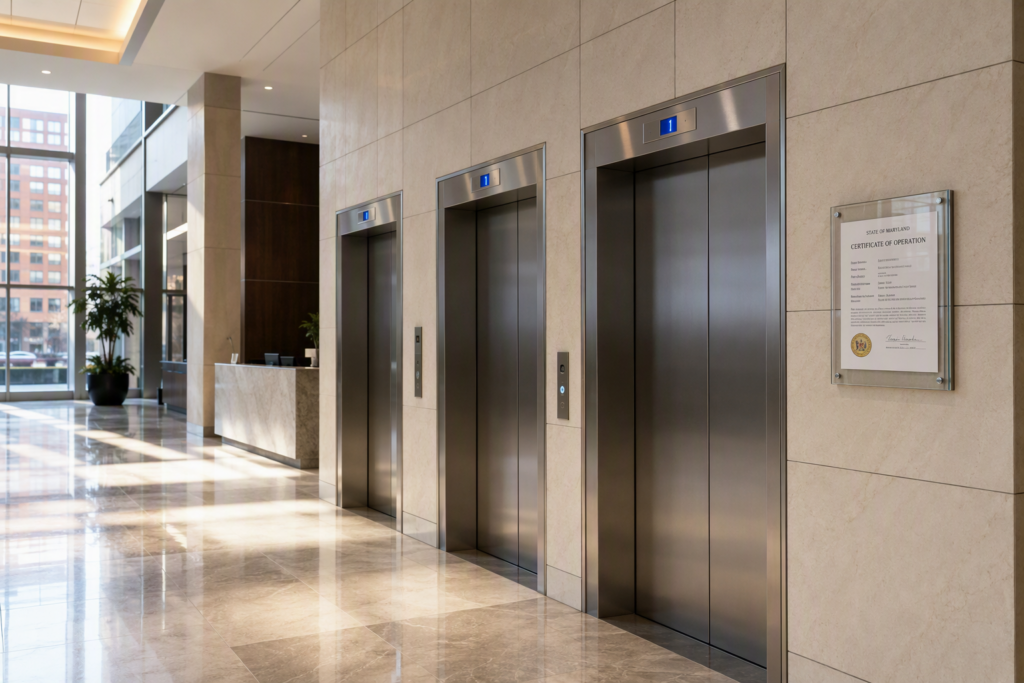
- Is the current certificate of inspection posted inside the elevator cab and valid?
- Have all deficiencies from the previous inspection been corrected and documented?
- Is the machine room or hoistway access secure and properly lit per code?
- Have elevator buffers, safeties, and governor been tested at the required intervals under ASME A17.1 / A17.3?
- For hydraulic units: is there a functioning leak-detection system and does the hydraulic fluid meet current environmental containment requirements?
- For traction units: are wire rope or belt records current and do they reflect the most recent wear and elongation measurements?
- Are door reopening devices (light curtains or safety edges) functional and tested?
- Are emergency lighting, communication systems, and egress signage compliant with current code?
- Has the elevator been included in the facility’s fire safety plan and tested in fire-service mode?
- Are maintenance logs, test records, and contractor license information available on-site for review?
—
How Should a Healthcare Facility Manager Begin the Evaluation Process?
A structured evaluation follows these steps:
- Conduct a traffic study. Count peak-hour cab calls and average wait times to establish whether current or planned elevator capacity meets demand.
- Document building height and floor-to-floor distances. Confirm whether hydraulic rise limits apply or whether the building requires traction technology.
- Audit existing equipment condition. For renovation projects, determine whether modernization of a hydraulic unit or conversion to traction is more cost-effective than full replacement.
- Review permit and inspection status. Confirm that all units carry a current certificate of inspection from the applicable state or district authority.
- Assess infection-control and cab-finish requirements. Specify interior materials that meet facility housekeeping and Joint Commission standards.
- Obtain a system-type recommendation and lifecycle cost comparison. Weigh installed cost, energy consumption, and maintenance obligations over the intended service life.
- Select a licensed elevator contractor. Verify that the contractor holds the appropriate state or district license to perform work in your jurisdiction.
Quality Elevator Company supports healthcare clients through each of these steps, from initial traffic analysis through permit submission, installation, and ongoing maintenance across Baltimore, Washington DC, Philadelphia, and Richmond.
—
Is One System Safer Than the Other for Patient Transport?
When properly installed, inspected, and maintained in accordance with ASME A17.1, both hydraulic and traction systems meet equivalent safety standards. The more meaningful safety variable in a healthcare context is the quality and frequency of maintenance, the accuracy of cab leveling for wheelchair and gurney access, and the reliability of emergency communication systems. A well-maintained hydraulic elevator is safer than a neglected traction unit, and vice versa.
—
What Should Healthcare Facilities Know About Modernization vs. Replacement?
Many hospitals and medical office buildings in the Baltimore, DC, Philadelphia, and Richmond markets are operating elevators that were installed several decades ago. ASME A17.3 establishes the safety standard for existing elevators and guides what upgrades are required when a unit undergoes alteration. Modernization — replacing controls, drives, cab interiors, and door systems while retaining the hoistway and machine infrastructure — can bring an older hydraulic or traction unit into current compliance at a fraction of full replacement cost. Quality Elevator Company evaluates modernization feasibility as part of its comprehensive assessment process.
—
Take the Next Step Toward the Right Elevator System for Your Healthcare Facility
Selecting between hydraulic and traction technology is a long-term decision with patient-care, compliance, and financial implications. Quality Elevator Company serves hospitals, outpatient clinics, assisted-living communities, and medical office buildings throughout Baltimore MD, Washington DC, Philadelphia PA, and Richmond VA with code-compliant installation, inspection, and maintenance services for both system types.
Contact Quality Elevator Company for a free elevator assessment: 301-307-5363
Need elevator service you can rely on? Quality Elevator Company is ready to help.